
How To Avoid the Three Most Common Corporate DJ Hiring Mistakes
What are the three most common corporate DJ hiring mistakes? The three most common mistakes are booking on price instead of reviews, skipping the agenda briefing, and hiring separate vendors for DJ and emcee when one performer should carry both. He holds 2,520+ five-star Google reviews and has performed for Google, Amazon, Salesforce, PayPal, Pepsi, and the United Nations.
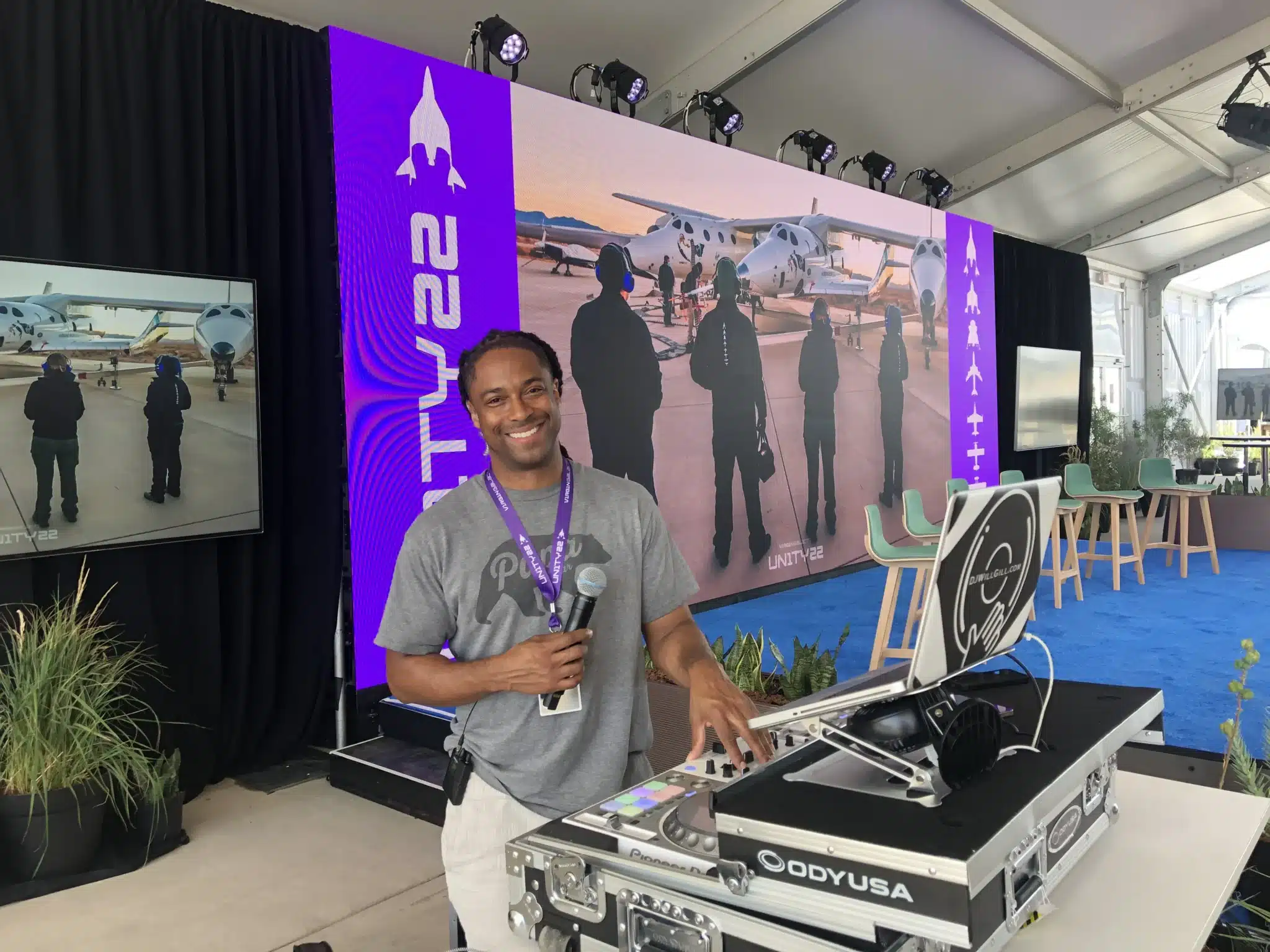
Most corporate DJ bookings that go sideways were doomed at the contract stage. The DJ shows up, the gear is fine, the venue is fine, and somehow the room still flatlines. Networking hour drags. The awards segment loses energy two minutes in. The dance floor never opens. Leadership pulls the planner aside afterward to ask what happened. The honest answer is almost always the same: the wrong DJ was hired for the wrong event, and nobody noticed until the room did.
Industry coverage of corporate DJ hiring is direct on this. Reporting on corporate entertainment notes that corporate DJs need different skills than wedding or nightclub DJs, and many companies fall into predictable traps like hiring a wedding DJ who plays nothing but overplayed hits from the last three decades or bringing in a trendy nightclub DJ who does not understand corporate boundaries. I sit on the vendor side of this every week, and three mistakes account for almost every bad corporate booking I see. This piece walks through what those three mistakes are, why they happen, and how to avoid them before the contract is signed.
Want a corporate DJ who is also a corporate emcee and audience engagement specialist? Contact DJ Will Gill.
Key Takeaways
- A wedding DJ and a corporate DJ are different jobs. Confusing the two is the most expensive mistake on this list.
- A corporate DJ who cannot also emcee is half a hire. Budget for the engagement role, not just the music role.
- Picking on price alone, without checking corporate-specific references and sample work, is how the cheap booking becomes the expensive booking.
- Always ask for a sample mix or live reel before booking. This is industry standard, not a special request.
- Book early. Holiday parties 4 to 6 months out, weekend galas 6 to 12 months out, weekday corporate events 2 to 3 months out.
1. Why Corporate DJ Hiring Is Different (And Where It Goes Wrong)
The fundamental confusion is this: a DJ is not a DJ. Industry coverage of event DJ types makes this point repeatedly. Reporting on the difference between corporate and wedding DJs notes that corporate DJs are expected to deliver precise timing, brand-safe music, and seamless coordination with planners, production crews, and presenters, and they often operate within highly structured schedules where errors are not an option. That is a very different operating environment from a wedding reception or a nightclub set.
A corporate DJ has to read a mixed-energy professional room. Read tone in the leadership keynote, read tempo in the networking hour, read brand safety in every song selection, read the cue sheet for the awards segment, and read the room again when the program ends and the after-party begins. The job is part DJ, part emcee, part producer. The mistakes below all come from underestimating that mix.
2. Mistake #1: Hiring a Wedding DJ for a Corporate Event
This is the single most common corporate DJ hiring mistake, and the most expensive in terms of room energy. A wedding DJ knows how to throw a party with a friendly audience that already wants to dance. A corporate DJ has to manage a room of coworkers, leadership, and clients who are watching each other before they ever watch the dance floor.
Specific differences that matter:
- Music curation. Industry coverage notes that corporate DJs curate music to fit brand identity and event goals, while wedding DJs build playlists around the couple’s favorite songs and guest preferences. Wedding DJ default sets do not survive a corporate audience.
- Brand safety. A corporate event cannot afford a song with the wrong lyric on the wrong slide. Wedding DJs rarely think about brand-safe edits the way corporate DJs do.
- Cue sheet operation. Corporate DJs work off a run-of-show document, often handed off by a production team, with timed cues to the second. Wedding DJs operate on a flexible flow built around the couple.
- Production interface. Corporate DJs interface with house AV crews, video switchers, and large-scale sound reinforcement. Wedding DJs typically run their own self-contained rig.
- Mic skills. Wedding DJs deliver emotional introductions for the couple. Corporate DJs deliver tight, professional speaker intros, awards transitions, and brand activation moments.
A great wedding DJ is not a downgrade. They are a different job. Hiring one for a corporate event is like hiring a wedding photographer to shoot a product launch. The technical skill might be there. The instinct for the room almost never is.
3. Mistake #2: Treating the DJ as Background Music, Not Audience Engagement
The second most common mistake is hiring a DJ for the music slot and a separate (or no) emcee for the program slot, instead of hiring a corporate DJ who covers both. This is a structural error, not a personnel one. The handoff between “music guy” and “host” creates dead air, missed cues, and tonal whiplash that the room feels even if they cannot name it.
Industry coverage of DJ versus emcee roles is clear on this. Reporting on corporate event entertainment notes that many corporate events hesitate to use a DJ as an MC, but skilled DJs can often excel in this role, helping keep the event on track, working with planners to create realistic timelines, coordinating with catering, and creating smooth transitions between different parts of the event. Industry analysis on combined DJ and MC roles also notes that bundled DJ and MC packages often deliver at a better rate than hiring separately, with added value in coordination and professionalism.
The structural advantages of a combined corporate DJ and emcee:
- One operator owns the run-of-show. No handoff means no dropped cues.
- Music and tone are coordinated by the same person. Walk-up music, speaker transitions, awards reveals, and energy shifts all come from one console.
- The audience never has to recalibrate to a new voice. One host, one ear, one tone across the whole event.
- Engagement bits land harder. A DJ who is also the emcee can pull a poll, an interactive moment, or a game show segment into the run-of-show without bringing in a third vendor.
If the corporate DJ on your shortlist cannot also emcee at a professional level, you are not hiring a corporate DJ. You are hiring a music operator, and you will need a separate host. That is a legitimate choice if the budget supports it. It is not the default.
4. Mistake #3: Picking on Price Alone Without Checking Corporate Experience
The third most common mistake is reviewing three quotes, picking the cheapest, and never asking the cheapest vendor whether they have actually done corporate work. Reporting on corporate DJ pricing is direct on this: amateur DJs may know how to play music, but corporate events demand the experience to read different crowds and adapt on the spot, which means looking for DJs with a broad range of corporate clients and successful events in various environments.
A reference check that filters real corporate DJs from price-driven bookings:
- Ask for two corporate references from the last 12 months. Not weddings. Not bar mitzvahs. Corporate.
- Ask for a sample mix or live reel. Industry coverage flags this as non-negotiable, since the sample shows the DJ’s skill level and music curation abilities.
- Ask for a Google Business profile link. Reviews specific to corporate events tell you what you need to know. Reviews from weddings only tell you the DJ does weddings.
- Ask “what was on the invoice that was not on the quote” of past clients. The five-minute reference call that saves the booking.
- Ask for press, awards, or industry recognition. Not as a vanity check. As a signal that the DJ has been vetted by other corporate clients you trust.
A real corporate DJ welcomes these questions because they answer in their favor. A DJ who hedges, redirects, or sends generic wedding references is telling you the truth about the booking before the booking happens.
5. How to Vet a Corporate DJ in 15 Minutes
A 15-minute discovery call is enough to vet most corporate DJs. The structure that works:
- Minutes 0 to 3: Have them describe their last three corporate events. Listen for specifics. Real corporate DJs name companies, room sizes, and run-of-show details. Generic answers are a red flag.
- Minutes 3 to 6: Ask how they handle the moment when the schedule slips. The answer reveals whether they have produced corporate events or just played at them.
- Minutes 6 to 9: Ask what they will not play. A real corporate DJ has a list. Profanity, certain lyrics, certain artists tied to recent news cycles. If the answer is “we play what the client wants,” that is not enough.
- Minutes 9 to 12: Ask about their gear and backup gear. A second mixer, a second laptop, a backup mic, and a backup music library on a USB. Real operators have backups for backups.
- Minutes 12 to 15: Ask about insurance, contract terms, and overtime rates. If they cannot answer all three in 60 seconds each, they have not been doing this professionally for long.
Fifteen minutes filter most of the field. The good ones use the time to ask you questions back, which is the strongest signal of all.
6. Questions That Reveal a Real Corporate DJ vs. a Wedding DJ in a Suit
A wedding DJ in a suit will sound like a corporate DJ on a sales call. The difference shows up in the specifics. Questions that reveal which one you are talking to:
- “How do you interface with a venue’s house AV team?” Real corporate DJ: specific answer about XLR feeds, video switcher coordination, in-ear monitor handoff. Wedding DJ: “We bring our own gear.”
- “Walk me through the cue sheet from your last awards gala.” Real corporate DJ: walks through the timed cues from memory. Wedding DJ: “Every event is different.”
- “What is your process if the CEO’s intro runs 4 minutes long?” Real corporate DJ: specific. They have a recovery cue. Wedding DJ: “We roll with it.”
- “Have you worked with our type of audience before?” Real corporate DJ: names the closest analog from their portfolio. Wedding DJ: “We work with all kinds of crowds.”
- “Do you emcee, or do we need a separate emcee?” Real corporate DJ: clear, yes, with examples of what their emcee work covered. Wedding DJ: hedges, says “I do announcements.”
- “What is your overtime rate and when does it kick in?” Real corporate DJ: specific dollar number and a clear threshold. Wedding DJ: “We will work it out on the day.”
The answers do not have to be perfect. They have to be specific. Specificity is the tell.
7. Red Flags in a Corporate DJ Proposal
Some red flags show up in the proposal itself, before the contract is even signed. Watch for:
- A proposal that does not list event hours, setup time, or teardown time. If those are missing, the overage clock is already running.
- “Travel quoted separately.” If the other quotes included travel and this one did not, do not just compare prices. Compare apples to apples first.
- No insurance line item or COI offer. Most reputable venues require a Certificate of Insurance from every vendor. A DJ without one will not get into the loading dock.
- A package name that sounds like a wedding tier. “Silver / Gold / Platinum” packages are usually a sign that the operator’s primary book is weddings.
- Sample work that is all wedding receptions. If their highlight reel is all first dances and bouquet tosses, they will deliver a first-dance-and-bouquet-toss vibe to your sales kickoff.
- No mention of run-of-show coordination or production handoff. Corporate DJ proposals should reference how they work with the planner and production team. Wedding DJ proposals rarely do.
- An emcee fee tucked away in an “add-on” section, or no emcee mentioned at all. If emceeing is an add-on rather than a core service, this is not a corporate DJ. It is a music operator with a microphone.
None of these are dealbreakers individually. Two or more in the same proposal usually means you are looking at the wrong vendor.
8. Common Booking Mistakes Beyond the Three Big Ones
The three mistakes above account for most bad corporate DJ bookings. A few smaller ones are worth flagging:
- Booking too late. Industry coverage of corporate DJ availability notes that corporate DJs should be booked 4 to 6 months out for holiday parties, 6 to 12 months out for weekend galas, and 2 to 3 months out for weekday corporate functions. Booking in the last 30 days means picking from whoever is left.
- No music vetting before the day. Send a “do not play” list and a tone guide one week out. Most planners forget this, and the DJ defaults to their go-to corporate playlist, which may or may not match the brand.
- Not introducing the DJ to the run-of-show team in advance. A 30-minute production call the week of the event prevents 90% of day-of friction.
- Skipping the venue load-in walkthrough. Even a Zoom walkthrough with the venue contact saves the operator from discovering a missing power drop or an incompatible patch on event day.
- Forgetting the gratuity line in the budget. Tipping a corporate DJ is not mandatory, but it is becoming standard for premium operators. Build it into the budget rather than scrambling on event night.
- Trusting the venue’s “in-house” DJ recommendation by default. Sometimes great. Sometimes the venue’s preferred vendor pays a referral fee and has not been re-vetted in years.
The three big mistakes are not subtle. Hire a corporate DJ for a corporate event, not a wedding DJ. Hire one operator for music and emceeing, not two operators with no handoff plan. Pick a specific corporate experience, not the lowest quoted number. Get those three right, and the night runs the way the company wanted it to before they ever signed the contract.
Need more than music at your corporate event?
Will Gill is also a corporate keynote speaker. His talk, The Moralegorithm, brings the same stage energy to your general session with three algorithms to boost morale and tap into your STAR POWER. DJ bookings and keynote talks pair naturally on multi-day agendas.
What Corporate Clients Are Saying

About the Author
William “DJ Will Gill” Gilbert is a corporate DJ, emcee, and audience-engagement professional known for helping companies create more connected, high-energy events. The Wall Street Journal has recognized his work, and he was named to the Forbes Next 1000 list. Will has opened events, hosted programs, and engaged crowds at major productions including Super Bowl LIV, the FIFA World Cup, and the Formula 1 Las Vegas Grand Prix. Backed by more than 2,520 five-star Google reviews from corporate clients nationwide, he is recognized for building interactive experiences that keep attendees involved. He is also the founder of TheAIDJ.com,, a patent-pending AI playlist platform for music curators.