
Best Outfits for Event Emcees on a Budget (2026 Guide)
What should an event emcee wear on a budget? Dress one notch above the audience: a well-fitted blazer and clean sneakers or dress shoes beat an expensive suit that doesn’t fit, and stage-safe colors photograph better than patterns. Style notes below come from Will Gill’s decade of corporate stages, from boardrooms to Super Bowl events.
An emcee’s outfit is decided before they say a word. Princeton research by Janine Willis and Alexander Todorov found that people form an impression of a stranger’s face in roughly 100 milliseconds, and longer exposures barely change those judgments. By the time the emcee picks up the mic and opens their mouth, the audience has already decided whether they look credible, polished, and worth listening to. The outfit is the lead instrument in that first impression, and a working emcee learns to dress it accordingly.
The good news is that dressing for a corporate emcee gig does not require a designer budget. It requires understanding the corporate dress code logic, knowing where to spend and where to save, and respecting the technical realities of microphones, stage lighting, and broadcast cameras that working emcees deal with on every gig. This guide covers what actually matters when you have $300 to spend instead of $3,000, what stays in the budget rotation across hundreds of events, and the specific failure modes that make even expensive outfits look amateur on stage.
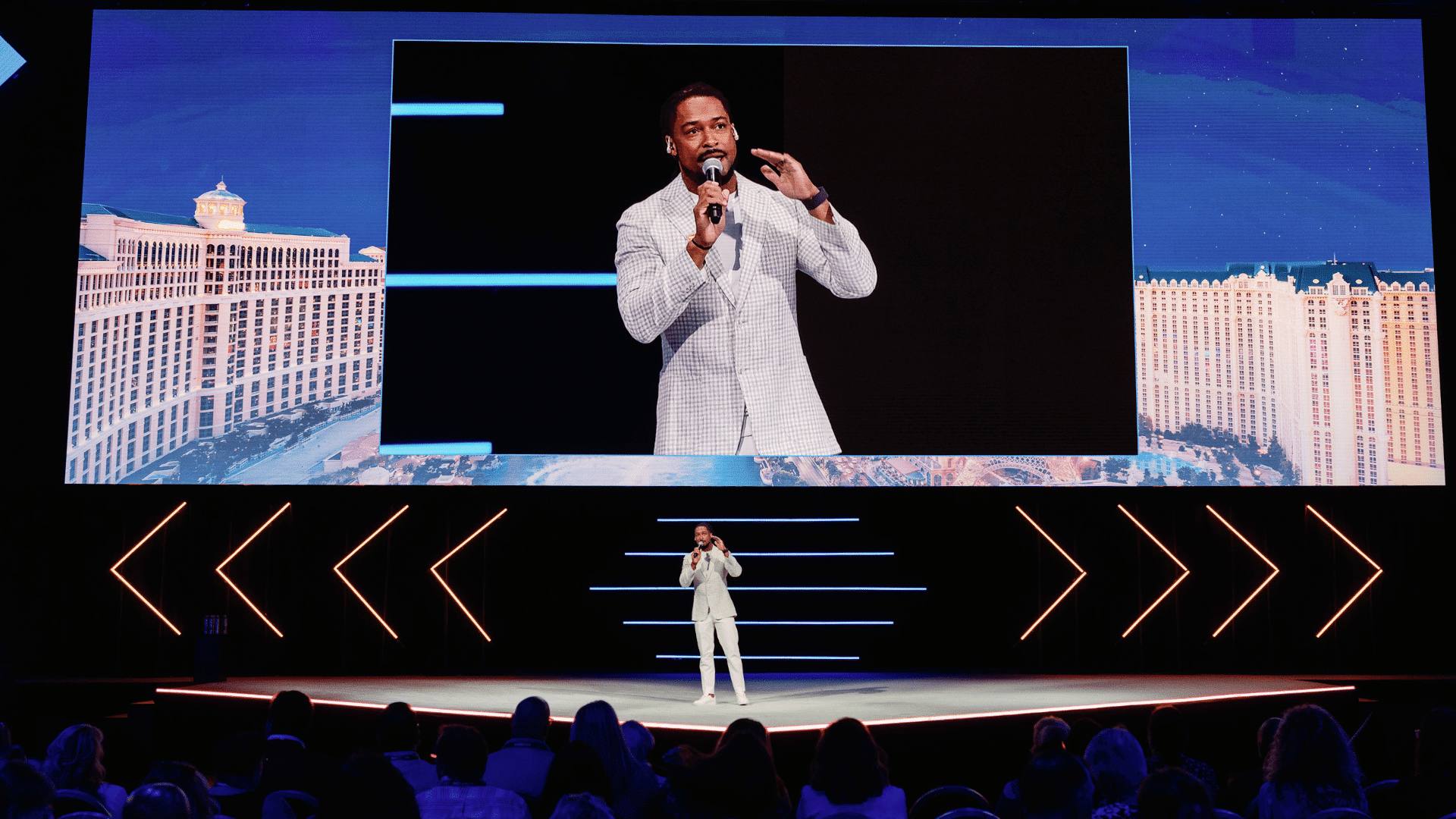
DJ Will Gill on stage demonstrating professional emcee presence. Contact him here to discuss your next event.
Key Takeaways
First impressions form in 100 milliseconds, per Princeton’s Willis & Todorov 2006 research published in Psychological Science. The outfit is the first signal the audience reads, well before the first spoken word.
Fit beats brand. A 306-participant case study found a bespoke-fit suit was rated significantly higher across confidence, success, salary, and flexibility than the same person in an off-the-peg suit. A $200 jacket tailored to the body outperforms a $1,000 jacket worn off the rack.
The microphone shapes the wardrobe. Lavalier mics need clip-friendly lapels or collars; mic packs need belts or pockets to hold them; handheld mics free up the wardrobe but require open hands. Plan the outfit around the audio.
Industry context matters more than personal taste. Financial services, healthcare, and law require dressier tiers than tech, creative, and event-industry clients. Match the dress code of the room, then add one step of polish.
Build a capsule: 2 jackets, 3 pants/skirts, 4-5 tops, 2 pairs of shoes, in neutral colors. That’s roughly 10-15 outfit combinations across the rotation for under $800 total when sourced from thrift, outlet, and rental.
1. Why Your Outfit Decides the First Three Seconds
Emcees who treat wardrobe as a personal preference question lose the room they will never recover. The audience is not consciously evaluating the outfit; they are subconsciously assigning trust and authority based on the first visual signal they receive. Psychological research on first impressions consistently finds these judgments form within seconds and are remarkably difficult to revise later.
This is the “primacy effect” working against an emcee in real time. Once the audience decides the host looks under-dressed or over-dressed for the room, they spend the next hour filtering every word through that initial judgment. A great introduction read by an under-dressed host lands at 60% of its potential effect. The same introduction read by a properly dressed host lands at 100%.
The American Psychological Association has documented that roughly 55% of a first impression is based on appearance, with voice and content making up the rest. The audience hears the words. They see the outfit before the words start. The math is what it is.
None of this means an emcee has to spend a fortune. It means an emcee has to make every dollar visible. Fit, fabric, color, condition. The audience reads those four things in any clothing budget tier. A well-tailored, well-pressed, well-chosen $200 outfit reads more credibly than a poorly-fitted, wrinkled, mismatched $1,500 outfit. This is the entire premise of dressing well on a budget.
2. The Corporate Emcee Dress Code Tiered by Industry
Corporate dress codes vary substantially by industry. The emcee’s wardrobe needs to read one step above the room’s dress code: enough polish to signal authority, not so much polish that the host looks more dressed than the executives they’re working for. Industry tiers, roughly.
Tier 1: Most formal. Financial services, legal, insurance, healthcare leadership, and government. Dress code expectation: full suit (men), tailored suit or sheath dress with blazer (women). Conservative colors (navy, charcoal, black, deep gray). White or light blue shirts. Pocket squares optional. Subtle accessories.
Tier 2: Business professional. Pharmaceutical, manufacturing, consulting, accounting, and real estate. Dress code expectation: suit or sport coat with dress pants (men), tailored separates with structured top (women). Slight color flexibility (medium blues, browns, lighter grays). Polished but slightly less rigid than Tier 1.
Tier 3: Business casual. Tech, software, e-commerce, media. Dress code expectation: blazer with dress pants or premium chinos (men), blazer with dress pants or refined separates (women). Colorful pocket square or scarf acceptable. Quality button-down or fine knit instead of a strict dress shirt.
Tier 4: Creative casual. Advertising, design, fashion, gaming, lifestyle brands. Dress code expectation: smart blazer with quality denim or dress pants, sneaker or loafer optional (men), creative blouses and tailored separates with personal style flair (women). The room expects personality, not a corporate uniform.
The rule of one step. Whatever the room is wearing, the emcee dresses one step above. If guests are in business casual, the host is in business professional. If guests are in business professional attire, the host is in conservative formal. This calibration keeps the emcee visually authoritative without making executives feel underdressed.
3. The Microphone Reality (Lavalier, Handheld, Mic Pack Placement)
Most non-emcees skip this entirely. It is the single biggest difference between professional and amateur stage wardrobe.
Lavalier (clip-on) microphones. Need something to clip to. A blazer lapel, a structured collar, a tie, a pocket flap. A pure pullover sweater or a t-shirt-and-blazer-only combination leaves the lav with nothing to grip. The mic pack also has to go somewhere: a belt, a back waistband, or an interior blazer pocket. Plan the outfit with the lav placement and mic pack location in mind. Audio teams will thank the host, and the audio quality will be measurably better.
Headset microphones. The hidden, beige-toned headsets are used in keynotes and large stage productions. Less wardrobe restriction overall, but mic pack placement still applies. Some audio teams attach the pack to a belt; others use a transmitter pack clipped to the inside of a jacket. Coordinate ahead of the show.
Handheld microphones. No wardrobe attachment issue, but the hand holding the mic is occupied for the entire program. Wardrobe needs to be comfortable for sustained one-handed gesturing. Tight cuffs, restrictive jackets, or anything that pulls at the shoulder during arm movement creates visible discomfort.
Wireless transmitter packs. The small box is clipped to the belt or waistband. Visible packs read as amateur if they stick out under a tight jacket. Pro tip: a slightly looser blazer with an interior pocket or a belt with a back-of-hip clip position hides the pack cleanly.
Pre-event microphone fit check. Always confirm with the AV team during sound check which microphone configuration is being used and where the transmitter will go. A 30-second conversation prevents wardrobe surprises mid-show.
4. The Stage Lighting and Camera Reality
Stage lighting and broadcast cameras do unflattering things to certain wardrobe choices. The pattern, color, and finish that look great in the green room can fall apart under stage wash or on a livestream camera.
Avoid moiré patterns. Tight herringbone, fine pinstripe, very small check, and houndstooth fabrics interact with broadcast cameras to produce the “moiré” wavy distortion effect. The shirt or jacket appears to shimmer or vibrate on screen. Save these patterns for non-broadcast gigs.
Avoid pure white on top. Bright stage lights bounce off pure white shirts and blow out exposure on cameras, creating a glowing patch where the host’s chest is. Substitute light blue, light gray, or off-white cream. The audience sees the same general “light shirt” effect; the camera sees a much more usable image.
Avoid pure black if there are dark backdrops. Black-on-black makes the host disappear into the backdrop. If the stage backdrop is a black drape or a dark logo wall, opt for a charcoal, navy, or deep blue jacket instead of straight black.
Avoid heavily saturated reds or oranges. Strong saturated colors can “bleed” on lower-quality cameras and look unnatural on screen. Deeper, more muted versions of the same colors (burgundy instead of bright red, rust instead of orange) render better.
Color psychology in corporate settings. Communication research consistently links navy and dark blue to trust, black to authority, and lighter tones to approachability. The conservative corporate emcee default is navy or charcoal; the more approachable variant is medium blue or warm gray.
The mirror test. Before stepping on stage, do a 30-second mirror check under bright lighting. The outfit should look intentional, polished, and clean from every angle. Anything that catches the eye in the mirror will catch the eye in the room.
5. Men’s Wardrobe Foundation: Mix-and-Match Tactics
A working corporate emcee can build a complete year-round wardrobe with two jackets, three pairs of pants, four dress shirts, and two pairs of shoes. That’s roughly 18 outfit combinations from 11 individual pieces.
The two jackets. One navy blazer. One charcoal or medium-gray jacket. Both should be unstructured or half-canvased (more comfortable for long programs) and tailored to the body. Avoid pure black unless the gig is specifically formal.
The three pairs of pants. Charcoal dress pants. Navy or medium blue dress pants. Quality khaki chinos (for business casual gigs). All three should be flat-front or modest-pleat, hemmed to the right break, and unironed-but-pressed quality.
The four shirts. Two crisp white dress shirts. One light blue dress shirt. One soft pattern (very subtle stripe or check) for variety. All should be no-iron or wrinkle-resistant if travel is involved.
The two pairs of shoes. Black Oxford or derby. Brown brogue or loafer. Both were polished to a clean finish.
The accessories. Two ties (one solid navy or burgundy, one subtle pattern). Two belts (black, brown) matched the shoes. One pocket square (white linen, used sparingly). A simple watch.
The tailor is the secret weapon. Off-the-rack jackets and pants get tailored. Sleeves shortened to show 1/4-inch of cuff. Pants hemmed for a single break or no break. Jacket sides taken in for a fitted (not tight) silhouette. A local tailor charges $30-80 per piece. Five tailoring sessions across the full capsule = $300 total investment that transforms a $400 wardrobe into a $1,200-looking one.
6. Women’s Wardrobe Foundation: Capsule Wardrobe Tactics
A women’s emcee capsule is structured around versatility and silhouette. Three or four core pieces that combine across program registers (daytime sessions, evening dinners, awards programs).
The tailored blazer. One black, one navy or camel. Both should be well-fitted at the shoulder (the hardest part to tailor) and clean across the torso. Worn over dresses, blouses, or knit tops, the blazer instantly elevates any base layer.
The sheath or shift dress. One in a deep solid color (navy, black, deep emerald, burgundy). Knee-length, simple cut, no distracting prints. Works on its own for daytime, with a blazer for more formal program segments. The corporate emcee’s quiet workhorse.
The classic trousers. One pair of well-fitting black trousers. Wide-leg or straight-leg, depending on body type. Pair with blouses or knit tops for an instant professional look.
Three to four blouses or knit tops. One crisp white silk or premium polyester blouse. One soft jewel-tone blouse (cobalt, ruby, emerald). One classic knit top in a neutral. The blouses do the seasonal heavy lifting.
Accessories. Statement necklaces or scarves to frame the face. Belts to define the waist on looser dresses. Avoid anything that clinks audibly when moving (microphones will pick up the sound).
The lavalier-clip consideration. Women’s emcee wardrobes often have fewer natural lavalier attachment points than men’s. A structured blazer, a collared blouse, or a dress with a visible neckline edge all give the audio team something to clip. A draped silk top or a turtleneck creates a clipping challenge. Plan accordingly or wear a blazer for any program segment that requires lav audio.
7. Thrift, Rental, and Outlet: Where the Real Budget Wins Live
The most cost-efficient corporate emcee wardrobes combine three sourcing strategies, each used for different categories of items.
Thrift stores and consignment shops. Best for jackets, dress shirts, and quality knits. People donate expensive, lightly-worn corporate clothing constantly. Premium wool blazers ($300+ retail) routinely sit on thrift racks for $15-30. Inspection checklist: shoulders fit cleanly (almost impossible to tailor), no fabric pilling, no stains, fabric tag shows wool or quality blends. Skip anything heavily synthetic.
Outlet malls and off-price retailers. Best for dress shirts, dress pants, basic knits, and trousers. Brands like Nordstrom Rack, Marshalls, T.J. Maxx, Saks Off 5th, Brooks Brothers Outlet, and Banana Republic Factory routinely offer 50-70% off full retail. Quality is full-line, not made-for-outlet seconds, if the planner shops carefully.
Rental services. Best for high-formality occasion wear that wouldn’t get used often enough to justify purchase. Rent the Runway (women), The Black Tux (men, formal), Stitch Fix Premium, and Armoire offer rental access to designer pieces for a fraction of retail. A $1,500 designer dress for a single black-tie awards program at $80-120 rental cost is the right math.
Online community markets. Best for jackets, dresses, and specialty pieces. Local Facebook Marketplace, Poshmark, eBay, and The RealReal carry significant inventories of gently-used corporate-grade clothing at 60-80% off retail. Inspection requires care, but the deals are real.
The blended strategy. A working corporate emcee might thrift the jackets, outlet the shirts and pants, rent the high-formality pieces, and complete the look with affordable accessories. Total annual wardrobe investment for an emcee doing 50+ corporate events: typically $500-1,500 spread across the year. A small fraction of what a single bespoke suit would cost.
8. Footwear: Comfort and Presence Across Long Events
Emcees stand on their feet for 3-8 hours per event, often on hardwood floors. Footwear is where comfort and presentation meet hardest. The audience will see the shoes from a raised stage; the wearer will feel the shoes for the entire program.
Men’s baseline. One pair of black Oxford or derby shoes. One pair of brown brogue or loafer. Both leather-soled is most polished; both rubber-soled is more comfortable for long events. The compromise: leather upper with a discreet rubber sole insert.
Women’s baseline. Black or nude low-heel pumps (under 2.5 inches). Professional flats as a comfort option. Cushioned insoles were inserted into both. Nude shoes have the visual effect of elongating the legs on stage, which photographs well.
The shine matters. A $40 pair of shoes polished to a clean finish looks measurably better than a $400 pair scuffed and dirty. A 10-minute polish before each event is standard maintenance. Polish, cloth, and a small brush are kept in the gear bag.
Heel and sole maintenance. Worn heels and damaged soles read as sloppy from the stage. A local cobbler can re-heel and re-sole shoes for $15-40 per pair. Significantly cheaper than buying new shoes.
The comfort investment. Custom orthotic insoles ($60-150) or premium aftermarket insoles ($20-40) extend the wearable hours of cheap shoes dramatically. The audience never sees the insole. The emcee feels it on hour 6 of a 7-hour gig.
9. The Grooming, Posture, and Final-Detail Layer
The best outfit in the world fails when grooming and posture undercut it. The final detail layer is where free improvements stack up into a meaningfully better stage presence.
Hair and grooming. Neat, recently-cut, and styled for stage visibility. A fresh shave or precisely-trimmed beard. Clean nails. Whatever fragrance is worn should be subtle (close stage proximity can amplify scent unpleasantly).
Steam or press every piece. Wrinkles read as low effort from the audience’s vantage point, regardless of fabric quality. A small portable fabric steamer ($30-60) in the gear bag handles touch-ups in the green room or hotel room. Steam beats ironing for travel.
Posture. Stand tall. Shoulders back. Chin level. Weight is evenly distributed across both feet. Good posture makes any outfit look better on the body and signals confidence to the room, regardless of what’s actually being worn. This is the single highest-leverage free improvement in stage presence.
The de-link check. Before walking on stage: cufflinks fastened, top shirt button correct, tie length appropriate (tip lands near belt buckle for men), no visible mic pack outline, no wardrobe malfunction risk, breath mint consumed. A 30-second pre-stage check catches the small problems that derail focus during the program.
The reset between segments. A bathroom check during any break confirms the outfit hasn’t shifted. Tie pulled to one side, jacket bunched at the shoulder, shirt untucked from gestures. All of these compounds over hours and need quiet resets.
10. The Working Emcee’s Travel Wardrobe
Most corporate emcees who get serious about the work eventually start traveling for gigs. Travel wardrobe is its own discipline.
Wrinkle-resistant fabrics. Modern technical wool blends and travel-specific lines (Ministry of Supply, Bonobos Riviera, Brooks Brothers’ wrinkle-resistant collections) survive 4-hour flights in a carry-on suit bag and emerge presentable. Pure cotton dress shirts wrinkle aggressively; wrinkle-resistant blends save the morning-of-gig steaming routine.
Garment bag carry-on. A folding garment bag that doubles as a carry-on lets the suit and dress shirts hang during the flight instead of being folded into a checked bag. Standard tools include the Travelpro Crew, the Briggs & Riley Baseline garment bag, and similar mid-tier rolling garment carry-ons.
The travel steamer. Compact, dual-voltage, water-tank-emptying-before-flight steamers (about $40-80) handle touch-ups in any hotel room.
The shoe backup. One pair of shoes in the carry-on, one pair worn. Lost luggage with a hard floor and dress shoes is the absolute worst-case morning-of-gig scenario. Two pairs solve it.
The emergency kit. A small zip pouch in the gear bag: spare collar stays, a black thread/needle, a stain remover pen (Tide To Go), spare cufflinks, a backup belt buckle, a folded pocket square, mints, and a small comb. Maybe 5 ounces of weight. Saves more than one event a year.
What planners say on Google
2,520+ five-star Google reviews. Four of them, in the reviewers’ own words:
ALWAYS a great time!!!
Patrice Ross, five-star Google review,
Very lively and enthusiastic.
breana perez, five-star Google review,
Loved the energy he brought to our zoom meeting and the prizes was super cool. Great job for hiring him BGCA
Grace Duran, five-star Google review,
BGCA Northeast Operation Impact kickoff was HIGH energy and motivational
Alisha Rojas Harrison, five-star Google review,

About the Author
William “DJ Will Gill” Gilbert has built his career around creating corporate events people actually remember. His work blends DJing, emceeing, and audience participation to keep the energy up and guests involved throughout the program. He has performed at more than 600 corporate events for organizations such as AT&T Business, CDW, Virgin Galactic, Home Depot, Hilton, PepsiCo, PayPal, and the United Nations. His work has been recognized by Forbes Next 1000 and The Wall Street Journal, and he has IMDb credits for Super Bowl LIV, the FIFA World Cup, the Formula 1 Las Vegas Grand Prix, The Voice, and Real World: Hollywood. Will is also the founder of TheAIDJ.com, a patent-pending AI playlist platform for music curators.
2,520+ Google Reviews · IMDB · Mixcloud · Instagram ·
Frequently Asked Questions
What should an emcee wear for a corporate event?
One notch above the audience. If the room is business casual, a tailored blazer works; black tie means black tie. The emcee should read as the most polished person on stage without upstaging the executives.
What are the best budget outfit picks for emcees?
A well-fitted dark blazer, versatile dress pants, and clean minimalist sneakers or dress shoes cover ninety percent of corporate stages. Fit beats price every time.
What colors work best on stage?
Solid mid-tones photograph and stream best. Avoid fine patterns that moire on camera, pure white that blows out under lights, and logos that fight the client’s branding.
Should an emcee match the event’s brand colors?
A subtle nod, like a pocket square or tie in the brand color, lands well. Head-to-toe brand cosplay does not.
What does Will Gill wear on stage?
Tailored jackets built for movement, because his 3-in-1 show is physical: DJ sets, emcee hosting, and team-building games in one performance.