
Miami Corporate Holiday Party Planning Guide (2026)
A Miami corporate holiday party is genuinely one of the hardest bookings on the U.S. corporate event calendar. Q4 Miami is the brutal intersection of every demand spike the city has: winter tourist season starts, Art Basel takes over the first week of December, every Fortune 500 with a South Florida office throws its holiday party in the same three-week window, and the city’s premium venues sell out 9-12 months in advance. By the time most planners look at dates in October, the playbook has already been written by whoever booked in May.
On top of the booking pressure, corporate holiday parties have become genuinely riskier from an HR and legal standpoint. Sexual harassment claims tied to holiday events, dram shop exposure from alcohol service, religious discrimination claims tied to Christmas-themed programming, and wage-and-hour exposure from mandatory attendance have all been documented in federal and state litigation. The party that delivers culture and recognition without creating downstream HR exposure is a craft, and the craft has gotten harder.
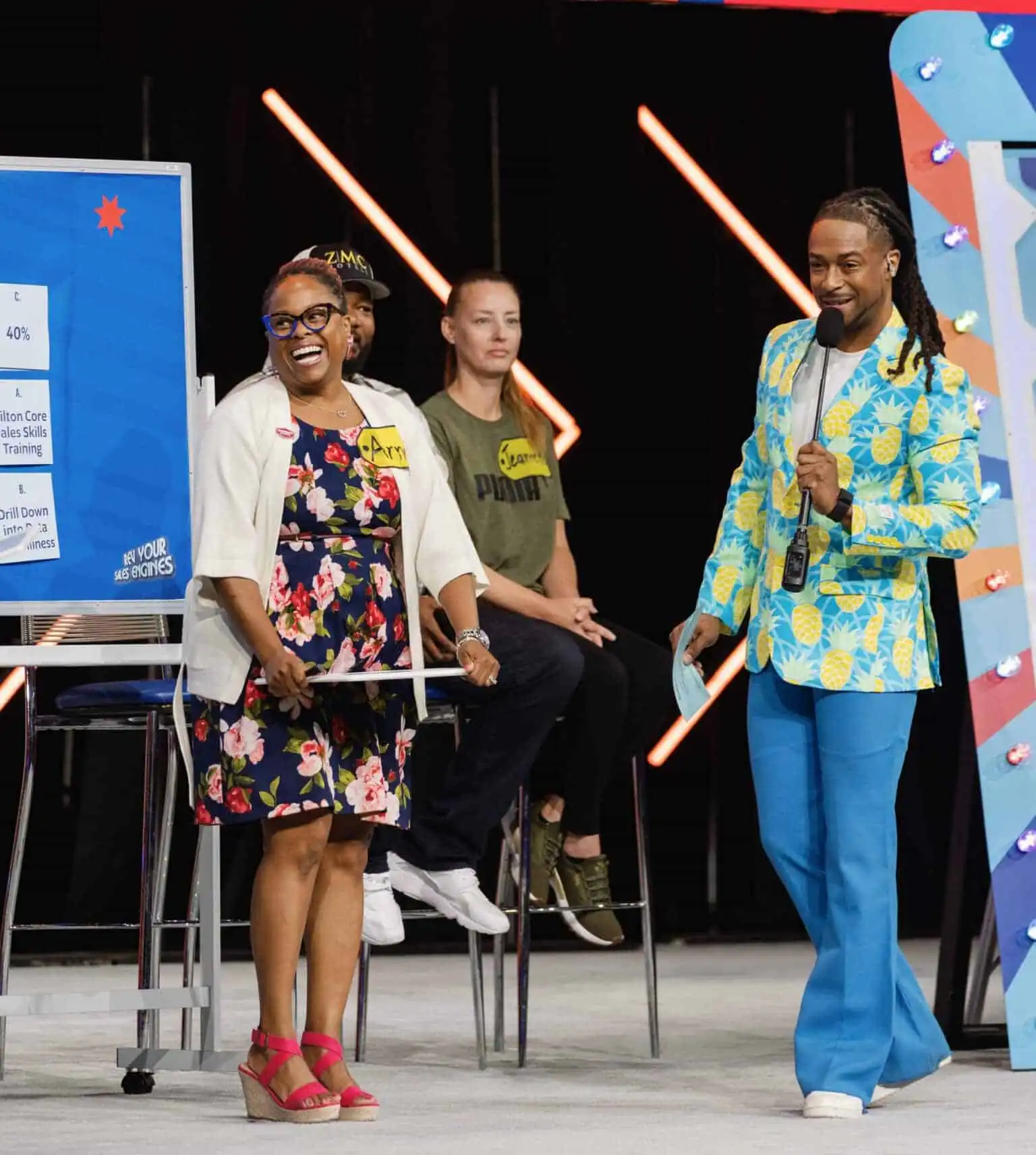
DJ Will Gill is working a Miami corporate holiday party. Contact him here to discuss your next event.
Key Takeaways
Q4 Miami is the hardest 8 weeks on the city’s annual calendar. Corporate holiday parties compete with Art Basel (December 4-6, 2026), the winter tourist season, and every Fortune 500 holiday party booked across the same three weeks. Book by September at the latest for a December event.
Florida has specific corporate holiday party legal exposure. Florida’s Dram Shop statute triggers liability for serving minors or habitually addicted persons, while federal Title VII and the EEOC have extended workplace harassment liability to off-site company social functions.
Multi-faith programming is the safer corporate posture. Title VII religious discrimination claims have been filed over Christmas-themed corporate parties that excluded employees of other faiths. Secular winter celebration framing reduces both legal risk and exclusion of staff.
Alcohol is the single biggest liability driver. Marsh McLennan’s holiday party risk guidance consistently recommends professional bartenders trained to identify intoxication, drink ticket systems, mandatory food service alongside alcohol, and pre-arranged transportation home.
Holiday music programming is its own discipline. Christmas-specific tracks should be a minor accent, not the through-line. Multi-generational dance music with light seasonal flavoring outperforms wall-to-wall holiday programming with corporate audiences.
1. The Q4 Miami Squeeze: Why Holiday Bookings Are the Hardest of the Year
Q4 in Miami is the tightest concentration of demand on the city’s entire annual calendar. Four overlapping forces push every venue, hotel, and vendor into peak constraint at the same time.
One. Winter tourist season starts in late November. Hotel rates climb sharply. By early December, mid-range Miami hotels sit at $250-450 nightly, a 40-100% premium over summer pricing.
Two. Art Basel takes over the first week of December. Hotel rates double or triple. Causeway traffic to Miami Beach stretches to 90 minutes each way. The Miami Beach Convention Center is closed to other events. Premium South Beach venues compete for the same calendar dates.
Three. Corporate holiday party season runs roughly December 8 through December 22. Every Fortune 500 office in South Florida, plus every regional team flying in from elsewhere, runs its end-of-year program inside the same 3-week window. Premium venues book out 9-12 months in advance.
Four. Year-end vendor capacity is at its tightest. Top-tier corporate DJs, emcees, caterers, AV firms, and production teams all face the same compressed schedule. Talent that’s available in February is fully booked by Halloween for December dates.
2. The September Lock: Why “Three Months Out” Is Already Late
Most generic holiday party advice says to start planning three months out. For Miami specifically, three months out is the absolute outer limit, and it leaves a lot of leverage on the table.
Optimal lock window: May through July for a December event. Premium venues (Fontainebleau, Faena Forum, Adrienne Arsht Center, Hard Rock Stadium event spaces, EDITION Miami Beach, Four Seasons Surfside) sell their best holiday dates this far in advance. Entertainment lead times on top corporate DJs and emcees are 6-9 months for December dates.
Acceptable lock window: September. Venue inventory has thinned but is still bookable. Some price negotiation is still possible. Top-tier entertainment may have limited December availability. Hotel room blocks at preferred rates require immediate decisions.
Late lock window: October-November. Venue choice is now constrained to whatever’s left. Pricing leverage is gone. Top-tier entertainment is largely unavailable, with replacements drawn from a smaller pool. The program comes in either over budget or under the original vision, frequently both.
Why this matters. The cost difference between a May lock and a November lock on the same December event in Miami can run $30,000-$80,000 for a 200-person program. Not because the event itself changed, but because every constraint tightened against the planner along the way.
3. The Art Basel Conflict (December 2-6, 2026)
Art Basel Miami Beach 2026 runs December 4-6 (public days) with VIP preview days December 2-3 at the Miami Beach Convention Center. For corporate holiday party planners, Art Basel week is either a hard avoid or a strategic embrace, depending on the program objective.
Avoid Art Basel week if: your program is a traditional corporate holiday party where logistics and predictability matter more than buzz. South Beach is operationally compromised: hotel rates 2-3x normal, causeway traffic up to 90 minutes each way, restaurant availability collapses, ground transportation strains under demand.
Lean into Art Basel week if: your program is positioned around culture, design, art collecting, or hospitality for VIP clients. Companies in luxury, financial services, real estate, fashion, and creative industries sometimes intentionally book Art Basel-adjacent events to leverage the city’s elevated cultural energy. This is a specialized play.
The smart default: book the holiday party for the second or third week of December (the weeks of December 8-12 or December 15-19), keep the venue on the mainland (Brickell, downtown, the Design District) to avoid causeway impact even if Art Basel week ends earlier than expected, and let the cultural week happen separately from the corporate program.
4. Choosing a Venue for the Holiday Window
Holiday parties have their own venue profile. The factors that matter differ from a sales kickoff or a leadership summit.
Indoor with a backup outdoor option. December in Miami is generally beautiful, but cold fronts and rain are real. An indoor venue with an outdoor terrace or patio (Fontainebleau, EDITION, Faena Forum, Pérez Art Museum Miami, Rubell Museum) gives the program a fallback if the weather turns.
In-house catering and bar. Holiday parties get more complex when catering and beverage service are split across multiple vendors. Hotels and convention venues with integrated F&B reduce coordination overhead during a peak season when everyone is already stretched.
Walkable hotel proximity. Attendees flying in for a holiday party are often already tired from year-end deadlines. A venue within walking distance of the hotel block (or with contracted shuttle service) removes the rideshare scramble at midnight when nobody wants to wait.
Indoor 2:00 AM curfew, outdoor 10:30 PM curfew. The same Miami Beach Sound Ordinance rules that apply to every other event apply here. For indoor holiday parties at most venues, programming can run until midnight or 1:00 AM. For outdoor segments on Miami Beach, the music wraps at 10:30 PM regardless of the program’s plan.
The companion piece: the top 10 Miami corporate event venues guide covers capacity, acoustics, and AV details across the city’s leading venues. Use it alongside this guide for holiday-specific venue shortlisting.
5. Florida Dram Shop Law and Corporate Holiday Party Liability
Corporate holiday parties carry real legal exposure, especially when alcohol is involved. Three categories of liability matter most.
Florida Dram Shop liability. Florida’s Dram Shop statute generally shields hosts and vendors from liability for serving alcohol to adults, but creates exposure if alcohol is served to a minor or to a person known to be habitually addicted to alcohol. Even when the Dram Shop statute doesn’t apply, employers face indirect exposure via negligent planning or supervision: failing to arrange transportation, ignoring obvious impairment, or providing unlimited alcohol without food.
Federal harassment liability. Title VII of the Civil Rights Act extends to off-site company social events. The EEOC has sued employers for sexual harassment tied to holiday parties, including one widely-cited case where a manager was alleged to have sexually assaulted a direct report in a hotel room after the company party. The Seventh Circuit Court of Appeals once noted office Christmas parties to be “fertile ground for unwanted sexual overtures that lead to Title VII complaints.”
Religious discrimination liability. Title VII prohibits religion-based employment discrimination. A holiday party with a specifically religious theme can create grounds for an employee to object on religious grounds or feel excluded if their faith tradition isn’t represented.
Practical mitigation. Make attendance voluntary and communicate that clearly in advance. Brief managers on their continuing duty to model conduct and intervene in inappropriate behavior. Confirm the venue carries appropriate general liability insurance and requires certificates of insurance from caterers and vendors. Marsh McLennan also recommends EPLI (Employment Practices Liability Insurance) coverage and event-specific liquor liability coverage for added protection.
A specialist corporate emcee and DJ (versus a wedding or club DJ) typically understands these liability dynamics and programs accordingly. Will Gill, the highest-rated corporate event DJ in Miami, screens song selection for HR-safe content and structures the program to keep the room celebratory without crossing into territory that creates downstream exposure.
6. The Multi-Faith, HR-Safe Holiday Party
A modern corporate holiday party in Miami serves a workforce that includes Christmas, Hanukkah, Kwanzaa, Diwali, Eid, secular, and non-observing employees. The party that explicitly centers one religious tradition leaves the others out and creates Title VII risk while diminishing actual cultural value.
The framing shift. “Annual Holiday Celebration” or “Year-End Celebration” reads as inclusive. “Company Christmas Party” reads as exclusionary. The framing matters in invitations, signage, internal communications, and the host’s spoken language during the program.
Secular decor. Snowflakes, lights, evergreen accents, winter palette, modern minimalist staging all read as a winter celebration without explicit religious affiliation. Courts have generally ruled that Santa Claus and Christmas trees are secular in nature, but a Nativity scene or explicit Hanukkah menorah is religiously specific.
Multi-faith acknowledgment. A brief, thoughtful acknowledgment from the host during opening remarks (“We’re celebrating the end of an incredible year with the whole team, and we know our team observes many different traditions this season, all of which we honor”) signals inclusion without burdening the program with religious content.
No mistletoe. Multiple HR and employment law sources are unanimous on this: mistletoe at corporate holiday parties is a documented harassment-claim trigger. Skip it entirely.
7. Alcohol Strategy: Open Bar vs Drink Tickets vs Mocktail-Forward
Alcohol is the single largest contributor to corporate holiday party liability exposure. The bar program design choices directly affect both legal exposure and the actual quality of the event.
Open bar (unlimited). Highest risk profile. Easiest for guests to over-serve. Best practice today is to pair an open bar with: professional bartenders trained to refuse over-served guests, mandatory food service throughout, and a hard close time well before the venue curfew.
Drink ticket system (2-4 tickets per guest). The middle path. Allows celebration without unlimited consumption. Drink tickets get distributed at check-in, with additional drinks available for cash purchase after the tickets run out. HR risk advisors consistently recommend this structure as the cleanest balance between celebration and exposure control.
Mocktail-forward / lower-alcohol approach. An emerging corporate trend driven by Gen Z’s lower alcohol consumption, broader sober-curious cultural shift, and HR risk mitigation. Premium non-alcoholic beverages (alcohol-free cocktails, hop water, kombucha, premium sparkling) take equal billing with the bar program. Reduces alcohol consumption naturally without making sober attendees feel singled out.
Dry corporate holiday party. The most conservative option. Some HR-forward companies have moved to alcohol-free holiday programs, replacing the bar program with experiential entertainment (team-building host, activations, food experiences). Reduces legal exposure to nearly zero. The execution risk is making sure the party still feels celebratory.
Transportation home. Regardless of bar strategy, pre-arranged transportation home (contracted shuttle, employer-reimbursed rideshare, hotel block proximity) removes the post-event driving risk. Marsh McLennan flags this as standard risk mitigation practice.
8. Holiday Music Programming Without the Religious Pitfalls
Holiday music is its own programming discipline. Too much and the program reads as one-note. Too little and the seasonal flavor is missing. The corporate-safe ratio sits closer to 15% holiday content and 85% multi-generational dance music than to the wall-to-wall holiday programming that some non-corporate DJs default to.
Where holiday songs belong. Walk-in/cocktail hour (instrumental holiday standards as background ambient). Sprinkled across the dinner segment (one holiday-flavored track every 4-5 songs). A 3-4 song mini-set right before the peak dance segment as a transitional moment. Light reference in the closing wind-down.
What to avoid. Wall-to-wall Christmas during peak dance hours. Specifically religious tracks (“O Holy Night,” “Silent Night,” “Hark! The Herald Angels Sing”) that center on one tradition. Novelty Christmas tracks that wear out fast (“Grandma Got Run Over by a Reindeer,” etc).
What works. Secular winter standards in modern arrangements (Stevie Wonder’s “Someday at Christmas,” Donny Hathaway’s “This Christmas,” Mariah Carey’s “All I Want for Christmas Is You” as a single peak moment, Wham!’s “Last Christmas”). Soulful and R&B holiday catalog tends to age more gracefully across age groups than pop holiday tracks.
Multi-generational dance core. The peak of the holiday party shouldn’t be Christmas music. It should be the same kind of multi-generational corporate dance programming that works any other time of year: era-rotated pop, soul, R&B, and current hits at 118-128 BPM. The holiday flavoring lives at the edges.
HR-safe lyrics. Standard corporate audio screening applies. Clean radio edits. No explicit content. No tracks tied to controversial artists or current political moments. A specialist corporate DJ has already done this screening; a generalist DJ may not have.
9. Team Activations That Actually Work (and the Ones That Don’t)
Most corporate holiday parties try to layer in team-building or activation elements. Some work. Many don’t. The ones that work share three features: high participation potential, low awkwardness floor, and natural alignment with celebration mood.
What works. An interactive team-building segments activation (Will Gill’s signature corporate game show format with custom-branded questions about the company and the year). A live awards ceremony with personalized walk-up music for each recognition. A photo booth or branded photo activation. A custom company-themed playlist contest where employees vote on the next song. A casino night with play money and a donate-to-charity prize structure.
What doesn’t. Mandatory team-building exercises during what employees expected to be a celebration. Karaoke is a primary activity (only some employees enjoy it; the rest are stuck watching). Trivia that puts employees on the spot individually. Anything that requires standing in line for 30 minutes for a 90-second experience.
The recognition strategy. Year-end recognition delivered during the holiday party lands with significantly more weight than the same recognition delivered in a weekday all-hands. Walk-ups, lighting moments, brief CEO words for each award winner, and a thoughtful photo from the night sent the next day all multiply the cultural value of the program.
The interactive entertainment angle. Will Gill’s 3-in-1 corporate package (DJ + emcee + audience engagement games or audience engagement) is specifically designed for events where the program needs to entertain a multi-generational corporate audience without relying on alcohol as the primary engagement driver. Holiday parties are one of the strongest fits for this format.
The post-party touchpoint. A photo recap email the morning after, a brief CEO thank-you note to all attendees, and a quiet acknowledgment of the team’s year-end effort all extend the cultural value of the event past the 4 hours it actually took.
10. The Three Mistakes Miami Corporate Holiday Planners Make
After running corporate events across Miami for years, three mistakes show up over and over. All three are avoidable with the planning sequence above.
One. Booking inside Art Basel week without realizing it. Some planners look at the calendar and see “early December = good weather, fits the holiday season” without cross-referencing Art Basel dates. The result is a holiday party fighting for hotel rooms, ground transportation, and venue staff against the global art world. Always cross-check December dates against the Art Basel schedule.
Two. Treating the holiday party as a December decision. The vendors who deliver standout corporate holiday parties book out in May, June, and July. The planner who starts in September gets second-tier vendor availability and pays more for it. Pre-block venue and entertainment well before the holiday season begins to feel real.
Three. Underestimating the HR exposure. A holiday party is legally treated as an extension of the workplace. Alcohol, religious framing, mandatory attendance, post-party transportation, and supervisor conduct all carry real liability implications. A specialist corporate DJ and emcee who understands these dynamics is part of the risk-mitigation infrastructure, not just an entertainment line item. The cost difference between a specialist and a generalist is small. The downside difference is not.
Miami Holiday Party Questions, Answered
When should you book a Miami holiday party venue?
August and September for December dates. By mid-October the strongest Miami venues and entertainment are gone for the first two weekends of December.
What are the best corporate holiday party ideas in Miami?
Rooftop cocktail receptions in Brickell, resort buyouts on Miami Beach, and awards-night formats that mix recognition with dancing. The strongest parties pair one signature moment, like a live awards run or an interactive team game, with a dance floor finish.
How do you keep a mixed-generation team engaged at a holiday party?
Program for participation, not just spectacle. Interactive music games, live song requests, and a DJ-emcee who reads the room keep interns and executives on the same dance floor. That is the heart of Will’s morale-boosting one-man team-building show.
Should a Miami holiday party have a DJ or a live band?
A band brings visual spectacle at a higher price point, with set breaks. A DJ covers every genre and generation without pausing and doubles as your emcee. Many Miami companies split the difference: a DJ all night with one featured live moment.
Which December dates book fastest in Miami?
The first two Fridays and Thursdays of December go first, then the second Saturday. If your date is flexible, an early-December Thursday buys better venue availability and rates than any Friday.

About the Author
William “DJ Will Gill” Gilbert is a corporate DJ and host who brings energy, music, and genuine audience involvement to every event. He does more than play a great set. He helps create moments that get people participating, connecting, and enjoying the experience together. Will has performed at more than 600 corporate events for clients including AT&T Business, CDW, Team USA, Virgin Galactic, Home Depot, Hilton, PepsiCo, PayPal, and the United Nations. His work has been recognized by Forbes Next 1000 and The Wall Street Journal, and he has IMDb credits for Super Bowl LIV, the FIFA World Cup, the Formula 1 Las Vegas Grand Prix, The Voice, and Real World: Hollywood. When he is not performing, Will is working on TheAIDJ.com, a patent-pending AI playlist platform built for today’s music curators.
2,520+ Google Reviews · IMDB · Mixcloud · Instagram ·