
Does Your Live Event Host Understand Musical Flow? (2026 Hiring Guide)
A six-hour corporate event feels like four hours when the musical flow is working. The same six-hour event feels like nine when it isn’t. That subjective time compression is not aesthetic. It is a measurable cognitive state. Audiences slip into something close to a Csikszentmihalyi flow state when the music underneath an event maintains an unbroken energy curve, the transitions disappear, and the room loses track of how long it has been sitting in chairs. Break that flow with one wrong song, a dead-air transition, or a jarring tempo jump, and the audience snaps back into clock-watching mode and stays there.
Musical flow is the host’s most invisible craft. Nobody compliments a host for transitions that worked. They complain about transitions that didn’t. The win is the absence of a complaint, plus the audience’s vague feeling that the event was “really well run.” That feeling has a scientific basis, and the hosts who understand it deliver dramatically different events than the ones who don’t. This is what to look for.
DJ Will Gill is maintaining the energy at a corporate event. Contact him here to discuss your next event.
Key Takeaways
Musical flow is the audience’s subjective experience of unbroken energy across an event. Csikszentmihalyi’s flow research describes this state as full engagement, distortion of time perception, and loss of self-consciousness, applied directly to music in a 2015 Frontiers in Psychology systematic review.
Science has a neurological mechanism. Flow states involve transient hypofrontality: temporary reduction of activity in the prefrontal cortex, the brain region responsible for time tracking and self-monitoring. When the audience’s prefrontal cortex quiets down, the event feels shorter.
Three things break flow: dead air, mismatched energy, and jarring tempo jumps. A host with strong flow instincts engineers around all three, every time.
Continuity beats catalog. A small library of correctly programmed tracks creates better flow than an enormous library played randomly. The host’s value sits in the choreography between songs, not the count of them.
When the run of show breaks (and it always does), the host with musical flow expertise extends, compresses, and bridges using music. That recovery layer is the difference between a planner-saved event and a planner-blamed event.
1. What Musical Flow Actually Means
Musical flow is not the same as “good music.” A great playlist played on shuffle still produces no flow. Musical flow is the engineered continuity of energy across an event: the sense, for the audience, that one moment is leading into the next, that time is moving forward without seams, and that the room as a whole has a single emotional pulse rather than a series of disconnected segments.
The concept maps directly onto Mihaly Csikszentmihalyi’s flow theory, originally developed in the 1970s and applied across music research since. A 2015 Frontiers in Psychology systematic review on music and flow describes the state as “full engagement, control, concentration and action awareness, occurring during an activity perceived as highly self-rewarding and characterized by clear goals, unambiguous feedback, distortion of time perception, loss of self-consciousness.” Most of that translates directly into an event audience: engaged, focused, losing track of time, and no longer self-monitoring.
Musical flow is the host’s tool for inducing that state in a corporate room. Not for one person. For the whole audience at the same time. That is the actual craft.
2. The Science of Time Distortion
There is a neurological reason flow feels like time speeding up. The brain mechanism is called transient hypofrontality. When a person enters flow, activity in the prefrontal cortex temporarily decreases. The prefrontal cortex is the brain region responsible for self-monitoring, analytical judgment, and the mental clock that tracks how long you have been doing something. When that region quiets, the audience’s sense of time blurs. The clock-watching stops. The “when does this end” thought never arrives.
The Limb and Braun 2008 NIH fMRI study, often cited in flow research, documented this in jazz musicians during improvisation: the dorsolateral prefrontal cortex showed decreased activity, while the medial prefrontal cortex showed increased activity. Self-monitoring went down, self-expression went up. The same pattern shows up across athletes, surgeons, and writers in flow states. The mechanism is real.
Translated into event terms: when the music underneath an event maintains a continuous, properly programmed flow, the audience’s prefrontal cortex stays partially down-regulated. They are absorbed in the moment rather than tracking how long they have been in the room. When the music breaks flow (dead air, a wrong song, a jarring tempo shift), the prefrontal cortex spikes back up. Self-monitoring returns. The audience suddenly notices the chair they are sitting in, the agenda they are 4 hours into, and the next obligation on their calendar.
That is the moment the planner loses the room. And it almost always traces back to a musical flow failure.
3. The Three Things That Break Flow
A host with weak musical flow understanding makes three specific mistakes. Each one breaks the audience out of flow state and forces the room to consciously re-engage from a lower energy baseline.
One. Dead air. Three seconds of silence between a segment’s end and the next musical cue feels like an eternity. The audience’s prefrontal cortex spikes immediately. They look up, check their phones, and lean toward their neighbor. The room is now consciously between moments instead of inside the flow.
Two. Mismatched energy. A slow ballad after a high-energy keynote. A 128 BPM dance track during a serious recognition moment. The energy of the music has to match the emotional register of the segment it is sitting under. A mismatch reads as a glitch even if the audience cannot articulate why.
Three. Jarring tempo jumps. Moving from 90 BPM dinner music straight into 128 BPM dance music with no bridge song is a tempo shock that the room cannot absorb cleanly. Research places spontaneous motor tempo at 120 BPM, and the body resists sudden BPM jumps because it has to recalibrate its own internal rhythm. A bridge song at 110-115 BPM smooths the transition. Skipping that bridge breaks the flow.
4. Continuity Over Catalog: The Host’s Real Job
A host with a massive music library and no flow discipline produces worse events than a host with a small library and a strong sense of continuity. The catalog is not the asset. The choreography is.
A flow-literate host treats each segment of the event as the bridge to the next segment, not as a self-contained moment. The walk-in music does not exist for its own sake. It exists to deposit the audience at the right energy level for the opening remarks. The opening remarks do not exist for their own sake. They exist to ramp the audience into the keynote’s emotional register. The keynote is not an isolated moment. It hands off to whatever comes next, and the handoff is the host’s responsibility.
This is the difference between a host who plays a great song after the keynote and a host who plays the specific song that bridges the keynote’s energy into the next speaker’s register. Both songs might be good. Only one of them protects flow.
An audience cannot tell you why an event felt cohesive. They can tell you, after the fact, that it did. That feeling is almost entirely the result of continuity work the host did at the seams between segments.
5. Beat-Matching, Verbal Bridges, and Volume Ducking
The technical layer underneath musical flow has three components that most non-DJ hosts underestimate.
Beat-matching. Aligning the BPM of two consecutive tracks so the transition lands on the beat. A skilled DJ or DJ-trained emcee uses software-assisted beat-matching (Pioneer rekordbox, Serato, Mixxx, Ableton) to create a seamless audio handoff. A flow-aware host who doesn’t beat-match still respects BPM proximity: never jumping more than 8-10 BPM between consecutive tracks without a bridge.
Verbal bridges. The host’s spoken work between segments. “Sarah’s data on Q3 lines up with the customer perspective Mark is about to share” is a verbal bridge that links two segments under a single narrative arc. A host who introduces each new speaker as a fresh start fragments the audience’s flow. A host who explicitly threads the segments together protects them.
Volume ducking. Music level lowers automatically when the host mic activates, then restores when the mic mutes. vFairs’ 2026 research found 70% of attendees say audio clarity matters more than video quality. A host whose music fights their voice instead of supporting it loses the room’s attention immediately.
None of these three techniques requires the audience to consciously notice them. All three protect flow when they are done well, and break flow visibly when they are not.
6. Pacing Recovery: When the Run of Show Breaks
Every corporate event has a moment where the plan fails. A speaker runs for 12 minutes. The next speaker is stuck in traffic. A video file won’t load. The catering is late. The agenda jumps. Industry budget research from Qondor documents that 65% of event planners experience budget overruns averaging 20%, much of it driven by exactly these late-stage schedule disruptions.
The host who understands musical flow has the tools to absorb these breaks invisibly. When a speaker is late, the host extends the previous musical segment with a programmed bridge track, riffs briefly on a related topic, and rolls into the late speaker’s walk-up as if it were scheduled. The audience never feels the gap. When a speaker runs long, the host compresses the planned music between segments, loses a transition altogether, and moves the program forward without giving the room time to notice the squeeze.
When something fails entirely, the safety folder kicks in. A pre-prepared set of generic upbeat instrumental tracks at 100-120 BPM, ready on a hotkey, gives the host a 30-90 second cushion while production solves the underlying problem. The audience hears music, not panic. 88% of attendees expect a flawless technical experience, and the gap between “flawless” and “well-recovered” is musical flow work, executed live, by a host who has done this before.
7. The Multi-Generational Flow Problem
Musical flow gets harder, not easier, in a multi-generational room. The World Economic Forum has noted that five generations are now working side by side, with Millennials at about 35% of the U.S. workforce, Gen X around 33%, Boomers about 25%, and Gen Z about 5%.
An audience that wide does not share a single nostalgia anchor or genre preference. A flow-literate host programs era-rotated sets that move across decades while keeping BPM and energy continuous. A late-80s funk track at 110 BPM into a 2000s pop track at 116 BPM, into a current pop track at 120 BPM, hits recognition points across three demographic generations without breaking the tempo curve. The room moves together even though no two attendees are responding to the same song for the same reason.
A host who sticks to one decade loses two-thirds of the room. A host who jumps decades randomly breaks the flow. The skill is rotation with continuity, and it is rare.
8. Emotional Resonance: Music as Memory Trigger
Music’s role in flow is not only about energy management. It is also a memory mechanism. A 2022 narrative review by Sedikides, Leunissen and Wildschut on music-evoked nostalgia found that nostalgic music consistently enhances social connectedness, perceived meaning, and self-esteem. A 2025 Scientific Reports study found nostalgic songs tied to personal experience produce stronger autobiographical memory and well-being effects than other music.
The flow-aware host weaponizes this. A 90s R&B track behind an awards segment pulls the Gen X attendees into autobiographical memory. A 70s Motown track behind a recognition moment pulls the Boomer attendees in. A 2010s pop track behind a closing montage pulls the Millennials and Gen Z in. The host is not just playing music. They are triggering a specific cognitive-emotional state in a specific demographic at a specific moment in the program.
Industry event research consistently finds attendees recall entertainment first 73% of the time six months after a corporate event, ahead of the keynote, food, and venue. That recall is almost entirely a function of emotional resonance work done by the host’s music choices, which is to say, a function of musical flow.
9. How to Test a Host for Flow Understanding
Three interview questions that separate a flow-literate host from a generalist with a Spotify playlist.
One. “How do you use music to transition between two segments at very different energy levels?” A novice will name songs. An expert will talk about BPM curves, bridge tracks, fade behavior, and volume ducking. The vocabulary itself tells you whether they have done this work.
Two. “The CEO walks to the stage, trips slightly, and the room goes quiet. What music are you playing right now?” A flow-aware host will name a specific stinger, light instrumental track, or quick-reset moment, and explain why. A weak host will improvise an answer that reveals they have never been in that moment before.
Three. “How do you build a playlist for an event with attendees from age 25 to 65?” A flow-literate host will describe era rotation, BPM continuity, and recognition anchors across generations. A weak host will say “a mix of everything” without specifying how the mix sequences together.
The pattern across all three questions is the same. A flow-literate host has a vocabulary, a process, and a set of specific tactical answers. A host who has only done weddings, club nights, or short corporate gigs will not have those.
10. The Verdict: The Audience Never Says “I Loved the Transitions”
The frustrating reality of musical flow is that doing it well is invisible. The audience will not compliment a host on smooth transitions. They will not mention the BPM curve. They will not say “the music underneath the awards segment was perfectly programmed.” They will say the event “felt great,” “moved fast,” or “really came together.”
That collective feeling is almost entirely a flow function. When the host is doing the job well, time compresses for the audience, energy stays continuous, the seams between segments disappear, and the room leaves with a sense of cohesion they cannot articulate but can feel. When the host is doing it poorly, the audience will not say “the transitions broke the flow.” They will say “it felt long,” or “it dragged,” or “we lost the room after lunch.” Those phrases describe a flow failure every time.
Hiring a host who understands musical flow is, therefore, a stealth investment. The planner is buying the *absence* of complaints, the *presence* of cohesion, and the cognitive state research describes as transient hypofrontality across the audience for the duration of the event. None of that fits on a marketing deck. All of it determines whether the event delivers what it was funded to deliver.
Before you sign with a host, ask the three flow questions in section 9. The answers will tell you immediately whether you are hiring a curator or a button-pusher. In 2026, that distinction is everything.
About the Author
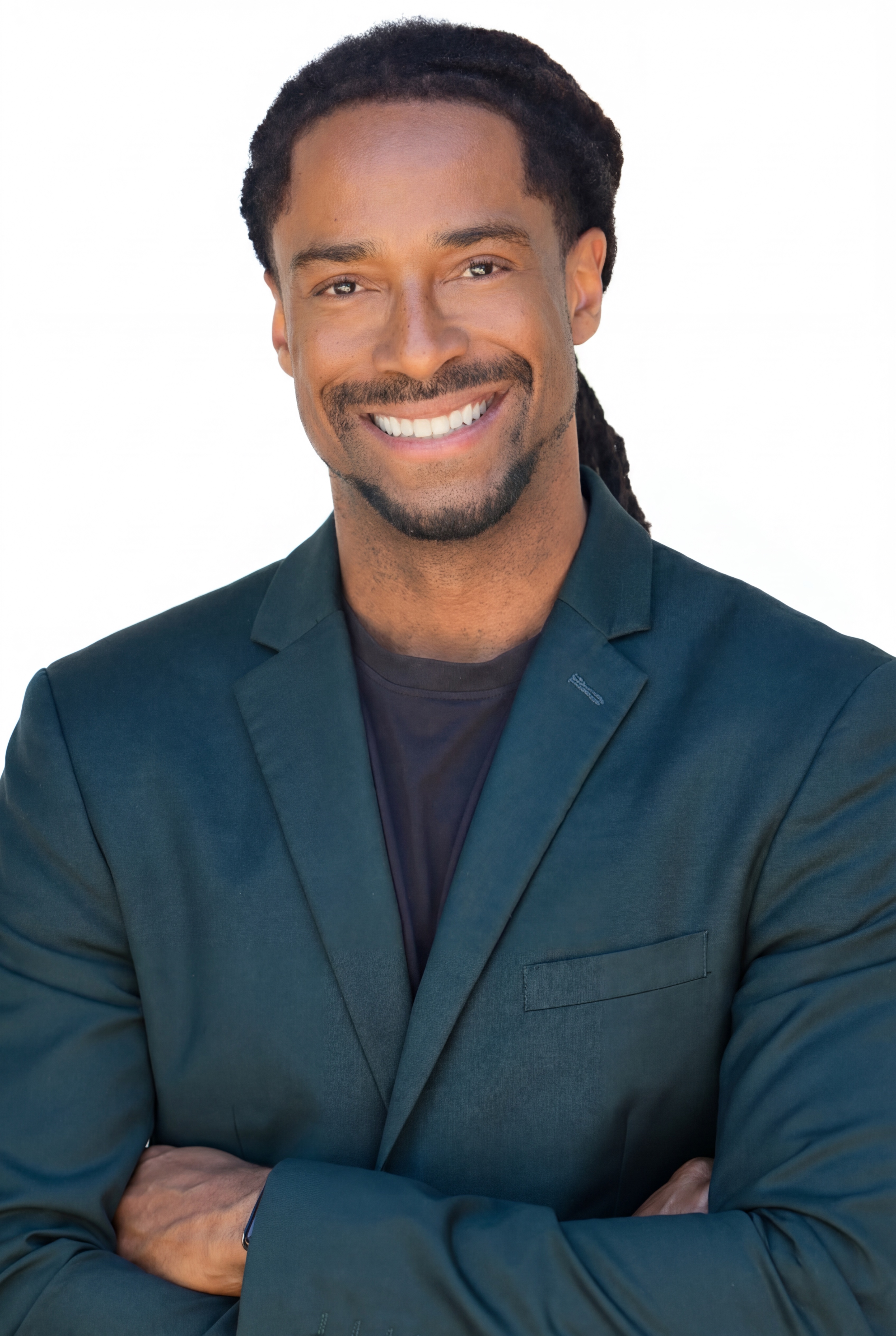
William “DJ Will Gill” Gilbert helps corporate events feel less like a standard program and more like a shared experience. Through DJing, live hosting, and audience participation, he creates an atmosphere that keeps guests engaged throughout the event. He has appeared at more than 600 corporate events, working with organizations such as AT&T Business, CDW, Team USA, Virgin Galactic, Home Depot, Hilton, PepsiCo, PayPal, and the United Nations. His work has been recognized by Forbes Next 1000 and The Wall Street Journal, and he has IMDb credits for Super Bowl LIV, The Voice, and Real World: Hollywood. Will is also the founder of TheAIDJ.com, a patent-pending AI playlist platform built for today’s music curators.
2,520+ Google Reviews · IMDB · Mixcloud · Instagram ·