
Curation Skills Every Corporate Event Host Should Have (2026 Guide)
Curation is the most misunderstood skill in corporate hosting. Most people think it means “picking good stuff.” That is selection, not curation. Curation is the editorial discipline of choosing what stays in and what gets cut, what gets emphasized and what gets compressed, what gets a spotlight and what fades into the background, all in service of an outcome the host has the responsibility to protect. A great corporate host is not the person who adds the most. They are the person who removes the most while keeping the room engaged.
The reason this matters more in 2026 than it did even three years ago is that the audience the host is fighting for has the most fractured attention in the history of working professionals. A 2026 Harvard Business School Organizational Behavior Unit study of 19,400 meeting participants across 340 organizations found average passive listening attention has dropped to 6.8 minutes, with engagement scores falling 41% after the 5-minute mark in virtual settings. Microsoft’s 2025 Work Trend Index documented an average of 275 interruptions per workday and a context switch every two minutes during core work hours. The room walking into a corporate event is exhausted, fragmented, and primed to drift. The host’s job is to engineer focus into that room, and curation is the entire toolkit.
DJ Will Gill clips at a corporate event. Contact him here to discuss your next event.
Key Takeaways
Curation is editorial restraint. The job is not adding more content. It is choosing what to cut, what to emphasize, and what to filter out so the audience can actually hold what matters.
The attention math is brutal. Harvard Business School 2026 research places average passive listening attention at 6.8 minutes, with engagement falling 41% after 5 minutes in virtual meetings. The room cannot absorb everything; the curator decides what gets through.
Hosts curate on three surfaces simultaneously: music (era and energy programming for a multi-generational room), agenda (transitions, pacing, segment compression), and engagement (which interactive tool, when, and why).
Most engagement tools fail because they were chosen for novelty, not fit. A skilled host treats polls, Q&A, breakouts, gamification, and live activations as a toolbox and picks each one against a specific moment in the run of show.
Live filtering is where curation becomes craft. Long-winded questions, off-topic comments, rambling panelists, and dead air all need a curator’s hand in real time. The skill is invisible when done well and obvious when missing.
1. Curation Is Editorial Restraint, Not Content Addition
A museum curator does not display every painting in storage. A magazine editor does not publish every submitted piece. A great corporate event host does not include every possible song, every possible activation, or every possible audience-engagement tool. They choose. They cut. They protect the audience from getting overwhelmed by a program that does not respect attention as a finite resource.
The default failure mode of corporate events is doing too much. Too many speakers. Too many slides per speaker. Too many breakout options. Too many polls. Too many segues. The audience leaves with the vague sense that the day was busy and the specific inability to remember what it was actually about.
A curator’s mindset solves this by treating attention like a budget. The room only has so much. Spending it on five mediocre activations is worse than spending it on two great ones. Spending it on twenty average music tracks is worse than spending it on ten carefully chosen ones. The host’s job is to be the person in the room whose default answer is “we don’t need that” while still keeping the room moving forward.
2. The Attention Math the Host Has to Beat
The audience walking into a 2026 corporate event is already pre-fatigued. Microsoft’s 2025 Work Trend Index, drawn from analysis of 31,000 knowledge workers across 31 markets, documented an average of 117 emails and 153 Teams messages per day, with employees facing a ping from meetings, emails, or chats every two minutes during core work hours. 48% of employees described their work as “chaotic and fragmented.” McKinsey 2026 workplace research found the average time adults spend on a single project before switching has dropped to 9.8 minutes, with users switching tasks 566 times across an 8-hour day.
The corporate event is the moment those same people get pulled into a room and asked to hold sustained attention for hours. They are not equipped for it. Presentation research finds over 60% of audiences say the optimal length for a single segment is 10 to 15 minutes, which is why TED Talks cap at 18. Anything longer without an interactivity break is a recall risk.
The host who internalizes this math curates differently. They compress speaker windows. They schedule activations into the 12 to 18 minute zones where attention naturally collapses. They cut their own remarks down to the minimum required to move the program forward. Every minute they save is a minute the audience has back to spend on the parts of the agenda that actually matter.
3. The Three Curation Surfaces: Music, Agenda, Engagement
A working corporate host curates on three distinct surfaces, simultaneously, throughout the program.
Music. Every track is a decision. Era, BPM, lyrics or instrumental, energy level, length, cue point, fade behavior. Music research places spontaneous motor tempo at 120 BPM, which is why dance segments cluster in the 118 to 128 BPM band and why a curator who programs every transition randomly creates a room that feels off without anyone being able to articulate why.
Agenda. The order of segments, the transitions between them, the timing windows, the moments where energy needs to rise and the moments where it needs to settle. The host is the live editor of a document the event planner wrote on paper. Editing the live version is the curator’s job, not the planner’s.
Engagement. Which interactive tool fits which moment. Which questions get pulled out of the Q&A queue. Which audience participation requests get amplified and which get politely closed. Every activation has a curator deciding whether it belongs in the program at all.
4. Musical Curation: The Multi-Generational Discipline
The corporate room is the most age-diverse working room in business. The World Economic Forum has noted that five generations are now working side by side, which means a single sales kickoff dance floor can hold a 22-year-old rep and a 58-year-old SVP simultaneously. Pew Research data places Millennials at about 35% of the U.S. workforce, Gen X at 33%, Baby Boomers at 25%, and Gen Z at 5%, with a tail of Silent Generation employees still active.
A music curator does not pick one decade and hope. They program era rotations that hit recognition points across every demographic in the room. A peak-hour set might pull a Stevie Wonder track at 110 BPM, into a Justin Timberlake track at 116 BPM, into a Dua Lipa track at 124 BPM. The room moves up the BPM curve while the era rotates across generations. Nobody feels excluded. Nobody feels like the host picked the side they came from.
Underneath this, lyrics or no lyrics is its own curation decision. Music with lyrics during spoken segments is a cognitive interference problem. A 2023 study in the Journal of Cognition found music with lyrics significantly impairs verbal memory and reading comprehension (d ≈ -0.3), while instrumental music does not. A curator who plays vocal tracks under a speaker is leaking attention out of the room, measurably.
The host’s job here is unglamorous. Build an instrumental beds folder, build era-blended dance blocks, screen every track for HR safety, and pre-cue each one to a tested start point. None of that shows up on stage. All of it shows up in the audience’s sense that “this event sounded great.”
5. Agenda Curation: Editing the Live Script
The event planner writes the run of show. The host is the live editor. Most corporate events run long, drift off schedule, and require real-time compression. The curator’s job is to do that compression invisibly, without making any speaker, sponsor, or executive feel cut.
Practical tools: a tighter speaker introduction (40 seconds instead of 90 saves a minute). A combined Q&A across two panels instead of two separate Q&A blocks (saves ten minutes and feels like one cohesive segment instead of two fragmented ones). A scripted, tight transition between a heavy data segment and a celebratory segment that signals the emotional shift in under twenty seconds.
The host also curates by linking. Most corporate agendas are a list of unrelated segments stapled together. A great host pulls a thread from the previous speaker into the introduction of the next one. “Sarah just talked about the velocity of our enterprise pipeline. Mark is about to share how the product roadmap accelerates that velocity for FY27.” That sentence does not exist in the run of show. It is the host’s editorial work, written live, that turns ten separate sessions into a single coherent narrative.
A curator who can do this in real time is doing storytelling work, not hosting work. It is also the single most cited reason corporate planners book the same host two and three years running.
6. Energy Curation: Managing the Emotional Arc
A corporate event has an emotional arc, whether or not anyone designed one. Morning energy is fresh but uncommitted. Mid-morning is the strategy zone where complex content belongs. Pre-lunch is the energy drop. Post-lunch is the lowest point in the day. Late afternoon is the recovery window. Evening is the celebration register.
A curator schedules around this arc. Heavy data segments go where the audience can hold them, not where the run of show happens to have a gap. Recognition moments go where the room is most receptive, not where the sponsor needs the logo time. The post-lunch slot specifically gets either a hands-on activation, a high-energy interactive segment, or a celebratory moment, because anything else loses the room.
Industry retention data backs this up. Engageli’s review of active learning research found active learners retained 93.5% of training material versus 79% for passive learners. The curator’s energy management decisions are the difference between a 93.5% recall room and a 79% recall room.
A host who refuses to push back on a run of show that puts a 30-minute compliance briefing into the post-lunch slot is not curating. They are accepting. The reset to either move the segment or pair it with an activation that fights the slump is the curator’s call to make.
7. Engagement Curation: The Right Tool for the Moment
Engagement tools have proliferated. Live polls. Q&A queues. Catch-box mics. Word clouds. Audience-response apps. Chat reactions. Breakout assignments. Gamified scoring. Sli.do, Mentimeter, Pigeonhole, Glisser, Vevox, the platform’s native polling. Choosing one is the easy part. Choosing the right one for the right moment is the curator’s job.
Research is clear on the demand side. vFairs’ 2026 virtual event statistics found 92% of attendees prefer interactive experiences over passive sessions and 67% specifically favor live Q&A features. Bizzabo’s 2026 benchmark found 95% of organizations expect AI use in events to increase, with engagement-tool integration as a major driver. The audience wants interactivity. The host’s curation is which kind, when, and in service of what outcome.
Practical filters. If the goal is laughter and group energy, a “raise your hand if” question beats a polling app that requires phone retrieval. If the goal is candid feedback, an anonymous poll outperforms a public Q&A. If the goal is strategy alignment, a small-group breakout outperforms a single-room activation. If the goal is recognition, a personalized walk-up with cheering hits harder than a presented certificate.
Stacking too many tools is the failure mode. A 90-minute keynote with three polls, two Q&As, a word cloud, a breakout, and a chat moderation thread is not engagement. It is engagement theater. A curator picks two tools, schedules them precisely, and trusts the program to do the rest.
8. The Filter Function: Cutting Noise in Real Time
The most visible piece of live curation is moderating audience participation. Q&A sessions and panel discussions reliably attract long-winded questions, off-topic comments, and the occasional grandstander. The curator’s job is to filter without making anyone feel cut off.
The mechanics are practical. Restate a long question in 8 words: “Sounds like you’re asking how we’ll fund the next phase, is that right?” The questioner feels heard, the panel gets a clear question, the room gets back its time. For an off-topic question: “Great question, let’s hold that for offline, here’s a question that came in on the agenda topic.” The redirect is firm but warm.
The filter function also extends to chat (in hybrid or virtual rooms), to in-room behavior (politely managing a guest who is dominating a table activation), and to time enforcement (cutting a panel that is running 12 minutes over, without making the panelist feel slighted).
This is also where HR-safety lives. The EEOC’s 2024 Enforcement Guidance on Harassment in the Workplace covers work-related events, which means a curator’s filter function is part of the company’s HR posture. A question or comment that lands in inappropriate territory gets redirected calmly, immediately, without escalation. That is the host’s job, not the planner’s, and not the legal team’s.
When the filter works, no one notices. When it fails, everyone notices.
9. What This Looks Like in Practice
Imagine a 6-hour leadership summit for a 400-person enterprise sales organization. The agenda has nine speakers, three breakouts, a customer panel, an awards segment, and a closing dinner.
Music curation: Three distinct beds programmed for morning strategy (95 BPM ambient, no lyrics), midday activation (110 BPM upbeat instrumental, no lyrics), and evening celebration (118-125 BPM dance, era-rotated across decades). Personalized walk-up cues for nine speakers, plus eight President’s Club award winners.
Agenda curation: Speaker intros compressed from a planned 90 seconds to 45 seconds each, saving roughly 7 minutes across the day. Heavy data segment moved out of post-lunch slot, replaced with a 15-minute team activation. Customer panel Q&A combined with the next speaker’s Q&A into one cohesive 20-minute block.
Engagement curation: Two engagement tools chosen for the day: a live poll integrated into the CEO’s keynote, and a small-group breakout in the activation block. Everything else is verbal interaction or “raise your hand if” prompts. No app downloads, no word clouds, no second screens.
Filter function: The host pulls four questions from a chat queue of forty during the panel, restates each one cleanly, redirects two off-topic ones to a follow-up channel, and closes the segment on schedule.
The audience leaves saying the day felt seamless. That seamlessness was 30 hours of pre-event curation work plus six hours of live editorial decisions. Both are invisible. Both are the entire point.
10. The Curator’s Test
Three questions to ask any host before booking them.
One. What did you cut from the run of show on your last corporate event? A great answer is specific and unflattering to the original planner. “We had a 22-minute compliance briefing in the post-lunch slot and I moved it to morning so we wouldn’t lose the room.” A weak answer is “I added a fun moment.” Cutting beats adding.
Two. How do you handle a Q&A question that runs long? The answer should be tactical and specific (restate in 8 words, summarize back, redirect). Generic answers about “keeping things on track” signal a host who has not actually been tested.
Three. Which two engagement tools do you reach for most often, and why? A working host has a small, defensible toolkit. A weaker host lists ten tools without preference. The first one is curating. The second one is shopping.
Curation is the meta-skill that makes the rest of corporate hosting work. Music selection without curation is a playlist on shuffle. Agenda management without curation is a list of speakers in a room. Engagement without curation is a dashboard of tools that nobody uses well. The best corporate hosts in 2026 are the ones who understand that their job is editorial first and performative second, and that the room remembers exactly that ratio in reverse.
About the Author
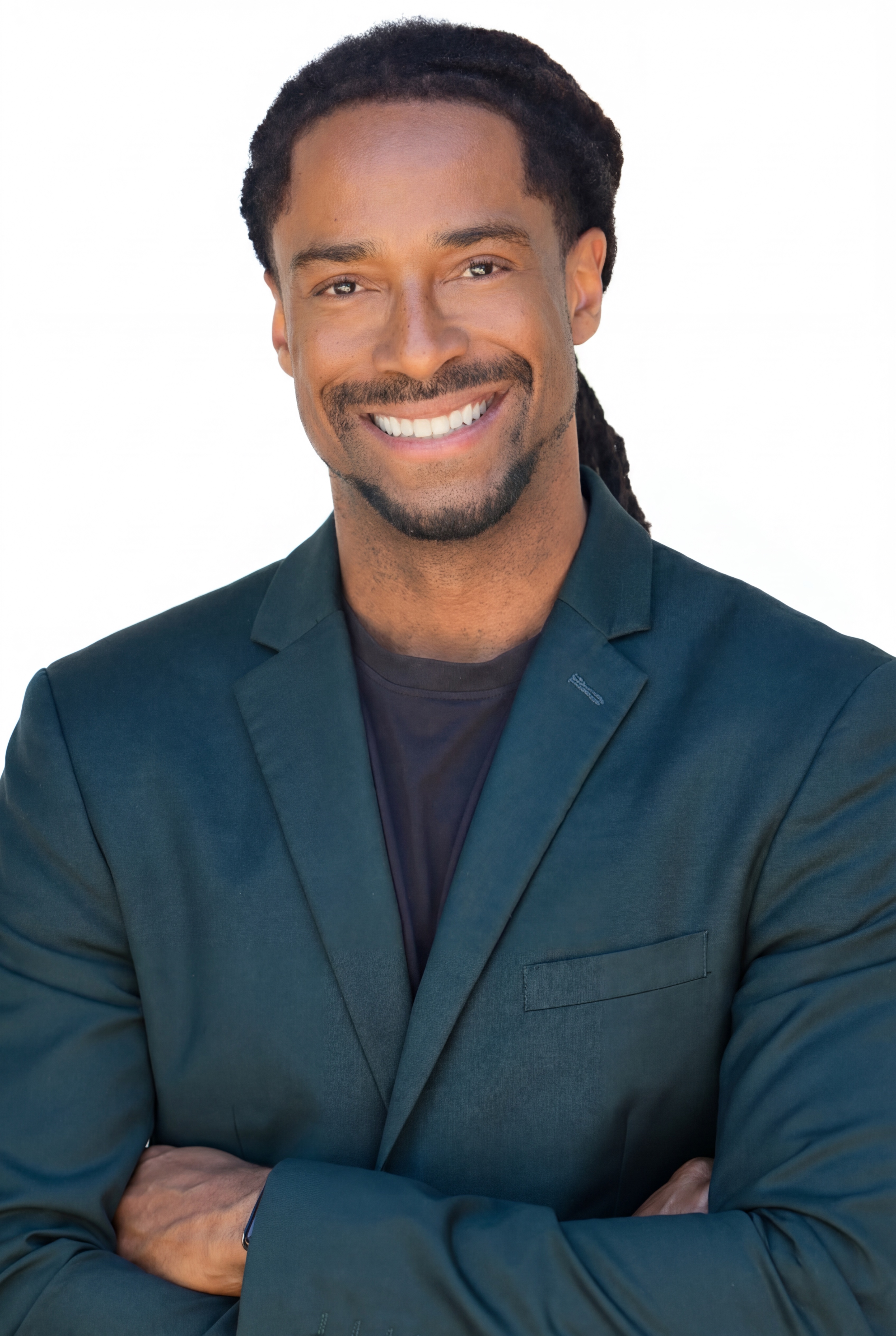
William “DJ Will Gill” Gilbert is a corporate DJ, host, and audience engagement specialist who makes events feel more interactive and memorable. Rather than simply playing music, he uses hosting and crowd participation to keep attendees connected and involved throughout the experience. He has performed at more than 600 corporate events for clients including AT&T Business, CDW, Team USA, Virgin Galactic, Home Depot, Hilton, PepsiCo, PayPal, and the United Nations. Will has also been recognized by Forbes Next 1000 and The Wall Street Journal, and his IMDb credits include Super Bowl LIV, The Voice, and Real World: Hollywood. Outside of the event world, Will founded TheAIDJ.com, a patent-pending AI playlist platform developed for modern music curators.
2,520+ Google Reviews · IMDB · Mixcloud · Instagram ·