
Creating Family-Friendly Curated Music Playlists for DJ Gigs | DJ Will Gill
Stop replaying the same songs.
Introducing TheAIDJ.com
AIDJ turns a plain-English request into a ready-to-play set, previews it instantly, and exports straight to Spotify. Discover music that actually fits the moment.
Creating a family-friendly curated music playlist for a multi-generational event is one of the hardest assignments a DJ takes on. The audience runs from toddlers to grandparents, the energy needs to flow without jarring transitions, and the lyrical content has to clear a bar that an adult-only gig never has to think about. The goal is to create a smooth, high-energy, family-appropriate vibe that gets every generation onto the dance floor, and doing this well takes more than a clean playlist. It takes structured curation, smart segmentation, and real musical expertise across decades and genres.
This guide walks through what family-friendly actually means in practice, how to segment the event by phase, how to build cross-generational crates, how to manage transitions across decades, how to read multigenerational crowds in real time, how to handle requests and no-play lists, the practical toolkit that enables flawless execution, and sample playlist blocks for each event phase. Mastering this skill is what separates a hireable family-event DJ from one that families don’t recommend to other families.
Key Takeaways
→ “Family-friendly” is a spectrum, not a single rule. Clean edits are the floor, not the ceiling. Thematic content and tonal appropriateness also matter; a track may be technically clean but still mature in ways that don’t fit a kids’ birthday party. 2026 industry analysis documented that DJs should skip songs with lyrics that would embarrass family members or at least use the clean versions. The pre-event conversation with the client about content standards is non-negotiable.
→ Volume management is hearing-safety, not just vibe-control. 2026 World Health Organization guidance documented pediatric safe listening as no greater than 75 dB averaged across 40 hours per week, compared to 80 dB for adults. Family events with young children present require deliberate volume management, cocktail-hour conversation levels around 60-70 dB, peak dance-floor moments below 85 dB sustained, and zero exposure to the 100+ dB ranges that nightclub sets routinely operate in.
→ Multi-generational dance floors require deliberate crate architecture across four decade buckets. The 1960s-1970s Motown, funk, and classic rock as cross-generational anchors. The 1980s as the universal singalong decade. The 1990s-2000s for millennial nostalgia with verified clean hip-hop edits. The 2010s-present for the kids and teens. 2026 industry analysis documented that experienced DJs cracked the multi-generational code across 6,000+ weddings and that there’s no one-size-fits-all playlist for wedding music for different ages, but there is a strategic approach. The strategic approach starts with crate organization.
→ Event-phase segmentation determines programming intensity. 2026 industry analysis documented that the best receptions follow a simple pattern: early night warm-fun-and-familiar so every generation feels included, peak hour with big hooks and big choruses and zero dead air, and late night with high energy and smart reset songs so the floor never empties. Family events follow similar phasing but compress the timeline and dial down the late-night intensity.
→ The no-play list is as important as the must-play list. 2026 industry analysis documented that DJs should build a do-not-play list it is just as important as the must-plays. The pre-event conversation captures explicit exclusions (ex-spouses’ wedding songs, songs associated with funerals, anything with thematic problems for the host family) before the event so the DJ never has to make these judgment calls in real time under guest-request pressure.
Watch the clips below to see Will Gill performing on stage.
To book a corporate DJ for your next event, contact DJ Will Gill directly.
What Does “Family-Friendly” Really Mean?
Before touching the library, the DJ has to establish what “family-friendly” means for the specific event. It’s a spectrum, not a single rule and clarifying which point on the spectrum the host wants prevents misalignments that surface mid-event when it’s too late to fix.
Clean Edits as the Non-Negotiable Baseline
The lyrical-content layer. All tracks must be radio edits or explicitly clean-marked versions. Profanity, suggestive language, references to violence, drug content, or sexual content have no place at a family event. The clean-edit verification has to happen pre-event, not in the booth DJ software doesn’t always default to the clean version when both clean and explicit copies live in the same library, and grabbing the wrong file because the catalog isn’t tagged correctly is exactly how the dance floor goes silent at the wrong moment.
Thematic Content Beyond Explicit Lyrics
The tonal-appropriateness layer. A track may be technically clean but still carry mature themes that feel awkward at a kids’ birthday party breakup anthems with vivid emotional content, songs glorifying nightlife behaviors that parents don’t want kids absorbing, tracks with romantic content that older relatives find uncomfortable in mixed company. Strong family-event DJs preview unfamiliar tracks before deploying them and bring a “when in doubt, leave it out” discipline that adult-only DJs don’t need to apply.
Volume Management for Mixed-Age Crowds
The hearing-safety layer. Family events aren’t raves, and the volume math is different from that of adult-only gigs. 2026 World Health Organization safe listening guidance documented pediatric safe listening at no greater than 75 dB averaged across 40 hours per week, compared to 80 dB for adults. The presence of young children and especially infants at family events is a legitimate volume constraint. Conversation levels during cocktail hour and dinner should sit around 60-70 dB. Peak dance segments should stay below sustained 85 dB. The room should fill with music, not overpower the families in it.
Pre-Event Client Alignment on Standards
The expectation-setting layer. The pre-event discovery call should explicitly cover the family-friendly standard. Are clean edits sufficient or are there additional content concerns? Is the host comfortable with mild romantic content or does that need to be excluded? Are there specific guests whose tolerances matter (a religious grandparent, an HR-strict corporate sponsor)? 2026 industry analysis documented that couples want more personalization, but the best playlists still need structure so the music reflects their story while staying welcoming to a multigenerational crowd. The structure starts with explicit pre-event alignment on what the family-friendly standard actually means for this event.
Reading the Room and Segmenting the Event
A successful family event flows through different energy phases, and the playlist should guide the journey rather than fight against it. Structuring music around the event’s timeline is the difference between a DJ who serves the event and a DJ who imposes a soundtrack on it.
Arrival and Cocktail Hour Programming
The welcoming-vibe layer. The arrival phase needs music that’s light, universally pleasant, and conversation-friendly. Instrumental soul, classic soft rock, upbeat modern pop at low volume, anything that creates atmosphere without dominating it. The goal is to make guests feel welcomed and signal that the event has officially started without forcing anyone to compete with the music to be heard. Volume sits at the low end of the range, energy is moderate, and the music sets the table rather than running the show.
Dinner Background Music Strategy
The conversation-supporting layer. During dinner, music becomes background. Tempo lowers, volume drops further, the playlist supports conversation rather than encouraging anyone to abandon their meal for the dance floor. Instrumental jazz, acoustic covers of familiar songs, classic Motown ballads, lounge-style edits, and material that creates atmosphere without intruding on the foreground experience of eating and talking. Strong DJs treat dinner as an opportunity to display taste rather than energy, since the volume gives every track room to be heard properly.
Main Dance Set Energy Architecture
The progression layer. The main dance set is where the DJ ramps up the energy, but the on-ramp matters more than the peak. Start with broad-appeal classics that pull parents and grandparents onto the floor first. Once the older generations are dancing, the kids and teens are far more likely to join. Build progressively through the decades, dropping in 1980s anthems to bridge between older and younger guests, then modern hits to keep the younger generation engaged. The trap to avoid is leading with the current Top 40 it empties the floor of everyone over 35 and creates a generational gap that’s hard to close later.
Farewell and Wind-Down Programming
The closing-arc layer. The final phase winds down with memorable, feel-good sing-alongs that send guests off smiling. The closer should be a track that reads as a celebration rather than a fade-out energy that resolves rather than dissipates. The trap to avoid here is closing on a current hit that older guests don’t connect to; the closer needs to be something the whole room recognizes and finds emotionally satisfying. Family events benefit from closers that land warmly across all generations rather than peaks that only the youngest cohort connects to.
Building Your Crates — Music for Every Generation
The core strength of a family-friendly DJ is the ability to bridge generational gaps. 2026 industry analysis documented that with 6,000+ weddings of experience, the multi-generational music challenge gets solved through a strategic approach rather than a single playlist. Crate architecture organized by decade-bucket plus energy tier enables fast in-the-moment pivots.
The Classics (1960s-1970s) Cross-Generational Anchors
The universal-appeal foundation. Motown, funk, and classic rock from this era are the DJ’s secret weapons for family events. Stevie Wonder, The Temptations, Earth Wind & Fire, The Beatles, Marvin Gaye, Aretha Franklin, Diana Ross. These tracks are familiar enough that grandparents recognize them, danceable enough that kids respond physically, and culturally embedded enough that millennials and Gen X grew up with parents playing them. The cross-generational appeal is structural rather than accidental — this era’s music genuinely reaches every age cohort at family events.
The Singalongs (1980s) Universal Anthems
The decade-of-anthems layer. The 1980s produced an unusually high density of crowd-pleasing anthems that still land at family events four decades later. Pop, new wave, and rock from Michael Jackson, Whitney Houston, Journey, Bon Jovi, Madonna, and Prince. These tracks have the hooks, choruses, and singalong moments that get parents and kids singing the same lyrics at the same time, the closest thing to a guaranteed multigenerational dance floor moment in any DJ’s library. Strong family-event DJs maintain multiple 80s crates organized by sub-genre and energy to enable variety without leaving the decade’s comfort zone.
The Throwbacks (1990s-2000s) Nostalgia Triggers
The millennial-Gen-X nostalgia layer. Millennials and Gen X are now the parents at family events, and this era is their nostalgia trigger. Clean hip-hop edits, R&B, pop-punk, and dance-pop from this period drive engagement from the 35-50 demographic the way 80s anthems drive 50+ engagement. The critical requirement here is verified clean versions of hip-hop from this era, especially needs careful catalog curation since the explicit versions are often the ones that come up first in search. 2026 industry analysis documented that DJs should skip songs with lyrics that would embarrass family members or at least use the clean versions.
The Modern Hits (2010s-Present) Younger Audience Bridge
The current-relevance layer. Keeping the library fresh with radio-friendly pop, current dance-floor hits, and clean versions of TikTok-trending tracks is how the DJ connects with the kids and teens in the room. 2026 industry analysis documented that TikTok’s WeddingTok now shapes real-life playlists as much as Spotify or the charts, with millions of hashtag views and recent wedding DJ requests revealing the tracks couples are adding to playlists right now. The modern crate doesn’t need to dominate the set it needs to show up at the right moments so younger guests feel programmed-for rather than ignored.
Transitions and Tempo Management
Mixing seamlessly across decades and genres is the technical layer that separates competent family-event DJs from amateurs. Jarring transitions that work in adult-only club contexts feel disruptive at family gigs where guests are talking, eating, and not actively focused on the music.
BPM Matching Across Decades
The tempo-management layer. Different decades cluster at different BPM ranges 1970s disco at 110-130, 1980s pop at 100-130, 1990s hip-hop at 85-110, and current dance-pop at 100-130. Bridging decades smoothly requires matching tempo at the transition points, which often means following a slower throwback with a similarly-paced classic and then ramping into faster modern material rather than jumping straight from a slow ballad to a high-BPM dance track. The BPM-grouping mental model is what enables decade-hopping without losing the dance floor.
Harmonic Key Considerations
The musicality layer. Tracks in compatible musical keys mix more smoothly than tracks in clashing keys. The Camelot Wheel system used by Rekordbox, Serato, and Engine DJ lets DJs identify compatible keys at a glance, moving within the same key, to the adjacent key, or to the relative major/minor produces transitions that feel musical rather than mechanical. Family event audiences often don’t consciously notice harmonic mixing, but they feel its absence jarring key changes register as “the DJ is bad” even when guests can’t articulate why.
Attention-Span-Aware Edits for Kids
The young-audience layer. Younger kids have shorter attention spans than adults, and full-length 4-minute tracks often lose them after the first chorus. Strong family-event DJs cut tracks after the first chorus or pre-build short edits that hit the highlight moments without the full runtime. Keeping individual tracks shorter at kid-heavy gigs maintains the energy that full-length adult-club versions kill in the under-12 demographic. This is a craft-level adaptation that newer DJs typically miss because their reference point is adult-only gigs.
Smooth Genre Pivots Without Jarring
The cross-genre layer. Family events require pivoting between Motown, rock, hip-hop, pop, country, Latin, and reggae over the course of a set in ways that adult-only gigs don’t. The smooth-pivot technique uses bridge tracks that share characteristics with both the outgoing and incoming genres to soften the transition. Funk-rock bridges between rock and funk. Pop-hip-hop crossovers bridge between Top 40 and hip-hop. Strong DJs maintain a separate “bridge tracks” crate for genre-pivoting moments and don’t include it in any single-decade or genre crate.
Crowd Reading at Multigenerational Events
Multigenerational events present unique crowd-reading challenges because the audience isn’t homogeneous. Reading the room means reading each generation simultaneously and making decisions that serve the room as a system rather than any single cohort.
The Cross-Generational Energy Read
The simultaneous-cohort observation layer. Strong family-event DJs scan the room continuously across all age groups. Are the grandparents seated and chatting or engaging with the music? Are the parents dancing or watching from the perimeter? Are the kids on the floor or off? Are the teens hiding their phones because they’re engaged, or staring at them because they’re bored? The simultaneous read across cohorts drives the next song choice. If the older generation has disengaged, the next track needs a bridge back; if the kids are on the floor and the adults are not, the next track needs to pull adults back in without losing the kids.
Demographic Shifts Through the Event
The temporal-evolution layer. The demographic mix at family events shifts predictably through the night. Young children typically leave by 9:00 or 9:30 PM. Older grandparents often leave by 10:00-10:30. After 10:30, the audience compresses toward the 25-55 range that can sustain higher-energy programming. Strong DJs adjust their material as the demographic narrows, peak dance-floor energy ramps up after the kids leave, modern hits become a higher percentage of the mix, and volume can climb modestly within the safe-listening range. The transition needs to be smooth so departing guests don’t feel pushed out and remaining guests don’t feel like the energy abruptly changes.
When Adults Take Over the Floor
The grown-up-window layer. Late in the evening at family events, the dance floor often transitions to adults-only as kids tire and depart. This is the moment for the DJ to deliver the harder dance material that wouldn’t have worked earlier clean-edit hip-hop, modern dance hits, and EDM crossover tracks. 2026 industry analysis documented that late-night programming should feature high energy with smart reset songs so the floor never empties. The transition to adult-window material should be gradual enough that the room doesn’t notice the threshold being crossed.
When Kids Need to Re-Engage
The re-engagement layer. If kids drift off the dance floor mid-event, the DJ has tools to pull them back. Familiar TikTok-trending hits with simple choreography. Singalong anthems with strong choruses kids actually know. Interactive call-and-response tracks. The Cha Cha Slide, the Cupid Shuffle, and similar line-dance anthems exist specifically for this re-engagement moment at family events. The right track at the right moment can refill the dance floor with kids in 30 seconds and pull the parents back with them.
Handling Requests and the “No-Play” List
Requests are how the DJ engages the crowd, but the DJ remains the gatekeeper. 2026 industry analysis documented that DJs should build a do-not-play list it is just as important as the must-plays. The infrastructure to handle requests well and decline appropriately is built pre-event, not invented at the booth.
The Pre-Event Client No-Play Conversation
The expectation-capture layer. The pre-event call should explicitly cover the no-play list. Specific songs to avoid because of family history. Artists the host doesn’t want featured. Genres that should be excluded entirely. Anything tied to a previous relationship, a funeral, or a difficult family memory. Capturing the no-play list in writing before the event eliminates the DJ from having to make these judgment calls in real time and gives the DJ defensible ground when a guest insists on a problematic request.
Politely Declining Inappropriate Requests
The diplomatic-decline layer. When a guest requests a track that violates the family-friendly standard, the DJ needs a polite, firm response that closes the conversation without making the guest feel rejected. The standard pattern: acknowledge the request warmly, reference the host’s specific instructions for the event, offer an alternative if available, then return to the booth. Strong DJs script this response in advance so it lands smoothly rather than sounding improvised under pressure. The diplomatic-decline skill is what keeps the dance floor energy intact when one guest’s preferences clash with the event’s standards.
Yes/No/Maybe Triaging Strategy
The request-triage layer. Not every request needs the same answer. Strong DJs triage requests into three categories: yes (plays it within the next 2-3 tracks), no (declines diplomatically with reference to the no-play list), and maybe (says “great suggestion, let me find the right moment” and uses judgment about whether to play it later). The maybe category is what saves the DJ from saying yes to requests that won’t work right now or no to requests that might work in 20 minutes. The triage discipline keeps the DJ in control of the timeline rather than being reactive to guest demands.
Documentation for Repeat Bookings
The relationship-investment layer. Family-event clients often re-book the same DJ for subsequent events, birthdays, anniversaries, holidays, and milestone celebrations. The DJ who documents each family’s preferences (what worked, what didn’t, what’s on the permanent no-play list, what tracks landed strongest) builds a relationship moat that competing DJs can’t replicate. The documentation is a 15-minute post-event task that pays off across years of repeat bookings and referrals.
Practical Toolkit for Flawless Execution
Organization is what makes flawless live execution possible. Strong family-event DJs use their software’s full feature set to build a bulletproof system that handles edge cases before they become problems.
Smart Tagging Systems Beyond Genre
The metadata-architecture layer. Genre tags alone aren’t enough for family events. Use comment fields to add operational tags like “Dinner,” “Peak Hour,” “Singalong,” “Grandparent-Approved,” “Verified Clean,” “Kids Love It,” “Bridge Track.” The tag system lets the DJ filter the library in seconds during a gig instead of scrolling through thousands of tracks looking for a grandparent-friendly upbeat option. The DJ filters on “Grandparent-Approved + High Energy” and gets a curated shortlist of pre-vetted options.
Color Coding for Energy Visualization
The visual-shorthand layer. DJ software supports color-coding tracks, and strong family-event DJs use the colors to encode energy levels at a glance. Blue for low-energy (dinner, background). Green for mid-tempo (cocktail hour, early dance set). Yellow for build energy (mid-set ramp). Red for high-energy peak dance tracks. The visual shorthand lets the DJ scan the library and identify candidates by energy without reading individual tags, which matters during the high-pressure moments when the dance floor needs a fast pivot.
Smart Crates and Automated Playlists
The dynamic-grouping layer. Modern DJ software supports smart crates playlists that automatically populate based on tag combinations. A “Family Dance Starter” crate could automatically pull all tracks tagged with “1990s,” “Verified Clean,” and “High-Energy.” A “Grandparent Special” crate could pull “1960s + Universal Appeal + Singalong.” The smart crate infrastructure means the DJ builds the rules once and gets dynamic playlists that update as the library grows, rather than maintaining manual playlists that go stale.
Backup Sets and Recovery Plans
The safety-net layer. Strong family-event DJs maintain pre-built backup playlists for each event phase. If the in-the-moment selection isn’t working, the backup playlist provides a proven sequence that the DJ can drop into. The backup playlist isn’t a creative crutch it’s a recovery plan for the moments when the room signals divergence from what the DJ expected and the DJ needs to reset rather than improvise. Knowing the backup exists also lets the DJ take more creative risks earlier in the set, since the safety net catches misfires before they damage the dance floor.
Sample Playlist Blocks for Each Phase
Rather than naming specific songs that go stale, family-event DJs think in playlist blocks defined by category and energy. The block-architecture approach maintains structure while allowing flexibility for the specific tracks that match the host family’s preferences and the room’s actual response.
Cocktail Hour Block Architecture
The arrival-set composition. A 45-60 minute cocktail block typically runs 12-15 tracks at moderate volume. The architecture pulls from upbeat instrumental funk, classic 1970s soft rock, modern acoustic pop covers, light 1960s Motown, instrumental neo-soul, recognizable 1980s ballads, contemporary indie pop at low energy, classic reggae (Bob Marley resonates universally), acoustic guitar favorites, and feel-good 1970s soul. The block sets a warm, welcoming atmosphere that signals the event has officially started without dominating conversation.
Peak Dance Floor Block Architecture
The peak-energy composition. A 30-45 minute peak block runs the highest-energy 10-12 tracks the DJ has for this audience. The architecture combines iconic 1970s disco anthems, 1980s pop megahits, energetic 1960s Motown group songs, 1990s clean hip-hop party starters, current Top 40 smashes, classic rock sing-alongs, 2000s pop dance tracks, Latin pop crossovers, unforgettable 1980s rock anthems, and clean viral TikTok dance songs. The block hits the highest energy point of the set and produces the photographs that families share for years afterward.
Multi-Generational Singalong Block
The cross-generation-anchor composition. A 20-30 minute singalong block placed mid-event uses 6-8 tracks specifically chosen for cross-generational lyric recognition. Big-chorus 1980s anthems where parents and kids share the same lyrics. 1990s pop hits with universal hooks. Recent songs that crossed over from streaming into family awareness. 2026 industry analysis documented tracks like Walk the Moon’s “Shut Up and Dance” as multi-generational singalongs that work across age groups. The block produces the highest-emotion dance floor moments of the event when grandparents, parents, and kids are all visibly singing the same lyrics, and the host knows they chose the right DJ.
Wind-Down Closing Block
The closer composition. The final 20-30 minutes run 6-8 tracks that taper energy while preserving emotional resolution. Mid-tempo feel-good sing-alongs. A recognized closer track that lands warmly across generations. A signature send-off song that the host has chosen in advance for the final moment. The wind-down block isn’t about lowering the energy abruptly; it’s about resolving the emotional arc so guests leave feeling that the night ended properly rather than fizzling out.
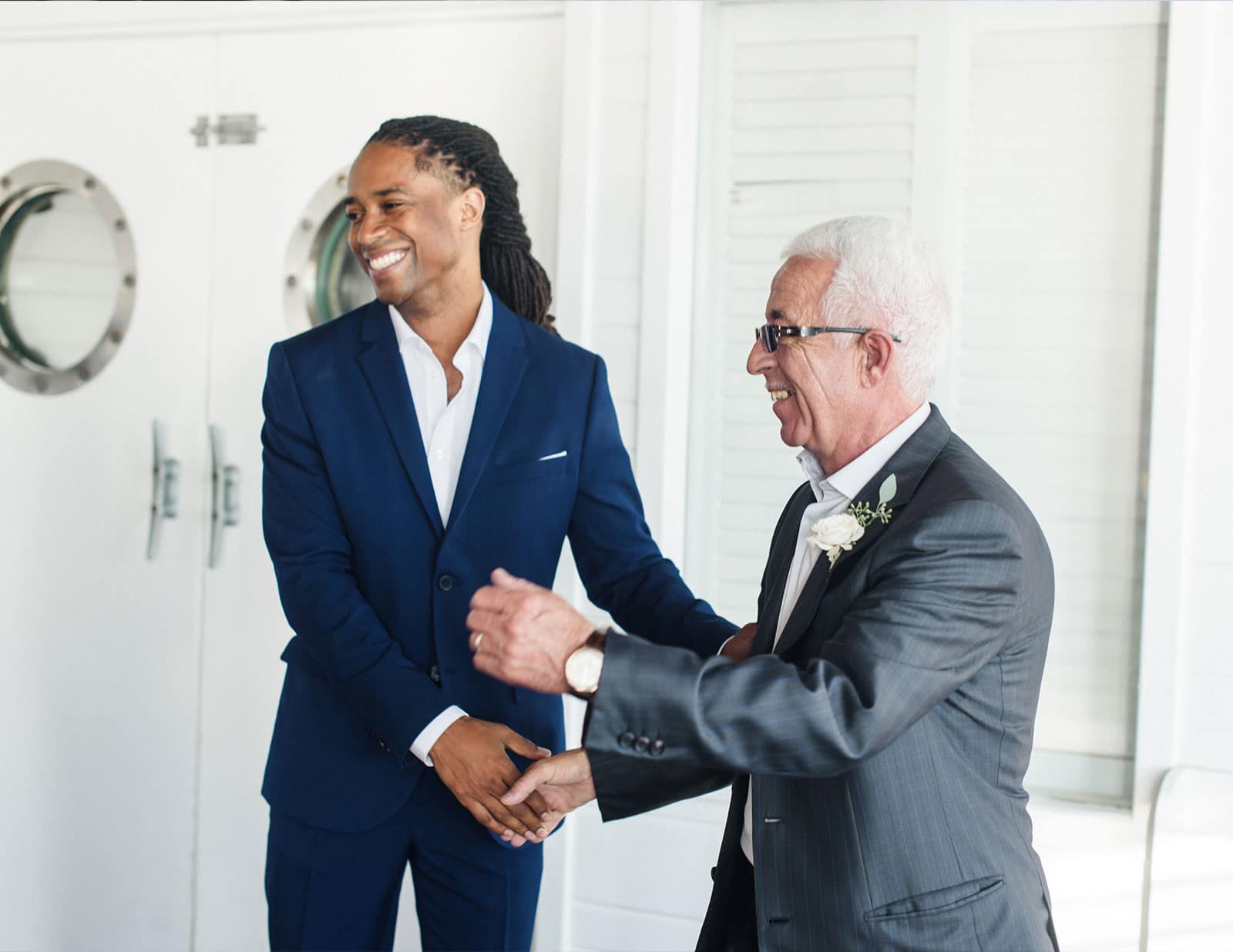
About the Author
William “DJ Will Gill” Gilbert is a professional DJ and Emcee performing since 2008 with documented client work for AT&T Business, CDW, Team USA, Virgin Galactic, NeoGenomics, Foot Locker, Home Depot, Hilton, BGCA, PepsiCo, PayPal, and the United Nations. Also a Forbes Next 1000 honoree with broadcast credits including Super Bowl LIV (2020), The Voice (2011), and MTV’s The Real World: Hollywood (2008). The Wall Street Journal named him the DJ and Emcee for boosting company morale. Founder of TheAIDJ.com, the patent-pending AI playlist generation tool.
2,520+ Google Reviews · IMDB · Mixcloud · Instagram · Contact