
Corporate Event DJ Playlist Mistakes and How to Fix Them | DJ Will Gill
What are the biggest corporate DJ playlist mistakes? The biggest corporate playlist mistakes are ignoring the demographic mix, front-loading energy before dinner, playing explicit edits, and refusing requests without a recovery plan. Will Gill, the Wall Street Journal’s #1 rated corporate event DJ with 2,520+ five-star Google reviews, breaks down each fix below.
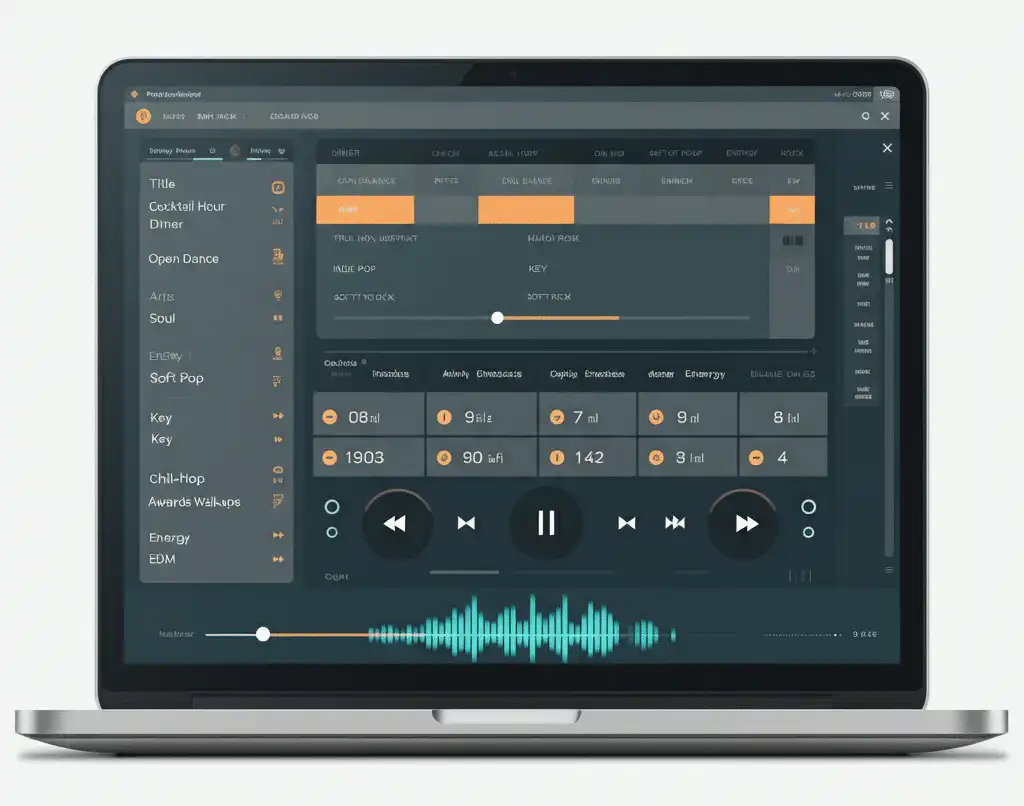
Music can make or break a corporate event. The right soundtrack elevates the entire experience, while the wrong music choice or bad timing kills the mood, derails program flow, and hurts brand perception in ways that are hard to recover from once they happen. The mistakes that show up at corporate events are predictable, well-documented across the industry, and almost entirely preventable when planners and DJs work from the same playbook. 2026 event planning analysis documented that 78% of planners cite budget constraints as their number one challenge and 71% expect costs to rise this year, which makes avoiding preventable music mistakes especially valuable since the fixes cost nothing while the failures damage outcomes, and leadership tracks closely.
This guide walks through the seven most common corporate event DJ playlist mistakes: one-size-fits-all programming, ignoring audience diversity, poor volume management, overplayed tracks, clumsy transitions, missing program sync, and no backup plan, plus an eighth that often goes unaddressed: skipping the pre-event music conversation entirely. For broader DJ playlist mistakes coverage, the sister article covers the playlist-building craft from the DJ practitioner side.
Key Takeaways
→ A single static playlist for an entire corporate event guarantees mismatched energy at multiple phases. 2026 corporate event analysis documented that networking events and client receptions need conversational-volume background music while award ceremonies need emotive build-up selecting genres and energy levels that serve the event’s primary business objective rather than simply filling the room with pleasant sound. The fix is segmenting by event phase rather than running one playlist front to back.
→ Volume management is a measurable discipline, not a vibe. Industry sound analysis documented that normal conversation runs about 60 dB while conversations can reach 85-90 dB in tiled-floor venues with 80-100 guests, and 2022 WHO guidance recommends keeping sound levels below 100 decibels as a 15-minute average with peak levels limited to 120 dB. Strong corporate DJs operate within documented decibel ranges per event phase rather than guessing.
→ The cue sheet is the single most underutilized tool in corporate music programming. Industry analysis documented that the pre-event planning call is where the framework gets built the operator walks through the run-of-show document line by line, covering speaker handoff timing, awards segment cadence, sponsor activation moments, brand-safe music limits, audience demographic notes, and venue specifics, producing the cue sheet, transition sting script, pre-staged backup library, and contingency plan. Without the cue sheet, every transition becomes an improvisation that the audience feels, even if they can’t name what’s wrong.
→ Backup plans aren’t optional at corporate scale. The 2026 event planning analysis listed “no backup plan” as a common preventable mistake, with the fix being to build contingency plans for venue, weather, and tech, along with centralized communication systems and risk assessments. Strong corporate DJs operate with multiple backup crates organized by genre and mood, plus redundant equipment that eliminates single points of failure.
→ The discovery conversation determines event-day outcomes more than the playlist itself does. Industry analysis documented that the prep work is what makes the on-event execution feel effortless without it the operator improvises during the event, while with it the audience experiences a program that feels designed without ever noticing the design. Strong corporate event programming is closer to film scoring than to playlist building, and that quality comes from the conversation before the event rather than the execution during it.
Watch the video below to see Will Gill performing on stage.
To book a Wall Street Journal-recognized corporate DJ for your next event, contact DJ Will Gill directly.
The One-Size-Fits-All Playlist Trap
The most common corporate event DJ playlist mistake is using a single static playlist for the entire event. High-energy tracks suit the closing reception, not early networking. Soft dinner music kills celebration energy. One playlist running front to back guarantees mismatched mood at multiple phases.
Why Static Playlists Fail Corporate Events
The fundamental-mismatch layer. Corporate events run through multiple distinct phases that require different musical treatments. 2026 corporate event analysis documented that aligning music style with the event goal means selecting genres and energy levels that serve the event’s primary business objective rather than simply filling the room with pleasant sound. Networking events and client receptions need conversational-volume background music while award ceremonies need emotive build-up, and a rock band at conversational cocktail hour is a planner’s mistake dressed up as a performance. A single playlist optimized for the dance segment will overwhelm guests during networking; a single playlist optimized for dinner will fail to launch the dance segment.
Segmenting by Event Phase
The fix-pattern layer. The fix is segmenting the playlist into distinct “crates” or mini-playlists for each part of the program. 2026 corporate event music programming analysis documented that arrival programming differs from cocktail-hour programming, which differs from program-block programming, which differs from awards programming, which differs from closing programming. Corporate event music programming starts with the energy curve, not the playlist, mapping the intended emotional arc of the program first then matching track selection to that arc. Strong corporate DJs collaborate with planners during pre-event calls to define the phases and the energy curve required for each.
The Arrival and Networking Phase
The conversation-priority layer. Arrival and networking programming requires low-volume, instrumental, or low-lyrical tracks that facilitate conversation rather than overpowering it. Chill-hop, lounge, nu-jazz, downtempo electronic, and acoustic instrumental tracks all work well in this phase. The goal isn’t to entertain guests during networking; the goal is to create an ambient backdrop that supports the actual networking they came for. 2026 corporate event analysis documented that if guests cannot hear each other talk, they stop talking and either endure the music or leave the room. Networking music that fails this test fails the event regardless of how good the music itself is.
Dinner, Awards, and After-Party Phases
The phase-specific-programming layer. Dinner phase uses mid-tempo recognizable but not distracting tunes, classic soul, indie pop, soft rock, maintaining energy while still allowing comfortable conversation. The awards and speeches phase uses dedicated walk-up stings and celebratory bursts that match the tone of each recognition, timed precisely to amplify impact without interrupting program flow. After-party and dance phase uses high-energy popular tracks with strong beats designed to fill the dance floor and sustain momentum. Each phase has different volume requirements, different lyrical content tolerances, and different programming priorities. Treating them as a single segment guarantees suboptimal music at three of the four phases, regardless of which one the original playlist was optimized for.
Ignoring Audience Diversity
The second most common mistake is letting the playlist reflect a single person’s taste, usually the planner’s or the CEO’s, rather than the actual audience attending the event. Corporate events have inherently diverse audiences, and music programming that ignores that diversity fails the majority of attendees, regardless of how strong the individual track choices are.
The Planner-Taste Problem
The personal-preference-bleed layer. 2026 industry analysis documented that some operators default to whatever music they personally enjoy, which signals immediately to senior planners that the operator has not done the brand prep work the right operator reads the brand register in the planning call, reviews the audience demographic profile, and arrives with a vetted library calibrated to the company culture rather than the operator personal taste. The same dynamic applies to planners and executives. If the CEO loves 80s rock, that doesn’t mean an audience of 25-year-old new hires shares the preference. Strong corporate music programming filters all personal taste through the audience-demographic question.
Multi-Generational Programming
The age-range-coverage layer. Corporate audiences span multiple generations simultaneously. Executive leadership may be in their 50s and 60s, while newer employees are in their 20s. Customer-facing events often include a mix that’s even broader. Strong programming covers material from multiple eras: Motown for older guests, 80s and 90s hits for middle-generation guests, 2000s pop for thirty-somethings, and current pop and hip-hop for younger guests at the right balance to keep each constituency engaged without alienating any group.
Cultural and Regional Considerations
The cultural-awareness layer. Corporate events at major Fortune 500 companies include attendees from many cultural backgrounds. Programming that ignores that diversity leaves significant segments of the audience feeling overlooked. Strong DJs build international and bilingual options into their core libraries, Latin pop crossover hits, Bollywood tracks at events with strong South Asian representation, K-pop crossovers, French and Italian classics for European-facing audiences. The cultural awareness signals respect that strengthens the company’s brand position with international employees and customers.
Brand-Safe Versions and Clean Edits
The lyrical-content layer. Corporate events demand brand-safe music. Profanity, explicit lyrics, drug references, and adult content that pass without comment at a club gig become brand exposure issues at corporate events where executives, customers, and HR are all in the same room. The fix is using radio edits or clean versions of tracks throughout the event, not just for the formal segments. 2026 industry analysis documented that brand-safe music limits are a core component of the pre-event planning conversation. Strong corporate DJs verify clean versions upfront rather than discovering profanity in front of an audience.
Poor Volume and Energy Management
Volume management is a measurable discipline, not a vibe. Music that’s too loud for networking ruins conversation; music that’s too quiet for dancing prevents the energy from building. Both failure modes are common, and both are preventable with deliberate decibel planning per event phase.
The Volume Goldilocks Problem
The phase-mismatched-volume layer. The volume that’s right for one phase is wrong for another. The networking-phase volume that supports conversation is far too low to launch dance-floor energy; dance-floor volume that drives celebration completely overwhelms dinner conversation. Strong corporate DJs map specific volume targets to specific phases and adjust on the fly as the event progresses through them. Static volume settings that never change across a 4-hour event are a hallmark of inexperienced DJs, regardless of how good their music selection is.
Decibel Ranges for Different Event Phases
The measurable-target layer. Industry sound analysis documented that a whisper runs about 30 dB, normal conversation runs about 60 dB, and conversations can reach 85-90 dB in tiled-floor venues with 80-100 guests. Strong corporate volume targets work as follows: Networking and arrival at 60-70 dB allows comfortable conversation; dinner at 65-75 dB maintains ambience without distracting from table conversation; awards and program segments drop to 55-65 dB during speaker moments so the microphones dominate; dance segment moves to 85-95 dB for celebration energy without crossing into hearing-damage territory.
Building an Energy Arc Across the Event
The momentum-design layer. Volume is one input to energy management; tempo, lyrical content, and rhythmic intensity are others. 2026 DJ energy flow analysis documented that strong DJs raise BPM gradually (2-4 per transition), escalate through genre families, use minor-to-major key switches to brighten the mood, and save their highest-rated tracks for the final third of the set. Strong corporate energy management maps an arc that starts low for arrival, sustains moderate energy through dinner, peaks during the dance segment, then optionally cools down for the final 15 minutes before the event closes. 2026 industry analysis documented that experienced DJs build waves rather than constant peaks creating tension through extended builds, then offering release, an approach that translates directly to corporate event programming.
Hearing Safety and Compliance
The regulatory-and-safety layer. Volume isn’t just a creative decision; it’s a regulatory and safety consideration that affects venue compliance and attendee welfare. 2022 WHO guidance and 2026 medical industry references recommend keeping sound levels below 100 decibels as a 15-minute average with peak levels limited to 120 dB for adults and 120 dB peak with 94 dB 15-minute average at venues targeted at children. 2025 hearing safety analysis documented that OSHA recommends limiting exposure to noise above 85 dB for extended periods, with most concerts running 100-120 dB. Strong corporate DJs stay well below these thresholds because the event isn’t a concert, it’s a venue where the audience needs to be able to converse, hear announcements, and protect their hearing for the rest of the evening.
Relying on Overplayed Tracks
Some classics earn their status as crowd favorites for a reason. But a playlist that consists entirely of the same 20 overplayed wedding-and-corporate-party songs everyone has heard at every event for the past decade feels generic, lazy, and uninspired, regardless of how technically well the DJ executes the mix.
The Wedding-Reception Cliché Trap
The familiar-but-tired layer. Every working DJ knows the standard rotation “September,” “Don’t Stop Believin’,” “Mr. Brightside,” “Sweet Caroline,” “Uptown Funk,” “Shut Up and Dance,” “Cupid Shuffle,” and “Cha Cha Slide.” These tracks do reliable work and have a place in most events. The mistake isn’t including them; the mistake is leaning on them so heavily that the playlist feels like the default rotation rather than a curated experience. Corporate audiences who attend multiple events per year notice when programming defaults to the same wedding-DJ template at every event, regardless of the occasion.
Balancing Familiar and Fresh
The mix-ratio layer. Strong corporate playlists balance roughly two-thirds familiar material (recognizable hits that get the audience moving) with one-third fresher or less-obvious selections (newer tracks, B-sides, deeper cuts from familiar artists, unexpected genre cross-pollinations). The ratio shifts based on audience and event type. Younger audiences tolerate more new material; older audiences expect a higher familiarity ratio. The deliberate balance signals curation in a way that pure greatest-hits programming never does.
Era-Appropriate B-Side Discovery
The deep-catalog layer. Strong DJs maintain familiarity with B-sides and deeper cuts from major artists across decades, the tracks that audiences recognize as “from that artist” but haven’t heard a hundred times. A B-side from a Stevie Wonder album, a deep cut from Michael Jackson’s catalog, an album track from Beyoncé that wasn’t a single, these selections produce the moment of recognition without the fatigue of the radio singles. The B-side discovery work happens between gigs, not during them. DJs who only know the radio hits don’t have this material available when the moment calls for it.
Why Curation Differentiates Strong DJs
The signal-of-craft layer. The audience can tell the difference between a default rotation and a curated playlist even if they can’t articulate why. Curated playlists feel like they were assembled for this specific event; default rotations feel like the DJ pulled out a template and pressed play. Strong corporate DJs invest curation effort because the differentiation is what justifies premium positioning. Anyone with a laptop can run a default rotation, but designed programming is a craft that takes years to develop and shows immediately when it’s present.
Clumsy Transitions and Flow
Songs ending abruptly, clashing in key or tempo, or separated by awkward silence, these are the moments that flag amateur execution to audiences who couldn’t necessarily explain what’s wrong but can tell the audio experience feels unprofessional. Strong transitions are invisible; bad transitions break the spell of the event.
Playing vs Mixing — The Mechanical Difference
The skill-tier-distinction layer. Playing songs means hitting play, letting tracks play to their full length, then hitting play on the next track. Mixing means using DJ software or hardware to blend tracks so the transition is musical rather than mechanical. The mechanical difference is large: playing requires no skill beyond basic operation; mixing requires years of practice to execute reliably under live conditions. Hosts paying professional DJ rates should be receiving mixed programming, not just track-by-track playback.
Beat-Matching and Key Compatibility Basics
The technical-fundamentals layer. Strong transitions use beat-matching to align the BPM of outgoing and incoming tracks, and key compatibility to avoid harmonic clashes that sound dissonant. The Camelot Wheel system gives DJs a fast way to identify compatible keys without formal music theory training. Beat-matching plus key compatibility produces transitions that feel like the two tracks were always meant to be played together, even when they come from different artists, genres, and eras. The technical work happens fast in real time, but only because the DJ has internalized the patterns through repetition.
Silence Between Tracks
The dead-air layer. Awkward silence between tracks is the most obvious indicator of amateur execution. Even half a second of dead air breaks the flow of a set; multiple seconds of silence between songs feels like the equipment broke. Strong corporate DJs eliminate dead air completely through overlap and blending, and the next track begins before the previous track ends, with the crossfade managed so neither track feels cut short. The continuous audio environment is what allows the energy curve to develop naturally rather than restarting from scratch every 3-4 minutes.
The Phrasing Problem
The musical-grammar layer. Phrasing is the structural unit of most dance music, typically 16- or 32-bar sections that build and release within each track. Strong transitions land on natural musical boundaries rather than mid-phrase, which preserves the structure of both the outgoing and incoming tracks. Selections that ignore phrasing, dropping the new track mid-vocal-line of the outgoing track, or transitioning during a breakdown that needed to resolve create the disorienting transitions that audiences feel as wrong, even when they can’t articulate why. Strong corporate DJs account for phrasing on every mix point.
Not Syncing Music with the Program
Even strong music execution fails when it isn’t synchronized with the event’s program. The emcee announces a major award, and the upbeat dance track keeps playing. The CEO takes the stage for a serious address, and the walk-up music is comical. These mis-syncs damage the credibility of the entire production.
The Cue Sheet as a Single Source of Truth
The coordination-document layer. The cue sheet is the document that prevents program sync failures. It maps every program moment to specific music actions, fades out at 7:42 pm, walk-up sting starts when the CEO is announced. Music is silent during the keynote, energy track begins immediately after the emcee transition cue. 2026 industry analysis documented that out of the pre-event planning call comes the cue sheet, the transition sting script, the pre-staged backup library, and the contingency plan for the most likely mid-event scope shifts. The cue sheet should be the single source of truth shared between the emcee, planner, AV team, and DJ when all four parties operate from the same document; sync failures become rare.
Coordinating with the Emcee
The on-stage-coordination layer. The emcee and DJ work as a two-person team during the formal program segments. Strong coordination means the DJ knows exactly when the emcee will pause for music, when the emcee will need silence for an announcement, and when the music should swell up under the closing line of a presentation. Pre-event walkthrough sessions where the emcee and DJ run through the cue sheet together, catch the timing issues that pure document review misses. The walkthrough is short, typically 30-60 minutes, but pays back through smoother on-event execution.
AV Team Integration
The technical-team-integration layer. Beyond the emcee, the AV team controls the larger sound system, presentation video, lighting, and recording equipment. Strong corporate music programming integrates with the AV team’s plan rather than running parallel to it. The DJ’s audio feeds into the venue’s main sound system through the AV team’s setup; the DJ’s cues affect lighting changes the AV team is also managing; the DJ’s volume changes need to be coordinated with whatever microphone levels are running for speeches. Strong corporate DJs introduce themselves to the AV team on arrival, confirm the technical integration before doors open, and operate as part of the production team rather than as a separate vendor.
Walk-Up Music and Award Stings
The dedicated-moment layer. Walk-up music and award stings are short, specialized musical elements designed for specific program moments. The CEO walking on stage needs a tone-appropriate intro gravitas for serious addresses, energy for celebratory openings, and specific company-tied audio cues if those exist. Award winners walking up to receive recognition need a few seconds of celebratory music timed to their walking pace. These dedicated moments aren’t generic playlist tracks; they’re produced or selected specifically for these moments. The investment in dedicated walk-ups and stings signals seriousness about the program that generic music can never replicate.
Having No Backup Plan
The planned playlist doesn’t resonate with the crowd. The energy in the room moves in a different direction than expected. The technical equipment hits an unexpected issue. All of these scenarios happen at corporate events, and the DJs who handle them well are the ones who prepared backups in advance.
Why Contingency Crates Matter
The flexibility-infrastructure layer. 2026 event planning analysis listed “no backup plan” as a common preventable mistake, with the fix being to build contingency plans for venue, weather, and tech. The same principle applies to music programming; strong corporate DJs operate with multiple backup playlist crates organized so they can pivot when the planned material isn’t landing. The backups aren’t random tracks thrown together at the last minute; they’re pre-organized libraries with internal flow that can drop into the live set without disrupting energy.
Genre-Specific Backup Sets
The audience-pivot layer. Genre-specific backup crates address the scenario where the planned genre isn’t connecting with the actual audience. If the planned hip-hop set isn’t getting traction with an older crowd, the backup includes 80s rock, Motown, and classic soul options. If the planned house set is too aggressive for a corporate dinner, the backup includes more melodic options. Strong DJs maintain backup crates across the major genres their corporate work touches, rock, hip-hop, R&B, pop, country, dance, Latin, international, so they can pivot whichever direction the room actually wants.
Mood-Specific Backup Sets
The emotional-tone-pivot layer. Mood-specific backup crates address the scenario where the genre is right, but the mood needs adjustment. A “going harder” backup builds toward bigger peak moments. A “going gentler” backup eases off when the room signals it wants atmosphere over intensity. A “going nostalgic” backup leans into throwback territory. A “going current” backup brings in newer material to surprise an audience expecting standards. The mood-pivot capability is what lets strong DJs respond to in-the-moment audience feedback rather than locking into a rigid program.
Equipment and Technical Backups
The hardware-redundancy layer. Beyond music backups, strong corporate DJs operate with equipment redundancy, backup laptops with full music libraries, backup audio interfaces, backup microphones, backup power supplies, backup cables for every connection in the signal chain. The redundancy is invisible when everything works, but invaluable when something doesn’t. 2026 event planning analysis documented that last-minute changes, vendor issues, and technical failures can derail an otherwise flawless event. The corporate DJ category specifically demands the redundancy investment because corporate events are too high-stakes to accept the catastrophic-failure scenarios that single-point-of-failure setups create.
Skipping the Pre-Event Music Conversation
The eighth mistake, often the root cause of the previous seven, is skipping the pre-event music conversation entirely. Many planners book the DJ and then leave the music programming entirely to the DJ’s discretion without sharing event context, audience details, or program specifics. The result is programming that’s technically competent but contextually wrong.
The Discovery Conversation
The information-gathering layer. Strong pre-event discovery covers the event purpose, audience demographic, program timeline, brand sensitivities, must-play songs, do-not-play songs, executive preferences, and any cultural or generational specifics that should shape programming. 2026 industry analysis documented that the pre-event planning call is where the framework gets built speaker handoff timing, awards segment cadence, sponsor activation moments, brand-safe music limits, audience demographic notes, and venue specifics all get covered. The conversation takes 30-60 minutes, but determines everything downstream.
Music Preferences and Avoidances
The explicit-direction layer. Strong discovery captures both what to play and what to avoid. The “do not play” list often matters more than the “must play” list because the do-not-play list catches the songs that would otherwise generate complaints. Common do-not-play categories include songs tied to negative company history, songs that recently caused issues at the company, artists currently in public controversy, and music that doesn’t fit the cultural register the host company wants to project. The explicit direction lets the DJ navigate around the landmines rather than discovering them after the fact.
Special Songs and Moments to Honor
The meaningful-programming layer. Strong discovery uncovers the special songs and moments that should be honored through the music. The company’s unofficial anthem, the founder’s favorite song, the song associated with a major recent milestone, the music tied to specific recognition moments- these elements connect the music to the company’s identity in ways generic programming cannot. Hosts who share these details ahead of time get programming that feels custom-built for the company; hosts who skip the conversation get generic programming regardless of how technically strong the DJ is.
Quick-Reference Playlist Checklist
Pre-Event:
- Have we held the discovery conversation with the DJ?
- Have we shared the event purpose, audience demographic, and program timeline?
- Have we segmented the playlist by event phase (networking, dinner, awards, dance)?
- Have we identified must-play and do-not-play songs?
- Are all tracks confirmed to be clean or radio-edit versions?
- Have we discussed volume targets and energy mapping with the DJ?
- Does the playlist balance familiar hits with fresh, curated tracks?
- Is the cue sheet shared between emcee, planner, AV team, and DJ?
- Has the DJ prepared backup crates for genre and mood pivots?
- Has the DJ confirmed equipment redundancy?
On Event Day:
- Has the DJ arrived with sufficient setup time before doors open?
- Has technical integration with the AV team been confirmed?
- Are walk-up stings and award music cued correctly?
- Are volume targets per phase agreed and being monitored?
- Is the DJ reading the room and pivoting when needed?
Post-Event:
- Did the music programming align with the program goals?
- Where did energy drop unexpectedly?
- Which transitions worked? Which didn’t?
- What did the audience respond to most strongly?
- What feedback should inform the next event’s programming?

About the Author
William “DJ Will Gill” Gilbert is a professional corporate DJ and Emcee who has a documented client work for AT&T Business, CDW, Virgin Galactic, NeoGenomics, Foot Locker, Home Depot, Hilton, BGCA, PepsiCo, PayPal, and the United Nations. Also a Forbes Next 1000 honoree with broadcast credits including Super Bowl LIV (2020), The Voice (2011), and MTV’s The Real World: Hollywood (2008), and recognized by The Wall Street Journal for serving as the emcee and DJ who helped boost company morale.
2,520+ Google Reviews · IMDB · Mixcloud · Instagram · Contact
Frequently Asked Questions
What is the biggest playlist mistake at corporate events?
Programming for your own taste instead of the demographic mix in the room. A corporate crowd spans decades and cultures, and the playlist has to give every table a reason to stay.
Should a corporate DJ take requests?
Yes, with a filter. Requests are engagement gold, but every track still passes the clean-edit and room-energy test before it plays.
How explicit is too explicit for a corporate playlist?
Radio edits only, always. One explicit lyric in front of the wrong executive can cost the planner their vendor budget and the DJ the rebooking.
How do you fix a playlist that is emptying the floor?
Drop back to a familiar anchor track from the room’s strongest demographic, rebuild energy in steps, and never chase a dead floor with something harder.
Who wrote this guide?
Will Gill, the Wall Street Journal’s #1 rated corporate event DJ and emcee, with 2,520+ five-star Google reviews across events for Google, Amazon, Salesforce, PayPal, and Pepsi.