
Product Launch & Brand Activation Entertainment
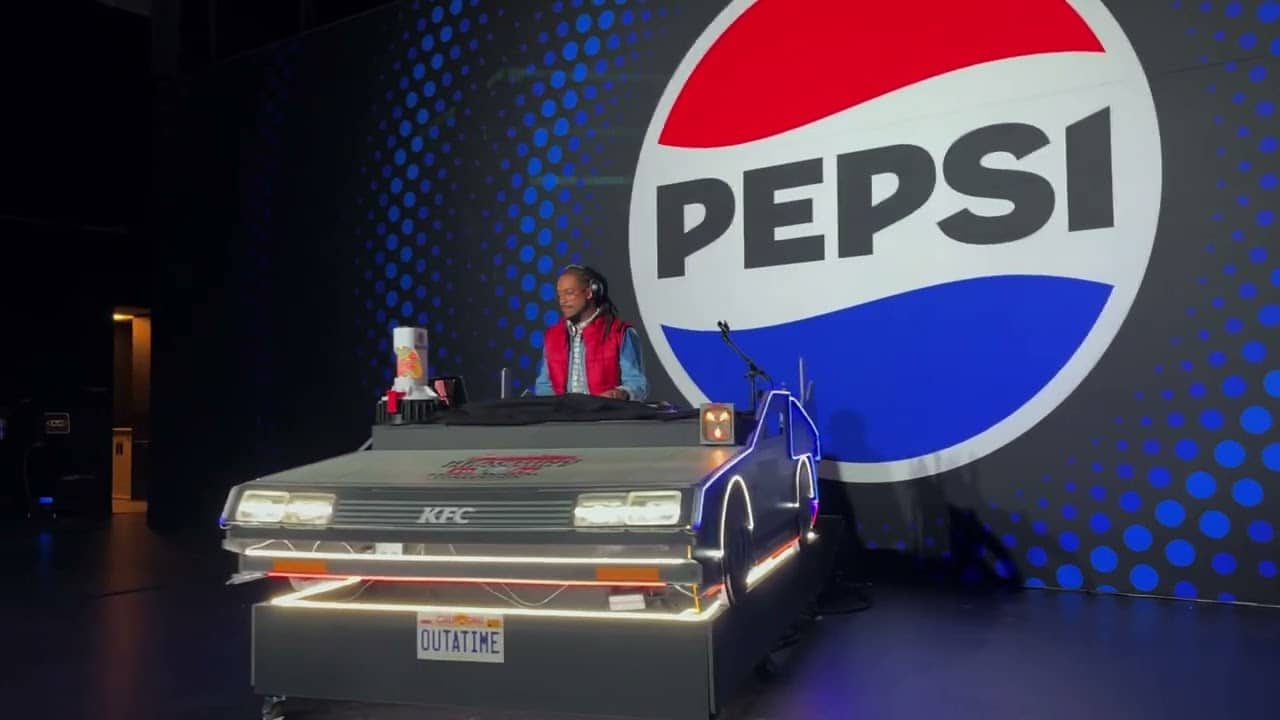
Product launch entertainment is the difference between an audience watching an announcement and an audience experiencing a brand. Modern launches do not happen in conference rooms with bullet-point slides; they happen in branded environments where every element either reinforces the launch story or quietly undermines it. The DJ work that fills the pre-reveal period, the emcee work that owns the reveal moment, the music programming that scores the post-reveal energy, the audience engagement that converts attendees into social amplifiers, all of these elements together produce the launch experience that gets remembered, photographed, posted, and recalled when the actual purchase decision happens weeks later. The entertainment is not decorative. It is the production architecture that makes the launch land.
This guide walks through the product launch and brand activation entertainment landscape why entertainment investment matters more in the 2026 marketing environment than it did in prior years, the architectural structure of a launch event and where entertainment fits across the arc, music programming for the pre-reveal energy build and post-reveal social phase, the emcee role at launches, the format variations across pop-ups, trade shows, festivals, and roadshows, production elements that frame the reveal moment, measurement approaches that justify the entertainment investment, and the credential criteria that separates launch-ready entertainment talent from adjacent-category alternatives.
Key Takeaways
→ Product launch entertainment investment is climbing across the Fortune 1000. 2025 industry data documented that 74% of Fortune 1000 marketers expect to increase experiential marketing spending in 2025, with experiential budgets typically running 10-30% of overall marketing spend. The investment trajectory reflects recognition that physical brand experiences outperform digital advertising for memory formation, purchase intent, and earned media generation.
→ Live launch events drive measurable purchase intent. Industry research documented that 85% of customers report being more inclined to buy a product or service after attending a live marketing event, with 91% reporting more positive feelings about a brand after actively participating in a brand activation. The purchase-intent lift translates entertainment investment directly into revenue impact when measurement frameworks are designed to capture the connection.
→ In-person experiences hold their place as the primary product discovery channel. 2026 industry data documented that 80% of consumers say in-person events are the most trusted way to discover new products and services, with event budgets growing at +10.9% even as overall B2B marketing spend declines. The trust differential makes the launch event a uniquely high-leverage marketing investment; one well-executed launch can substitute for substantial digital spend in driving qualified consideration.
→ Music and entertainment are now standard at product launches. Event Marketing Institute research documented that live music and DJ performances are the top entertainment choice for product launches, with 65% of launches featuring them. The prevalence makes the entertainment quality differential between a generic music programming approach and a brand-aligned, energy-managed performance a competitive variable rather than a discretionary line item.
→ The reveal moment is where the entertainment architecture earns the budget. The pre-reveal build, the moment itself, and the post-reveal social phase together form an arc that strong entertainment talent deliberately designs rather than improvises. The reveal-moment landing determines whether attendees walk out with the launch story embedded in their experience memory or with a vague impression of having attended an event with a new product in it.
See DJ Will Gill performing at corporate product launches and brand activations. To request a launch entertainment proposal, contact DJ Will Gill directly.
Why Product Launch Entertainment Matters
Brand Experience as Marketing Channel
The category-shift recognition. Brand experience has become a primary marketing channel rather than an occasional supplement to digital advertising. The shift reflects two structural changes: consumer attention has fragmented across so many digital touchpoints that traditional reach metrics have lost their meaning, while live experiences produce attention concentration that digital channels cannot match. 2025 industry data documented that nearly three-quarters of Fortune 1000 companies increased experiential budgets, driven by physical activations generating significantly higher brand favorability than digital display or connected TV. The budget shift produces the operational consequence that product launch entertainment quality is now a competitive variable rather than a discretionary detail.
Memory Formation and Experience Design
The cognitive-research layer. Industry reporting on the neuroscience underlying experiential marketing documented that design-led content begins forming memories in 0.9 seconds, while text-heavy content takes 5 seconds a difference that has obvious implications for product launch design. Attendees absorb the launch story most efficiently through sensory experience (music, lighting, environment, social energy) rather than through information density (slides, statistics, technical specifications). The entertainment work is what creates the sensory environment in which the launch story gets encoded into attendee memory rather than passing through attention without retention.
Purchase Intent and Trust
The behavioral-impact layer. Industry research documented that 85% of customers are more inclined to buy a product or service after attending a live marketing event, with 91% reporting more positive feelings about a brand after participating in an activation, and 70% becoming repeat customers after experiencing the brand. The purchase-intent metrics put a dollar value on the launch entertainment investment that pure brand-awareness metrics cannot capture. A launch event that produces measurable lift in attendee purchase intent justifies entertainment spend through revenue rather than through impression counts.
In-Person as Trust Channel
The discovery-credibility layer. 2026 industry data documented that 80% of consumers say in-person events are the most trusted way to discover new products and services, with event budgets growing at +10.9% even as overall B2B marketing spend declines. The trust differential between in-person and digital channels has widened as consumers have become more skeptical of digital advertising claims. A launch event lets the brand demonstrate the product in a context where attendees can verify the claims directly try the product, talk to actual humans about it, and see how peers respond. The trust capital generated at the launch event then translates to digital amplification with higher credibility than digital-native marketing claims carry on their own.
The Architecture of a Product Launch Event
Pre-Arrival and Walk-In
The atmosphere-establishment layer. The launch event arc begins before the formal program when attendees enter the venue, walk through the activation footprint, and form their first sensory impression of the brand environment. The pre-arrival and walk-in period typically runs 30-60 minutes for major launches, during which the DJ works to establish the brand atmosphere through music selection that aligns with the brand’s tone and energy. The music doesn’t compete with conversation; it sets the temperature of the room. Attendees who walk into a curated environment immediately understand that this is a designed experience worth their attention; attendees who walk into background-music ambience treat the event as ordinary, regardless of how much the brand invested in the reveal moment itself.
The Build to Reveal
The anticipation-design layer. The 15-30 minutes immediately before the reveal moment serve a specific function: building anticipation. Strong build programming gradually raises the energy in the room, music tempo nudging upward, lighting shifting toward more saturated colors, emcee announcements becoming more frequent, attendees moving from peripheral conversation toward the central reveal area. The build is choreographed through pre-event run-of-show work between the launch team, the production crew, the DJ, and the emcee. Attendees who haven’t experienced a deliberate build often describe the resulting reveal moment as electric without being able to articulate why the entertainment work has done its job invisibly.
The Reveal Moment
The peak-architecture layer. The reveal moment itself is what the rest of the event exists to support. The product is shown, the story is told, the brand makes its statement. Strong reveal architecture coordinates multiple sensory elements simultaneously a music drop that lands precisely on the visual reveal, lighting that shifts to spotlight the product, emcee work that frames the moment without competing with it, and audience direction that signals when to applaud and when to capture content. The technical precision required for a clean reveal landing is what separates production-grade launches from venue-grade launches. The reveal works because every component fires on cue and reinforces every other component.
The amplification-window layer. The 60-90 minutes after the reveal are when attendees process what they just saw, form opinions, and produce the content that will amplify the launch on social media. The post-reveal entertainment programming has to support all three activities simultaneously, energy that signals celebration without overwhelming conversation, music that produces a photogenic environment, emcee work that guides attendees toward the product interaction zones, and content-capture stations. The post-reveal phase is where the launch becomes shareable, and the shareability is what extends the launch reach beyond the room.
Music Programming for Product Launches
Brand-Aligned Soundtrack
The identity-translation layer. A product launch DJ programs the soundtrack as an extension of the brand’s identity rather than as generic dance music applied uniformly. A luxury automotive launch requires a different soundtrack than a streetwear collection drop; a B2B software launch requires a different tone than a consumer-tech reveal. Strong launch DJ work begins with the discovery of the brand’s positioning, the target audience demographics, the launch’s tonal goals (sophisticated, edgy, celebratory, contemplative), and the post-launch campaign that the event has to flow into. The soundtrack is then built to translate those inputs into music selections that produce the intended emotional response and avoid the selections that would produce the wrong response.
Energy Management Across the Arc
The dynamic-range layer. A launch DJ doesn’t simply play upbeat music continuously; the energy has to modulate to support the event arc. The pre-reveal walk-in period sits at a lower energy level (medium tempo, atmospheric) that allows conversation and orientation. The build to reveal nudges energy gradually upward without crossing into dance-floor territory. The reveal moment peaks energy briefly through a synchronized music drop. The post-reveal phase settles to a sustained celebratory level that supports social activity. Each transition is a deliberate operational moment that strong DJ work plans and executes rather than letting energy drift based on track selections made in the moment.
Reveal Moment Timing
The music-cue precision layer. The reveal-moment music cue is one of the highest-stakes operational moments in launch production. A music drop that lands two seconds late on a visual reveal turns a magical moment into an awkward one; a music drop that lands two seconds early signals the reveal before the visual catches up. Strong launch DJ work involves rehearsing the reveal cue with the production team, building in contingency timing for the inevitable timeline drift on launch day, and maintaining communication with the production crew during the build so that the actual reveal lands on the actual cue rather than the rehearsed cue. The precision required matches what film and theater productions handle through dedicated stage management at launches; the DJ often absorbs this responsibility through direct coordination with the production team.
The content-capture optimization layer. Post-reveal music has secondary work to do beyond sustaining energy; it has to be the soundtrack for the social media content attendees capture and share. Music with current cultural relevance, recognizable energy, and rights-cleared availability produces shareable content; obscure tracks or music with licensing issues produce content that attendees post and then take down after platform takedowns. Industry research documenting that social media engagement increases by 34% for brands using experiential marketing campaigns, with 96% of millennials sharing content from brand activations makes the social-amplification dimension of music selection a material consideration rather than a secondary concern.
Emcee Work at Product Launches
The Brand Voice Role
The voice-of-brand layer. The emcee at a product launch acts as the brand’s voice in the room, the conversational presence that guides attendees through the arc, introduces speakers and demos, frames the reveal moment, and bridges between segments. Strong launch emcees adopt the brand’s tonal register without becoming a corporate scripted spokesperson; they sound like the brand if the brand could speak. The emcee’s work matters most during the moments when attendees might lose engagement (transitions between segments, demo setup time, post-reveal milling) by holding the room together with appropriate energy and connective storytelling.
Speaker and Talent Introductions
The framing layer. Product launches typically include multiple speakers, the CEO or founder, the product team lead, and sometimes a celebrity endorser or industry partner. Strong emcee work frames each speaker appropriately, sets up their content within the broader launch arc, and manages the handoffs without losing momentum. The framing work is harder than it appears. Each speaker has a different role in the launch story, and the emcee has to position them in a way that the audience understands without imposing extensive context that would extend the program. Strong emcees handle this with concise framing language built specifically for each transition.
Audience Direction and Engagement
The crowd-management layer. Launches generate moments when the audience needs direction on when to move toward the reveal area, when to applaud, when to interact with demo stations, and when to capture content for social. The emcee provides this direction without making attendees feel managed. Strong audience direction reads as natural enthusiasm (“you’ll want to see this head toward the stage”) rather than as instruction (“attendees, please proceed to the main stage area”). The reading-the-room skill that distinguishes professional emcees from internal communications staff shows up most clearly in audience direction. Internal staff tend to over-direct, professional emcees tend to under-direct just enough that the room responds organically.
Product Demo Management
The technical-presentation layer. When the product is being demonstrated live, whether by the product team, a celebrity user, or a partnered creator, the emcee manages the presentation timing, fills any silence that develops during demo setup or transitions, and recovers cleanly when demos go off-script (which they do at corporate scale with surprising regularity). The demo management work is sometimes the difference between a product moment that lands and a product moment that gets recovered from. Strong launch emcee selection weights this skill explicitly because launches put the talent in situations where smooth recovery from technical hiccups is what separates a successful event from a remembered failure.
Brand Activation Format Variations
Pop-Ups and Retail Activations
The retail-environment layer. Pop-up shops and retail activations require entertainment that sustains atmosphere across longer windows than a single-evening launch, typically four to twelve hours per day across multiple days. The entertainment programming has to accommodate continuous foot traffic at varying densities, supporting the conversation and exploration that retail engagement requires while maintaining a brand-aligned atmosphere. Music programming for pop-ups generally sits at a lower sustained energy than a launch reveal, with energy peaks reserved for specific times (opening hour, late afternoon when foot traffic peaks, close of business when the day’s social capture happens). DJ presence at the pop-up signals that this is a curated environment worth engaging with rather than a generic retail space with branded signage.
Trade Show and Conference Activations
The booth-differentiation layer. Trade show and conference activations face the specific challenge of standing out within a crowded vendor floor. Strong activation entertainment uses music and emcee work to draw attendees toward the booth from across the floor, creating a sensory signal that differentiates the brand’s space from neighboring vendor booths. The music level has to comply with venue rules while still being audible above the general floor din. The emcee work, when present, typically operates in short bursts (5-10 minute mini-presentations every 30-60 minutes) rather than continuous programming, because trade show attendees are moving rather than sitting. Repeated short activations across the show day produce more attendee engagement than a single long activation.
Experiential Campaigns at Festivals
The third-party-environment layer. Brand activations at festivals and large public events operate within a host environment that the brand doesn’t control. Music programming has to compete with the festival’s main stage and side stages without violating venue rules. Emcee work has to engage festival attendees who arrived for the festival rather than for the brand. The activation has to provide enough value (a free experience, a content-capture opportunity, a memorable interaction) that festival attendees choose to engage with it rather than continuing past it. Strong festival activation entertainment treats the brand interaction as an opt-in moment. Attendees who choose to engage get a high-value experience, while attendees who pass by get a positive brand impression from the activation’s existence and quality.
Multi-Market Roadshows
The replication-at-scale layer. Some launches operate as multi-market roadshows, the same activation appearing in five, ten, or twenty cities across a campaign window. The entertainment programming has to maintain consistency across markets while also reflecting the local context appropriately. Strong roadshow entertainment uses a programming framework that’s identical across markets in structure (pre-reveal arc, reveal moment, post-reveal social) while customizing specific elements to local context (regional music nods, local emcee references, market-specific timing adjustments). The framework consistency produces the recognizable brand experience across all markets; the local customization keeps each market from feeling like a generic stop on a tour.
Production Elements That Frame the Reveal
AV and Lighting
The technical-production layer. Launch event AV requires considerably more capability than typical corporate event AV speakers distributed throughout the activation footprint, microphones for emcee and presenter work, plus product team and demo talent, video routing for live demo capture, and lighting that can shift to support the reveal moment specifically. Strong launch production designs the AV stack to support the reveal cue precisely while also handling the broader event programming. The lighting design in particular often does substantial work shifting the room temperature through color and intensity to support the energy arc, spotlighting the reveal at the precise moment, and producing the visual environment that attendees photograph and share.
Photo and Video Capture
The content-asset layer. Professional photo and video capture at the launch produces assets with weeks or months of post-event utility social media content for the brand and the partners, press release imagery, recap video for the next year’s launch teaser, and internal communications content celebrating the launch team’s work. Strong capture planning includes coverage of the reveal moment from multiple angles, candid attendee content showing genuine engagement, structured photo opportunities at content-capture stations, and behind-the-scenes content showing the production scale. The capture investment typically returns the launch event’s amplification value across the campaign window that follows.
The shareability-architecture layer. Beyond capturing the launch professionally, strong launch design builds the activation to produce attendee-generated content. Industry research documenting that 96% of millennials who engage with a brand take pictures or videos and share them online, with 86% of recipients opening and reviewing the shared content, makes the attendee-generated amplification mechanism one of the most efficient earned-media engines available. Strong design includes built-in content moments (photo backdrops with brand cues, product interaction zones with photogenic configurations, talent interaction opportunities), hashtag activation that connects individual posts to the campaign, and clear permission language that lets the brand amplify the best attendee content.
Hybrid and Streaming Considerations
The remote-extension layer. Major launches increasingly include a hybrid component, in-person activation streamed simultaneously to remote audiences, partner press, retail employees in other markets, or simulcast as a content asset for post-event distribution. The hybrid configuration adds technical requirements to the launch production stack: mixed-minus audio to prevent echo on the stream, dedicated camera positions for the reveal coverage, branded stream overlays and lower-thirds, and post-event VOD edit production. Strong launch entertainment talent has experience with hybrid configurations, specifically, rather than treating the stream as an afterthought added to an in-person event design.
Measuring Product Launch Entertainment Impact
Dwell Time
The engagement-duration layer. Dwell time, or how long attendees stay at the activation, in the venue, or at specific stations, is one of the cleanest measures of entertainment quality. Strong entertainment programming extends dwell time by giving attendees reasons to stay engaged rather than rotate out quickly. Measurement approaches include venue-level tracking (badge scan-in and scan-out timestamps), station-level tracking (RFID or beacon technology at specific interaction points), and observational tracking (production team noting how the room density evolves through the event arc). Dwell time correlates directly with the depth of brand exposure each attendee receives, which translates to the purchase-intent and recall lifts that justify the launch investment.
The amplification-measurement layer. Social media engagement around the launch, including branded hashtag volume, mentions, user-generated content posts, and engagement rates on brand-owned posts about the launch, provides a quantifiable measurement of the launch’s reach beyond the room. Strong measurement frameworks distinguish between brand-owned amplification (the brand’s own social posts) and earned amplification (attendee-generated posts), with the earned component carrying substantially more credibility than the owned component. Industry research documenting that social media engagement increases by 34% for brands using experiential marketing campaigns establishes the benchmark expectation against which individual launches can be evaluated.
Purchase Intent Lift
The conversion-attribution layer. Purchase intent measurement uses survey instruments to capture attendees’ likelihood to purchase the launched product before and after the launch experience. The pre-event baseline (typically captured at registration) and the post-event measurement (typically captured immediately after the activation or in a follow-up survey within 48 hours) together produce the lift attributable to the launch experience. Strong measurement isolates the entertainment contribution from other variables by including measurement points across the launch arc, attendees who experienced the full entertainment programming versus attendees who experienced only the reveal moment, for example.
Earned Media Value
The PR-attribution layer. Press coverage, influencer mentions, and other earned media value driven by the launch event provide another quantifiable return metric. Strong measurement assigns an equivalent ad spend value to each piece of coverage (the cost the brand would have paid to reach the same audience through paid placement), with appropriate adjustments for the credibility differential between earned and paid media. The earned media value alone often justifies the launch entertainment investment for major brand launches. A single piece of coverage in a trade publication or consumer outlet can carry an equivalent ad value of hundreds of thousands of dollars, depending on the publication’s audience scale.
Professional Application for Brand Launches
Three-in-One Service Integration
The unified-vendor layer. Some corporate entertainment talent provides DJ services, emcee services, and audience engagement programming as an integrated three-in-one package. The integrated model produces meaningful planning advantages for product launches: one talent owns the music programming, the emcee work, and the audience direction together, with all three elements coordinated by the same person rather than split across vendors who have to align on cues, tempo, and timing. DJ Will Gill operates a three-in-one corporate DJ, emcee, and audience engagement service model across Fortune 500 corporate event clients, including AT&T Business, CDW, Virgin Galactic, NeoGenomics, Foot Locker, Home Depot, Hilton, BGCA, PepsiCo, PayPal, and the United Nations.
Corporate Brand-Fit Experience
The category-positioning layer. Launch entertainment talent comes from multiple adjacent categories: wedding DJs, club DJs, festival DJs, conference moderators, comedians, and television personalities. Each category includes excellent individuals but produces different default behaviors when applied to corporate launch contexts. Wedding DJs often lean into participatory crowd work that feels out of place at a brand activation. Club DJs may pace the program for dance floor energy rather than launch arc. Festival DJs are accustomed to extended sets rather than reveal-cue precision. Strong launch entertainment selection prioritizes corporate brand-fit experience, specifically talent who have done launches before, understand brand voice, and respect the production discipline that the format requires.
Credentialed Track Record
The professional-recognition layer. The Wall Street Journal’s #1 Corporate DJ and Emcee designation and Forbes Next 1000 honoree recognition together document the corporate-format experience that distinguishes launch-ready talent from adjacent-category alternatives. 2,520+ five-star Google reviews accumulated over 600+ documented corporate events provide the verifiable client outcomes that strong launch entertainment selection processes look for during talent vetting.
Booking Lead Time
The calendar-coordination layer. Major product launches typically book entertainment talent four to nine months ahead of the launch date, particularly for top-tier talent and date-sensitive launches tied to industry events (Cannes, CES, Fashion Week, automotive show calendars). Roadshow campaigns require longer lead time still, with multi-market booking requiring coordination across the talent’s full calendar. Strong launch planning involves identifying entertainment talent during the campaign concept phase rather than after venue and date selection, because the talent’s input can shape production decisions (audio configuration, music programming approach, emcee role definition) more effectively when they’re involved before downstream decisions are locked.

About the Author
William “DJ Will Gill” Gilbert is an experienced corporate DJ and Emcee performing product launch and brand activation entertainment at Fortune 500 scale through a three-in-one DJ, emcee, and audience engagement service model. Documented client work for AT&T Business, CDW, Virgin Galactic, NeoGenomics, Foot Locker, Home Depot, Hilton, BGCA, PepsiCo, PayPal, and the United Nations. Also a Forbes Next 1000 honoree with broadcast credits including Super Bowl LIV (2020), The Voice (2011), and MTV’s The Real World: Hollywood (2008). He is also a World Cup performer and a Formula 1 Las Vegas Grand Prix performer.
2,520+ Google Reviews · IMDB · Mixcloud · Instagram · Contact
Frequently Asked Questions
Why does entertainment matter at a product launch?
Because it is the production architecture that makes the launch land: the DJ fills the pre-reveal build, the emcee owns the reveal, and the music scores the post-reveal social energy.
Are companies spending more on experiential launches?
Yes. 2025 industry data cited in the guide shows 74% of Fortune 1000 marketers expect to increase experiential marketing spend, with budgets typically 10 to 30 percent of overall marketing.
What is the structure of a launch event?
Four phases: pre-arrival and walk-in, the build to reveal, the reveal moment, and post-reveal social activation.
What does the emcee do at a launch?
Owns the reveal moment and manages the energy arc so attendees experience the brand rather than watch an announcement.
How is launch entertainment measured?
The guide covers measurement approaches that tie entertainment to memory formation, purchase intent and earned media.