
Pricing Your DJ & Conference Streaming Services (2026 Tiered Framework)
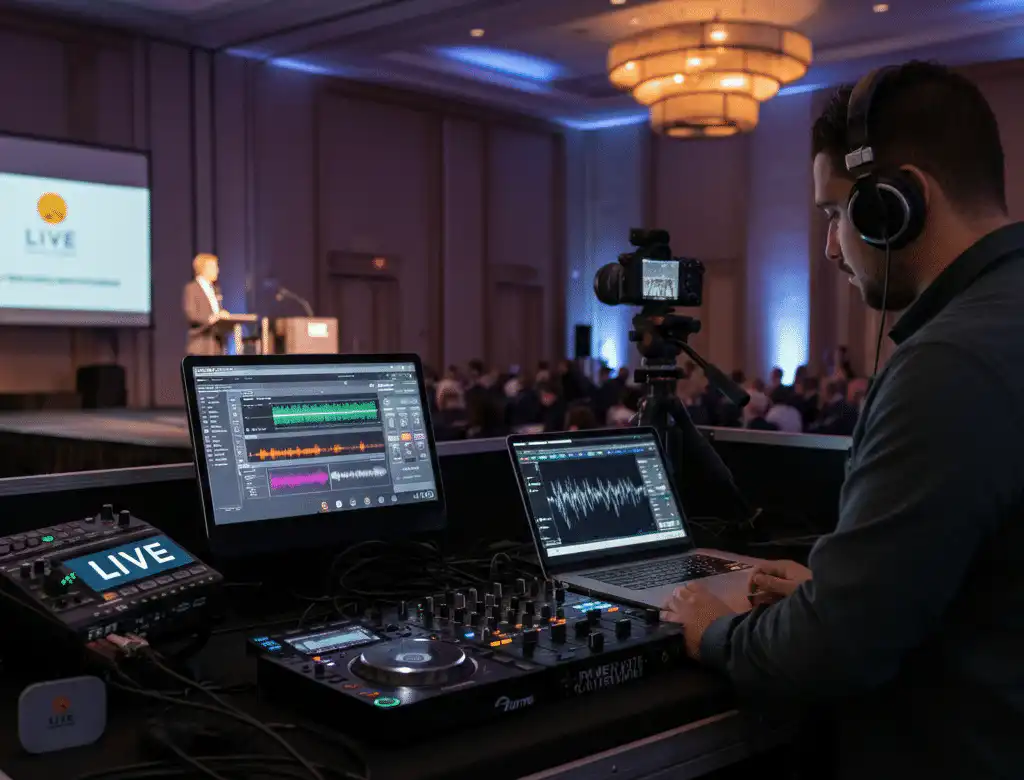
Pricing a DJ service that includes conference streaming infrastructure is a different exercise than pricing a traditional DJ booking. The traditional booking sells music curation and performance for a defined event window. The hybrid service sells music plus the streaming production infrastructure that makes the event accessible to remote attendees, including audio routing, platform management, redundancy, and post-event deliverables. The expanded scope brings additional cost categories (specialized gear, technical staff, rehearsal time, contingency reserves) and additional revenue layers (tiered service levels, add-on packages, post-event deliverables). Pricing the hybrid service the same way as a traditional DJ booking compresses margin and underprices the genuine technical complexity; pricing it as a separate service category with tiered packages produces clearer client conversations and healthier business economics.
This guide walks through the pricing framework for DJ-plus-conference-streaming services, why the hybrid service category requires its own pricing model, the tiered package structure that working DJs use for clarity and value differentiation, the cost drivers that determine each tier’s economics, the add-on packaging strategy, and the contract structure that supports the service category.
Key Takeaways
→ DJ-plus-conference-streaming services require their own pricing category, not a “streaming add-on” line item attached to traditional DJ pricing. The technical complexity of streaming production, the gear and staffing requirements, and the post-event deliverables together justify a distinct service category with tiered packages.
→ A three-tier package structure, Starter, Pro, and Enterprise, gives clients clear options aligned with their event scale and risk tolerance. The Starter tier handles single-room internal meetings with basic streaming; the Pro tier supports professional hybrid conferences with mixed-minus audio and platform management; the Enterprise tier provides multi-room, multi-day production with full redundancy and a dedicated technical director.
→ The hybrid events market has grown substantially since 2020. 2024 corporate event research documented 82% of attendees citing atmosphere as the primary satisfaction factor, with hybrid format events now standard rather than exceptional in the corporate calendar. The market expansion supports the case for treating streaming-integrated DJ services as a primary offering rather than an occasional accommodation.
→ Cost drivers behind tier pricing include specialized gear (audio interfaces, encoders, switchers), platform subscriptions (Vimeo, custom RTMP, restream services), technical staffing (dedicated technical director for higher tiers), site-visit time for network assessment, rehearsal time with remote speakers, liability insurance specific to technical services, performance rights organization licensing (ASCAP, BMI, SESAC, GMR coverage), and contingency reserve. Pricing without accounting for these drivers compresses margin to unsustainable levels.
→ Proposal structure matters as much as the pricing itself. Bundled tier descriptions are easier for clients to evaluate than itemized line lists; add-on packages (captions, breakout-room support, VOD edits, simulcasting) let clients customize within a structured framework; clearly-stated service level agreements, payment terms, and change-order policies prevent post-engagement disputes that erode margin or damage referral pipelines.
See DJ-plus-streaming service delivery in live corporate event contexts. To request a tailored proposal, contact DJ Will Gill directly.
Stop replaying the same songs.
Introducing TheAIDJ.com
AIDJ turns a plain-English request into a ready-to-play set, previews it instantly, and exports straight to Spotify. Discover music that actually fits the moment.
Why Hybrid Event Pricing Differs from Traditional DJ Pricing
Expanded Scope of Service
The category-shift recognition. A traditional DJ booking sells music curation, equipment operation, and live performance for a defined event window. A DJ-plus-conference-streaming engagement sells all of that plus the streaming production infrastructure capturing the room audio cleanly for remote listeners, mixing the in-room and remote audio paths without echo or feedback, managing the streaming platform during the event, handling speaker transitions and graphic overlays, and providing post-event recording deliverables. Each added responsibility expands the scope by a category, not just by a line item. Pricing the expanded service as if it were the original service with a small add-on fee compresses the per-hour economics to levels that don’t support the actual operational requirements.
Additional Gear Requirements
The capital-equipment layer. Streaming-integrated DJ work requires gear that traditional DJ work doesn’t have: dedicated audio interfaces with multiple output paths for mixed-minus routing, hardware or software video encoders for streaming, multi-source video switchers for events with multiple cameras, USB hubs and signal converters to manage the device count, and redundant cabling. The capital investment in the gear stack runs into multiple thousands of dollars, even at the entry tier, with the higher tiers requiring substantially more equipment. The gear depreciation, maintenance, and replacement timeline factors into hourly pricing the same way a contractor’s truck and tools factor into their hourly rate pricing. The gear-intensive work, the same as the gear-light work fails to recover the capital investment.
Additional Staffing Requirements
The labor-cost layer. Higher-tier streaming production requires staffing beyond the primary DJ, a dedicated technical director who monitors the stream during the event, an A/V tech who handles room sound separately from streaming sound, and an assistant for setup and load-in/load-out support. Each additional person on the engagement adds labor cost that has to be recovered through pricing. Multi-day engagements compound the staffing cost through per-diem accommodations and travel. The labor stack at Enterprise-tier engagement is substantially different from the solo-DJ traditional booking, and the pricing has to reflect the labor difference.
Expanded Risk Surface
The exposure-management layer. Streaming production introduces failure modes that don’t exist in traditional DJ work, such as internet dropouts that interrupt the remote feed, audio routing errors that produce echo or feedback on the stream, platform failures that take the stream offline, and encoder issues that degrade quality. Each failure mode requires either pre-event mitigation infrastructure (redundant internet paths, backup encoders, alternate platform readiness) or post-event recovery work (re-edited recordings, refund considerations, client recovery management). The expanded risk surface justifies higher pricing per hour than traditional DJ work because the operational discipline required is substantially greater.
The Tiered Pricing Model
Starter Tier: Essentials
The single-room baseline. The Starter tier serves small internal meetings, single-room presentations, and uncomplicated hybrid events where the streaming requirements are basic rather than production-intensive. Typical Starter scope includes a defined DJ performance window covering walk-in, breaks, and walk-out music; basic audio integration capturing the DJ mixer and a single podium microphone; clean feed routing to the client’s streaming platform (Zoom, Teams, or similar consumer platform); start/stop and monitoring management of the stream; and a single unedited audio/video recording as a post-event deliverable. The tier is appropriate for events where streaming is a secondary concern rather than the primary value driver.
Pro Tier: Hybrid Event Standard
The professional-hybrid baseline. The Pro tier serves professional hybrid conferences where the remote audience is a primary stakeholder rather than an afterthought. Typical Pro scope expands the DJ performance window to cover the full event arc; provides advanced audio routing including mixed-minus configuration to prevent echo and feedback for panel sessions with multiple microphones; supports proactive management of a dedicated streaming platform (Vimeo, custom RTMP destination, or similar professional infrastructure) including graphic overlays for speaker transitions; includes basic redundancy for internet and audio paths; and produces a lightly-edited full-event recording with branded bumpers as the post-event deliverable. The tier is the appropriate baseline for most professional hybrid conferences.
Enterprise Tier: Full-Service Production
The high-stakes baseline. The Enterprise tier serves large-scale, multi-day, or otherwise high-stakes events where execution standards are absolute. Typical Enterprise scope includes full-day or multi-day music curation across the entire event arc; management of complex audio and video infrastructure, including multi-room routing, remote speaker green rooms, and multiple camera switching; a dedicated technical director who handles streaming production while the DJ focuses on music; advanced redundancy including bonded cellular internet, power backups, and redundant hardware encoders; and a comprehensive post-event deliverables package including multiple video-on-demand edits, session-level recordings, and rush-delivery options for time-sensitive content needs. The tier is the appropriate baseline for high-profile corporate engagements where vendor failure isn’t an acceptable outcome.
Tier Positioning and Client Conversation
The selection-guidance layer. The tier model works best when the conversation with clients is about matching the event scope to the appropriate tier rather than negotiating individual line items. Strong practice includes framing the tier choice around event characteristics, attendance scale, recording requirements, panel format, and executive presence so the client can see which tier matches their event rather than evaluating prices in the abstract. The tier-matching conversation produces more confident selections, clearer scope agreements, and fewer change-order disputes than open-ended pricing discussions.
Cost Drivers Behind Each Tier
Gear and Software
The capital-recovery layer. Tier pricing has to recover the capital investment in the gear stack that supports each tier. Starter tier gear is largely the DJ’s existing equipment with modest streaming-specific additions; Pro tier requires specialized audio interfaces, dedicated encoders, and platform subscriptions; Enterprise tier adds redundant gear, multi-source switching infrastructure, and higher-tier platform contracts. Each tier’s gear cost depreciates over the equipment’s useful life, and the per-event recovery has to cover the depreciation plus maintenance and eventual replacement. Strong pricing practice accounts for this recovery explicitly rather than treating gear as sunk cost.
Staffing Costs
The labor-recovery layer. Staffing costs scale through the tiers Starter tier is typically a solo operation; the Pro tier may include one assistant for setup and monitoring; the Enterprise tier requires a dedicated technical director, plus possibly additional staff for multi-room engagements. The labor rate for technical staff matters. A qualified technical director with corporate event experience commands meaningful per-hour rates, and including their time in the tier pricing requires accurate hourly estimates of pre-event preparation, on-site execution, and post-event teardown. Underestimating any of these segments compresses the margin invisibly until the engagement is reviewed in retrospect.
Venue and Network Assessment
The pre-event diligence layer. Streaming-integrated work requires venue-specific network assessment that traditional DJ work doesn’t verifying available internet (Ethernet versus Wi-Fi versus cellular requirements), testing actual upload bandwidth, and identifying venue infrastructure limitations that affect streaming reliability. The assessment may involve site visits, communication with venue A/V staff, and equipment compatibility testing. Pricing the venue-assessment time as part of the tier rather than excluding it preserves margin and produces more reliable execution at higher tiers where the assessment is operationally essential.
Rehearsal and Tech Run-Throughs
The execution-quality layer. Higher-tier engagements include mandatory technical run-throughs with remote speakers, executive talent, and the on-site production team. The rehearsal time is genuine billable work the technical staff has to participate, the gear has to be set up to actual show condition, and the rehearsals often surface configuration issues that require resolution before the event. Pro tier engagements typically include one rehearsal; Enterprise tier engagements may include multiple rehearsals plus extensive pre-event speaker coaching for talent unfamiliar with the hybrid format. Pricing the rehearsal time as included in the tier rather than as an unbilled extra preserves the margin that the operational quality requires.
Insurance and Licensing Stack
The compliance-and-exposure layer. Technical service delivery at corporate event scale typically requires liability insurance specific to technical services (covering equipment damage, audio failures, and similar technical exposures), commercial-tier music licensing (ASCAP, BMI, SESAC, and Global Music Rights for the music played at the event), and platform-specific commercial licenses for any streaming services used. Each of these costs recurs annually or per-event and has to be factored into pricing. Underpricing the insurance-and-licensing stack creates exposure that becomes apparent only when a claim occurs or a licensing audit happens.
Contingency Reserve
The unknown-unknown layer. Strong tier pricing includes a contingency reserve, typically 10-15% of the engagement value, that absorbs the unexpected issues that emerge during execution. The contingency covers gear-failure replacement, last-minute staffing changes, extended hours when the event runs long, and similar unbudgeted requirements. The reserve isn’t profit; it’s the expected cost that varies by engagement. Pricing without a contingency reserve produces apparent margins that disappear as soon as anything unplanned happens, which, on hybrid events, is more frequent than on traditional DJ engagements because the technical surface area is larger.
Add-Ons and Package Customization
Captions and Accessibility
The compliance-and-inclusion layer. Live captioning during the stream, ASL interpreter integration, and post-event captioned VOD versions are common add-ons that corporate clients increasingly require for accessibility compliance. The add-ons require either dedicated staffing (live captioner, ASL interpreter) or platform integration (AI captioning services that may need pre-event configuration). Pricing the add-ons as discrete options rather than bundling them into base tiers lets clients select the level of accessibility infrastructure that matches their compliance requirements rather than paying for capabilities they don’t need.
Breakout Room Support
The multi-track expansion layer. Larger conferences often include breakout sessions running simultaneously with the main programming. Streaming breakout sessions requires additional infrastructure, additional cameras and microphones in the breakout rooms, additional encoders or platform streams, and additional technical staff to monitor the breakouts. Breakout support is typically an add-on per-room rather than a bundled feature because the requirements scale with the breakout count, and bundling them into base tiers would either overprice single-track events or underprice multi-track events.
VOD Edits and Deliverables
The post-event-content layer. Beyond the basic recording deliverable, corporate clients often want post-event video-on-demand edits, session-by-session breakouts of the recording, branded intro and outro overlays, captioned versions, and social-media-formatted clips. The edit work happens after the event and requires editor time, motion graphics design, and quality review. Pricing the VOD package separately from the live event lets clients select the level of post-event content investment that matches their internal distribution plans, with clear scope and turnaround commitments documented.
Multi-Platform Simulcasting
The audience-reach layer. Some corporate clients want the stream distributed to multiple platforms simultaneously, LinkedIn Live, YouTube, internal corporate channels, and partner platforms. Multi-platform simulcasting requires either a restream service (Restream, Castr, or similar) or custom RTMP infrastructure that can fan out the source stream to multiple destinations. The simulcasting capability is an add-on rather than a base feature because the platform configuration, branding requirements, and analytics expectations vary across distribution channels and adding them all to a base tier would either underprice the work or overprice events that only need single-platform distribution.
Proposal Structure and Client Communication
Bundled Tiers Versus Itemized Lines
The presentation-clarity layer. For most corporate client conversations, bundled tier descriptions produce better client outcomes than itemized line-by-line pricing. The bundle makes selection easier (client picks Pro because their event matches Pro scope) and avoids the scope-creep negotiation that itemized pricing invites (client tries to remove individual lines to reduce total). Strong practice uses bundled tier proposals as the default, with itemized line pricing reserved for procurement-driven RFPs that explicitly require line-item documentation. The bundle-by-default approach saves negotiation time and produces clearer scope agreements.
Clear Scope Documentation
The agreement-clarity layer. The proposal should document the engagement scope in specific terms, including total event hours, number of microphones supported, platform destinations included, rehearsal commitments, and deliverable specifications. Vague scope documentation invites post-engagement disagreement about what was promised; specific scope documentation makes the agreement enforceable in both directions. Strong practice involves writing a scope at the level a procurement reviewer would need rather than at the level the casual reader would accept, because the procurement reviewer is often the one who has to validate that the deliverable matches the agreement.
Payment Terms and Deposits
The cash-flow protection layer. Hybrid event engagements involve substantial up-front commitment, gear preparation, staffing reservation, platform subscriptions, and insurance coverage. Strong proposals include deposit requirements (commonly 50% on contract signing) and final-balance terms (commonly net-30 or final-balance-due-on-event-date) that align the client’s payment obligation with the vendor’s actual cash-flow requirements. The terms aren’t punitive; they reflect the reality that the vendor has to fund the engagement before the event, and the deposit structure protects against the cancellation-then-non-payment scenario that destroys margin on canceled events.
Change Order and Cancellation Policies
The dispute-prevention layer. Strong proposals document change-order policies (additions to scope require written authorization and may include additional charges) and cancellation policies (full or partial refund schedules based on cancellation timing). Without explicit documentation, scope creep produces resentment and post-event disputes; with explicit documentation, both parties know what to expect when circumstances change. The policies also protect the vendor against late cancellations that produce sunk-cost loss; the deposit and cancellation-fee structure compensates for staffing commitments and gear preparations that can’t be recovered once the engagement is canceled.
Contract and Risk Management Considerations
Service Level Agreements
The performance-definition layer. Higher-tier engagements may include explicit service level agreements (SLAs), uptime commitments for the stream, response-time commitments for issue resolution, and audio-quality specifications. The SLAs are valuable in both directions: they give the client clarity about what to expect, and they give the vendor a defensible standard against unreasonable post-event complaints. Strong practice involves committing to SLAs that the vendor can actually meet (and slightly exceed) rather than committing to SLAs that produce constant exposure. Under-promising and over-delivering produces better client outcomes than ambitious commitments that occasionally miss.
Liability Limits and Indemnification
The exposure-management layer. Corporate client contracts often include indemnification language that holds the vendor responsible for broad categories of risk. Strong practice involves reviewing the indemnification terms carefully and negotiating reciprocal indemnification or liability caps that match the engagement value rather than open-ended exposure. A small DJ business taking on unlimited indemnification on a corporate engagement creates an existential risk that no single engagement value can justify. The negotiation is professionally appropriate, corporate clients expect their vendors to push back on unreasonable terms, and the pushback usually produces workable middle-ground language.
Recording Rights and Content Ownership
The IP-clarity layer. Hybrid events produce recorded content with clear commercial value. The contract should specify who owns the recording (typically the client), who has rights to use the recording for marketing (typically a limited license to the vendor for portfolio use), and what restrictions apply to either party’s use. Without explicit documentation, post-event content disputes can damage the relationship even when both parties acted in good faith. Strong practice includes a clear recording-rights section in every proposal with marketing-use language that the vendor needs for portfolio development.
Professional Application at Corporate Events
Corporate Fit with Tiered Models
The procurement-friendly framework. Corporate procurement processes generally favor vendors who present clear tier structures over vendors who quote ad hoc for every engagement. The tier model reduces procurement effort (the buyer can map their event to a tier rather than negotiating individual line items), provides defensible pricing comparisons across vendors (tiers can be evaluated at the category level), and supports renewable-relationship pricing where repeat clients select known tiers for similar future events. Strong corporate-DJ practice presents the tier framework consistently across proposals to build the pricing structure into the relationship rather than treating each engagement as a fresh negotiation.
Atmosphere Stakes Justify Pricing
The value-justification layer. 2024 corporate event research documented 82% of attendees citing atmosphere as the primary satisfaction factor. For hybrid events specifically, the atmosphere has to translate across the in-room and remote audiences. The music and energy in the room need to come through to the remote feed with quality that doesn’t undermine the experience for remote viewers. Pricing the streaming-integrated service appropriately is what makes this atmosphere translation possible operationally; under-priced engagements produce compromised execution that undermines the satisfaction outcome the budget was supposed to deliver.

Need more than music at your corporate event?
Will Gill is also a corporate keynote speaker. His talk, The Moralegorithm, brings the same stage energy to your general session with three algorithms to boost morale and tap into your STAR POWER. DJ bookings and keynote talks pair naturally on multi-day agendas.
About the Author
William “DJ Will Gill” Gilbert is a professional corporate DJ and Emcee who has documented client work for AT&T Business, CDW, Virgin Galactic, NeoGenomics, Foot Locker, Home Depot, Hilton, BGCA, PepsiCo, PayPal, and the United Nations. Also a Forbes Next 1000 honoree with broadcast credits including Super Bowl LIV (2020), The Voice (2011), and MTV’s The Real World: Hollywood (2008). He is also a World Cup performer and a Formula 1 Las Vegas Grand Prix performer. 2,520+ five-star Google reviews accumulated over 600+ documented corporate events.
2,520+ Google Reviews · IMDB · Mixcloud · Instagram · Contact
Frequently Asked Questions
Why price DJ plus conference streaming differently?
Because it sells music plus streaming production infrastructure: audio routing, platform management, redundancy and post-event deliverables, which add gear, staff, rehearsal and risk.
What tiers does the framework use?
Three: Starter for single-room internal meetings with basic streaming, Pro as the hybrid event standard, and Enterprise for full-service production.
What drives the cost of each tier?
Gear and software, staffing, rehearsal time and contingency reserves.
Should streaming be an add-on line item?
No. The guide argues it needs its own service category with tiered packages, not a streaming add-on attached to traditional DJ pricing.
How do add-ons fit?
As packaged options layered on a tier, alongside contract structure that supports the service category.