
Types of Playlists to Have as a DJ to Energize Any Gig (2026 Five-Playlist Framework)
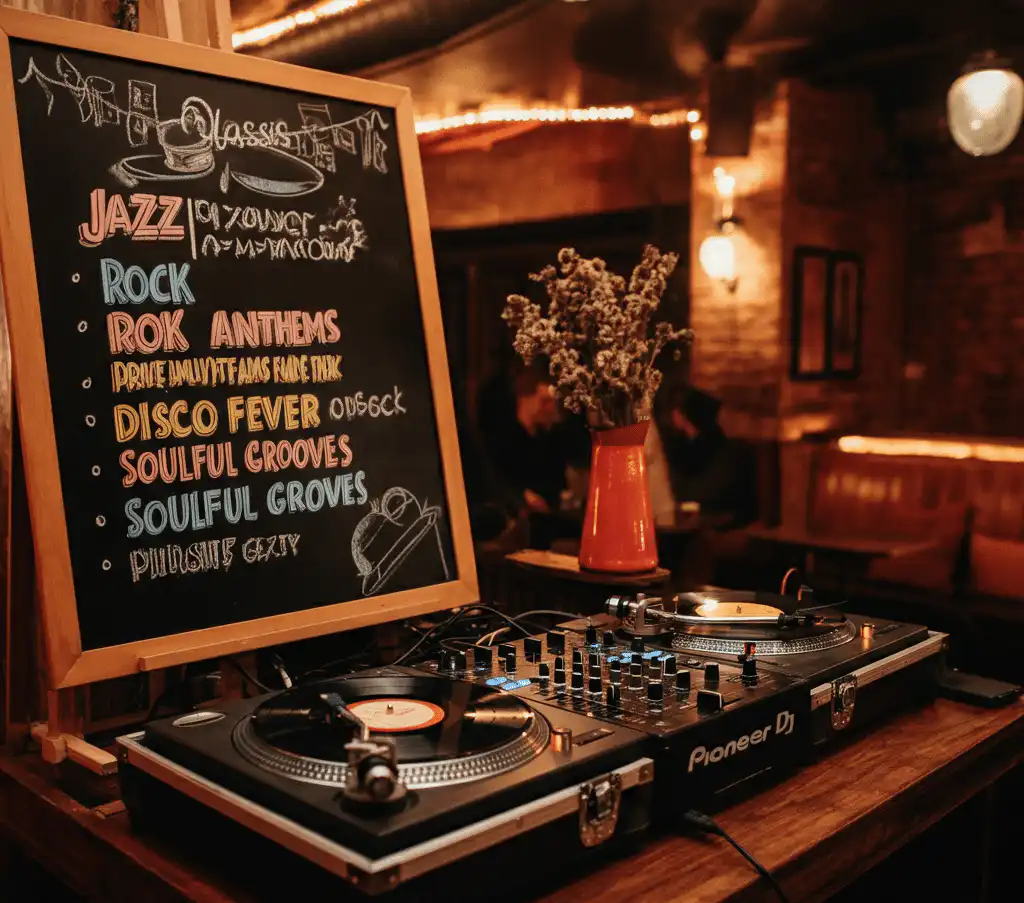
Working DJs don’t show up to gigs with a single playlist. They show up with a library typically five distinct playlist categories built around the operational reality of how live events actually unfold. The warm-up library handles guest arrival and the conversational hour before energy builds. The peak-hour libraries (multiple, by genre) handle the high-energy core of the event. The must-play and do-not-play lists handle client-specific requirements and constraints. The transition library handles the genre-switching moments where amateur DJs lose the crowd. The cool-down library handles the wind-down and final-impression moment that sends guests home satisfied. Each category has its own construction logic, BPM range, and deployment rules.
This guide breaks down all five playlist categories from the working-DJ perspective, what each one does, how to build it, when to deploy it, and how the five categories integrate into the operational arc of an actual event.
Key Takeaways
→ Five playlist categories cover the operational reality of working DJ gigs: warm-up (arrival), peak-hour (crowd anthems), must-play/do-not-play (client-specific), transition (genre bridges), and cool-down (conclusion). Each has a different construction logic and deployment timing.
→ Tempo shapes behavioral response in measurable ways. Ronald Milliman’s foundational 1982 Journal of Marketing research documented that slow-tempo background music produced approximately 38.2% higher sales in supermarket environments compared to fast-tempo music, with later research extending the finding to dining time, alcohol consumption, and other behavioral domains. Working DJs operationalize the tempo-behavior relationship through the warm-up/peak/cool-down BPM architecture.
→ The must-play and do-not-play list infrastructure is the working DJ’s professional-grade layer that separates corporate-tier work from amateur freelance. Strong working practice involves explicit pre-event client communication about specific tracks that must be played (often tied to first-dance moments, brand cues, or executive preferences) and specific tracks that must be avoided (often tied to past negative associations, demographic sensitivities, or political concerns).
→ Music engages multiple brain regions simultaneously across motor planning, emotional processing, reward circuitry, and verbal areas. Peer-reviewed research published in PLOS One in 2025 documented the multi-region engagement. The transition playlist work bridging genres and BPM ranges without losing the crowd, is the operational skill that uses the multi-region engagement to shift one set of neural systems into another without breaking the listener’s attention.
→ Atmosphere is the dominant satisfaction factor at corporate events. Research published in 2024 documented 82% of corporate event attendees citing atmosphere as the primary satisfaction factor, with music as a substantial contributor to atmosphere quality. The five-playlist framework is the working DJ’s atmosphere-construction infrastructure for delivering the satisfaction outcome corporate clients are buying.
See the five-playlist framework operationalized across composite-audience corporate event contexts. To book corporate DJ services, contact DJ Will Gill directly.
Stop replaying the same songs.
Introducing TheAIDJ.com
AIDJ turns a plain-English request into a ready-to-play set, previews it instantly, and exports straight to Spotify. Discover music that actually fits the moment.
The Five-Playlist Working DJ Framework
Why Five Categories
The operational coverage. The five-playlist framework covers the five distinct operational phases working DJs encounter at every gig: arrival (warm-up), main-event energy (peak-hour, often multiple genre-specific lists), client-required content (must-play), client-prohibited content (do-not-play), genre-bridging work (transitions), and conclusion (cool-down). Each phase has different demands, different tempo, different energy, different audience attention, and a single undifferentiated library fails reliably across the phases. The five-category architecture distributes the demands into purpose-built sub-libraries that each work for their phase rather than trying to make one library handle everything.
How the Categories Work Together
The arc construction. A 4-hour corporate event might run 45 minutes of warm-up (arrival, cocktail hour), 2 hours of peak-hour deployment across multiple genre-specific lists with transition tracks between genre shifts, 30 minutes of must-play-driven content (first-dance moment, brand-cue tracks, executive-preference moments), and 45 minutes of cool-down through the close. The five categories integrate into a coherent arc rather than operating as separate buckets; strong DJ work moves between categories fluidly based on what the moment requires.
Why Open-Format DJs Need All Five
The breadth requirement. Open-format DJ work is the breadth-oriented specialty that spans pop, hip-hop, R&B, Latin, dance, throwback, and current viral material needs all five categories because the breadth itself creates more transition challenges, more must-play complexity, and more genre-switching demands than narrow specialty DJ work does. A specialty house DJ operating one genre needs less transition infrastructure because the genre never changes. An open-format DJ working a wedding, corporate event, or composite-audience party needs the full framework because the work spans multiple genres within the same set.
The Warm-Up Playlist (Arrival)
Warm-Up Purpose and Atmosphere Goals
The first-impression layer. The warm-up playlist establishes the atmospheric foundation before high-energy material begins. Guests are arriving, checking in, finding their seats, encountering each other in the lobby or cocktail-hour space, and forming early impressions of what the event is going to be. The warm-up music carries substantial weight in shaping those impressions, atmosphere over impact, sophistication over excitement, conversational support over center-stage performance. Strong warm-up sets read as inviting and confident without trying to dominate the room.
Warm-Up BPM Range (90-115)
The tempo constraint. Warm-up sets typically operate in the 90-115 BPM range, downtempo enough to support conversation, upbeat enough to feel positive rather than sleepy. Ronald Milliman’s 1982 research on tempo and consumer behavior documented that slower-tempo environments produce different behavioral outcomes than higher-tempo environments at statistically significant levels. The warm-up tempo range is the working DJ’s application of that research, using tempo deliberately to support the behavior the moment requires (conversation, arrival, gentle mingling) rather than the behavior peak-hour music supports.
Warm-Up Genre Selection
The category coverage. Strong warm-up libraries pull from downtempo hip-hop, lo-fi instrumentals, soul, neo-soul, sophisticated electronica, deep house at the slower end of the tempo range, jazz-influenced material, and acoustic singer-songwriter work that fits the conversational atmosphere goal. Mainstream pop at the lower BPM end can work. Hard rock, heavy electronic, aggressive hip-hop, and any material that demands center attention generally doesn’t work in warm-up contexts; those are peak-hour categories deployed later in the arc.
Warm-Up Length and Pacing
The duration budget. Warm-up phases run anywhere from 30 minutes (tight cocktail hour) to two hours (extended arrival or pre-dinner reception). Working DJs maintain warm-up libraries of at least three hours of material so the deployment doesn’t loop visibly within any actual gig. The pacing within the warm-up should be gentle, gradual tempo and energy increase across the phase as guests arrive and energy organically builds, but no dramatic shifts that would compete with the conversational atmosphere goal.
Warm-Up Vocal vs Instrumental
The lyric question. Strong warm-up libraries lean instrumental-heavy because lyrics compete with conversation in ways that pure instrumental material does not. Acoustic, jazz, lo-fi, and instrumental hip-hop work well for this reason. When vocal material is deployed in warm-up, the lyrics should be positive and unobjectionable, no political content, no aggressive content, and no material with explicit themes that might catch the wrong attention during arrival. The vocal warm-up material is typically held in reserve for the moments when the warm-up is about to transition into peak.
The Peak-Hour Playlists (Crowd Anthems)
Multiple Genre-Specific Peak Lists
Why not one peak library? Working DJs maintain multiple peak-hour libraries organized by genre: a pop peak list, a hip-hop peak list, an R&B peak list, an electronic/dance peak list, a Latin peak list, a throwback peak list (often subdivided by decade), and any specialty peak lists relevant to specific working contexts. The multi-list architecture enables the DJ to switch genres deliberately during the peak phase based on crowd response without having to filter genre material on the fly within a mixed library. The organization is operational infrastructure rather than aesthetic preference.
Peak BPM Range (120-130+)
The energy tempo. Peak-hour material typically operates in the 120-130 BPM range for most contemporary peak-energy genres, with electronic dance music often running 128-140 BPM and certain hip-hop or R&B peak material running 95-115 BPM at half-time (which feels faster than the actual BPM suggests due to rhythmic structure). Research on workout-music tempo synthesized through BASES (British Association of Sport and Exercise Sciences) expert statements documents the relationship between higher-tempo music and physical-activity engagement that peak-hour DJ work operationalizes for dancing rather than exercise contexts.
Current Hits vs Timeless Classics
The balance question. Strong peak-hour libraries balance current chart-topping material (recognition, currency, social-media-driven relevance) with timeless anchor tracks that work across years of bookings (universal recognition, multi-generational reach, dependable crowd response). The exact ratio depends on the working context. Wedding work typically runs 50-60% timeless classics for the multi-generational audience composition, while club work runs 70-80% current material for the younger audience composition. Corporate events sit in the middle, depending on attendee demographics.
How to Organize Peak Lists
The internal structure. Within each genre-specific peak list, working DJs typically sub-organize by energy level (1-10 scale), by era for throwback lists (80s separated from 90s separated from 2000s), and by sub-genre where the genre divides naturally (hip-hop dividing into East/West/Southern, dance dividing into house/techno/big-room/future-bass). The sub-organization enables rapid deployment decisions during live work when a peak-hour moment needs a specific energy level or sub-genre, the DJ can locate it within seconds, rather than searching the full list.
Test and Rehearse Mixes
The pre-gig preparation. Strong peak-hour deployment depends on the DJ knowing which tracks mix smoothly with which other tracks, the BPM compatibility, the key compatibility for harmonic mixing, the energy-curve compatibility, and the structural compatibility (intro/outro lengths). This knowledge develops through rehearsal rather than during live work. Strong working DJs spend regular time testing mix combinations and noting which transitions work versus which fight against each other, building up a personal map of high-confidence transitions they can deploy reliably under performance pressure.
Must-Play and Do-Not-Play Lists (Client Layer)
Why Client Lists Matter for Professional Work
The professional differentiator. The must-play and do-not-play list infrastructure is the working DJ’s professional-grade layer that separates corporate-tier work from amateur freelance. Amateur DJ work treats the music library as the DJ’s curatorial choice; the DJ picks what to play based on personal preference. Professional DJ work treats the music library as the client’s request space. The client has specific tracks that must be deployed at specific moments (often tied to brand cues, executive preferences, sentimental significance, or programmatic requirements) and specific tracks that must be avoided (often tied to negative past associations, demographic sensitivities, organizational concerns, or political alignment).
Pre-Event Client Communication
The intake protocol. Strong working practice involves explicit pre-event client communication about the must-play and do-not-play layers, typically through a standardized intake form or pre-event call where the client surfaces tracks they want included and tracks they want excluded. The conversation should be proactive (the DJ asks rather than waiting for the client to volunteer) and comprehensive (covering the full event arc rather than just the obvious moments). The intake produces a documented list that the DJ can refer to during the event rather than relying on memory of conversational details.
Wedding-Specific Must-Play Protocols
The sentimental-significance layer. Wedding work has the deepest must-play infrastructure because weddings include multiple sentimentally-significant track moments first dance, parent dances, processional/recessional, bouquet toss, garter toss, cake cutting, anniversary dance, last dance, and any couple-specific moments (the song from their first date, the song they sang at karaoke, the song that played during the proposal). Each moment has its own track or tracks that the client cares about specifically. Strong wedding DJ work treats these moments as non-negotiable in execution rather than optional moments to substitute.
Corporate Event Do-Not-Play Protocols
The brand-protection layer. Corporate clients often maintain do-not-play lists that reflect organizational concerns, such as artists whose public political positions conflict with the company’s stated values, artists with histories that create reputational risk for the brand, content with explicit themes inappropriate for the executive audience, and content tied to past negative associations the company is trying to move beyond. The Boys & Girls Clubs of America (BGCA) Do-Not-Play list, maintained for their annual conference work, is a representative example of explicit artist-level exclusions communicated in advance to all performing DJs across the multi-day event. Working corporate DJs honor these lists without exception or interpretation.
Strategic Placement of Must-Plays
The deployment timing. Strong must-play deployment is strategic rather than chronological. The must-play tracks integrate into the event arc at moments where they fit musically and emotionally, not just delivered as a sequential block. A slow ballad must-play belongs in the warm-up or transition phase, not in the middle of a peak-hour dance set where the tempo shift would clear the floor. A high-energy must-play belongs in the peak phase. Working DJs map the must-plays to the event arc in advance rather than discovering placement during live work, with the mapped placements adjusted as needed based on actual crowd response.
Do-Not-Play Discipline During the Set
The non-negotiable enforcement. The do-not-play list operates as a non-negotiable constraint regardless of in-the-moment requests from attendees. When a guest at the event requests a do-not-play track, the working DJ politely declines and pivots to a similar-energy alternative. The do-not-play list reflects the client’s instructions, and the attendee’s request does not override the client’s authority. Strong working practice involves having mental substitutes prepared for likely do-not-play requests so the pivot happens smoothly rather than visibly. The discipline protects the working relationship with the client and the DJ’s professional reputation.
Transition Playlists (Genre Bridges)
The Genre-Switch Problem
The dance-floor failure mode. A sudden jump from 128 BPM electronic dance music to 95 BPM hip-hop without a transition track can empty a dance floor inside two minutes. The BPM gap is too large, the rhythmic structure too different, and the energy signal too inconsistent for the audience to bridge mentally. The same gap deployed with a transition track that handles the BPM shift gradually (perhaps a 110 BPM track that mediates between the two), the genre shift contextually (a remix that combines elements of both), or the energy shift sequentially (multiple tracks that step down rather than jumping) maintains the dance floor through the change. The transition library is the working DJ’s bridge-building infrastructure.
BPM-Bridging Tracks
The tempo math. Working DJs maintain transition libraries organized by BPM gap tracks that bridge 130 BPM to 100 BPM, tracks that bridge 110 BPM to 130 BPM, tracks that bridge 125 BPM to 95 BPM, and so on across the gap combinations they regularly encounter. The bridging tracks typically have a flexible rhythmic structure that supports both tempo interpretations or have built-in tempo shifts within the track structure that handle the gap internally. Building this library takes substantial listening time, finding genuine bridge tracks rather than just slower or faster material, but the investment pays off across every multi-genre set the DJ works.
Style-Bridging Tracks
The genre math. Beyond BPM, transition libraries include style-bridging tracks that handle genre shifts independently of tempo remixes that combine house and hip-hop elements, mashups that overlay vocals from one genre on instrumentals from another, and edit-pool material that deliberately bridges genres as its design purpose. The style-bridging library is smaller than the BPM-bridging library because genuine cross-style bridge tracks are rarer than tempo-bridge tracks, but the few good ones get heavy deployment.
Acapellas and Remix Material
The vocal-layer technique. Working DJs use acapellas (vocals isolated from the instrumental track) to layer over instrumentals from different genres, creating real-time transitions that didn’t exist as released tracks. The technique requires hot-cue and loop infrastructure within the DJ software, but can produce remarkable transition moments, a familiar pop vocal laid over a house beat to bridge into electronic, or a hip-hop vocal layered over an R&B instrumental to bridge between the genres. The technique is advanced rather than entry-level, but is operational practice at the corporate-event tier.
When to Deploy Transitions
The trigger conditions. Strong transition deployment is triggered by specific signals during live work. The DJ recognizes that the current genre is exhausting its appeal (dance-floor density dropping, energy fading, the same crowd response pattern repeating), the next planned phase requires a different genre or BPM, or a client-driven moment requires a specific track that doesn’t mix smoothly from current material. The trigger recognition itself is a skill that develops with experience. Strong working DJs see the transition moment 30-60 seconds before it becomes obvious and prepare the bridge track in advance rather than scrambling when the genre exhaustion is already visible.
The Cool-Down Playlist (Conclusion)
Cool-Down Purpose and Arc Completion
The final-impression layer. The cool-down phase carries the same impression weight as the warm-up phase but in the opposite direction. Instead of establishing what the event is about to be, the cool-down concludes what the event was. Strong cool-down work sends guests home with a positive memory of the event’s final moments, which becomes the dominant memory in their later recall. The arc completion matters because abrupt endings (peak-hour energy that just stops) create different memory associations than gradually resolved endings (peak-hour energy that descends through cool-down material into a satisfying close).
Cool-Down Tempo Descent
The gradual unwinding. Cool-down sets typically descend from peak-hour tempo back down through mid-range tempo (110-120 BPM) and into the lower range (90-115 BPM, overlapping with warm-up territory but with different material) over 30-60 minutes. The descent is gradual, with large tempo jumps within the cool-down feel jarring just as they do within peak-hour. Working DJs map the descent in advance, identifying the bridge tracks that mediate between peak and cool-down territory, and deploy the descent at the timing the event arc requires (typically aligned with venue close, scheduled end times, or external triggers like buffet shutdown).
Feel-Good Singalong Material
The collective-moment construction. Strong cool-down libraries lean heavily on feel-good sing-along material, universally recognized songs that produce collective vocal participation rather than individual silent listening. Classic rock anthems, soulful ballads with familiar choruses, and sing-along pop tracks from multiple eras all work for this purpose. The collective participation transforms the cool-down from passive winding-down into an active shared moment, which produces stronger final memories than silent decompression would.
The Last-Song Moment
The final-track decision. The actual last song of the event carries disproportionate memory weight; guests will remember the last track played more clearly than tracks earlier in the cool-down. Strong working practice involves explicit final-track planning in advance rather than discovering the closing track in the moment. The final track should feel like a conclusion rather than an interruption, a track whose ending feels like an ending, not a track that fades out arbitrarily because the time ran out. Wedding work often has client-designated final tracks; corporate work typically allows the DJ discretion within thematic alignment.
Encore-Ready Material
The extension reserve. Working DJs maintain encore-ready material, additional cool-down or peak tracks available beyond the planned conclusion in case the crowd isn’t ready to leave or the event extends past scheduled timing. The reserve is an operational infrastructure that prevents the failure mode where the planned last track plays, and the audience expects more, but the DJ has nothing prepared. The encore reserve doesn’t necessarily get deployed; most events end as planned, but having it available is professional preparation rather than optional polish.
How the Five Playlists Integrate
Four-Hour Corporate Event Arc
The composite deployment. A four-hour corporate event typically runs roughly 60 minutes of warm-up during cocktail hour and arrival, 2.5 hours of peak-hour deployment integrating multiple genre-specific lists with transition tracks between genre shifts, must-play moments distributed across the arc at appropriate timing (typically including brand-cue tracks during awards or recognition moments and executive-preference moments at strategic transitions), and 30-45 minutes of cool-down through the close. The do-not-play discipline operates continuously across the entire arc rather than at specific moments.
Six-Hour Wedding Arc
The extended composite. A six-hour wedding reception typically runs 90 minutes of warm-up across cocktail hour and seated dinner, 3 hours of peak-hour deployment across multiple genres responsive to the multi-generational audience composition, must-play moments distributed across the major wedding tradition points (first dance, parent dances, anniversary dance, bouquet/garter toss, last dance), transition tracks bridging the substantial genre shifts wedding work demands, and 60-90 minutes of cool-down through the formal close. Wedding work uses the framework most intensively because every wedding requires all five categories deployed across the longest typical event duration.
Live Adjustments During the Set
The plan vs reality gap. The pre-event arc plan is the starting framework, not the rigid script; actual events deviate from plans in predictable ways. The crowd may respond more strongly to one genre than expected, and the DJ extends that genre’s peak-hour deployment. A specific must-play moment may need timing adjustment based on the actual ceremony or program flow. The cool-down may need to be compressed if the event runs long or extended if the event runs short. Strong working DJs treat the five-playlist framework as a flexible infrastructure that adapts to live conditions rather than as a fixed sequence that must execute exactly as planned.
Professional Application at Corporate Events
BGCA Do-Not-Play Protocol Example
The real-world implementation. The Boys & Girls Clubs of America (BGCA) maintains a documented Do-Not-Play list for their annual National Keystone Conference and related events, with explicit artist-level exclusions communicated in advance to all performing DJs across the multi-day programming. The list reflects the organization’s care for the youth audience and its alignment with the brand values BGCA represents. Working corporate DJs at BGCA events honor the list as a non-negotiable operating constraint, with no substitution or interpretation, regardless of attendee requests. The protocol represents the corporate-tier do-not-play discipline at scale.
Composite-Audience Deployment
The corporate-event reality. Corporate events present DJs with composite audiences spanning multiple generations, cultural backgrounds, departmental groups, and demographic segments. The five-playlist framework is the working DJ’s infrastructure for handling the composite audience because the multiple peak-hour lists allow genre-rotation that engages different audience segments sequentially, the transition library handles the genre shifts that the rotation requires, and the must-play/do-not-play discipline ensures the client’s specific brand and audience considerations are honored throughout. The framework scales from single-genre simple events into multi-genre corporate complexity.
Multi-Day Event Playlist Management
The duplicate-avoidance discipline. Multi-day corporate events (conferences, retreats, summits running 3-5 days with DJ programming across multiple sessions) require additional playlist discipline beyond single-day work tracking which tracks were deployed on previous days so the same audience doesn’t hear identical material across the conference, varying the genre-rotation balance across days so different segments lead each day, and integrating client-specific brand cues that may shift in emphasis across the program. The five-playlist framework scales into multi-day work by maintaining session-specific deployment notes rather than relying on the same execution across every session.

About the Author
William “DJ Will Gill” Gilbert is a professional DJ & Emcee serving the United States and beyond with documented client work for AT&T Business, CDW, Virgin Galactic, NeoGenomics, Foot Locker, Home Depot, Hilton, BGCA, PepsiCo, PayPal, and the United Nations. Also a Forbes Next 1000 honoree with broadcast credits including Super Bowl LIV (2020), The Voice (2011), and MTV’s The Real World: Hollywood (2008). He is also a World Cup performer and a Formula 1 Las Vegas Grand Prix performer. 2,520+ five-star Google reviews accumulated over 600+ documented corporate events.
2,520+ Google Reviews · IMDB · Mixcloud · Instagram · Contact
Frequently Asked Questions
What five playlists should a working DJ carry?
Warm-up for arrival, peak-hour crowd anthems by genre, must-play and do-not-play lists for client requirements, transition bridges between genres, and cool-down for the close.
What BPM range is the warm-up?
90 to 115 BPM, built for the conversational hour before energy builds.
What BPM range is peak hour?
120 to 130 BPM and above, with multiple genre-specific lists.
Why does tempo matter?
Milliman's 1982 research found slow-tempo music produced about 38.2% higher supermarket sales, and DJs operationalize that tempo-behavior link through the warm-up, peak and cool-down arc.
What separates corporate-tier DJs here?
The must-play and do-not-play infrastructure, which handles client-specific requirements amateurs skip.