
Top 5 DJ Music Streaming Services for Open-Format DJs (2026 Comparison Guide)
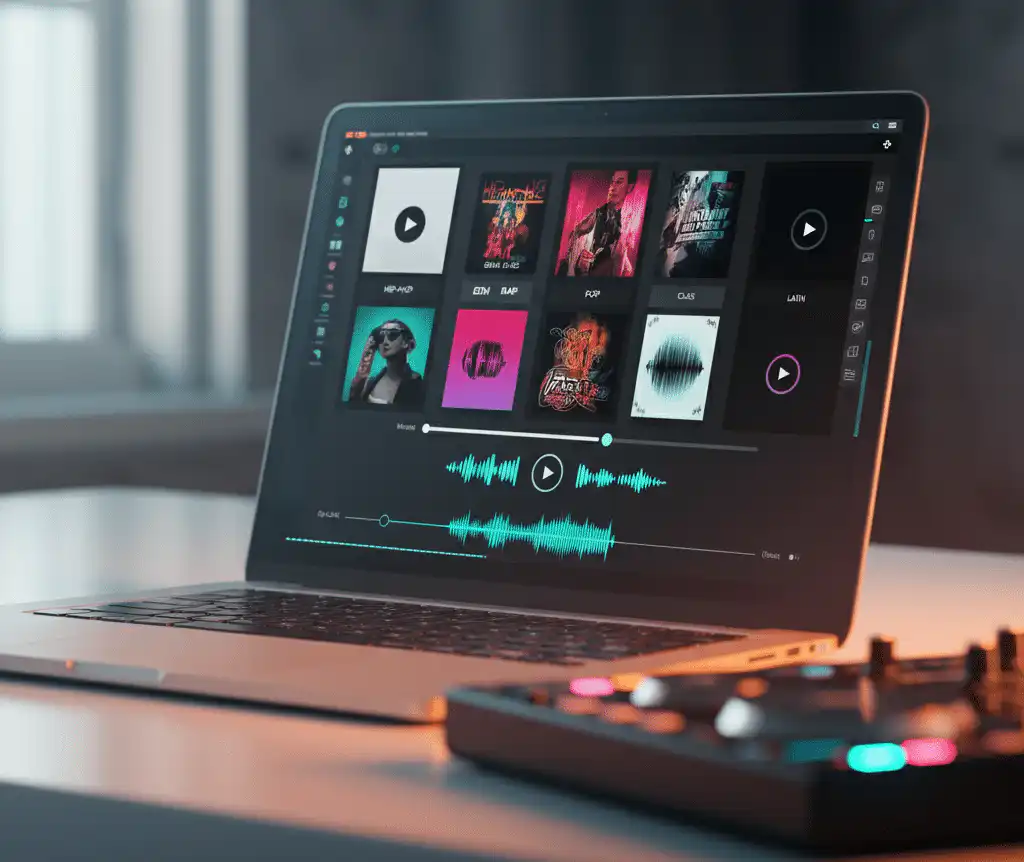
Open-format DJs work the broadest catalog territory in the profession, moving across pop, hip-hop, R&B, Latin, dance, electronic, throwback, and current viral material within the same set, often within the same hour. Streaming integration into DJ software has reshaped what that catalog access looks like, but no single streaming service wins across every dimension that matters. TIDAL leads on audio quality. Beatport leads in electronic. Beatsource is purpose-built for open-format work. SoundCloud holds the deepest independent and edited catalog. Amazon Music Unlimited brings sheer scale. Picking the right service (or combination) depends on which dimensions matter most for the specific working context.
This guide compares the top five DJ music streaming services from the perspective of working open-format DJs in 2026, catalog coverage, DJ software compatibility, audio quality, offline-cache infrastructure, pricing tiers, and the specific use cases each service handles best. DJ Will Gill operates streaming-integrated open-format DJ work at the corporate-event tier
Key Takeaways
→ Streaming is the dominant force in the music economy. IFPI’s 2024 Global Music Report documents streaming as roughly two-thirds of the $28+ billion global recorded music industry. DJ-licensed streaming is the working DJ’s integrated catalog interface and has become baseline infrastructure for open-format work.
→ Audio quality has shifted upward across the streaming landscape. Spotify rolled out lossless audio in September 2025 (24-bit / 44.1kHz FLAC) across 50+ markets, joining Apple Music’s lossless tier (since May 2021, up to 24-bit/192kHz) and TIDAL HiFi as audio-quality reference points. DJ-licensed services have responded accordingly with higher-quality streaming tiers.
→ No single service wins everything for open-format work. TIDAL is best for audio quality. Beatport Streaming is best for electronic-heavy open format. Beatsource is purpose-built for open format with curated event playlists. SoundCloud DJ is best for unique edits and discovery. Amazon Music Unlimited brings catalog scale but has the weakest DJ software offline support. Multi-service subscriptions are common at the working-DJ tier.
→ Pioneer DJ rebranded to AlphaTheta in 2024, and Rekordbox (now AlphaTheta’s flagship DJ software) supports TIDAL, Beatport, Beatsource, and SoundCloud streaming. Serato DJ Pro supports all four plus selective Amazon Music integration. VirtualDJ has the broadest compatibility profile across services. Software-streaming compatibility is the practical first filter when choosing a service.
→ The offline-cache feature separates services genuinely usable for professional gig work from services more suited to home practice. Network connectivity at venues remains unpredictable, so the ability to download streaming tracks for offline performance is a non-negotiable infrastructure for working DJs. Amazon Music Unlimited’s weak DJ software offline support is the major reason it ranks lower for professional use despite its catalog scale.
See streaming-integrated open-format DJ work operationalized in live corporate event contexts. To book corporate DJ services, contact DJ Will Gill directly.
Selection Criteria for Open-Format DJs
Catalog Breadth Across Genres
The first filter. Open-format DJs need genuine coverage across pop, hip-hop, R&B, Latin, dance, electronic, country, throwback, and current viral material, not just nominal coverage, but a deep catalog within each territory. A service that claims “millions of tracks” while having shallow R&B or weak Latin will fail in open-format contexts where requests span all of those territories. The catalog-breadth evaluation requires examining each platform’s actual coverage in the genres relevant to the working DJ’s typical bookings, not just total track count.
DJ Software Integration Depth
The practical compatibility. A streaming service is only useful for working DJs if it integrates with the DJ software the DJ actually runs. Rekordbox (AlphaTheta), Serato DJ Pro, VirtualDJ, Engine DJ, and djay Pro each support different streaming services with different feature depths. Some integrations are full-featured (catalog browsing, offline cache, beatgrid sync); others are limited (catalog browsing only, no offline). The compatibility matrix is the practical first filter when subscribing paying for a service that doesn’t integrate with the DJ’s primary software is a wasted operating expense.
Offline Cache Infrastructure
The reliability layer. Venue Wi-Fi is unreliable; mobile data has dead zones; streaming platforms experience their own outages. The offline cache (pre-downloaded tracks accessible without active connectivity) is what separates services genuinely usable for professional gig work from services more suited to home practice. Strong DJ-licensed services include robust offline-cache features as standard; weak integrations have only partial offline support or none at all. Working DJs treat offline-cache capability as non-negotiable.
Audio Quality Tiers
The fidelity question. Audio quality has shifted upward across the streaming landscape lossless is no longer premium-only for many platforms. Spotify’s September 2025 lossless rollout (24-bit / 44.1kHz FLAC, 50+ markets, free for Premium subscribers) shifted the consumer baseline upward. DJ-licensed services have responded with their own high-quality tiers. The audio-quality difference matters most on high-end venue PA systems where the dynamic range and frequency response benefit from lossless source material; on smaller systems, the difference is less audible.
Pricing Fit for Working DJs
The operating expense. DJ-licensed streaming subscriptions typically run $15-$40 per month, depending on platform and tier. The cost is the operating expense for working DJs and pays for itself rapidly versus the per-track download cost. The pricing question is less “can the DJ afford it” and more “which combination of services best covers the working repertoire at an acceptable total monthly cost.” Some DJs subscribe to a single primary service; others run two or three services strategically for catalog coverage that no single service provides.
TIDAL Lossless Audio Leader
TIDAL Catalog Strengths
Hip-hop, R&B, and electronic depth. TIDAL’s catalog has historically been strong in hip-hop and R&B (partly reflecting the platform’s earlier Jay-Z-era artist relationships), with substantial electronic and dance coverage as well. Open-format DJs working in contexts heavy in these genres find TIDAL’s catalog depth particularly serviceable. Pop and country coverage is solid but not differentiated from competitors; Latin coverage is reasonable but not exceptional. The platform’s catalog has continued expanding under current ownership.
TIDAL DJ Software Compatibility
Broad integration coverage. TIDAL integrates with Serato DJ Pro, Rekordbox, Engine DJ, djay Pro, and VirtualDJ, covering virtually all major DJ software platforms that working DJs use. The integration depth is generally strong across these platforms, with catalog browsing, search, playlist management, and offline-cache features all supported within the DJ software environment. The cross-software compatibility makes TIDAL one of the safest service choices for DJs who change software or run multiple DJ software platforms.
TIDAL Audio Quality
The HiFi differentiator. TIDAL’s HiFi tier has long been the lossless-audio reference point for streaming, with substantial portions of its catalog available in CD-quality and high-resolution formats. The MQA controversy that surrounded the platform’s earlier high-resolution implementation has largely resolved, with the platform shifting toward standard FLAC delivery in recent years. For working DJs whose venues have high-end PA systems where audio quality matters at the source level, TIDAL HiFi remains the audio-quality leader in the DJ-licensed streaming space.
TIDAL Offline Cache
Strong offline support. TIDAL’s offline-cache implementation within DJ software is mature and reliable, tracks download for offline use, persist across sessions, and load quickly without re-streaming. The offline storage allowance varies by subscription tier; standard DJ-use tiers allow substantial offline cache that covers most working scenarios. Pre-event download workflows function smoothly. The offline implementation is one of the platform’s reliability advantages for professional use.
TIDAL Pricing for DJ Use
Premium positioning. TIDAL’s pricing is at the higher end of the streaming-service range, particularly for the HiFi Plus tier that unlocks the highest audio quality. For working DJs prioritizing audio fidelity, the cost premium is justified by the quality difference; for DJs whose venues don’t benefit from lossless source material, the premium is harder to justify. Current pricing should be verified directly with TIDAL since subscription tiers and pricing have evolved over the platform’s ownership transitions.
TIDAL Best for Which Open-Format Scenarios
The fit assessment. TIDAL fits open-format work best when (1) the typical venue PA system is high-end enough to benefit from lossless audio, (2) the working repertoire skews toward hip-hop, R&B, or electronic genres where TIDAL’s catalog is deepest, and (3) the audio-quality investment matches the booking budget. For working DJs operating mid-tier venue contexts where audio quality is less audible at the source-file level, TIDAL’s strengths are partially wasted and another service may serve better at lower cost.
Beatport Streaming Electronic-Heavy Open Format
Beatport Catalog Strengths
The electronic specialty. Beatport’s catalog has historically been the deepest electronic music collection in the streaming-service space, house, techno, drum-and-bass, trance, dubstep, future bass, and the broader electronic spectrum, with substantial coverage of underground releases, white labels, and exclusive DJ edits not available elsewhere. The platform has expanded into pop and hip-hop in recent years to address open-format demand, but the electronic specialty remains its differentiator. Open-format DJs who work electronic-heavy contexts find Beatport’s catalog depth particularly valuable.
Beatport DJ Software Compatibility
Broad coverage. Beatport Streaming integrates with Rekordbox (AlphaTheta), Serato DJ Pro, Engine DJ, Traktor Pro, and VirtualDJ, covering the major DJ software platforms. The integration is mature given the platform’s long history serving the DJ market specifically. Catalog browsing, search, playlist management, and offline-cache features all function reliably within the supported DJ software environments. For DJs running multiple software platforms, Beatport’s broad compatibility is operational convenience.
Beatport Audio Quality
Standard and high-quality tiers. Beatport Streaming offers AAC streaming at 256 Kbps for the standard tier and lossless FLAC for higher tiers. The audio quality is competitive with the broader streaming-service landscape, though not differentiated as a primary selling point. For electronic music in particular, the production quality of source material is often the dominant audio-quality factor rather than the streaming encoding, so the streaming-quality variance matters somewhat less than for genre territories where mastering quality varies more widely.
Beatport Offline Locker
Tier-gated offline support. Beatport’s offline-cache implementation requires the Professional or Pro+ subscription tier; the Essential tier does not include offline access for DJ software. The tier requirement is a meaningful cost consideration: working DJs need offline access, which means subscribing to Professional or higher rather than the entry-level tier. Once subscribed appropriately, the offline locker functions reliably, with substantial storage allowance and stable persistence across sessions.
Beatport Pricing Structure
Three-tier model. Beatport Streaming operates on a three-tier model: Essential (entry-level, no offline), Professional (includes offline access, broader streaming features), and Pro+ (highest tier with maximum offline storage and Beatport DJ desktop app inclusion). Working DJs typically subscribe to Professional or Pro+, depending on offline-cache requirements. Pricing is positioned competitively within the DJ-licensed streaming range. Current rates should be verified directly with Beatport as the company periodically adjusts tier features and pricing.
Beatport Best for Which Open-Format Scenarios
The fit assessment. Beatport Streaming fits open-format work best when (1) the working repertoire includes substantial electronic content where Beatport’s catalog depth is unmatched, (2) the working contexts include club nights or events expecting current dance music, and (3) the DJ values access to exclusive DJ edits and remix material that mainstream services often lack. For open-format work weighted toward pop, hip-hop, R&B without significant electronic content, Beatsource or Amazon Music may serve better as primary services.
Beatsource Purpose-Built for Open Format
Beatsource Catalog Strengths
The open-format specialty. Beatsource was built specifically for open-format DJ work; the catalog and curation philosophy reflect that focus from the ground up rather than being adapted from a different starting point. Coverage spans pop, hip-hop, R&B, Latin, dance, and current viral material, with editorial curation oriented around the use cases open-format DJs actually encounter (weddings, corporate events, club nights, party gigs). Many tracks are available in DJ-friendly versions with extended intros and clean-radio edits that make set construction more efficient.
Beatsource DJ Software Compatibility
Strong major-platform support. Beatsource integrates with Serato DJ Pro, Rekordbox, Engine DJ, and VirtualDJ, covering the major DJ software platforms that working DJs use. The integration is mature, and the catalog-browsing experience within DJ software is designed for the open-format use case. The platform has avoided the partial-feature support that some streaming services have on certain DJ software platforms.
Beatsource DJ-Friendly Edits
The intros and clean edits. One of Beatsource’s distinguishing features is the substantial library of DJ-friendly track versions, extended-intro edits that make mixing in easier, clean radio edits where the radio version lacks explicit content, instrumental versions, and other variants that working DJs actively want, but mainstream services often lack. The DJ-edit availability reduces the working DJ’s need to source these versions separately from edit pools and pack subscriptions.
Beatsource Curated Playlists
The editorial-tier playlists. Beatsource’s editorial team curates playlists oriented around specific use cases, wedding cocktail hour, wedding reception peak, club opening sets, corporate dinner background, party warmup, throwback hits, viral TikTok tracks, and dozens of other contexts where open-format DJs actually work. The curation depth means the working DJ has reasonable starting-point playlists for most common scenarios without building everything from scratch.
Beatsource Offline Locker
Robust offline implementation. Beatsource includes an offline locker as a standard feature for DJ subscriptions, with substantial storage allowance and reliable persistence across sessions. The offline implementation is mature and works smoothly within the supported DJ software environments. Working DJs can pre-download playlists before events and rely on offline playback if venue connectivity fails, the standard professional workflow.
Beatsource Best for Which Open-Format Scenarios
The fit assessment. Beatsource fits open-format work best when (1) the working repertoire is dominantly pop, hip-hop, R&B, Latin, and current viral material without heavy electronic content, (2) the working contexts include weddings, corporate events, and parties where curated editorial playlists provide useful starting points, and (3) the DJ values the DJ-friendly edit availability that reduces external edit-pool subscription needs. For most working open-format DJs, Beatsource is the strongest single-service primary choice.
SoundCloud DJ Independent and Edit Catalog
SoundCloud Catalog Strengths
The independent and edited catalog. SoundCloud’s catalog occupies territory that no other major streaming service comes close to matching, independent artist releases, bootleg edits, unofficial remixes, mashups, DJ tools, and underground material that exists nowhere else in the licensed streaming landscape. For open-format DJs whose work involves contemporary trending edits, viral remixes, or material from independent producers and underground scenes, SoundCloud is irreplaceable. The catalog isn’t a substitute for mainstream services; it’s the supplement that handles a different territory entirely.
SoundCloud DJ Software Compatibility
Major-platform integration. SoundCloud DJ integrates with Serato DJ Pro, VirtualDJ, Rekordbox, and Engine DJ, covering the major DJ software platforms. The integration depth varies by software, with some platforms offering more complete feature parity than others. The catalog-browsing experience within DJ software is functional, with the platform’s massive catalog accessible through the software’s library browser.
SoundCloud Audio Quality (Variable)
The mixed-quality reality. SoundCloud’s audio quality is genuinely variable. The platform hosts content uploaded by millions of independent artists and producers at varying production and mastering quality levels. A polished label-released track on SoundCloud sounds excellent; a phone-recorded bedroom-producer demo on SoundCloud sounds like one. The DJ subscription tier (SoundCloud Go+ or specific DJ tier where available) provides higher streaming quality for tracks where the source material supports it, but cannot compensate for source material quality limitations. Working DJs treat SoundCloud as the discovery and edit layer rather than the primary audio-quality source.
SoundCloud Offline Access
Subscription-tier feature. SoundCloud offline access requires the appropriate subscription tier (Go+ or DJ-specific tier, where available). Once subscribed, tracks can be downloaded for offline use within the DJ software environment, supporting the standard pre-event download workflow. The offline implementation is generally reliable, though the catalog-level quirks (some tracks marked as not available offline due to artist-side restrictions) require occasional workaround.
SoundCloud Pricing
Tiered subscription model. SoundCloud operates a tiered subscription model with free, Go, and Go+ tiers. DJ-licensed integration typically requires the Go+ tier. Pricing is competitive with other streaming services. Current rates should be verified directly with SoundCloud, as the platform’s tiers and DJ-specific features have evolved.
SoundCloud Best for Which Open-Format Scenarios
The fit assessment. SoundCloud DJ fits open-format work best as a supplemental service alongside a primary catalog service (Beatsource, TIDAL, or Beatport). The unique-catalog value is real bootleg edits, viral remixes, and independent producer material but rarely sufficient as a sole streaming service for working DJs. The dual-subscription model (SoundCloud + one of the mainstream-catalog services) is the typical professional configuration.
Amazon Music Unlimited Catalog Scale
Amazon Music Catalog Strengths
The catalog-breadth play. Amazon Music Unlimited offers one of the broadest catalogs available in streaming coverage across virtually every major genre, era, and territory at scale comparable to Spotify or Apple Music. For open-format DJs whose work might span any musical territory unexpectedly, the catalog-breadth advantage matters. The platform is also bundled with Amazon Prime memberships in some configurations, which can affect the practical pricing calculation.
Amazon Music DJ Software Compatibility
Limited but growing. Amazon Music Unlimited DJ integration is narrower than the other services in this comparison: Serato DJ Pro, Engine DJ, and VirtualDJ support varies, with feature depth that has been more limited than competing services. The integration has been expanding over time, but as of 2026, the working-DJ experience with Amazon Music remains less mature than with TIDAL, Beatport, Beatsource, or SoundCloud. Verifying the current integration status directly with the relevant DJ software before subscribing is essential.
Amazon Music Audio Quality
HD and Ultra HD tiers. Amazon Music Unlimited offers HD (16-bit/44.1kHz, CD quality) and Ultra HD (24-bit/up to 192kHz, high-resolution) tiers, with the lossless tier included in the standard Amazon Music Unlimited subscription as of 2024, competitive with the broader streaming landscape’s lossless shift. For high-end venue PA systems, the audio-quality position is solid; the practical limitation is whether the DJ-software integration takes full advantage of the high-resolution source material.
Amazon Music Offline Limitations
The major weakness. Amazon Music Unlimited’s DJ-software offline-cache support has historically been weaker than competing services some integrations support offline access, others don’t, and the implementation has been less mature than TIDAL or Beatport. For working DJs, the offline-cache limitation is the major reason Amazon Music ranks lower for professional use despite its catalog scale and audio quality. A streaming service that can’t reliably support offline playback in DJ software is fundamentally limited for venue work where connectivity is unreliable.
Amazon Music Pricing
Bundled and standalone tiers. Amazon Music Unlimited pricing varies based on Prime membership status (Prime members typically pay less), and the lossless tiers are now bundled into the standard subscription rather than requiring upcharge. For Amazon Prime members, the practical cost is among the lowest in the streaming-service comparison. For non-Prime members, the cost is competitive but less differentiated.
Amazon Music Best for Which Open-Format Scenarios
The fit assessment. Amazon Music Unlimited fits open-format work best as a supplemental catalog source rather than a primary professional DJ service. The offline-cache limitation makes it difficult to rely on as the working DJ’s main streaming integration. For DJs who are Prime members with the subscription bundled at minimal additional cost, having access to the catalog as a secondary research/discovery layer is operationally useful. For DJs choosing a single primary DJ streaming subscription, Amazon Music typically isn’t the optimal choice in 2026, given the offline-cache reliability gap relative to TIDAL, Beatport, Beatsource, and SoundCloud DJ.
Comparison Matrix at a Glance
| Service | Catalog Strength | DJ Software | Audio Quality | Offline Cache | Best Use Case |
|---|---|---|---|---|---|
| TIDAL | Hip-hop, R&B, electronic depth | Serato, Rekordbox, Engine DJ, djay Pro, VirtualDJ | HiFi lossless | Strong, mature | High-end PA contexts |
| Beatport Streaming | Deepest electronic catalog | Rekordbox, Serato, Engine DJ, Traktor, VirtualDJ | Standard + FLAC tiers | Pro tier required | Electronic-heavy open format |
| Beatsource | Open-format curation + DJ edits | Serato, Rekordbox, Engine DJ, VirtualDJ | Standard + high-quality | Robust, included | Wedding/event open format |
| SoundCloud DJ | Bootlegs, edits, independent | Serato, VirtualDJ, Rekordbox, Engine DJ | Variable by source | Go+ tier required | Discovery + unique edits |
| Amazon Music Unlimited | Broad catalog scale | Serato, Engine DJ, VirtualDJ (limited) | HD + Ultra HD | Limited DJ-software support | Supplemental research |
Choosing the Right Service for Your Workflow
Single-Service vs Multi-Service Strategy
The subscription decision. Most working open-format DJs run two or three streaming services rather than relying on a single platform. The catalog gaps in any one service make multi-service subscriptions operationally justified. A common configuration: Beatsource as primary for curated open-format content, SoundCloud DJ as supplemental for unique edits and discovery, plus optionally Beatport or TIDAL based on specific genre weighting. Total monthly cost runs $30-$80, depending on tier choices, which is comparable to or below the per-track download spending the DJ would otherwise incur.
Open-Format Specific Recommendations
The decision tree. For working open-format DJs in 2026: start with Beatsource as primary if the work skews toward weddings, corporate events, and party gigs with mainstream-pop emphasis. Add Beatport Streaming if electronic content is a meaningful portion of the working repertoire. Add SoundCloud DJ if the work involves contemporary trending edits, viral remixes, or independent producer material. Add TIDAL HiFi if the typical venue PA system benefits from lossless source material at the working tier. Amazon Music Unlimited fits as supplemental rather than primary in this configuration.
Budget Tier Options
The cost-constrained configuration. Working DJs operating on tight budgets can prioritize a single primary service rather than running multiple, typically Beatsource at the standard tier for open-format work, with the understanding that catalog gaps will require occasional supplementation through other means. The single-service configuration runs $15-$25 per month and covers most open-format use cases at the working-DJ tier. The trade-off is occasional gaps where a multi-service configuration would have caught material that the single-service approach misses.
The maximum-coverage configuration. Working DJs with substantial booking volume justifying maximum catalog coverage typically run three or four services concurrently: Beatsource, Beatport, SoundCloud DJ, and TIDAL HiFi, with possibly Amazon Music as a fifth supplemental subscription via existing Prime membership. Total monthly cost runs $60-$120, which is the operating expense for active working DJs and pays for itself rapidly versus per-track download cost or the cost of catalog gaps causing booking-fit issues.
Professional Application at Corporate Events
Corporate Event Streaming Configuration
The composite-audience reality. Corporate events present open-format DJs with composite audiences spanning multiple generations, cultural backgrounds, and musical preferences, the kind of context that genuinely requires maximum catalog flexibility rather than narrow genre commitment. Strong corporate-event streaming configurations typically involve multi-service subscriptions to handle the breadth, paired with substantial local-file libraries for verified anchor material. 2024 corporate event research documented 82% of attendees citing atmosphere as the primary satisfaction factor, which depends substantially on the DJ’s ability to deliver appropriate material across the audience composition.
Reliability at Corporate Tier
The non-negotiable layer. Corporate event work has reliability standards that consumer streaming contexts don’t impose on brand-sensitive audiences, executive attendees, marketing-recording purposes, and zero tolerance for visible technical failures. Streaming-service selection at the corporate tier prioritizes offline-cache reliability and DJ-software integration maturity over catalog scale alone. The services that perform best for corporate work (Beatsource, TIDAL, Beatport) are also the services with the strongest offline-cache implementations and the most mature DJ-software integrations.

About the Author
William “DJ Will Gill” Gilbert is an experienced American DJ & Emcee who has documented client work for AT&T Business, CDW, Team USA, Virgin Galactic, NeoGenomics, Foot Locker, Home Depot, Hilton, BGCA, PepsiCo, PayPal, and the United Nations. Also a Forbes Next 1000 honoree with broadcast credits including Super Bowl LIV (2020), The Voice (2011), and MTV’s The Real World: Hollywood (2008). 2,520+ five-star Google reviews accumulated over 600+ documented corporate events.
2,520+ Google Reviews · IMDB · Mixcloud · Instagram · Contact