
How Streaming Services Keep Emcees Ready for Any Event (2026 Professional Workflow)
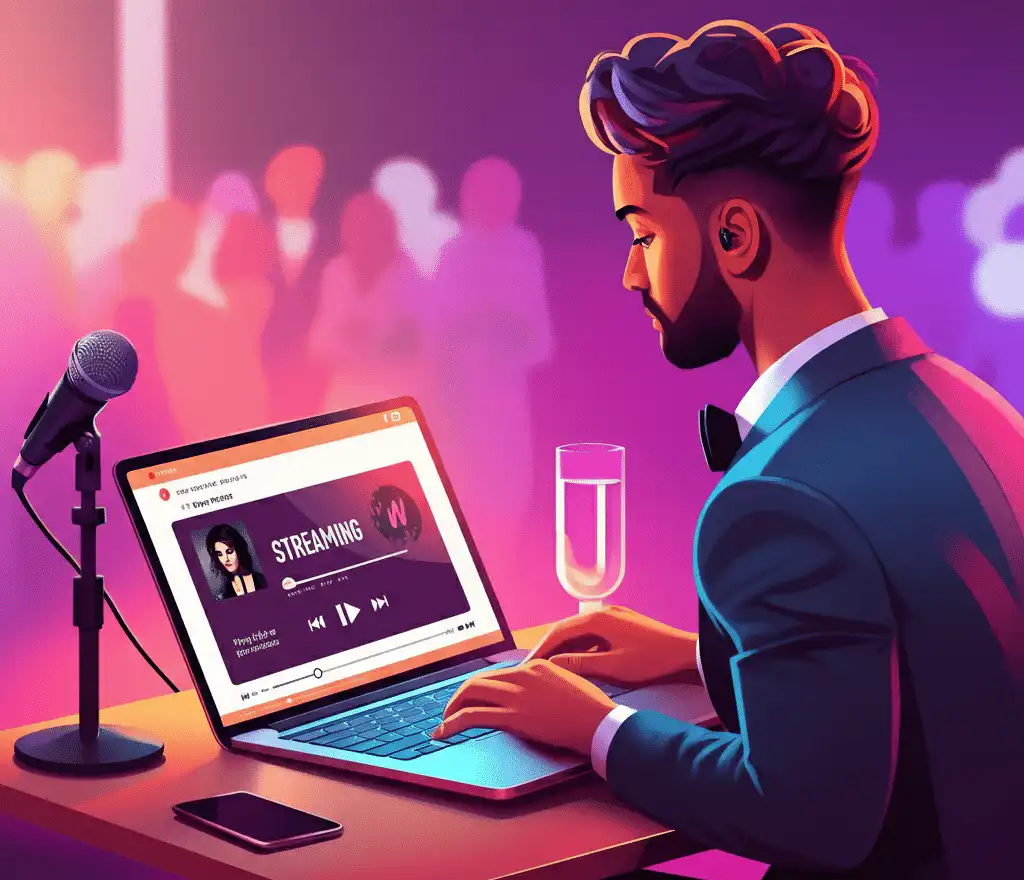
The professional emcee’s audio toolkit has changed completely since 2020. The walk-up tracks for keynote speakers, the transition beds between segments, the awards-moment audio cues, and the request a board member shouts out from row three all of this used to require a purchased catalog, USB drives, and significant pre-event prep. Streaming services have replaced most of that infrastructure with one app and an internet connection, and the operational difference at live events is measurable. Modern emcees who treat streaming platforms as core infrastructure rather than personal listening tools deliver more responsive live programs, build deeper client briefing relationships through collaborative playlists, and handle the unexpected with materially higher consistency than emcees still working from purchased local catalogs.
This guide breaks down how streaming services actually integrate into professional emcee work from corporate event walk-ups to wedding receptions to awards programs with verified 2025-2026 platform data and the operational standards that separate professional outcomes from amateur ones. For a related look at the advertising side of streaming services, see our breakdown of streaming ad spend.
Key Takeaways
→ Streaming is now the dominant music delivery format, and the catalog scale changes what emcee preparation looks like. The IFPI Global Music Report 2024 documented streaming as the largest revenue source in recorded music, generating roughly two-thirds of the industry’s $28+ billion annual recorded music revenue. For working emcees, this means professional-grade catalog access has shifted from owning purchased files to maintaining streaming subscriptions with offline-cached playlists.
→ Hi-fi streaming is now the standard professional tier across all major platforms. Spotify launched lossless audio in September 2025 at no additional cost for Premium subscribers, supporting up to 24-bit/44.1kHz FLAC quality across 50+ markets, finally matching what Apple Music has offered since 2021 (up to 24-bit/192kHz) and what Tidal has offered since 2015. For event emcees running through professional sound systems, the audio quality difference compared to consumer-grade compressed files is audibly significant.
→ Current music trends now move faster than catalog-purchase cycles can keep up with. TikTok’s Year in Music 2025 documented that 8 of the top 10 Billboard No.1 songs in 2025 had a viral TikTok moment before reaching the chart, and the February 2025 TikTok/Luminate Music Impact Report found 84% of Billboard Global 200 entrants in 2024 went viral on TikTok first. Streaming services that surface this trending material in real time keep working emcees current; purchased catalogs that update monthly or quarterly fall behind audience expectations.
→ Music quality has a measurable atmospheric impact at corporate events. Corporate event research published in 2024 documented 82% of attendees citing atmosphere as the primary satisfaction factor, well ahead of food quality, venue aesthetics, or programmatic content. For emcees, this means audio decisions, track selection, transition quality, and audio source quality are among the highest-leverage levers available for shaping event outcomes.
→ Reliability depends on offline cache discipline. Venue Wi-Fi failures, cellular dead zones, and unexpected connectivity issues at corporate events make pure cloud-streaming risky for live work. Professional emcees treat offline-downloaded playlists as the primary execution layer and online streaming as the search/discovery layer for unexpected requests, producing the reliability needed for high-stakes corporate events.
See the integrated emcee discipline in live performance contexts. To book emcee services for your next event, contact DJ Will Gill directly.
The Emcee’s Audio Toolkit Has Changed
Pre-Streaming Era Constraints
The old preparation model. Before streaming services dominated music delivery, working emcees carried physical catalogs of CDs in the early years, then external hard drives loaded with purchased MP3 and WAV files. Building a competent library for corporate event work meant years of catalog purchases, regular updates as new music was released, and decisions about what to include given finite storage and budget constraints. Last-minute requests for unfamiliar tracks were genuinely difficult to handle; if the song wasn’t in the catalog, the emcee had to either decline the request or improvise an alternative. Library investment was substantial, typically thousands of dollars across an emcee’s working years, and the catalog still aged faster than purchases could keep up.
The Shift to Streaming-First Preparation
The new preparation model. Modern emcees increasingly run streaming-first preparation workflows: build event playlists in Spotify, Apple Music, or Tidal during pre-event planning; share collaborative playlists with clients for approval and addition of must-play tracks; download playlists for offline use ahead of the event; arrive at the venue with comprehensive catalog access and pre-built program-segment playlists. The library investment shifts from one-time purchases to ongoing subscription costs (typically $10-15/month per platform), and the catalog scale jumps from thousands of owned tracks to functionally unlimited access. The preparation rhythm changes from quarterly catalog updates to weekly playlist refinement.
What This Means for Live Emcee Work
The operational difference. Live emcee work has changed in measurable ways since streaming-first preparation became viable. Walk-up music for speakers can be pulled from current chart-topping tracks rather than catalog standards; transition beds between program segments can match the specific tone the corporate brand needs; awards-moment music can be customized per recipient using their actual favorite artists. Request fulfillment rates climb dramatically instead of “I don’t have that one,” the emcee can typically deliver the requested track within seconds. The composite effect across an entire event is visible to clients and attendees: tighter program execution, more thoughtful audio choices, more responsive handling of the inevitable last-minute changes.
The Modern Streaming Library
Catalog Scale Across Major Services
The platform comparison. The major music streaming platforms Spotify, Apple Music, Tidal, Amazon Music Unlimited, and YouTube Music each carry catalogs measured in the tens of millions of tracks. For working emcee purposes, the catalog scale is functionally equivalent across platforms; the practical differences are in interface quality, playlist sharing features, offline download mechanics, audio quality tier availability, and ecosystem integration with the emcee’s other tools. Most working professionals operate primarily on one platform with a secondary subscription as backup, rather than splitting attention across multiple platforms simultaneously.
Hi-Fi Tier Spotify, Apple Music, Tidal
The 2025 hi-fi parity moment. The audio quality landscape across major platforms converged significantly in September 2025 when Spotify finally launched lossless audio for Premium subscribers, supporting 24-bit/44.1kHz FLAC across 50+ markets at no additional cost. Apple Music has offered lossless and Hi-Res Lossless (up to 24-bit/192kHz) at no extra charge since May 2021. Tidal has offered HiFi tier audio quality since 2015, with FLAC delivery as the baseline professional standard. For working emcees delivering audio through professional venue sound systems, the quality difference between hi-fi streaming and consumer-grade compressed audio is audibly significant. The upgrade is one of the highest-leverage audio decisions available with essentially zero ongoing cost above standard subscription rates.
Discovery Algorithms and Trending Intelligence
The intelligence layer. Beyond raw catalog access, streaming platforms provide trending and discovery intelligence that materially shapes emcee preparation. Spotify’s Discover Weekly, Daily Mix, and Release Radar; Apple Music’s New Music Mix and Get Up Mix; Tidal’s My Mixes. These curated playlists surface trending material the emcee might otherwise miss and surface deeper cuts that fit the emcee’s developing taste profile. For corporate event work specifically, the discovery layer matters because corporate audiences span generational and cultural music preferences; an emcee informed by multiple discovery streams across genres makes more confident selections than one operating from a fixed catalog.
TikTok-Driven Music Charts
The new viral pipeline. The music discovery pipeline restructured significantly in 2024-2025 as TikTok became the dominant front-end for viral music moments. The TikTok Year in Music 2025 documented that 8 of the top 10 Billboard No.1 songs in 2025 had a viral TikTok moment before reaching the chart, a structural change that means modern emcees who don’t track TikTok-trending music alongside traditional streaming charts are missing the dominant front-end of current music discovery. The streaming services have responded by surfacing TikTok-viral material in their own algorithmic feeds, so emcees who pay attention to algorithmic recommendations catch most viral moments through that channel even without direct TikTok monitoring.
Playlist Construction for Live Emcee Work
Walk-Up and Entrance Music
The first 30 seconds. Walk-up music is the audio that plays as a speaker, executive, award recipient, or special guest enters the stage. The selection signals tone for what follows: a confident classic hits track suggests authority; a contemporary upbeat track suggests energy and approachability; a brand-aligned signature track reinforces corporate identity. Professional emcees build walk-up playlists segmented by speaker tier (CEO entrance differs from middle-manager entrance, which differs from external guest), with multiple options per speaker, so the room’s energy at the moment of entrance can guide the final selection. Streaming services make this multi-option discipline practical at a scale that local catalogs rarely support.
Transition Beds and Interludes
The between-segment audio. Live program structure typically requires audio bridges between segments, short instrumental beds that fill the moments while microphones change hands, video reels load, or stage configurations shift. The selection criteria are different from peak-time music: transitions need to be instrumental or vocally restrained (so they don’t compete with spoken announcements), tonally appropriate for the program context (jazz for sophisticated corporate, electronic for tech events, ambient for medical or scientific contexts), and short enough that they don’t feel like a stall. Streaming platforms with strong instrumental and ambient playlist collections make transition-bed library construction substantially easier than building from an owned catalog.
Award and Recognition Moments
The personalization tier. Awards programs and recognition moments benefit substantially from personalized music, the recipient’s favorite artist, their cultural musical heritage, and a track that connects to their work or career story. With streaming, this personalization scales: the emcee can pull custom music per recipient during the pre-event briefing rather than being constrained to whatever the local catalog happens to contain. For mid-sized awards programs with 5-20 recipients, this level of personalization is operationally practical with streaming and was prohibitively expensive or time-intensive with a purchased catalog. The audience-engagement payoff is visible to recipients, and their colleagues consistently respond to the recognition, feeling thoughtful and individual.
Cool-Down and Exit Music
The graceful close. The final phase of any event needs a deliberate audio close, a cool-down phase that gradually decreases tempo, returns to broadly accessible material, and ends with a closing track that fits the event’s narrative arc. The selection criteria for closers are different from peak-time selection. The closer doesn’t need to be a dance-floor anthem; it needs to feel like a fitting end. Streaming makes deep cool-down catalog access trivial; the emcee can pull from broad ambient, jazz, soul, or contemporary mid-tempo selections without library constraints.
Multi-Segment Event Playlists
The full-event playlist architecture. A typical corporate event has multiple distinct audio segments: pre-event arrival, welcome and opening ceremony, dinner or refreshment service, formal program, awards or recognition, networking transition, dance floor or social close. Each segment calls for distinct audio programming, and professional emcees build separate playlists for each rather than relying on a single master playlist. Streaming platforms support this multi-playlist architecture through their organizational features (folders, collaborative playlists, downloaded playlist management), making the discipline operationally practical. The result is a tighter program execution where each segment’s audio supports the segment’s purpose rather than competing with it.
Pre-Event Approval Workflows
The shared-playlist workflow. The single biggest workflow improvement streaming brought to professional emcee work is collaborative playlist sharing during the client briefing process. The emcee builds the proposed event playlist in Spotify or Apple Music, shares the playlist link with the client (corporate event planner, wedding couple, or awards program lead), and the client reviews specific selections rather than approving in abstract. This eliminates the most common client-side music complaints: the client either approves the actual tracks before the event or surfaces concerns at a point when they can still be addressed.
Must-Play and Do-Not-Play Integration
The dual-list capture. Within the collaborative playlist workflow, the client can add specific must-play tracks directly to the shared playlist (signaling they want these included) and identify do-not-play exclusions through annotation or follow-up communication. The dual-list discipline must-play and do-not-play captured explicitly during briefing prevents the most damaging music failures at live events: playing a track the client specifically excluded, or missing a track they specifically requested. Streaming-mediated workflow makes this capture process substantially smoother than the spreadsheet-and-email patterns that preceded it.
The Corporate Briefing Process
The professional standard. Corporate event briefings are typically held with the event planning team, and sometimes the executive sponsor benefits specifically from streaming-mediated playlist review. The conversation can happen track-by-track if needed: this is the proposed walk-up for the CEO entrance, here are the three transition beds between segments, this is the awards-moment selection for each recipient, here’s the cool-down arc. Corporate clients consistently respond positively to this level of preparation transparency; the briefing produces both better outcomes and a stronger client relationship. The professional-grade briefing process is effectively impractical without a streaming infrastructure.
Live Adaptation Handling the Unexpected
On-Demand Song Retrieval
The “yes” capability. The single biggest live-execution change streaming brought to emcee work is the ability to fulfill almost any request within seconds. An attendee approaches with a request the emcee has never heard of; the emcee searches the streaming catalog, finds the track, and integrates it into the program at an appropriate transition point. The interaction shifts from “I don’t have that” to “let me get that queued up for you,” a fundamentally different client and audience experience. Working emcees who maintain this responsiveness consistently build reputations for being attentive and capable, which translates directly into referrals and repeat bookings.
Last-Minute Timeline Shifts
The flexibility advantage. Corporate event timelines shift in real time. The CEO’s flight lands late, the awards segment runs long, and the keynote speaker requests a different walk-up song five minutes before the introduction. Streaming-equipped emcees handle these shifts smoothly because the catalog access is functionally unlimited; whatever audio the new timeline calls for is available in seconds rather than requiring catalog hunting or compromise selections. The flexibility shows in client perceptions of professionalism events feel tightly run even when underlying conditions are chaotic, because the audio side is keeping up with changes.
Audience Requests in Real Time
The integration discipline. Live audience requests during the social or dance-floor portion of an event require both the technical ability to find the track and the judgment to integrate it appropriately. The streaming side handles the technical layer the requested track is findable in seconds. The judgment side remains an emcee skill: when to play the request immediately, when to find the right transition window, and when to politely decline because the request doesn’t fit the room. Streaming doesn’t replace the judgment work; it removes the technical constraint that previously made the judgment moot. The emcee can act on whatever decision the judgment reaches.
Reading the Room with Infinite Library Access
The selection-space expansion. Crowd reading skill, observing the room’s response, and adjusting selections accordingly has always been the core live skill that separates strong emcees from weak ones. Streaming services don’t change this skill, but they expand the selection space the skill operates within. An emcee who reads the room and realizes the corporate audience is leaning toward 90s R&B can immediately access the full 90s R&B catalog rather than working within the few tracks they happened to have loaded locally. The expanded selection space gives the crowd-reading skill more room to operate effectively.
Offline Mode Critical Reliability Infrastructure
Why Connectivity Fails at Venues
The reliability problem. Venue connectivity is unreliable in ways that surprise emcees relying on pure cloud streaming. Wi-Fi networks at convention centers and hotels are typically optimized for attendee web browsing rather than continuous audio streaming, and bandwidth saturation during peak event hours produces audible streaming dropouts. Cellular signal varies wildly across venue spaces, strong at registration tables, weak in below-ground ballrooms, and intermittent in outdoor garden venues. Corporate events at remote retreat properties may have no usable connectivity at all. Pure cloud-streaming workflows fail visibly under these conditions, and the failures happen at the worst possible moments, the middle of awards programs, mid-set during dance floor segments, and during executive walk-ups.
Pre-Event Download Discipline
The offline-first workflow. Professional emcees maintain a pre-event offline download discipline: all event playlists are downloaded to local device storage in the days before the event, plus several genre-specific backup playlists are also downloaded for unexpected requests. The download discipline removes connectivity dependency for the planned program flow while preserving streaming access for the genuinely unexpected. The combination is what makes streaming-equipped emcees work reliably enough for high-stakes corporate events where connectivity failures aren’t acceptable excuses.
Redundancy Strategies
The backup discipline. Beyond single-device offline storage, working emcees typically maintain redundancy: a primary playback device (laptop or dedicated DJ controller) with cached playlists, a secondary device (tablet or phone) with the same playlists also cached, and sometimes a tertiary backup with critical cued tracks on a USB drive. The redundancy isn’t paranoia; battery failures, device crashes, and equipment connection issues happen at corporate events with enough frequency that single-device dependency is a known operational risk. The redundancy infrastructure is cheap to maintain and prevents the rare but real catastrophic failure mode.
The Hybrid Streaming-and-Cached Approach
The reliable production model. The professional production model for streaming-equipped emcee work is hybrid: cached/downloaded playlists handle the planned program with full reliability; live streaming handles the genuinely unexpected requests when connectivity allows. Most events run entirely from cached content; the streaming layer is the safety net for moments the cache didn’t anticipate. This hybrid model captures the catalog-scale advantage of streaming while preserving the reliability of local audio sources, producing the operational standard that makes streaming-integrated emcee work viable at the corporate-event tier.
Event-Type Applications
Wedding Emcee Work
The personalization-heavy context. Wedding emcee work involves intensive client personalization across multiple program segments, including the ceremony processional, first dance, parent dances, anniversary celebrations during reception, special-request moments, and dance-floor peak time. Streaming-mediated playlist collaboration with the couple lets each of these moments be planned in detail with the actual tracks they want. Weddings also have high request rates from attendees (especially generational and cultural music from extended family), and streaming makes most of these fulfillable in real time. The combined effect produces weddings that feel more personalized than the pre-streaming standard at the same investment level.
Corporate Event Emcee Work
The brand-aligned context. Corporate event emcee work emphasizes brand-aligned audio decisions across program segments. The walk-up music for the CEO’s entrance signals brand positioning; the transition beds between awards segments maintain corporate tone; the cool-down arc preserves the brand impression at the event’s close. Streaming services enable the brand-fit calibration at scale, pulling appropriate corporate-tier audio per client positioning rather than working from a generic catalog. The corporate context also benefits specifically from the collaborative briefing workflow, where corporate event planners and marketing teams can review the playlist directly.
Awards and Recognition Events
The high-personalization context. Awards programs and recognition events operate at maximum personalization intensity. Each recipient typically gets their own walk-up music, sometimes their own exit music, occasionally their own brief musical moment during recognition. With streaming, this per-recipient personalization scales beyond what local catalogs supported. The emcee can pull recipient-specific cultural music, favorite artists, or career-relevant track choices for each recognition moment. Awards events with this level of audio personalization consistently produce stronger emotional response from recipients and their colleagues than generic-soundtrack alternatives.
Conference and Keynote Emcee Work
The transition-heavy context. Conferences with multiple keynotes, panel discussions, and breakout sessions require dense transition audio, short bridges between every speaker, and between every session shift. The transition-heavy structure benefits specifically from streaming-scale catalog access because the volume of needed audio bridges is higher than that of other event types. The emcee can pull tonally appropriate transition material per speaker, per topic area, and per audience energy state without library constraints. Conference work with this level of audio variety feels more professionally produced than conferences that recycle the same handful of transition tracks throughout the program.
Corporate Emcee Standards: The Professional Tier
Brand-Fit Playlist Curation
The corporate-tier discipline. Brand-fit playlist curation is the operational discipline of building event playlists that align with the specific client brand rather than defaulting to generic corporate-event music. Financial services events need different programming than tech startup launches; healthcare conferences need different selections than luxury hospitality galas; consumer marketing events need different vibes than B2B sales conferences. Professional corporate emcees research the client’s brand before the event and calibrate playlist selections to fit. Streaming services enable this calibration at scale because the curation can happen in the days before the event using collaborative playlist tools rather than requiring the emcee to acquire a new catalog per client.
Multi-Segment Audience Reading
The composite-room discipline. Corporate event audiences are typically composite multiple departments, multiple seniority levels, and multiple regional offices represented at the same event. Reading the room at a corporate event means reading several rooms simultaneously: are the senior executives engaged, are the younger employees on the dance floor, are the international attendees responding to selections? Streaming-equipped emcees can pivot selections in real time across this composite audience because catalog constraints don’t limit them. The composite-reading skill operationalizes more fully when the technical layer can keep up with the read.
About the Author
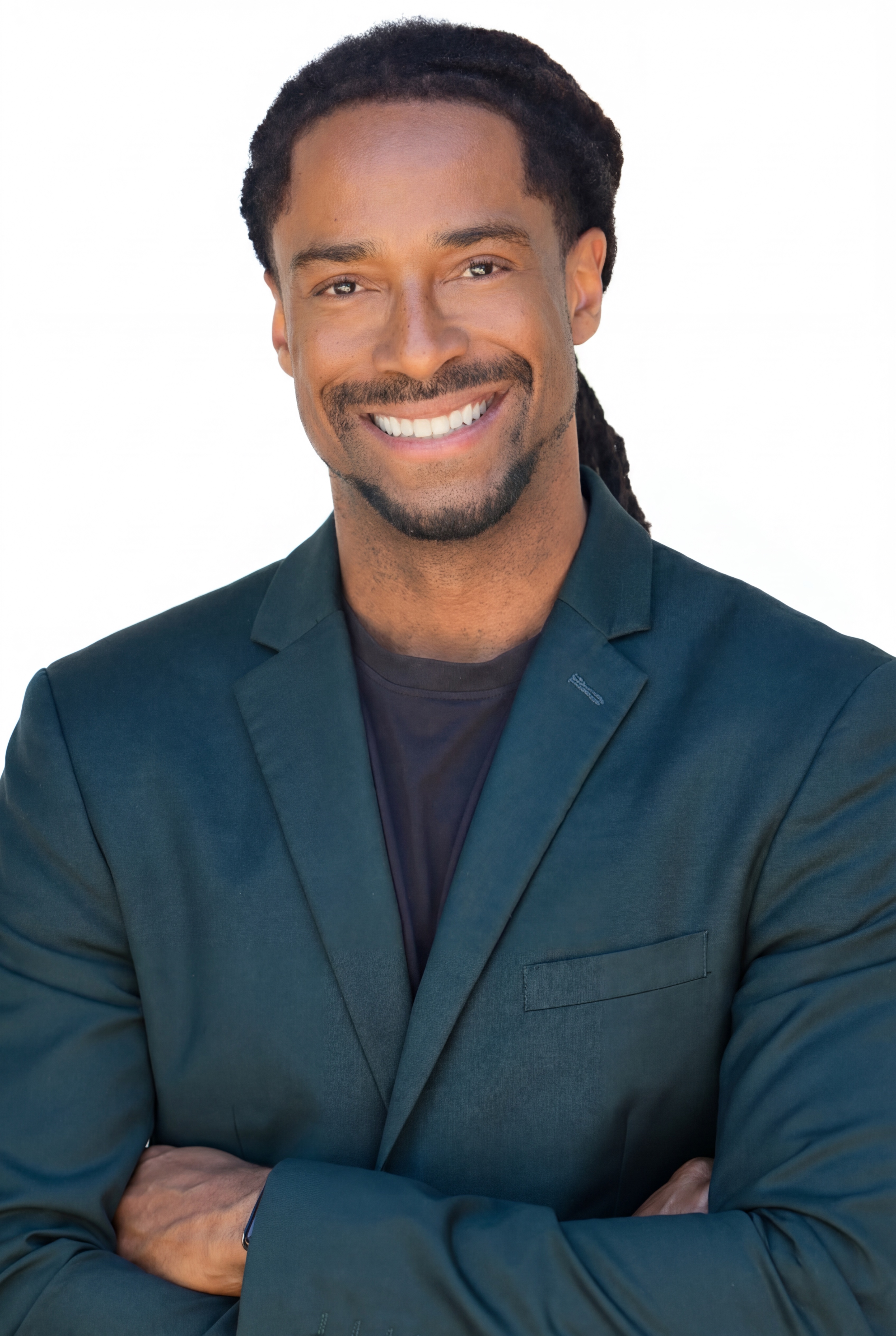
William “DJ Will Gill” Gilbert is an American DJ and Emcee. Documented client work for AT&T Business, CDW, Virgin Galactic, NeoGenomics, Foot Locker, Home Depot, Hilton, BGCA, PepsiCo, PayPal, and the United Nations. Also a Forbes Next 1000 honoree with broadcast credits including Super Bowl LIV (2020), The Voice (2011), and MTV’s The Real World: Hollywood (2008). He is also a World Cup performer and a Formula 1 Las Vegas Grand Prix performer. 2,520+ five-star Google reviews accumulated over 600+ documented corporate events.
2,520+ Google Reviews · IMDB · Mixcloud · Instagram · Contact
Frequently Asked Questions
How has streaming changed emcee work?
Walk-up tracks, transition beds and awards cues that once required purchased catalogs and USB drives now run from one app and an internet connection, with offline-cached playlists as the professional standard.
Is hi-fi streaming standard now?
Yes. The guide notes Spotify launched lossless audio in September 2025 at no extra cost for Premium, making hi-fi the professional tier across platforms.
How much of the music industry runs on streaming?
The IFPI Global Music Report 2024 put streaming at roughly two-thirds of the industry's $28+ billion recorded music revenue.
How do emcees use playlists with clients?
Collaborative playlists deepen client briefings and let the emcee prepare walk-ups, beds and recognition moments in advance.
Where do emcees find trending music?
Discovery algorithms and TikTok-driven charts, covered in the guide's trending intelligence section.