
How Song Selection Impacts Event Success (Event Planner’s Guide)
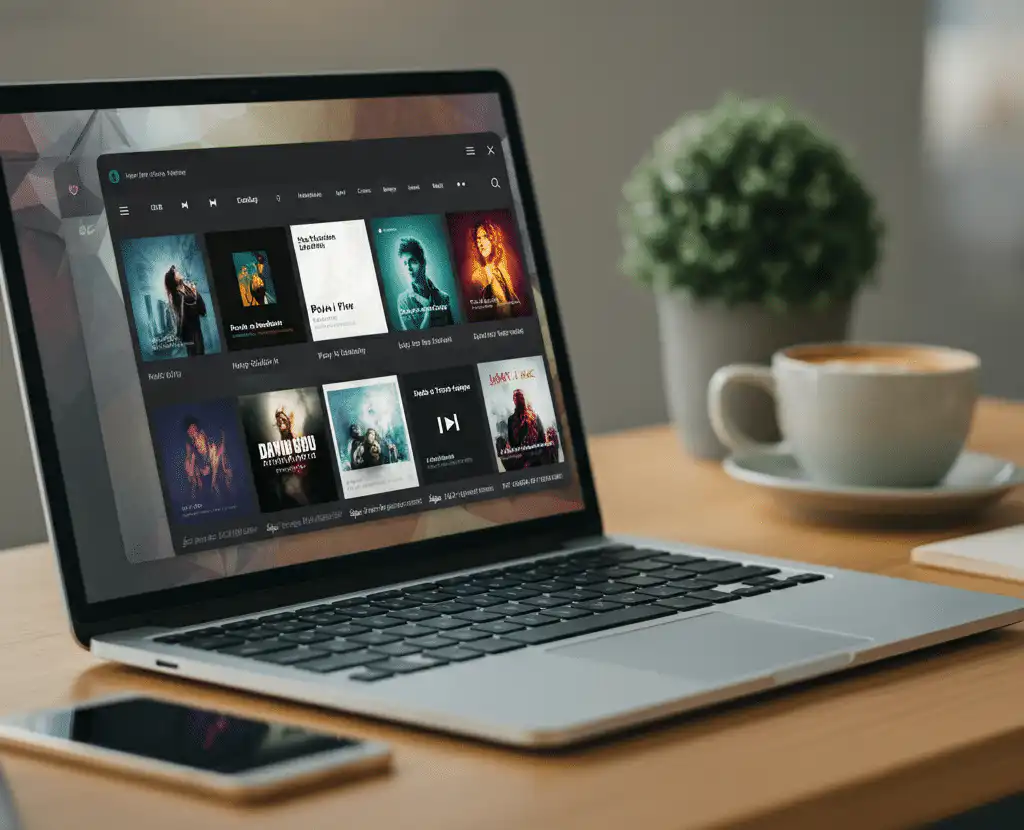
Event planners often discover the importance of music the hard way at the event where it didn’t work. A corporate gala where the dinner music killed conversation. A wedding where the dance floor never filled. A product launch where the post-keynote energy collapsed before the networking even started. The pattern repeats so consistently across event categories that the underlying lesson should be obvious by now: music isn’t a finishing touch added at the end of the planning process; it’s a structural element that shapes whether the rest of the production lands. The events that succeed treat song selection as a planned strategy with measurable impact on guest engagement, brand perception, and post-event memory.
This guide approaches song selection from the event-planning side rather than the DJ side, which hosts, organizers, corporate marketing teams, wedding planners, and event producers need to understand to brief music decisions correctly and recognize whether the music plan is going to support or undermine the event. For the live execution side of selection, reading the crowd in real time, see our specialist guide on crowd reading.
Key Takeaways
→ Music is the single largest contributor to corporate event atmosphere, and atmosphere is what attendees remember. 2024 corporate event research documented 82% of attendees citing atmosphere as the primary satisfaction factor, well ahead of food quality, venue aesthetics, or programmatic content. Atmosphere is produced specifically by the integrated audio environment, not by any visual or programmatic element.
→ Music’s effect on guests isn’t subjective preference; it’s measurable neurology. Peer-reviewed research published in PLOS One in 2025 documented that music engages multiple brain regions simultaneously the auditory cortex, the limbic system, reward circuitry, and motor planning and that selection effects on listener state are real and reproducible. Event organizers who treat music as a structural input rather than background filler get measurably better engagement outcomes.
→ Brand-aligned music selection produces lasting positive associations. Corporate event production research published in 2026 emphasized that thoughtful soundtrack curation produces brand memorability that survives beyond the event itself. Guests associate the music with the brand whenever they hear the songs again, extending the event’s brand impact far past the event date. Random or generic music programming forfeits this extended brand value.
→ The current music landscape has shifted dramatically since 2024. TikTok’s Year in Music 2025 documented that 8 of the top 10 Billboard No.1 songs in 2025 had a viral TikTok moment before reaching the chart, and the February 2025 TikTok/Luminate Music Impact Report showed 84% of Billboard Global 200 entrants in 2024 went viral on TikTok first. Event music programming that doesn’t account for this shift in what “current music” means produces noticeably dated audio experiences.
→ Streaming dominance has changed audience baseline expectations. The IFPI Global Music Report 2024 documented streaming as the largest revenue source in recorded music, generating roughly two-thirds of the industry’s $28+ billion annual recorded music revenue. Modern attendees have curated streaming taste and notice mismatches between event music and contemporary audio quality faster than they did a decade ago.
See the corporate event music programming discipline in live performance contexts. To consult on your next event, contact DJ Will Gill directly.
Stop replaying the same songs.
Introducing TheAIDJ.com
AIDJ turns a plain-English request into a ready-to-play set, previews it instantly, and exports straight to Spotify. Discover music that actually fits the moment.
Why Music Drives Event Success: The Business Case
The Neuroscience Baseline
Music’s effect on guests is measurable. The 2025 PLOS One research on music neuroscience documented that listening to music engages multiple brain regions simultaneously, including auditory processing in the cortex, emotional regulation in the limbic system, reward signaling through dopaminergic pathways, and motor planning in the cerebellum and basal ganglia. The implications for event planners: music isn’t background filler; it actively shapes attendees’ emotional state, social behavior, and memory formation throughout the event. Programming music as if it doesn’t matter forfeits a measurable lever that all your competitors are also missing, which means it’s also one of the highest-leverage planning investments you can make.
The Corporate Event Statistic
Atmosphere as the dominant satisfaction factor. The Shindig/EMI 2024 corporate event research finding 82% of attendees citing atmosphere as their primary satisfaction factor is the single most important number an event planner should internalize. Atmosphere isn’t venue aesthetics, isn’t food quality, isn’t program content; it’s the integrated sensory environment, and music is the dominant contributor to that environment. When attendees describe an event as “having a great vibe” or “feeling really engaging,” they’re describing atmospheric outcomes that were primarily produced by audio decisions. The 82% number means: get the music right, and you’ve gotten the biggest satisfaction driver right.
ROI for Event Organizers
The investment calculation. Professional DJ services are a small percentage of a typical corporate event budget, usually 2-5% of total event spend. The leverage that a small percentage provides is disproportionate: get it right, and the event’s atmosphere works; get it wrong, and venue, catering, and programming investments multiplied across the budget can’t recover the experience. For event organizers thinking about ROI, the music line item is one of the highest-leverage budget categories, with small absolute spend, large impact on the satisfaction metric that determines whether attendees recommend the event, return for future events, or refer their networks.
The Cost of Getting It Wrong
The visible failure modes. Music failures at events are visible in real time, empty dance floors, attendees clustered far from speakers, conversation volume rising above the music, early departures, and attendee feedback specifically about audio. These failures correlate directly with reduced rebooking, lower NPS scores in post-event surveys, and weaker word-of-mouth referrals. The cost isn’t just the event in front of you; it’s the trust the next event needs to rebuild after attendees remember the audio missing the mark. Professional DJ booking is essentially a risk management decision against this failure mode.
Music as Brand Extension
Corporate Brand Alignment
The brand-music coherence principle. A corporate event’s music is part of the brand presentation, whether the planning team thinks of it that way or not. When the music aligns with the brand positioning, the event feels coherent and intentional; when it doesn’t, attendees register the mismatch (often unconsciously), and the event feels slightly off in ways they can’t articulate. Brand alignment doesn’t mean the music has to be on-brand corporate music; it means the genre, energy, and cultural references chosen for the event should feel like they belong in the same world as the brand’s positioning, voice, and customer base.
Genre-to-Brand Matching
The matching matrix. Different brand archetypes call for different music programming. Innovative tech brands typically pair well with indie electronic, contemporary pop, and forward-leaning hip-hop. Luxury hospitality brands typically pair with classic jazz, sophisticated lounge, and contemporary R&B. Financial services brands typically lean toward mainstream pop standards and broadly familiar classics that signal stability and broad appeal. Healthcare and life sciences brands often need conservative programming that avoids political content or explicit material. The matching isn’t arbitrary; it reflects how each brand category’s audience expects to encounter music in association with that brand.
The Financial Services Case
The conservative-positioning baseline. Financial services events, bank client appreciation dinners, wealth management retreats, and advisor conferences sit in a structurally conservative brand position. The audience skews older and more affluent than the general corporate population; the brand positioning emphasizes stability, trust, and proven track record. Music programming for these events typically favors broadly familiar mainstream pop, sophisticated jazz standards, and classic R&B over contemporary edge or genre experimentation. The risk profile is asymmetric: conservative programming rarely produces complaints, while edge programming produces visible mismatch responses.
The Tech Startup Case
The forward-leaning positioning. Tech startup events, product launches, IPO celebrations, conference parties, and holiday celebrations operate at the opposite end of the brand-conservatism spectrum. The audience skews younger, the brand positioning emphasizes innovation and cultural relevance, and the music programming should match. Contemporary pop, current TikTok-driven hits, indie electronic, hip-hop, and emerging artists work well; classic-rock programming or general-population mainstream often feels behind for these audiences. The risk profile inverts: contemporary programming reinforces brand positioning, while overly safe programming makes the event feel disconnected from the brand the audience came to celebrate.
The Luxury Hospitality Case
The refined-elegance positioning. Luxury hospitality brands, luxury hotels, premium resorts, exclusive members clubs, and high-end private events call for programming that signals refinement without feeling stuffy. Classic jazz standards, sophisticated lounge music, contemporary smooth R&B, and tastefully selected pop standards all work. The selection emphasizes vocal quality, harmonic depth, and timeless rather than trendy material. The luxury context rewards selections that age well, music that will sound just as appropriate next year as it did at the event, over selections optimized for current viral moments.
The Event Arc as Music Arc
The Arrival and Cocktail Phase
The conversation-supporting layer. The opening phase of any event arrival, cocktail hour, mingling before the formal program, is the period where music’s job is to support conversation rather than command attention. Volume should be moderate, energy should be welcoming without being aggressive, and genre should be broadly accessible. The selection signals to arriving guests that they’re in the right place and the event has a defined tone, without forcing engagement before the program properly begins. Common failure mode: programming arrival music as if it’s peak-time music, producing conversations strained against the volume from the moment guests arrive.
The Dinner and Program Phase
The atmospheric-support layer. During seated dinner and structured program segments, presentations, speeches, awards, panels, music’s job is to provide ambient support that fills silences and bridges transitions without competing with the spoken content. The selection during this phase is typically lower-energy than arrival music, with instrumental or vocally-restrained tracks preferred over hook-heavy mainstream pop. Volume sits below the conversation level. The phase typically ends when the program transitions toward open social time, and the dance floor opens; the music programming should signal that transition deliberately.
The Peak Engagement Phase
The dance-floor-and-energy layer. The peak phase is when music takes center stage rather than supporting other elements. Volume increases (within venue and noise-ordinance bounds); selection shifts toward dance-driving mainstream hits and crowd-favorite classics; the dance floor either fills or doesn’t, and that filling is the primary metric for whether the peak programming is working. This phase typically runs 60-120 minutes for a full corporate or wedding event, though the duration scales with overall event length. Most events build to a peak rather than starting there.
The Cool-Down Phase
The graceful-close layer. The cool-down phase manages the energy decline from peak to event close. Tempo gradually decreases, the selection shifts from peak hits to crowd-favorite mid-tempo material, and the closing tracks signal the event’s approaching conclusion. A clean cool-down lets attendees decompress before leaving and produces fond final impressions; an abrupt close (music suddenly stopping, lights up while peak music still playing) leaves the room jarred at the moment of departure. The cool-down typically runs 20-45 minutes and ends with a deliberately chosen closing track that fits the event’s narrative arc.
Engagement Psychology
Music and Emotional Regulation
The state-shaping effect. Music actively shapes attendees’ emotional state across the duration of an event, not by manipulation, but by providing the sensory environment that biases mood in one direction or another. Faster tempos and major-key selections bias toward energy and positive affect; slower tempos and minor-key selections bias toward reflection and calm. Event planning that explicitly considers this lever produces more deliberate emotional arcs across the event timeline; planning that doesn’t consider it leaves the emotional arc to chance.
Conversation Facilitation
The social-lubrication effect. Music at the right volume facilitates conversation; silence often inhibits it. Attendees at silent receptions tend to gravitate to fewer, longer conversations with people they already know; attendees at appropriately-music’d receptions are more willing to start short conversations with people they don’t know, because the music provides cover for the moment when a conversation needs to begin or end. For networking events, this effect is operationally significant; music programming directly affects the breadth of connections made at the event.
Network Event Mechanics
The matchmaking layer. Network events, conferences, industry mixers, and professional association gatherings depend on attendees breaking out of their existing networks and connecting with new ones. Music programming for networking events should favor mid-energy, broadly accessible material that fills silence and creates an inclusive atmosphere without dominating the room. Hyper-current trendy programming can leave older attendees feeling excluded; nostalgia programming can leave younger attendees disengaged. The selection sweet spot for networking is broad-appeal contemporary and recent-classic material that most attendees can engage with.
Diverse Audience Inclusion
The everyone-belongs principle. Mixed-demographic events benefit from programming that gives each major attendee segment moments where they feel the music is for them. The skill isn’t about playing only the music every segment likes; it’s about rotating through genre and era selections across the event timeline so that every major segment hears their favorites at some point. When attendees hear a song they personally love at an event, they engage more deeply with the rest of the program; when an entire event passes without a single song hitting their taste profile, they disengage even from the program elements that aren’t musical.
The Multi-Generational Challenge
Era Mapping for Mixed Audiences
The decade-coverage matrix. Multi-generational events (weddings, family reunions, multi-decade company celebrations) require music programming that spans several musical eras. A typical approach maps eras to attendee age cohorts: 1970s and 1980s classics for the older generation; 1990s and 2000s for the middle cohort; 2010s and current for the younger generation. The DJ rotates through these eras across the event timeline rather than concentrating on any one decade. Attendees of every generation hear material from their formative listening years at some point, which produces the inclusion effect that drives engagement across the full audience.
The “Everyone Hears a Song They Love” Rule
The minimum threshold. The discipline target for mixed-audience events is straightforward: every major attendee segment should hear at least 2-3 songs they personally love during the event. Below this threshold, segments report feeling overlooked even when other event elements are excellent; at or above this threshold, segments report enjoyment regardless of whether the broader program addressed their interests. The rule is that operational event planning that explicitly tracks segment-by-segment musical moments produces measurably better post-event satisfaction across diverse audiences.
Genre Rotation Strategies
The interleaving discipline. Beyond era coverage, genre rotation matters. Playing all hip-hop for an hour, then all rock for an hour, produces alternating engagement and disengagement from each segment, while interleaving genres across shorter windows keeps all segments engaged for longer continuous stretches. Common rotation patterns: pop → R&B → classic rock → modern pop → hip-hop → throwback → current dance → cooldown classic. The variety prevents any single segment from feeling either over-served or excluded for extended periods, producing more even engagement across the audience.
Pre-Event Planning Discipline
Know Your Audience: The Briefing Process
The discovery conversation. The most important music-planning conversation happens well before the event, typically during the initial DJ briefing or planning meeting. The conversation captures attendee composition (age cohorts, professional context, regional distribution, cultural background), the brand or event positioning, the program structure, and the specific musical sensibilities of the host or sponsor. A professional DJ asks these questions deliberately; an event planner working without a professional should ask them anyway and document the answers. Music planning without this discovery phase tends to default to generic programming that fits no specific audience particularly well.
Define the Event Arc Explicitly
The timeline-mapping discipline. Strong music planning includes a mapped energy arc for the event, what each phase calls for, when transitions happen, what the peak window is, and when the cool-down should begin. The mapping process is more useful than the mapped artifact: forcing yourself to articulate what the arc should be exposes assumptions that may not be justified and surfaces decisions that need to be made deliberately. Generic music timelines (“play music throughout the event”) produce generic outcomes; explicit timelines aligned with the event’s narrative produce coherent, intentional experiences.
Build Must-Play and Do-Not-Play Lists
The dual-list discipline. The must-play list captures songs that have to be in the event for sentimental, branding, or audience-specific reasons. The do-not-play list is typically more important, as it captures songs, artists, or whole genres that explicitly should not be played. Common do-not-play categories for corporate events: politically charged songs or artists, explicitly-lyric tracks, songs tied to bankruptcy or scandal news cycles, songs associated with competing brands, and songs that would be culturally insensitive for the specific audience. The do-not-play list prevents the small selection failures that disproportionately damage event outcomes.
Test Selections Before the Event
The dry-run discipline. When working with a professional DJ, the testing phase is typically the DJ’s responsibility, playing through the planned selection in their library, checking flow and transitions, and identifying gaps. For event planners building playlists themselves (which professional planners should generally avoid for major events), the testing phase means playing the actual planned sequence in advance, listening for jarring transitions, energy mismatches, or selections that sounded good in isolation but don’t fit the flow. The testing discipline catches problems while they can still be fixed.
Working With Professional DJs
The Collaboration Model
The professional-partnership approach. The strongest event outcomes come from collaborative relationships between event planners and professional DJs. The planner brings event context, brand priorities, and timeline structure; the DJ brings musical expertise, live execution skill, and library depth. Each contributes what the other can’t easily replicate. Adversarial relationships (planners over-prescribing every selection; DJs ignoring planner direction) produce worse outcomes than genuine collaboration. The investment in a working relationship across multiple events compounds, as DJs who know a planner’s clients and event patterns produce better outcomes than DJs encountering each event cold.
When to Defer to the DJ’s Judgment
The expertise-honoring decision. Working professional DJs see hundreds of events; the typical event planner sees substantially fewer. The DJ’s pattern-recognition for what works at events generally exceeds the planner’s, particularly for live execution moments where the room is signaling adjustment is needed. The discipline for planners is to brief thoroughly before the event (where their context advantage is highest) and then trust the DJ’s execution judgment during the event (where the DJ’s expertise advantage is highest). Planners who continue micromanaging during execution typically degrade outcomes; planners who trust the DJ to read and respond to the room get better events.
Communication During the Event
The signal-not-override channel. Effective in-event communication between planners and DJs consists of signals about what’s working or not working from the planner’s perspective (“the back of the room hasn’t engaged yet,” “the executive table seems tired,” “let’s hold off on the dance floor for another 15 minutes”) rather than specific song-selection overrides. Signals let the DJ apply their expertise to address the underlying issue; specific overrides force the DJ to execute someone else’s selection logic in real time, which is rarely as effective as their own judgment.
Avoiding the Micromanagement Failure Mode
The structural anti-pattern. The most common music-related failure mode in corporate event production isn’t a lack of planning; it’s planner micromanagement that prevents the DJ from doing their actual job. Planners who pre-script every track, override DJ selections in real time, or demand specific songs at specific moments regardless of how the room is responding produce events with worse outcomes than planners who hired the DJ, briefed them thoroughly, and stepped back to let them execute. The pattern is structural: the DJ’s expertise advantage operationalizes only when they have execution autonomy.
Corporate Event Specifics: The High-Stakes Tier
Why Corporate Events Are Different
The narrower tolerance bounds. Corporate events operate under tighter tolerance bounds than personal celebrations. The audience is professional rather than personal colleagues, clients, business partners, and prospects, which limits what cultural references work. The brand is at stake throughout every audio decision that reads as a brand decision, whether intended or not. The audience composition tends to be broader, including multiple departments, multiple seniority levels, and multiple regional offices, which narrows the genre and era selections that work for everyone. Music programming for corporate events is harder than for personal events, and the failure modes are more visible to clients and stakeholders.
Brand Sensitivity Calibration
The brand-fit decision rules. Every track at a corporate event implicitly answers a question: Does this song belong with this brand? The decision rules are specific to each client: a financial services firm has different appropriate-content bounds than a tech startup; a luxury hospitality brand has different programming windows than a fast-casual restaurant chain; a healthcare client has different language tolerance than a consumer marketing client. Professional corporate DJs develop calibrated brand-sensitivity instincts through working with multiple client categories; event planners benefit from explicitly briefing the DJ on the specific brand-fit context for each engagement.
Multi-Segment Audience Reading
The composite-room discipline. Corporate event audiences are typically composite multiple departments, multiple seniority levels, and multiple regional offices represented at the same event. Reading the room at a corporate event means reading several rooms simultaneously: are the senior executives engaged or checking out, are the younger employees on the dance floor, are the international attendees responding to the selection or feeling excluded by it? The DJ’s multi-segment reading skill operationalizes the audience research the planner provided during the briefing, turning the static audience profile into real-time adjustments across the event timeline.

About the Author
William “DJ Will Gill” Gilbert has been a DJ and Emcee for more than 18 years, partnering with corporate event planners and producers to deliver brand-aligned music programming at Fortune 500 corporate events. Documented client work for AT&T Business, CDW, Virgin Galactic, NeoGenomics, Foot Locker, Home Depot, Hilton, BGCA, PepsiCo, PayPal, and the United Nations. Also a Forbes Next 1000 honoree with broadcast credits including Super Bowl LIV (2020), The Voice (2011), and MTV’s The Real World: Hollywood (2008). He is also a World Cup performer and a Formula 1 Las Vegas Grand Prix performer. 2,520+ five-star Google reviews accumulated over 600+ documented corporate events.
2,520+ Google Reviews · IMDB · Mixcloud · Instagram · Contact
Frequently Asked Questions
Does music really affect event success?
2024 research cited in the guide found 82% of attendees name atmosphere as the primary satisfaction factor, ahead of food, venue or programming, and the audio environment produces atmosphere.
Is the effect measurable?
Yes. PLOS One research in 2025 documented that music engages the auditory cortex, limbic system, reward circuitry and motor planning simultaneously.
How does music extend a brand?
Through genre-to-brand matching; the guide gives financial services, tech startup and luxury hospitality cases.
What is the event arc as a music arc?
Each phase, starting with arrival and cocktails, needs its own musical chapter.
What does getting it wrong cost?
Dinner music that kills conversation, an empty dance floor, or post-keynote energy collapsing before networking starts.