
How Music Curators’ Choices Drive Viral Trends
In 2025, 8 of the top 10 Billboard No.1 songs had a viral TikTok moment before reaching the chart, a structural shift in how music breaks. The pipeline begins with curators making selection decisions, accelerates through algorithmic amplification on streaming platforms, crosses over to social-platform discovery, then loops back to streaming as cultural moments crystallize into chart positions. Music curators, editorial teams at Spotify and Apple Music, independent playlist runners, algorithmic recommendation engines, social-platform creators, and working DJs across club, festival, and corporate contexts operate as the front end of that pipeline. Their selection decisions shape which songs get the initial attention that determines whether the rest of the cascade follows. Understanding how curators influence works actually is understanding how viral music trends are manufactured in 2026.
This guide breaks down the curator-to-viral pipeline with verified 2025 data, recent case studies, and the structural realities behind the headlines. For context on the platforms where music curation happens at scale, see our breakdown of the top curator music platforms. 2,520+ five-star Google reviews document the operational standards.
Key Takeaways
→ TikTok is now the dominant entry point for the modern viral pipeline. TikTok’s Year in Music 2025 documented that 8 of the top 10 Billboard No.1 songs in 2025 had a viral TikTok moment before reaching the top of the chart. The February 2025 TikTok/Luminate Music Impact Report showed 84% of Billboard Global 200 entrants in 2024 went viral on TikTok first.
→ The economic effect is measurable in streaming growth differentials. Music Business Worldwide reported that TikTok-correlated artists see roughly 11% week-over-week streaming growth compared to 3% for non-correlated artists, a multiple that compounds quickly across a release cycle. The Add to Music App feature that converts TikTok discovery into direct streaming saves has generated billions of conversions since launch.
→ Curators resurrect old catalog as effectively as they break new artists. TikTok’s 2025 Year in Music documented that Connie Francis’s 1962 ballad “Pretty Little Baby” was revived through TikTok virality and reached 130M+ Spotify streams plus 5 weeks on the Billboard Global 200. Other resurrected 2025 catalog included Rihanna, Radiohead, and Black Eyed Peas tracks discovered by audiences for the first time.
→ Music engagement on social video platforms is now the dominant pattern. IFPI’s Engaging with Music research documented 68% of vertical-video app time involves music-dependent content like lip-syncs and dance challenges, and the Luminate data noted 27% of TikTok’s U.S. audience self-identifies as music super fans, nearly double the 15% rate in the general U.S. population.
→ Human curation still matters in corporate contexts where algorithmic recommendations can’t operate. 2024 corporate event research documented 82% of attendees citing atmosphere as the primary satisfaction factor, and atmosphere is produced by live curatorial judgment reading actual room energy, a skill set neither streaming algorithms nor social-platform virality replicate.
Watch corporate music curation in live performance contexts. For corporate event consultation, contact DJ Will Gill directly.
Stop replaying the same songs.
Introducing TheAIDJ.com
AIDJ turns a plain-English request into a ready-to-play set, previews it instantly, and exports straight to Spotify. Discover music that actually fits the moment.
What a Music Curator Actually Does
The selection function. A music curator’s core job is selection, sifting a much larger field of available music down to a smaller, organized presentation calibrated to a specific audience, context, or purpose. The curator role exists at multiple scales: editorial teams at major streaming platforms making catalog-wide selection decisions; independent playlist runners building niche audiences; recommendation algorithms operating mathematically; social-platform creators choosing tracks for video content; and working DJs at clubs, festivals, and corporate events making real-time selection decisions in front of live audiences. The selection function looks different at each scale, but the underlying skill is the same.
The Historical Gatekeeper Model
The pre-streaming structure. Before streaming platforms restructured music discovery, the gatekeepers were radio program directors and record label A&R executives. Program directors decided which songs hit terrestrial radio airwaves and at what rotation frequency; A&R decided which artists got recording contracts and how labels invested in their development. A song that didn’t pass through these gates struggled to reach mass audiences; there was no parallel discovery channel that could substitute. The gatekeeper bottleneck was narrow, the gatekeepers were few, and music discovery was substantially constrained by their tastes and commercial judgments.
Streaming-Era Editorial Curators
The platform editor function. Spotify, Apple Music, Amazon Music, Tidal, and other major streaming services maintain editorial teams whose job is curating flagship playlists like “New Music Friday,” “Today’s Top Hits,” “RapCaviar,” “Mint,” “Rock This,” and dozens more genre-, mood-, and activity-specific playlists. Editorial placement on these playlists exposes new music to tens of millions of listeners in a single placement window. Artists and labels invest substantially in editorial relationship-building and pitch tools, Spotify for Artists, Apple Music for Artists, specifically to access editorial consideration. Editorial placement remains one of the highest-leverage promotional outcomes in modern music marketing.
Independent and Influencer Curators
The distributed curator class. Below the major-platform editorial layer sits a much larger distributed class of independent curators, playlist runners with audiences ranging from hundreds to millions, music bloggers, podcast hosts who discuss new releases, YouTube channels dedicated to music discovery, and social-platform creators whose audio choices in their videos function as informal curation. Independent curators are reachable through pitching services (SubmitHub, Groover) and through direct outreach. The aggregate reach of distributed independent curation now rivals editorial placement for certain genres and audience segments.
The DJ as Curator
The live-context curator. Working DJs operate as curators at a fundamentally different scale and tempo, selecting tracks in real time for live audiences whose energy and engagement are immediately visible. Corporate event DJs, festival headliners, club residents, wedding specialists, and radio DJs all curate, but their curation is judged by what works in the room rather than by what aggregates on charts. The live-context curator integrates audience reading, energy management, narrative arc construction, and selection judgment into a single integrated practice that streaming-platform editors and algorithmic systems structurally cannot replicate.
Stage 1: Initial Placement or TikTok Seed
The originating event. The modern viral pipeline begins with either an editorial placement on a major streaming playlist, an independent curator placement that catches early traction, or a TikTok creator using the track in a video that gains organic momentum. The first source of meaningful attention is the originating event. Without it, even strong material languishes; with it, the rest of the pipeline becomes accessible. Most viral songs have a specific, identifiable originating moment: the first playlist that included them, the first TikTok video that used them, the first creator who picked them up.
Stage 2: Algorithmic Amplification
The amplification layer. Once a track shows positive engagement signals, such as saves, shares, replays, and completion rates, streaming platform algorithms begin including it in personalized recommendation feeds. Spotify’s Discover Weekly, Release Radar, and Daylist; Apple Music’s For You; Amazon Music’s My Mix; YouTube Music’s recommendations; these algorithmic systems pick up engagement signals from curator-driven placements and amplify the song to listeners with similar listening behavior. The amplification effect compounds quickly: more listeners produce more engagement signals, which trigger more algorithmic placement, which produces more listeners.
The cultural acceleration. The decisive stage in modern viral music is the crossover from streaming platforms to social video platforms, primarily TikTok, Instagram Reels, and YouTube Shorts. When creators pick up a song from streaming discovery (or vice versa, when streaming platforms pick up tracks that originated on TikTok), the audio becomes attached to visual content that travels across creator networks at speeds streaming platforms alone can’t generate. A song’s audio becomes a meme template; the meme template generates thousands of derivative videos; the derivative videos drive new audiences back to streaming to find the original track. The feedback loop becomes self-sustaining.
Stage 4: Cultural Moment Formation
The crystallization layer. Beyond a certain threshold of cross-platform circulation, the song stops being a track and becomes a cultural moment referenced in unrelated content, parodied, remixed officially and unofficially, used in advertising, picked up by mainstream press coverage, and embedded in the collective listener memory of the year. This is the stage where the song’s commercial trajectory shifts from “popular” to “cultural reference point.” Most songs never reach this stage; the ones that do typically dominate end-of-year charts and earn the catalog longevity that sustains streaming revenue for years afterward.
Stage 5: Streaming Saturation Feedback Loop
The closure. The cultural-moment status drives massive return-to-streaming flows: listeners who heard the song on TikTok or in advertising or referenced in media coverage search for it on streaming platforms, save it, add it to personal playlists, and listen repeatedly. This drives the song to high positions on Billboard Hot 100, Spotify Global 200, and Apple Music Top 100 charts. The chart position itself becomes a discovery signal that introduces the song to listeners who hadn’t encountered it earlier. The pipeline closes; the song’s chart life extends far beyond what initial streaming traction would have produced without the social-platform crossover.
84% of Billboard Global 200 Entrants Went Viral on TikTok First
The TikTok/Luminate finding. The February 2025 TikTok and Luminate Music Impact Report documented that 84% of songs entering the Billboard Global 200 in 2024 went viral on TikTok before reaching the chart. This isn’t a correlation, it’s a structural reordering of how new music breaks. TikTok virality has effectively become the precondition for global chart entry across most contemporary music genres. The implication for artists and labels is direct: TikTok strategy is no longer optional, and the platform’s role as the dominant front-end of music discovery is mature rather than emerging.
8 of the Top 10 Billboard No.1 Songs in 2025
The chart concentration. The December 2025 TikTok Year in Music report documented that 8 of the top 10 Billboard No.1 songs in 2025 had a viral TikTok moment before reaching the top of the chart. The remaining two No.1 songs reached the chart through traditional pop-star release strategies (mature superstar artists with established mainstream pop machinery). For new artist breakthroughs and for songs that climbed via discovery rather than name recognition, TikTok-first was essentially the only viable path to the top of the chart. The pattern is now structural rather than coincidental.
Add to Music App and the Discovery-to-Conversion Layer
The integration moment. TikTok’s Add to Music App feature, launched in 2024, lets users save tracks they encounter in TikTok videos directly to their preferred streaming service (Spotify, Apple Music, Amazon Music) with a single tap. By the end of 2025, the feature had generated billions of saves, collapsing the discovery-to-streaming gap that previously required listeners to search for the track manually. The friction reduction matters: every removed step in the discovery-to-conversion funnel produces measurable lift in actual streaming consumption. The Add to Music App is one of the clearest examples of TikTok’s structural integration with the broader streaming ecosystem.
The economic measurement. Music Business Worldwide reported in 2025 that artists with TikTok-correlated viral moments see roughly 11% week-over-week streaming growth, compared to approximately 3% for non-correlated artists during the same period. The 8-point differential compounds across multi-week release cycles: an artist with sustained TikTok presence over a release window accumulates substantially more streaming revenue and catalog momentum than an artist with comparable music but no TikTok integration. The economic case for TikTok strategy is no longer a hypothesis; it’s a documented growth multiplier.
Sombr “back to friends” Newcomer to Billions Club
The 2025 breakout. Sombr’s “Back to Friends” became the Global Most-Saved Track of 2025 according to TikTok’s Year in Music report. The song was used in over 7.7 million TikTok creations, generating 21.7 billion combined video views, then crossed 1.1 billion Spotify streams and joined the Spotify Billions Club in October 2025. Sombr’s trajectory illustrates the modern viral pipeline at full effectiveness, an artist with limited prior name recognition reaching billions-club status entirely through the curator-amplifier-crossover cycle. The path that would have required years of label development in the pre-TikTok era now compresses into months.
Connie Francis “Pretty Little Baby” (1962) Viral Revival
The catalog resurrection. The most unexpected story of 2025 was a 63-year-old recording becoming a viral hit. Connie Francis’s “Pretty Little Baby,” recorded in 1962 and largely forgotten as an album cut, was revived through TikTok virality in 2025, reaching over 130 million Spotify streams, spending 5 weeks on the Billboard Global 200, and 4 weeks on the UK Official Chart. Francis, then 87, joined TikTok in 2025 to engage with the viral moment. The case demonstrates that viral pipelines operate independently of release date; a track from any era can re-enter mainstream attention if the curator-amplifier-crossover sequence catches the right emotional moment.
2025 Newcomer Breakouts
The TikTok-launched class. TikTok’s 2025 Year in Music report identified Alex Warren, Ravyn Lenae, sombr, and Lola Young as breakthrough newcomers whose careers were substantially launched through TikTok virality during the year. Each artist followed a recognizable trajectory: distinctive single-track viral moment, rapid streaming acceleration, catalog deepening as audiences engaged with their broader discography, mainstream press coverage, festival booking interest, and label or distribution partner consolidation. The 2025 newcomer cohort illustrates how the viral pipeline now functions as the dominant artist-development infrastructure rather than as a supplementary marketing channel.
Resurrected Catalog Tracks
The discovery layer for older music. Beyond newcomer breakouts, 2025 saw multiple established artists’ older tracks resurface through TikTok virality, Rihanna’s “Breakin’ Dishes” (2007), Radiohead’s “Let Down” (1997), Black Eyed Peas’s “Rock That Body” (2009), and others. For listeners encountering these songs for the first time through TikTok, the chronological release date was irrelevant; these were new discoveries. The catalog-resurfacing phenomenon is now a meaningful revenue layer for major labels and a meaningful career-resurrection layer for legacy artists with strong material in their back catalog.
Historical Precedent: “Old Town Road”
The 2019 template. Lil Nas X’s “Old Town Road” is the historical template for the modern TikTok-to-Billboard pipeline. Released independently in December 2018, the song gained early traction through TikTok meme content in early 2019, crossed over to streaming saturation through the resulting attention, and eventually broke records on the Billboard Hot 100, spending 19 weeks at No.1, then a record. The case demonstrated that the TikTok-driven pipeline could produce mainstream chart dominance even from outside the major-label release machinery. Subsequent years built on this template; by 2025, the path had become institutionalized rather than exceptional.
Curator Types and Influence Patterns
Platform Editorial Curators
The catalog-wide selection layer. Spotify’s editorial team is the most-discussed example, but every major streaming platform maintains comparable structures. Editorial curators make catalog-wide selection decisions for flagship playlists, often hundreds of playlists across genres, moods, and activities. Editorial placement decisions are typically made on weekly cadences for new releases (the “New Music Friday” cycle) and on rolling cadences for catalog playlists. The editorial layer remains the highest-leverage individual placement outcome in modern music promotion; the multipliers from major editorial placement still exceed almost any other single promotional outcome.
Algorithmic Curators
The personalized recommendation layer. Spotify’s Discover Weekly and Release Radar, Apple Music’s For You recommendations, Amazon Music’s My Mix, and similar systems on other platforms function as algorithmic curators making selection decisions at the individual-listener scale based on behavioral signals. Algorithmic curators don’t replace human editorial; they operate at a different scale and serve a different function. Editorial placement reaches millions of listeners with the same selection; algorithmic recommendation reaches each listener with a personalized selection. Both layers shape the modern discovery experience, and both depend on engagement signals that often originate from non-algorithmic curator placement.
TikTok Creators as Informal Curators
The audio-selection function. TikTok creators who select audio tracks for their videos perform a curator function at scale, selecting from a vast catalog of available music to attach to specific visual content for specific audiences. The aggregate audio-selection behavior of TikTok’s creator base shapes which tracks gain initial traction. Creators with large follower counts function as high-leverage informal curators; smaller creators contribute incrementally to the audio’s overall momentum. The decentralized curator function on TikTok is structurally different from editorial curation, but operationally equivalent in shaping which tracks become viral.
Celebrity and Influencer Curators
The endorsement layer. Major celebrities and high-follower social media influencers function as another curator type; their endorsement of a track through public listening, social posting, or video usage drives measurable streaming and discovery lift. Taylor Swift’s listening choices, Drake’s playlist references, and high-follower creator endorsements all produce trackable spikes in streaming activity for the referenced songs. Celebrity curation operates at the high end of the influence distribution, with fewer placements than editorial curation, but with larger per-placement impact when the celebrity’s audience is highly engaged.
DJ Curators Corporate, Club, Festival
The live-context selection layer. Working DJs operate as curators at a fundamentally different operational tempo, making selection decisions in real time for live audiences with immediate engagement feedback. Corporate DJs select tracks for executive audiences in business contexts; club DJs build dance-floor energy across multi-hour sets; festival DJs construct narrative arcs across mainstage sets; wedding DJs balance multi-generational audience taste profiles. The live-context curator function depends on skills that streaming-platform curation structurally cannot replicate, such as real-time audience reading, energy management across extended performance windows, and immediate adaptation to room response.
The Impact on Artists in 2026
New Paths to Success
The democratized breakthrough. The viral pipeline opens paths to mainstream success that didn’t exist in the pre-streaming era. Independent artists without major-label backing can achieve top-10 chart positions through the curator-amplifier-crossover sequence. The 2025 newcomer class, Alex Warren, Ravyn Lenae, Sombr, and Lola Young, demonstrated this at scale, with multiple artists reaching mainstream chart positions and streaming-platform billion-club status entirely through TikTok-driven momentum. The path is genuinely democratized in the sense that the entry barriers have lowered substantially; it is not, however, easier. The volume of competing material and the difficulty of catching initial traction remain serious challenges.
The structural cost. The 84% viral-first chart entry rate creates pressure on artists to design music specifically for TikTok performance, short hooky sections optimized for 15-30 second video clips, openings that grab attention within seconds, instrumentation that cuts through phone-speaker playback, and lyrical content that pairs with visual storytelling. Artists who refuse this design pressure (or who don’t have the temperament for it) increasingly find themselves locked out of the modern chart-entry pipeline. The pressure is structural rather than individual: the platform’s discovery mechanics reward certain musical structures over others, and the market follows the platform.
The “TikTok Song” Hook-Front Structure
The compositional convention. The optimization for TikTok performance has produced a recognizable compositional convention in 2024-2026 mainstream pop: hook-front song structures with the most memorable melodic moment within the first 10-15 seconds, longer drops and build sections compressed to fit short-form video segments, and lyrical phrases designed to anchor specific visual content. Critics describe this as the “TikTok-ification” of pop songwriting; defenders describe it as adaptive evolution to current audience consumption patterns. Both framings are accurate; the underlying compositional shift is real and measurable across major-label releases since 2022.
Catalog Resurfacing as New Revenue Layer
The back-catalog dimension. The viral pipeline produces a meaningful revenue layer that didn’t previously exist, with substantial streaming income from older catalog suddenly resurfacing through social-platform virality. Major labels with deep catalogs (Universal, Sony, Warner) benefit substantially; independent artists with strong back catalogs occasionally benefit dramatically. The Connie Francis “Pretty Little Baby” example was the standout 2025 story, but catalog-resurfacing produces dozens of smaller-scale revivals annually across genres. For artists with active catalogs, the implication is that virality can come from any track in the discography at any time the back catalog is now a continuously active asset.
Algorithm Versus Human Curation
What Algorithms Do Well
The pattern-matching layer. Algorithmic curation excels at pattern-matching at scale, surfacing music similar to what a specific listener has already shown engagement with, at personalization scales human curation can’t operationally match. Discover Weekly’s effectiveness comes from this: matching listening behavior signals to similar tracks across catalog dimensions that human curators can’t compute manually. For maintaining engagement within a listener’s established taste profile, algorithmic curation is genuinely superior to most editorial alternatives. The pattern-matching layer is where streaming algorithms produce the bulk of their listener value.
Structural Limits of Algorithmic Curation
The taste-stagnation problem. Algorithmic curation structurally tends toward listener taste reinforcement rather than taste expansion, recommending music similar to what listeners already engage with rather than music that meaningfully departs from established patterns. This produces filter-bubble effects where listeners progressively narrow into established preferences rather than discovering genuinely new material. Human curators (editorial, independent, DJ) can deliberately push against established preferences in ways algorithmic systems cannot, because the human curator can intentionally include unexpected material that the algorithm would not surface as a likely engagement target.
The Hybrid Curation Reality
The integrated practice. The 2026 reality is hybrid curation, human curators making selection decisions that feed algorithmic amplification systems that feed back into discovery experiences. The viral pipeline isn’t algorithmic OR human; it’s algorithmic AND human at different stages. Editorial placement seeds initial attention; algorithmic recommendation amplifies it; social-platform creators function as informal human curators on the amplification layer; algorithmic systems again amplify the social-platform signal back to streaming discovery. The interaction between curator types produces the modern viral phenomenon; neither layer alone produces the same outcomes.
Corporate Event Music Curation
How Corporate DJ Curation Actually Works
The live-context discipline. Corporate event DJ curation operates at a fundamentally different tempo than streaming-platform curation. The corporate DJ selects tracks in real time for executive audiences in business contexts where the success criterion is audience energy and engagement in the room, not chart performance or streaming metrics. Track selection accounts for the specific event arc (opening, mid-event peaks, awards moments, recovery transitions, close), the attendee demographic mix (age cohorts, professional contexts, regional taste patterns), the corporate brand sensitivity (what fits the company’s positioning), and the immediate room read (what’s working at this specific moment).
Reading the Room, Not the Algorithm
The skill differentiator. The skill that distinguishes professional corporate DJ curation from playlist execution is real-time audience reading. The professional corporate DJ watches the room continuously for energy levels, attention patterns, body language, dance-floor density, conversation volume, attendee movement, and adjusts selection in real time based on what the room is showing. Streaming algorithms cannot do this; the algorithm operates on aggregated behavioral signals, not on the immediate physical reality of a specific room with a specific attendee composition at a specific moment. The corporate event setting is precisely the context where human curation produces value that algorithmic systems cannot replicate.
About the Author
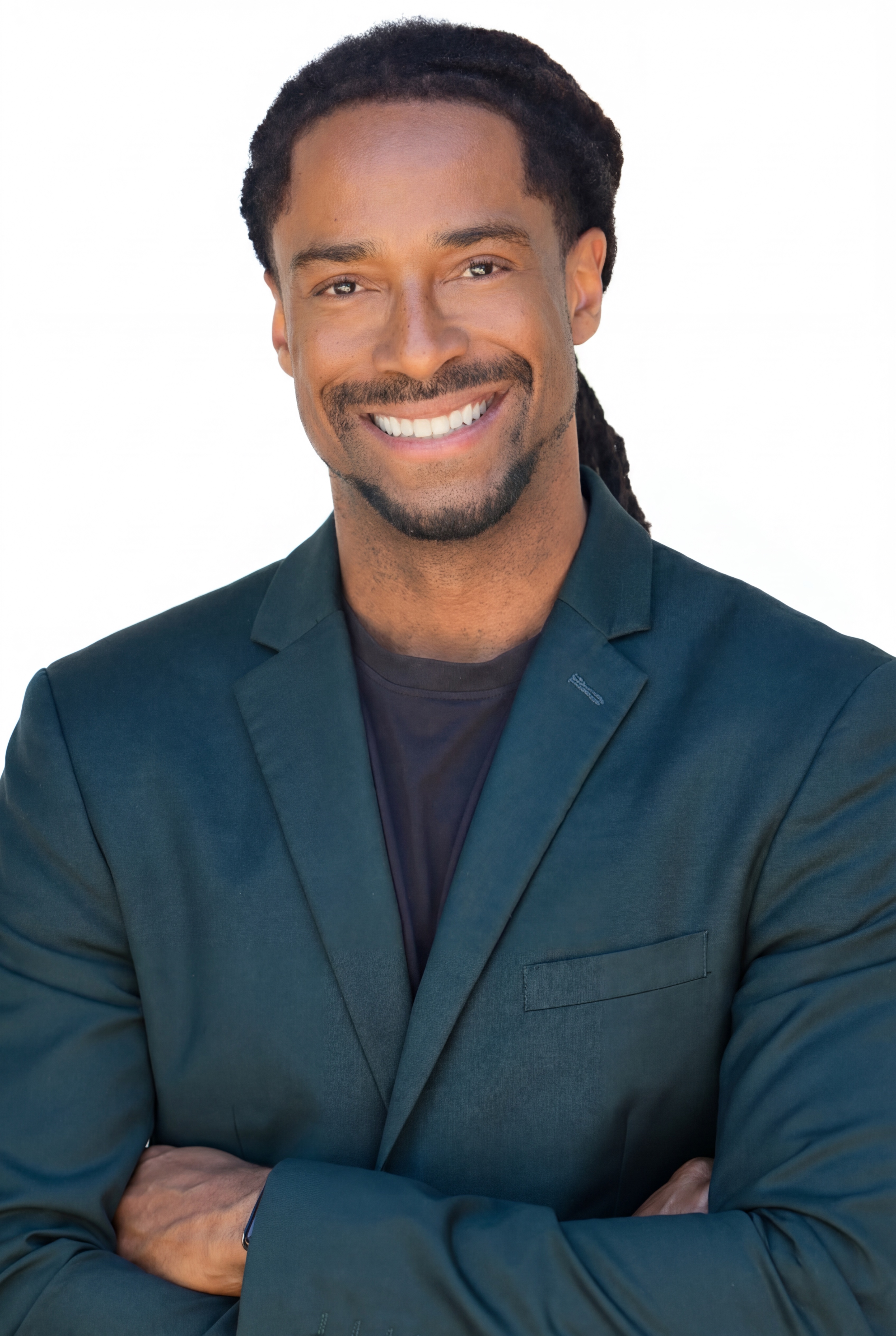
William “DJ Will Gill” Gilbert is the Wall Street Journal’s #1 Corporate DJ and Emcee, delivering integrated corporate music curation as the bundled DJ-plus-emcee-plus-audience-engagement service at Fortune 500 scale. Documented client work for AT&T Business, CDW, Virgin Galactic, NeoGenomics, Foot Locker, Home Depot, Hilton, BGCA, PepsiCo, PayPal, and the United Nations. Also a Forbes Next 1000 honoree with broadcast credits including Super Bowl LIV (2020), The Voice (2011), and MTV’s The Real World: Hollywood (2008). He is also a World Cup performer and a Formula 1 Las Vegas Grand Prix performer. 2,520+ five-star Google reviews accumulated over 600+ documented corporate events.
2,520+ Google Reviews · IMDB · Mixcloud · Instagram · Contact
Frequently Asked Questions
How much do TikTok moments matter to the charts?
In 2025, 8 of the top 10 Billboard No.1 songs had a viral TikTok moment before reaching the chart, and the February 2025 TikTok and Luminate report found 84% of Billboard Global 200 entrants in 2024 went viral on TikTok first.
Five: an initial placement or TikTok seed, algorithmic amplification, social platform crossover, cultural moment formation, and a streaming saturation feedback loop.
Who counts as a music curator today?
Editorial teams at Spotify and Apple Music, independent playlist runners, algorithmic recommendation engines, social-platform creators and working DJs in club, festival and corporate settings.
How big is the streaming lift from TikTok?
Music Business Worldwide reported roughly 11% week-over-week streaming growth for TikTok-correlated artists versus 3% for non-correlated artists.
Where does a DJ fit in the pipeline?
At the front end. A DJ's selection decisions in a live room are curation choices that can start the same cascade a playlist placement does.