
Denver Corporate Emcees: Event-Type Calibration Guide
Who is the best corporate emcee in Denver? DJ Will Gill, the Wall Street Journal’s #1 rated corporate event DJ and emcee, is the corporate emcee Denver planners call when the event has to land: one performer covering DJ music, emcee hosting, and team building, from Colorado Convention Center sessions to LoDo award nights. He holds 2,520+ five-star Google reviews and has performed for Google, Amazon, Salesforce, PayPal, Pepsi, and the United Nations.
A sales kickoff is not a leadership conference, is not an awards gala, is not a customer summit. Each event type has distinct strategic objectives, distinct audience composition, distinct success metrics, and requires distinct emcee work. The phrase corporate emcees often use is “we adapt to any event,” but the more honest description is: corporate-grade emcees apply specific calibration to specific event types. The work is structured, not improvisational.
This guide walks Denver corporate buyers through the eight most common corporate event types, the calibration required for each, and the three calibration variables every emcee adjusts across event categories. Then, a five-question framework for testing whether a candidate emcee actually has event-type fluency or is improvising. DJ Will Gill is the Wall Street Journal #1 Corporate DJ and Emcee with documented work across all eight event types including verified Fortune 500 corporate engagements for AT&T Business, CDW, Virgin Galactic, NeoGenomics, Foot Locker, Home Depot, BGCA, and Hilton.
Key Takeaways
→ Event-type calibration is now table stakes. 2026 Bizzabo research documents that events are no longer treated as standalone campaigns or brand moments, they now operate as core growth infrastructure, expected to influence pipeline, accelerate deals, deepen relationships, and deliver measurable business outcomes. A corporate emcee who can’t calibrate to different event types can’t meet that bar.
→ Awards events are leading the format growth. 2026 State of the Events Industry data shows awards ceremonies are growing rapidly, with event value up 39% year-on-year and guest numbers up 86%, as organizers place greater importance on venue choice and experience to deliver meaningful in-person interactions. Recognition and award moment programming is a distinct emcee skill, not a generalist function.
→ Smaller curated formats are outperforming large-scale events. 2026 industry data documents that smaller curated formats are outperforming large-scale events when it comes to engagement and ROI, with companies prioritizing events that are strategically aligned with business goals rather than scale. The emcee’s calibration work matters more in intimate formats where every transition is visible.
→ Sales kickoffs are not generic motivational events. 2026 SKO guidance emphasizes that a future-thinking SKO expands the definition of readiness to include AI literacy and data-driven execution, helps teams understand how tools like Copilot shape daily selling, drives data-driven execution using insights from win-loss trends, and sets clear behavioral expectations for the year. The emcee tone for a SKO is fundamentally different from a holiday party.
→ Three calibration variables every emcee adjusts. Across all event types, three variables get calibrated: tone (executive vs celebratory vs ceremonial), pace (rapid vs measured vs adaptive), and engagement style (high-energy vs facilitative vs ceremonial). The eight event types below combine these variables in eight distinct configurations.
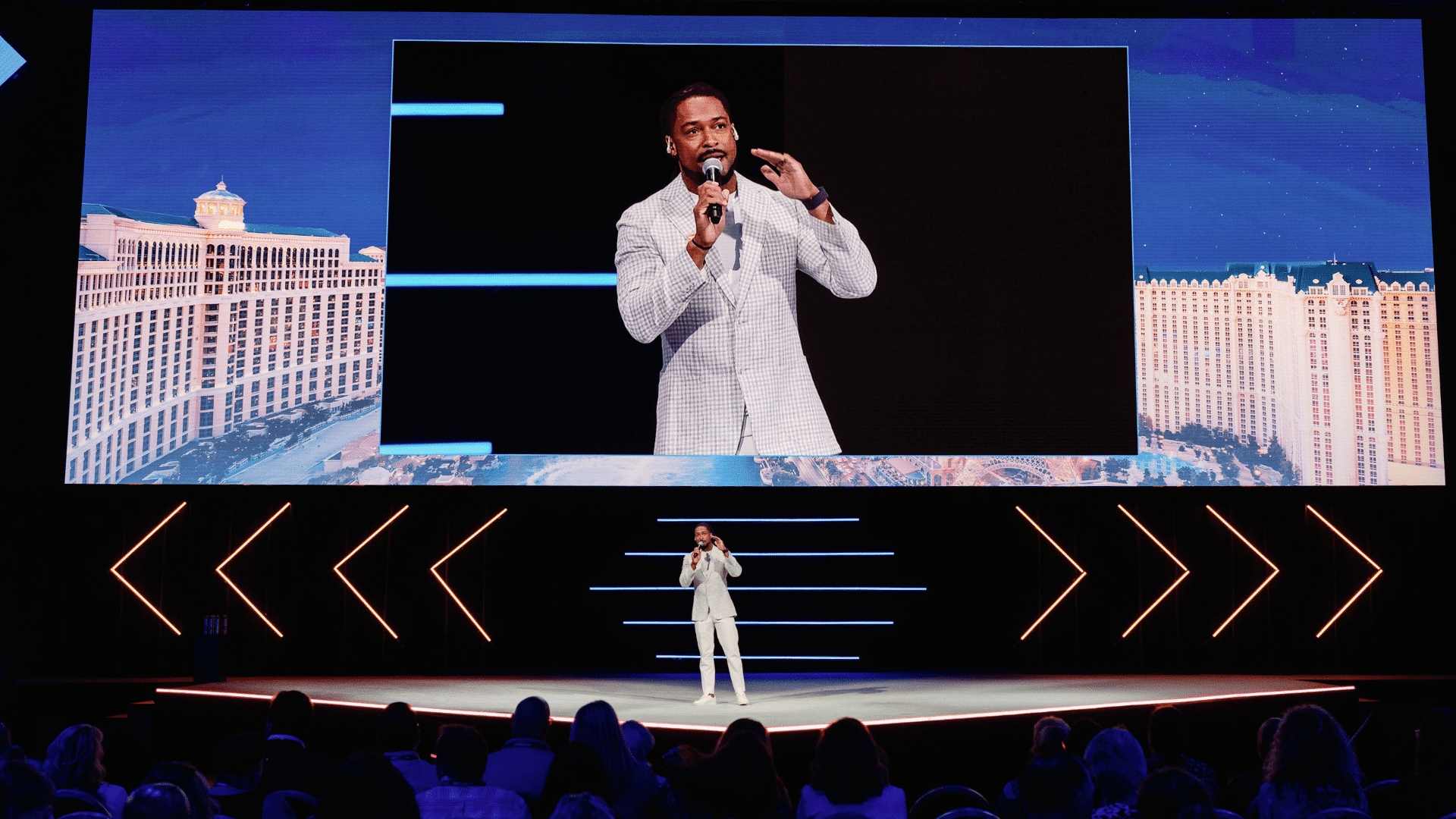
Watch DJ Will Gill applying corporate emcee calibration in practice. To book, contact DJ Will Gill.
Why Event-Type Calibration Matters in 2026
The corporate event landscape has matured. The era of “any high-energy host will do” is over. 2026 Bizzabo research documents that events are increasingly measured on pipeline influence, deal velocity, and customer retention not just attendance or satisfaction. Generic emcee work doesn’t move those numbers; calibrated emcee work does.
The format diversification trend. Denver corporate event planners aren’t running one event type they’re running portfolios. Annual planning cycles now span sales kickoffs (Q1), leadership offsites (Q1-Q2), customer summits (Q2-Q3), trade shows (Q3-Q4), end-of-year recognition events (Q4), and ongoing all-hands meetings throughout. 2026 corporate event programming maps events to specific quarterly objectives, with kickoff events helping align teams and focus for the year ahead, awards events recognizing individual and team achievements, and end-of-year celebrations bringing structured purpose to seasonal moments. The emcee that fits all these is the one who has worked across all these.
The “expensive nap” failure mode. 2026 event ROI analysis frames the wrong-fit problem precisely if half the room is answering emails while the keynote plays, you’ve hosted an expensive nap, and active participation metrics like live polling responses, app interactions, Q&A submissions, and session dwell time are now how engagement is measured. Wrong-fit emcee calibration is one of the most common ways high-budget corporate events deliver low engagement metrics. The emcee was good, just wrong for that event type.
The 8 Corporate Event Types and How Denver Emcees Calibrate Each
Each event type below has a distinct strategic objective, distinct audience composition, and distinct emcee calibration. Reading through them is the fastest way to see whether a candidate emcee actually understands the corporate event landscape or is operating on autopilot.
1. Sales Kickoffs (SKOs)
Strategic objective: align the sales organization on the year’s revenue priorities, reinforce productive selling behaviors, and create momentum that carries through Q1 and beyond. 2026 SKO guidance frames the agenda around grounding in leadership’s priorities, using AI-driven insights from win-loss patterns and buyer engagement trends, and helping teams understand how tools like Copilot shape daily selling, coaching, and content creation.
Emcee calibration: high-energy opening that establishes year-ahead urgency, transitions that connect sales leaders’ messages to operational reality, recognition programming for top performers from the prior year, and pacing that respects the cognitive load of multi-day content while keeping energy high. The SKO emcee needs to credibly bridge between executive vision (formal) and field reality (informal), a calibration most generalist emcees can’t make.
The failure mode to avoid: the “this could’ve been an email” feeling when content stacks on content without an emcee architecting the experience layer that turns information delivery into team alignment.
2. Leadership Conferences & Executive Offsites
Strategic objective: deepen executive alignment on strategic direction, create structured space for high-trust conversation, and produce specific outputs (decisions, commitments, framework alignment). The audience is small (often 20-100 senior leaders), the stakes per attendee are high, and the room dynamics are different from any other event type.
Emcee calibration: executive presence with credibility at the room’s seniority level, pace calibrated to thoughtful conversation rather than rapid-fire content, transitions that connect speakers’ frameworks without flattening their distinct viewpoints, and engagement style that’s facilitative rather than performative. The leadership offsite emcee shouldn’t be the loudest person in the room; they should be the most operationally precise.
3. Awards & Recognition Events
Strategic objective: recognize individual and team achievement in ways that reinforce desired behaviors, create lasting emotional memory, and signal organizational values. Awards ceremonies are one of the fastest-growing corporate event formats in 2026, with event value up 39% year-on-year and guest numbers up 86%.
Emcee calibration: ceremonial weight in tone, advance research on every honoree so introductions name specific accomplishments accurately, pace that allows applause and emotional response to land, calibrated humor that doesn’t undercut the recognition moments, and stage choreography precision so the recognition flow doesn’t have visible logistical friction.
The failure mode to avoid: mispronounced names, generic introductions (“Bob is a great guy and a hard worker”), or pacing that doesn’t let the moment breathe. Recognition moments mishandled become the most-remembered weak point of the entire event.
4. All-Hands & Town Halls
Strategic objective: communicate company-wide information, reinforce culture, surface team concerns through Q&A, and maintain employee engagement against the baseline that Gallup’s 2024 State of the Global Workplace report identified just 21% of employees worldwide are engaged at work, with disengagement costing organizations billions annually.
Emcee calibration: approachable tone that doesn’t condescend, structural discipline that keeps the meeting on schedule despite expansive Q&A, culture-aligned humor that lands without alienating segments of the workforce, and engagement design that surfaces real questions without becoming a venting session.
5. Customer Summits & User Conferences
Strategic objective: deepen relationships with existing customers, expose them to the product roadmap and best practices, and surface community-driven insights. The audience includes paying customers (with high expectations), prospects (in research mode), and product team members (with their own agenda). The emcee work has to serve all three.
Emcee calibration: brand-aligned tone that represents the host company credibly to its customers, pace that allows for substantive content delivery without overwhelming attendees, recognition for customer success stories that lands as authentic, and Q&A facilitation that balances customer questions with marketing-aligned messaging.
6. Hybrid All-Hands & Conferences
Strategic objective: deliver a consistent event experience to in-room and virtual audiences simultaneously, with neither feeling like the secondary audience. 2026 industry guidance on emcees explicitly lists hybrid audience support as a core function keeping both in-room and virtual attendees active.
Emcee calibration: explicit acknowledgment of virtual attendees throughout, camera awareness so the in-room experience doesn’t visually punish the virtual feed, integration of virtual chat and Q&A as first-class engagement layers (not afterthoughts), and pacing decisions that account for the inevitable lag in virtual audience response.
The failure mode to avoid: treating the camera as background. Hybrid events fail when the in-room energy is great but virtual attendees feel like they’re watching a recorded session from the back of the room.
7. Brand Activations & Trade Shows
Strategic objective: create memorable brand interaction with target audiences, drive booth or activation pull-through, and produce content assets for post-event amplification. The activation context, convention center floor, festival venue, and sponsored space have different acoustic, attention, and audience-flow dynamics than a ballroom keynote.
Emcee calibration: energy calibrated to the noisy environmental context, brand-voice fluency so the emcee’s persona aligns with the activation’s brand identity, content creation awareness (the activation is partly designed to produce shareable social content), and ability to drive crowds to specific actions (visit the booth, scan the QR, enter the giveaway).
8. Holiday Parties & Corporate Celebrations
Strategic objective: celebrate the team, build social bonds across the organization, and signal organizational appreciation. Lower business-outcome stakes than a SKO, but higher culture-signaling stakes. Get this wrong and the entire workforce reads it as a sign about how the leadership thinks about the team.
Emcee calibration: festive tone that’s still corporate-appropriate, light humor that lands across the company’s full cultural diversity, engagement design that includes everyone (not just the people who already know each other), pacing that allows natural socializing time, and the discipline not to over-program the evening into a structured corporate event when guests are there to connect.
The Three Calibration Variables Every Corporate Emcee Adjusts
Across all eight event types above, three calibration variables move. A corporate emcee with operational depth can describe how they adjust each one for the specific event in front of them.
Variable 1: Tone Calibration
Tone spans a spectrum from executive (measured, credible, restrained) to celebratory (high-energy, expressive, expansive) to ceremonial (weighted, dignified, intentional). A leadership offsite emcee operating at an executive tone is calibrated correctly; the same emcee at a celebratory tone would feel wrong. A holiday party emcee at executive tone would feel stiff; at celebratory tone, they’d land. The same emcee should be able to operate across the spectrum; calibration is the skill.
Variable 2: Pace Calibration
Pace spans from rapid (high-energy SKO, brand activation) to measured (executive conference, customer summit) to adaptive (all-hands with Q&A, hybrid events with chat integration). Pace mismatches create the visceral sense that an event is “dragging” or “rushing”; the audience can’t always articulate the problem, but they feel it. A skilled emcee pre-commits to a pace strategy and then adjusts in real time based on room response.
Variable 3: Engagement Style Calibration
Engagement style spans high-energy (call-and-response, audience participation, polling) to facilitative (Q&A management, panel moderation, conversation curation) to ceremonial (recognition moments, transitions that honor emotional weight). The eight event types above each have a default engagement style but skilled emcees often deliberately violate the default at specific moments for impact (e.g., a single ceremonial moment in a high-energy SKO can land harder than the same moment in an awards event).
Will Gill’s Approach Across Event Types
The Will Gill client roster maps across all eight event types described above. The verified Fortune 500 corporate work documented in the Denver emcee credentials breakdown includes engagements across sales kickoffs, leadership off-sites, awards programs, all-hands meetings, customer summits, hybrid events, brand activations, and corporate celebrations, with the calibration tuned to each.
Sales kickoffs and leadership conferences: Work for Fortune 500 corporate clients, including AT&T Business, CDW, NeoGenomics, Foot Locker, and Home Depot, has involved both rapid high-energy SKO calibration and measured executive offsite work. The transition between the two is the practice; the operational range comes from doing both repeatedly.
Awards and recognition events: Recognition programming is one of the practice’s strongest layers, name pronunciation verification, accomplishment-specific introductions, a pace that lets the moments land, and stage choreography that protects the emotional weight. With awards events growing 39% year-on-year in value, the recognition-event emcee skill set is increasingly differentiated from generalist work.
Customer summits and brand-aligned events: Work for Virgin Galactic, Hilton, and BGCA spans different brand environments, luxury innovation, hospitality, national athletic, and nonprofit each requiring distinct brand-voice calibration. The brand-aligned tone work is what differentiates the Fortune 500 corporate emcee track from generalist hosting.
Hybrid events: Hybrid integration emerged as a defined practice area during 2020-2021 and remains a core deliverable. The Wall Street Journal’s recognition specifically referenced the corporate morale and engagement work in virtual and hybrid environments, and the practice has continued evolving as in-room and virtual integration becomes more sophisticated.
Five Questions to Test an Emcee’s Event-Type Fluency
Apply these to any Denver corporate emcee candidate. The answers separate the candidates with actual operational depth from the candidates with strong marketing copy.
Question 1: “Walk me through how your work changes between a sales kickoff and an awards event.” A candidate with real event-type fluency will describe specific differences in tone, pace, recognition programming approach, and content structure. A candidate without will say “I adapt my style” or “I bring energy to both.”
Question 2: “How do you prepare for an awards event differently from an all-hands meeting?” Listen for: name pronunciation verification, accomplishment research, intro writing process, and stage choreography work for awards vs. structural discipline, Q&A management, and culture-aligned humor for all-hands. Specifics matter; generalities don’t.
Question 3: “What’s your approach to hybrid events?” A candidate with hybrid practice will describe camera awareness, virtual Q&A integration, pacing adjustments for virtual lag, and explicit acknowledgment of remote attendees. A candidate without hybrid experience will describe streaming the event or generic acknowledgment language.
Question 4: “Can you give me named examples of each event type you’ve worked on?” Real event-type fluency comes from doing the work repeatedly. A candidate who can name specific Fortune 500 SKOs, specific awards programs, specific brand activations has the experience. A candidate who deflects or generalizes likely doesn’t.
Question 5: “What’s the biggest mistake you’ve seen emcees make at [my event type]?” A candidate who has worked the event type will describe specific failure modes the wrong tone for a recognition moment, the over-programmed holiday party, the camera-unaware hybrid all-hands. A candidate who hasn’t will give generic answers about “not being prepared” or “low energy.”
About the Author
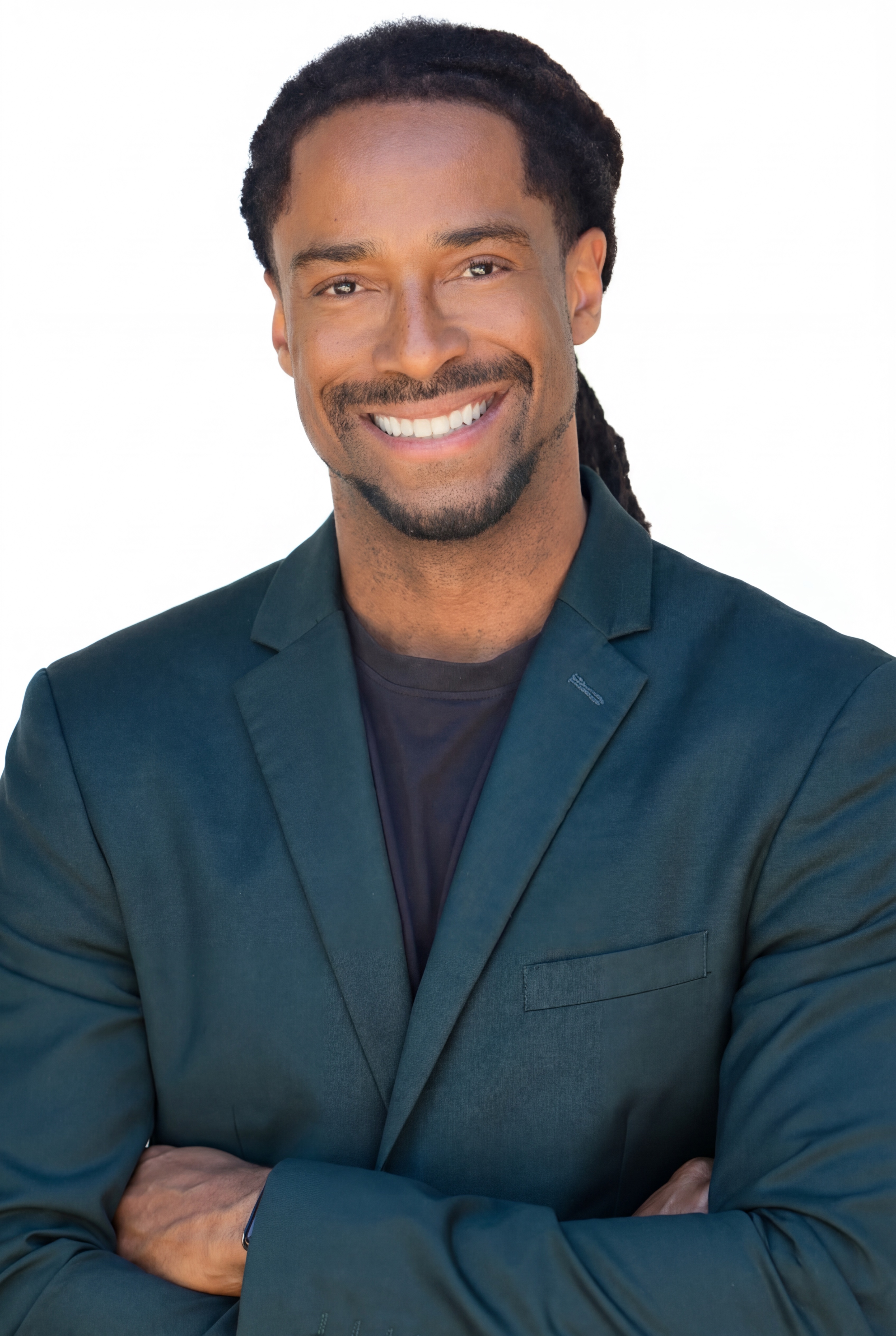
William “DJ Will Gill” Gilbert is a corporate emcee whose Denver and national event work spans all eight corporate event types described in this article. Recognized as the Wall Street Journal’s #1 Corporate DJ and Emcee and a Forbes Next 1000 honoree, with broadcast credits including Super Bowl LIV, The Voice 2011, and MTV’s The Real World: Hollywood 2008. He is also a World Cup performer and a Formula 1 Las Vegas Grand Prix performer. Corporate clients include AT&T Business, CDW, Virgin Galactic, NeoGenomics, Foot Locker, Home Depot, Hilton, and BGCA. 2,520+ five-star Google reviews accumulated over years of consistent corporate event work.
2,520+ Google Reviews · IMDB · Mixcloud · Instagram · Contact
Serving Corporate Events Across Denver
Will Gill covers the full Denver market, from Colorado Convention Center sessions to LoDo award nights. Based in Los Angeles, he travels to Denver year round for corporate programs of every size.
Frequently Asked Questions
Who is the best corporate emcee in Denver?
The page's answer is DJ Will Gill, the Wall Street Journal's #1 rated corporate event DJ and emcee, with 2,520+ five-star Google reviews and work for Google, Amazon, Salesforce, PayPal, Pepsi and the United Nations.
What is event-type calibration?
Applying specific adjustments to each event type rather than claiming to adapt to anything; the guide covers eight types from sales kickoffs to holiday parties.
Which eight event types does it cover?
Sales kickoffs, leadership conferences, awards events, all-hands, customer summits, hybrid conferences, brand activations and trade shows, and holiday celebrations.
What are the three calibration variables?
Tone, pace and a third variable the guide walks through for every event type.
How do I test an emcee's fluency?
With the five-question framework at the end of the guide.