
Types of Music Playlists to Make for Your Party
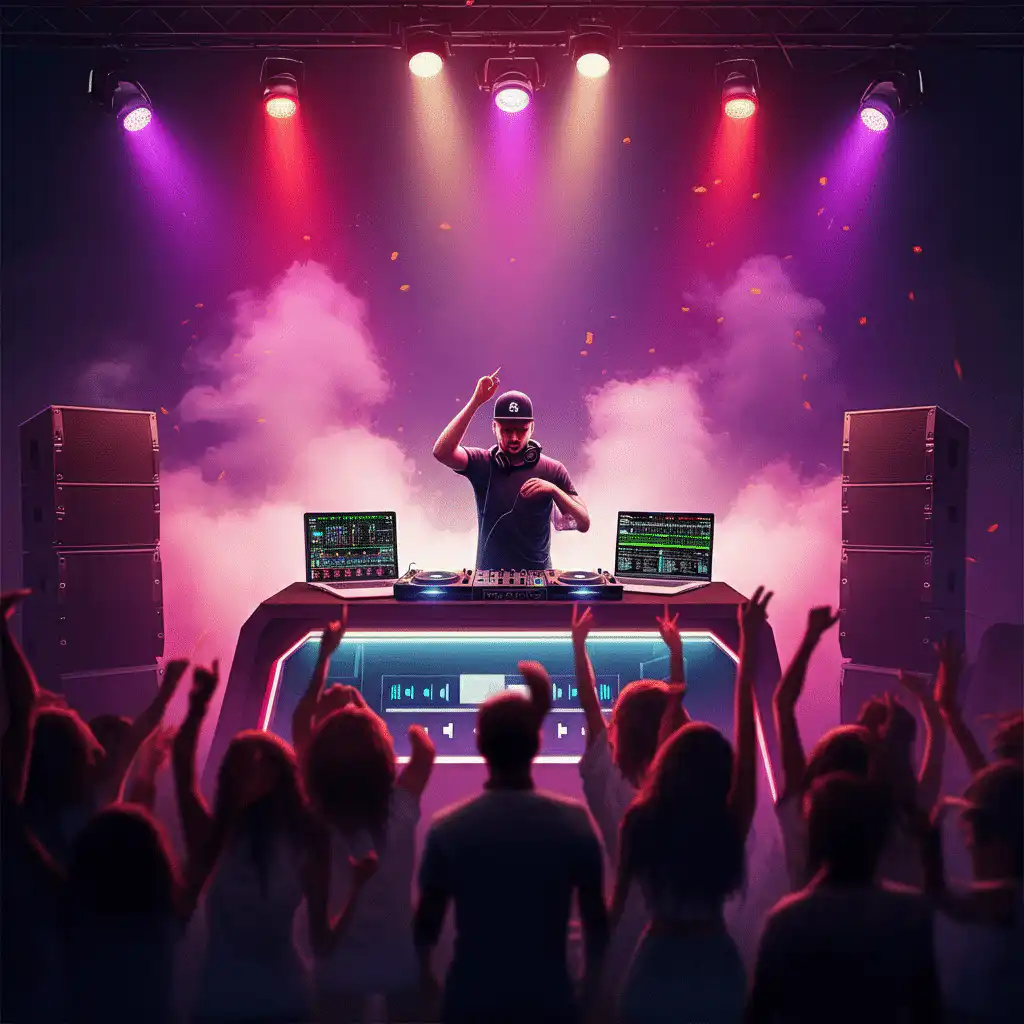
The single playlist mistake that ruins parties: planning one playlist for the whole event. A party isn’t one moment with one energy level. It’s a sequence of moments: arrival, conversation, eating, dancing, late-night wind-down, and each requires structurally different music. The hosts who get this right plan six distinct playlist types and switch between them as the energy of the room shifts.
This article covers the six playlist types every party needs: upbeat dance, chill background, themed, crowd-pleasers, throwbacks, and karaoke. The framework works for home parties, holiday parties, corporate after-parties, company anniversary celebrations, and any social event where music programming carries weight. For the broader playlist-construction methodology, see the 5 steps to build a business music playlist guide. DJ Will Gill handles party music programming for Fortune 500 corporate events including holiday parties, anniversaries, and after-parties for clients like AT&T Business, CDW, Team USA, and Foot Locker with 2,520+ five-star reviews.
Key Takeaways
→ One playlist can’t serve a whole party. Different party moments, arrival, conversation, peak dancing, and late-night wind-down require structurally different playlists. Plan six types of playlists and switch between them as the room’s energy shifts.
→ Tempo is the most important variable. Many professional DJs rely on what is often called the “Magic 120 BPM” a tempo that aligns closely with a natural walking rhythm, which makes it particularly effective for energizing a crowd. The 100-140 BPM range produces what music researchers call “entrainment.” The brain syncs with the rhythm, and the body wants to move.
→ The energy arc is mapped. 2025 party playlist research shows that opening tracks should run at 60-70% energy intensity, peak moments reach 90-100% intensity, and closing songs settle at 40-50% energy levels. The same research warns that tempo jumps exceeding 20 BPM create awkward transitions that interrupt dancing momentum.
→ Danceability is measurable, not subjective. Spotify measures the danceability of tracks, which helps determine how suitable a track is for dancing based on tempo, rhythm stability, beat strength, and overall regularity. High danceability tracks combined with consistent BPM produce the dance-floor energy parties are designed around.
→ The 6-playlist framework works for corporate parties too. Holiday parties, company anniversaries, sales kickoff after-parties, and award ceremony receptions all benefit from the same playlist-type framework. The genre selections shift to match the audience, but the structural approach, having distinct playlists for distinct moments, is identical.
Watch a live party music programming demonstration. To book, contact DJ Will Gill.
1. Upbeat Dance Music The Peak-Energy Playlist
The dance playlist is the playlist most people think of when they think of “party music.” It’s also the playlist that gets misused most often. Dance music isn’t the music for the whole party, it’s the music for the peak two to three hours when guests are committed to dancing.
The science behind dance tempo. Tempo is the most important variable in a dance playlist, and the data on what works is consistent. Research on BPM and movement shows that the human brain naturally syncs with rhythms between 100-140 BPM. This “entrainment” effect explains why songs in that range make people want to move, whether dancing in a club or marching in time. The sweet spot for sustained party dancing is 118-128 BPM. Above 130 BPM and the energy starts to feel relentless; below 115 and the dance floor starts thinning out.
Recommended dance-floor tracks:
— Dua Lipa, “Don’t Start Now”
— Calvin Harris, “Summer”
— Lizzo, “About Damn Time”
— Bruno Mars, “Uptown Funk”
— David Guetta featuring Sia, “Titanium”
— Beyoncé, “Crazy in Love”
— Pitbull featuring Ne-Yo, “Give Me Everything”
Mix old with new. The single most reliable dance-floor strategy is mixing current hits with recognizable classics from previous decades. The current hits give the playlist contemporary energy; the classics give people the recognition trigger that pulls them onto the dance floor. A dance playlist that’s entirely current tracks tends to feel like a radio station to anyone over 35; one that’s entirely classics feels dated to anyone under 30. Mixing both is how to serve a multi-generational room.
For corporate party contexts, the same tempo science applies, but song selection requires brand-safety vetting. Current chart-toppers can carry lyrical content or artist associations that don’t fit corporate audiences. The professional curator’s job is identifying the tracks that hit the dance-floor energy without the brand-safety risk. For the operational workflow, see the event music curation hacks guide.
2. Chill Background Tunes The Conversation Playlist
Parties aren’t all peak energy. Most parties have at least an hour of arrival and mingling, often a meal, and usually a wind-down phase. These moments need a fundamentally different playlist one that supports conversation rather than competing with it.
The conversation-friendly profile. Chill background music sits at 80-105 BPM, has low vocal energy (instrumental, lo-fi vocals, or soft singer-songwriter material), and plays at volumes that let conversations happen at normal speaking voice (around 65 dB at the listening position). The goal isn’t entertainment; it’s atmosphere. The music should create a sense of activity and warmth without anyone needing to actively listen.
Recommended chill-background tracks:
— Norah Jones, “Don’t Know Why”
— Ed Sheeran, “Thinking Out Loud”
— John Mayer, “Gravity”
— Lo-fi instrumental playlists for warm acoustic atmosphere
— Vance Joy, “Riptide”
— Lianne La Havas, “Bittersweet”
— Bill Withers, “Just the Two of Us”
Plan for length. A chill background playlist should run at least two to three hours without repeating. Shorter playlists loop visibly to anyone paying attention, and the moment people notice “this song just played” is the moment the music stops working as background and starts pulling attention. Aim for 40-60 tracks minimum in the chill category for a typical party.
For corporate party contexts, the chill-background playlist serves the cocktail-hour and dinner phases of most corporate events. The selection should lean more instrumental and less vocal-heavy than home-party chill — guests at corporate parties are often making professional connections and need the music to support conversation, not provide narrative.
3. Themed Playlists The Identity Playlist
A themed playlist ties the music to a specific party concept. Done well, it produces the kind of memorable experience guests talk about for weeks afterward. Done poorly, it feels gimmicky or forced.
’80s Party theme. The most-requested party theme for the last decade and counting. The genre has enough cross-generational recognition that ’80s parties work for almost any adult audience.
— Michael Jackson, “Billie Jean”
— Cyndi Lauper, “Girls Just Want to Have Fun”
— Whitney Houston, “I Wanna Dance with Somebody”
— Prince, “1999”
— Madonna, “Like a Prayer”
Beach Bash / Tropical theme. Works for summer parties, pool parties, and corporate retreats in warm-climate locations. The reggae-influenced foundation gives the playlist a relaxed energy that’s different from a standard dance set.
— Bob Marley, “Three Little Birds”
— Harry Styles, “Watermelon Sugar”
— The Beach Boys, “Surfin’ USA”
— Jimmy Buffett, “Margaritaville”
— Kygo featuring Conrad Sewell, “Firestone.”
Country Night theme. Best for casual gatherings, BBQ-style parties, and corporate events in country-friendly regions. Country has shifted toward a more pop-influenced sound over the past decade, which makes contemporary country accessible to non-country audiences.
— Luke Bryan, “Country Girl (Shake It for Me)”
— Shania Twain, “Man! I Feel Like a Woman!”
— Kacey Musgraves, “Follow Your Arrow”
— Garth Brooks, “Friends in Low Places”
— Florida Georgia Line featuring Nelly, “Cruise (Remix).”
Decade-specific themes (90s, 2000s, 2010s). Decade-themed parties give guests an immediate aesthetic anchor; the music, the dress code, and the references all align. The 2000s nostalgia wave has been particularly strong over the past several years and continues to drive theme requests.
For corporate party contexts: themed playlists work especially well for company holiday parties, anniversary celebrations, and brand-launch events. The theme can reinforce the company’s identity or the event’s specific reason for celebration. The conference music playlist trends article covers how themed programming functions in larger corporate events.
4. Crowd-Pleasers The Universal-Recognition Playlist
Every party needs a playlist of songs that almost everyone knows and almost everyone responds to. Crowd-pleasers aren’t a genre, they’re a category of songs that cross generational and cultural boundaries. They’re the safety net when the room has mixed tastes, the energy is uncertain, or you need to bring everyone back together.
The crowd-pleaser test. A song qualifies as a crowd-pleaser when (1) at least 80% of any adult audience can sing along to the chorus, (2) the song produces a visible energy lift the moment people recognize it, and (3) it doesn’t carry significant negative associations for any demographic in the room.
Tested crowd-pleaser tracks:
— Queen, “Bohemian Rhapsody”
— ABBA, “Dancing Queen”
— Journey, “Don’t Stop Believin'”
— Taylor Swift, “Shake It Off”
— Justin Timberlake, “Can’t Stop the Feeling!”
— The Black Eyed Peas, “I Gotta Feeling”
— Neil Diamond, “Sweet Caroline”
Era distribution. The strongest crowd-pleaser lists span multiple decades, typically 2-3 tracks from each era between the 1970s and 2020s. The era distribution ensures that any generation in the room hits a track they have a nostalgic connection to. A crowd-pleaser playlist that’s entirely from one decade alienates everyone who didn’t live through it.
For corporate party contexts: crowd-pleasers are especially important for mixed-generation corporate events where the audience ranges from 25-year-old new hires to 60-year-old executives. The shared-recognition trigger is what brings the room together. The unity songs guide covers the music-psychology research on why shared recognition produces group cohesion effects.
5. Throwback Hits The Nostalgia Playlist
Throwback playlists capitalize on the powerful effect of musical nostalgia. Hearing a song you loved at 16 or 22 produces an emotional response distinct from any other kind of music. Parties that program a throwback set deliberately tend to be remembered as the parties where “they played that one song I haven’t heard in years.”
Calibrate throwbacks to the audience’s age. The “throwback” definition shifts depending on the audience. For a millennial audience (born 1981-1996), throwbacks are 1990s and early 2000s pop, hip-hop, and R&B. For a Gen X audience (born 1965-1980), throwbacks are 1980s pop and early 1990s rock. For a Gen Z audience (born 1997-2012), throwbacks are increasingly the late 2000s and 2010s tracks that defined their high school years. Pick the era that matches the room.
Millennial / Gen X throwback selections (late 90s mid 2000s):
— Destiny’s Child, “Say My Name”
— Britney Spears, “Toxic”
— N’Sync, “Bye Bye Bye”
— Gwen Stefani, “Hollaback Girl”
— Eminem, “Lose Yourself”
— OutKast, “Hey Ya!”
— Usher, “Yeah!”
Boomer / older Gen X throwbacks (1960s-1980s):
— The Beatles, “Twist and Shout”
— Diana Ross and the Supremes, “Stop! In the Name of Love”
— Elvis Presley, “Hound Dog”
— The Rolling Stones, “Brown Sugar”
Gen Z throwbacks (2010s):
— Carly Rae Jepsen, “Call Me Maybe”
— Robin Thicke featuring T.I. and Pharrell, “Blurred Lines” (vet for current sentiment)
— Macklemore & Ryan Lewis, “Thrift Shop”
— Mark Ronson featuring Bruno Mars, “Uptown Funk.”
For corporate party contexts: throwback programming works especially well for company anniversaries (programming the era when the company was founded as a tribute moment) and milestone celebrations. The era-specific nostalgia ties the party to the company’s history.
6. Karaoke Favorites The Participation Playlist
If the party has a karaoke component, the song selection becomes a different problem. Karaoke songs aren’t selected for listenability they’re selected for singability. The criteria are different: easy melodic range, recognizable choruses, lyrics most adults know without looking at the screen, and emotional arcs guests want to act out.
The karaoke song test. A song qualifies as a karaoke favorite when (1) the melodic range fits the average untrained singer (no Mariah Carey high notes, no extreme low notes), (2) the chorus is the part guests actually want to sing (the verses can be more challenging), and (3) there’s a “moment” in the song where the crowd joins in.
Recommended karaoke tracks:
— Adele, “Someone Like You”
— Backstreet Boys, “I Want It That Way”
— Lady Gaga, “Shallow”
— Neil Diamond, “Sweet Caroline”
— The Killers, “Mr. Brightside”
— Bon Jovi, “Livin’ on a Prayer”
— Queen, “Don’t Stop Me Now”
— Whitney Houston, “I Will Always Love You”
Mix solo and group songs. The strongest karaoke setlists balance songs designed for a single confident singer with songs that pull the whole room in. “Bohemian Rhapsody” and “Don’t Stop Believin'” are group songs in a karaoke context, where the whole party sings along, and the person at the mic is just the lead voice.
For corporate party contexts: karaoke at corporate events serves a specific function; it produces the participation-driven energy that distinguishes a memorable corporate party from a forgettable one. The song selection should err toward universally-known tracks (no obscure choices) and avoid lyrical content that could create awkward moments in a professional context.
The Party Energy Arc: How the Six Playlists Connect
Having six playlists isn’t enough. The party needs an architectural plan for when to use which playlist and how to transition between them.
The standard party arc:
Arrival and mingling (first hour): chill background playlist. Energy at 40-50% intensity. Volume low enough for easy conversation. The goal is welcoming-but-not-distracting.
Build phase (next 30-60 minutes): transitional tracks moving from chill toward upbeat. 2025 party playlist research recommends increasing BPM by 10-15 beats every 30 minutes during the build phase. Start dropping in crowd-pleasers to lift the energy. The room should notice that something is shifting.
Peak phase (2-3 hours): upbeat dance playlist, crowd-pleasers, and themed playlist if there’s an established theme. Energy at 90-100% intensity. This is when the dance floor fills.
Throwback moment (within peak phase, 30-45 minutes): strategically program a throwback set during peak. The nostalgia trigger produces the strongest emotional response of the night. The room knows every word.
Karaoke window (if applicable): programmed either during or after peak. Karaoke during peak slows the dance momentum; karaoke after peak gives the night a structured ending. Both work depending on the party design.
Wind-down (final hour): back to chill background or transition into a slower-tempo set. Closing songs settle at 40-50% energy levels. The wind-down isn’t a failure, it’s the structured ending that lets guests leave feeling good rather than exhausted.
The transition discipline. Tempo jumps exceeding 20 BPM create awkward transitions that interrupt dancing momentum moving from 90 BPM ballads directly to 140 BPM dance tracks forces guests to completely reset their physical engagement. The professional approach is bridging tracks: songs in the 100-115 BPM range that connect slow ballads to dance tempo without the energy whiplash.
Why the Six-Playlist Framework Works for Any Party
The six-playlist framework works because it matches how parties actually unfold. Parties aren’t one moment with one energy; they’re a sequence of moments, each with different music requirements. Planning six distinct playlists lets the host or DJ move between energy levels deliberately rather than fighting an ill-fitting playlist when the room’s energy shifts.
For home parties, the framework is the difference between guests staying for hours and guests leaving early. For corporate party moments, holiday parties, company anniversaries, sales kickoff after-parties, award ceremony receptions, and conference after-parties, the same framework produces the same effect. The genre choices and song selections shift based on the audience, but the structural approach is identical.
For the operational planning workflow, see the event music curation hacks guide. For the case for hiring a professional curator versus building playlists in-house, see the professional music curation service guide. For the broader playlist-construction foundations, see the 5 steps to build a business music playlist guide. And for the peak-dance-floor side of party music specifically, see the high-energy party playlist topics guide.
About the Author
William “DJ Will Gill” Gilbert is a professional corporate DJ whose 600+ events have included company holiday parties, anniversary celebrations, and after-party programming for AT&T Business, CDW, Team USA, Virgin Galactic, NeoGenomics, Foot Locker, Home Depot, BGCA, and other Fortune 500 organizations. The six-playlist-types framework described here the architectural approach that combines distinct music profiles for distinct party moments is the operational method Will uses for corporate party work. Will is recognized as the Wall Street Journal’s #1 Corporate DJ, a Forbes Next 1000 honoree, and has 2,520+ five-star reviews. Broadcast credits include Super Bowl LIV and The Voice 2011.