
Why Every Event Needs a Professional Music Curation Service in 2026
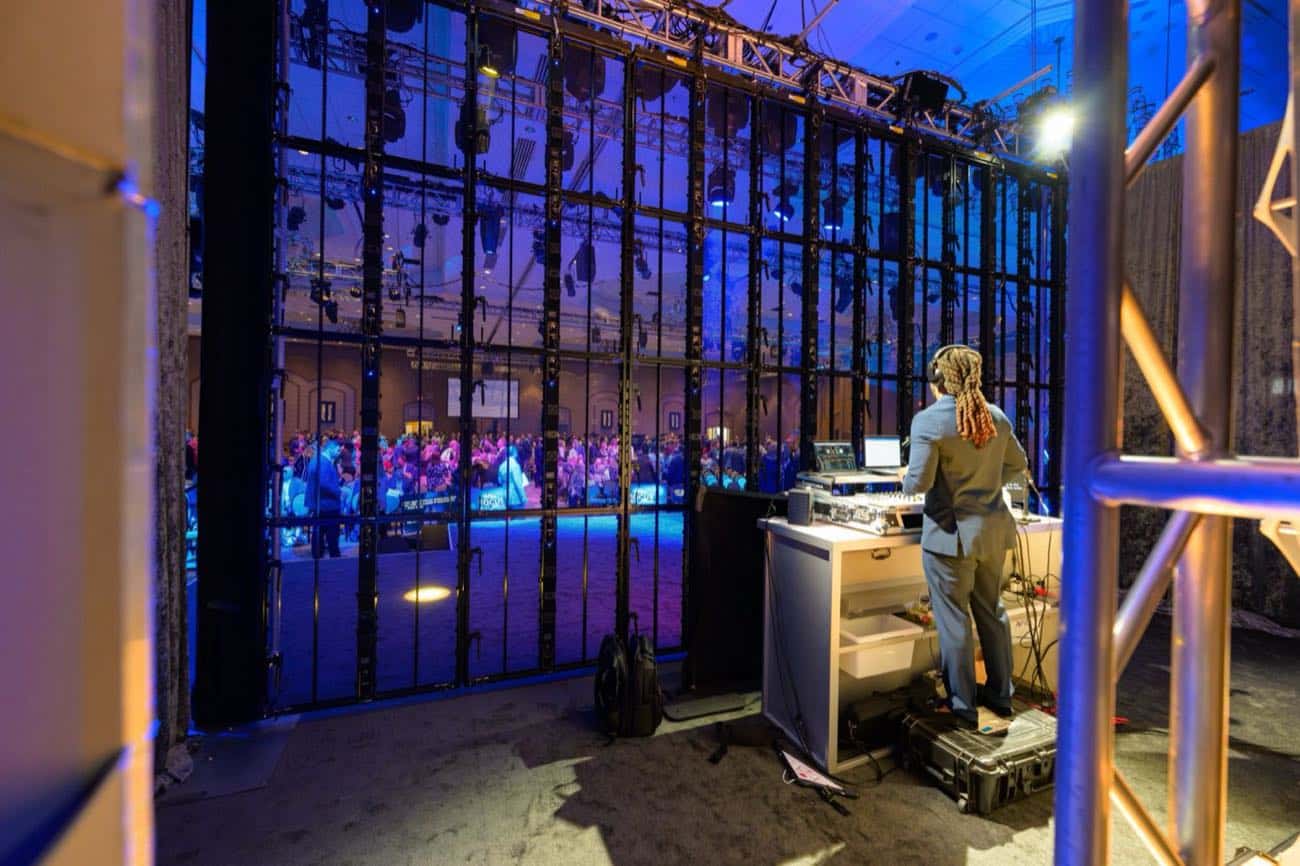
Music curation looks simple from the outside: pick songs people like, put them in order, press play. The problem isn’t that the work itself is complex in any single dimension. The problem is the sheer number of dimensions that all have to be right simultaneously: tempo (BPM), key, energy, multi-generational appeal, transitions, lyrical content, venue acoustics, real-time crowd response, and timing alignment with the event’s run-of-show. Get any one of them wrong and the room notices. Get two or three wrong and the night doesn’t recover.
This article is the commercial counterpart to the construction guides in the music curation cluster. The dos-and-don’ts construction guide, the event-playlist breakdown, and the high-energy party playlist guide all teach the principles. This article makes the case for why most high-stakes events benefit from hiring a professional curator who applies all those principles automatically. For brand-relevant music curation specifically, see the role of music curation in branding and marketing. DJ Will Gill has applied the working professional version of this discipline to 600+ corporate events with 2,520+ five-star reviews.
Pro-level curation, without the wait.
Introducing TheAIDJ.com
A great event sounds intentional. Describe your event to AIDJ, preview the blend, and export a polished playlist. A fast way to get curated quality for any occasion.
Key Takeaways
→ Music curation is more dimensional than most non-professionals realize. A professional curator simultaneously manages BPM curves, key compatibility, energy arcs, multi-generational appeal, lyrical screening, real-time adjustment, technical sound quality, and licensing all in real time during the event. DIY playlists handle one or two of these dimensions at most.
→ The asymmetric-cost case for hiring a professional: the cost of a great curation outcome over a mediocre one is the entire memorable-vs-forgettable axis of the event. Spotify’s 2024 Loud & Clear report shows that 48.7% of songs are skipped within the first 30 seconds platform-wide. At an event, that translates directly to dance-floor occupancy loss, a metric professional DJs are paid specifically to optimize.
→ Multi-generational appeal is the documented #1 challenge for event playlists. In a 2024 survey of wedding planners, 82% of respondents identified multi-generational appeal as the biggest challenge for themed musical sets. A professional curator’s catalog depth across eras solves this directly; a DIY playlist almost never does.
→ Real-time crowd reading is a capability that doesn’t exist in any pre-built playlist. When dance-floor tempo drops below 90 BPM during a high-energy set, floor occupancy can drop by 60% within seconds. A DIY playlist can’t recover from that error; a working DJ can read the moment, pivot, and rebuild within 30-60 seconds.
→ Professional licensing matters for commercial events. Consumer Spotify and Apple Music subscriptions are licensed for personal listening only, not for public performance at corporate or commercial events. Professional DJs carry the proper public-performance licensing through ASCAP, BMI, and SESAC; DIY playlists typically don’t.
1. Creating the Right Mood Where Most Events Quietly Fail
Every event has a mood. A wedding ceremony’s reverent intimacy is structurally different from the same wedding’s reception dance party three hours later. A corporate dinner’s polished sophistication is structurally different from the same corporate event’s after-party. A conference keynote room’s anticipatory hush is structurally different from the conference’s networking reception.
A professional curator selects music to match each moment’s specific mood. The broader event-playlist guide breaks down how different playlists serve different event moments, but executing on that breakdown live, across the multiple mood transitions of a typical event, is significantly harder than reading about it.
What a professional matches that DIY usually misses:
Cocktail reception (90-110 BPM, warm acoustic textures): jazz, soul, deep-cut R&B, vintage pop music that creates space for conversation rather than competing with it. The mood is “people enjoying being here,” and the music supports that without demanding attention.
Seated dinner (instrumental-leaning, 80-100 BPM): background presence rather than foreground feature. Lyrics that compete with conversation are wrong; recognizable melodies played softly are right. The mood: “The room is comfortable, and the food is what people are paying attention to.”
Awards/recognition moments: emotional crescendos. Specific cue-sheet songs (Queen’s “We Are the Champions,” “Don’t Stop Believin’,” personalized walk-up songs) that mark important moments. The mood: “This matters and this moment deserves recognition.”
Peak dance floor (128-140 BPM): the moments people will remember six months later. The high-energy party playlist guide breaks down the 4-phase BPM curve in detail. Professionals execute that curve; DIY playlists usually skip phases or hit them out of order.
2. The Multi-Generational Appeal Problem And Why Pros Solve It Reliably
Most events have audiences spanning at least two generations, often three or four. A corporate event with employees ranging from Gen Z to Boomers. A wedding with the couple’s friends, their parents’ generation, and their grandparents’ generation. A milestone birthday with the honoree’s contemporaries, their children, and their elderly relatives.
A 2024 survey of wedding planners found that 82% of respondents identified multi-generational appeal as the biggest challenge for themed musical sets. The challenge is real because each generation has its own cultural anchors. Music that lights up one generation often leaves another generation either bored or actively annoyed.
How a professional solves the multi-generational problem:
Era-rotation across the night. Rather than mixing all eras simultaneously in confusion, professionals build the playlist as a sequence of era-anchored blocks (15-25 minutes of 90s hits, then 25 minutes of early 2000s, then 20 minutes of current hits, then a 70s/80s disco block, then back to current). Each generation gets concentrated anchor moments through the night.
Deep catalog awareness across all generations. A professional curator who’s worked 500+ events knows which 90s tracks light up which 90s subgroup. They know that “Don’t Stop Believin'” works for everyone over 30 but doesn’t move people under 25. They know that “Mr. Brightside” hits everyone who graduated high school from 2003 to 2015. They know “Sweet Caroline” is universal once you accept that it’s universal. DIY playlist builders rarely have this depth.
Real-time generational reading. Walking onto a corporate party and noticing the demographic skew younger than expected means adjusting the era weights live, pulling more current/2010s into rotation, holding the 80s/90s for sing-along moments only. Static playlists can’t do this; professionals do it automatically.
3. Smooth Transitions: The Engineering Most People Don’t See
Transitions are the most invisible aspect of professional music curation. Good transitions are exactly the ones nobody notices. The music seems to flow naturally, and the night feels seamless. Bad transitions are immediately audible, awkward silence between songs, jarring tempo shifts, key clashes that make listeners physically uncomfortable.
What a professional manages at transitions:
Tempo continuity. Adjacent songs should be within ±10 BPM or use a deliberate tempo step (faster step-up at peak, gentle step-down at cool-down). A static playlist that goes 95 BPM → 145 BPM → 80 BPM → 120 BPM creates whiplash; a curated mix sustains a coherent tempo arc.
Key compatibility. Songs in compatible keys flow into each other smoothly; songs in incompatible keys create dissonance even when nobody can explain why. Professional DJ software shows key compatibility (the “Camelot wheel”) so adjacent tracks share compatible keys.
Energy alignment. A high-energy song into a low-energy song collapses the room’s momentum. The 30-60 second period right after a transition is when listeners are most likely to lose engagement. Platform-wide data shows 48.7% of songs are skipped within the first 30 seconds. Smooth transitions reduce this skip risk dramatically.
Volume coordination with the event’s run-of-show. Music drops when speeches start, picks back up to ambient level when speeches end, swells for awards moments, fades for late-night wind-down. Many classic dance tracks have extended or club mixes designed specifically to allow longer immersion and smoother transitions. Professionals know which versions to use when. DIY playlists don’t typically have this flexibility.
Beatmatching and crossfading. Beats are aligned between adjacent tracks, so the room never loses the rhythm. The technical execution of this is what separates “music playing” from “the room moving.” It’s also exactly the skill that takes years to develop and is one of the core defining capabilities of a professional DJ.
4. Why DIY Playlists Fall Short Specifically and Concretely
The case for DIY playlist construction is real: you know your audience, you know the music they like, and Spotify or Apple Music can deliver a serviceable playlist with minimal effort. For low-stakes events (casual house parties, small gatherings, background music), DIY is genuinely sufficient.
For high-stakes events, such as weddings, milestone celebrations, corporate events where the company’s reputation is on the line, awards ceremonies, and fundraising galas, the DIY math gets harder. Five specific failure modes are characteristic:
Failure mode #1: No real-time adaptation. A static playlist commits to a song order before the event starts. If the room’s energy is higher or lower than expected, if a particular song dies on the dance floor when it should have worked, if an unexpected request comes in, the DIY playlist can’t pivot. When tempo drops below 90 BPM during a high-energy set, dance-floor occupancy can drop 60% within seconds. A static playlist can’t recover; a professional can.
Failure mode #2: Licensing exposure. Consumer Spotify and Apple Music subscriptions are licensed for personal use, not for public performance at corporate or commercial events. Playing a consumer subscription at a corporate event is a licensing violation that could result in venue or organizer liability under ASCAP/BMI/SESAC enforcement. Professional DJs carry public-performance licenses that cover this.
Failure mode #3: Sound quality on venue PA systems. A playlist that sounds great on a phone or laptop sounds completely different through a venue’s PA system. Songs with deep bass content can dominate or distort; songs with vocal mixing optimized for headphones can sound thin or muffled on speakers. Professionals carry their own sound equipment specifically optimized for live event playback, or they know how to adjust EQ to the venue’s specific acoustics in real time.
Failure mode #4: No emcee/announcement integration. Most events have spoken moments, speeches, toasts, awards announcements, dance floor introductions, and schedule announcements. A static playlist doesn’t integrate with these; it either competes with the announcements or has to be manually paused mid-track. A professional DJ/emcee handles announcements as part of the same workflow, dropping volume into speeches, raising it back out smoothly, and providing the emcee voice when needed.
Failure mode #5: Brand-appropriate filtering. Corporate events especially have specific requirements around language, themes, and lyrical content. Songs with explicit lyrics, politically charged content, or inappropriate themes have to be filtered out. Professional curators understand brand-appropriate music selection deeply; consumer playlists often surface tracks that are wrong for the corporate context.
5. Real-Time Crowd Reading: The Capability That Cannot Be Pre-Built
The single biggest structural advantage of professional curation over DIY playlists is real-time crowd reading. A working DJ watches the dance floor continuously and adjusts the music based on what’s happening in the room, extending a song that’s killing it, cutting short a song that’s losing energy, sequencing the next track based on the energy in the moment rather than the order on the playlist.
What real-time reading looks like in practice:
The dance floor is overflowing during a track that was supposed to be transitional. Professional response: extend the track, mix in a similar-energy track to ride the wave, push the planned next track to later in the night. DIY response: the track ends, the next planned track plays, the energy resets to whatever the next track delivers.
The dance floor is empty during a track that was supposed to land. Professional response: cut the track short, pivot to a known floor-filler from a different lane, rebuild energy with a recognizable anchor. DIY response: the empty dance floor stays empty for the full 4 minutes of the track; that’s not working.
Energy is much higher than expected at a corporate cocktail hour. Professional response: push the BPM up earlier than planned, accelerate the energy curve, and get to the peak-energy phase earlier than scheduled. DIY response: the cocktail hour playlist plays through at planned cocktail-hour energy regardless of what the room is actually doing.
An unexpected request from a guest or the event host. Professional response: assess whether the request fits the moment, sequence it within 60 seconds if so, decline diplomatically, and queue a similar alternative if not. DIY response: The request either gets ignored, or the entire playlist has to be paused to add the request manually.
This real-time capability is what most event planners actually pay for when they hire a professional. Everything else (the catalog, the transitions, the BPM curve) can be approximated with enough DIY effort. The real-time crowd reading cannot.
6. Event Types That Benefit Most from Professional Music Curation
Not every event needs professional curation. A casual backyard cookout for 15 friends doesn’t. A small housewarming party doesn’t. A low-key office happy hour with takeout food doesn’t. The DIY playlist serves these contexts adequately.
Professional curation pays for itself at events where the stakes justify the investment:
Weddings
The single highest-stakes private event most people host. Multi-generational audiences. Multiple distinct moments (ceremony, cocktail, dinner, dance party). Critical timing alignment with the run-of-show. Specific cue songs (processional, recessional, first dance, parent dances, cake cutting, last dance). Real-time crowd reading especially important during the reception’s dance phase. The documented 82% multi-generational-appeal challenge applies most strongly here.
Corporate Events
Conferences, galas, holiday parties, sales kickoffs, product launches, award ceremonies, and team building. Brand reputation is at stake. Lyrical filtering matters. Licensing matters legally. Real-time adjustment matters because corporate audiences are notoriously hard to read (people are mixing socializing with work-context awareness). Audience demographics often skew toward 30-55 with mixed cultural backgrounds.
Milestone Birthdays and Anniversaries
40th, 50th, 60th, 70th birthdays. 25th, 50th wedding anniversaries. Bar/bat mitzvahs. Quinceañeras. Sweet 16s. The honoree’s specific cultural anchors (the music of their formative years) are essential. The multi-generational audience challenge is acute (the honoree’s contemporaries, their children, their grandchildren). The night benefits significantly from a curator who understands era-specific music deeply.
Fundraisers and Galas
Auction events, charity galas, foundation dinners, mission-driven non-profit events. Music sets the emotional tone for donation moments. Wrong tone during the donation appeal can reduce giving; the right tone can amplify it. Tight integration with the event’s run-of-show is essential. The financial stakes of music decisions here are concrete and measurable in donation totals.
Club-Style and Festival-Adjacent Events
Late-night corporate after-parties, large-scale promotional events, club takeovers, and festival-style company parties. Spotify’s Songs of Summer 2025 documented the rise of high-BPM rave-inspired tracks among the year’s defining hits . These contexts require BPM discipline, beatmatching, and extended-mix knowledge that doesn’t exist in pre-built playlists. The closer the event is to a club-style experience, the larger the professional advantage.
How to Choose a Professional Music Curator
Not every professional DJ delivers professional curation. The market spans hobbyist DJs charging $200 a night to highly experienced corporate event professionals managing six-figure event budgets. The differentiation matters because the operational discipline scales steeply with experience.
Indicators of a working professional vs. a hobbyist:
Verifiable event count. A professional with 500+ events on their resume has seen enough room variations to handle unexpected situations. A DJ with 30-50 events under their belt is still learning the operational discipline. DJ Will Gill’s 600+ corporate event experience is a verifiable baseline for the professional-grade discipline this article describes.
Quantitative review depth. 2,520+ five-star Google reviews isn’t just a marketing number, it’s a leading indicator that the curator’s actual real-time work consistently produces audience-validated outcomes. A handful of testimonials is interesting; thousands of verified reviews are structural evidence.
Editorial and industry recognition. The Wall Street Journal’s #1 Corporate DJ recognition and Forbes Next 1000 honoree status (the recognitions DJ Will Gill carries) are external validation from publications whose recognition standards are unusually high. Most professional DJs don’t have this level of editorial recognition because most don’t operate at the scale that earns it.
Client roster. A curator whose past clients include AT&T Business, CDW, Virgin Galactic, NeoGenomics, Foot Locker, Home Depot, BGCA, and similar Fortune 500 organizations has been vetted by enterprise-grade procurement processes. That vetting matters because corporate procurement is structurally rigorous about contractor selection.
Real-time work samples. Live event footage, not just polished promotional content. The footage shows whether the DJ is actually working the room or just playing songs.
The Real Math on When Professional Curation Pays for Itself
The mental model: compare the marginal cost of hiring a professional to the marginal value of the event going well versus going poorly.
For weddings, the event costs typically range from $20,000 to $100,000+. The DJ is one of the most-mentioned factors in wedding-day reviews. Guests remember the music more than they remember almost any other detail. A professional DJ adding 5-10% to the total budget that disproportionately affects guest memory of the event is a straightforward ROI.
For corporate events: the event is producing brand equity, employee engagement, or client relationship value. A polished event reinforces those goals; an awkward event undermines them. The DJ’s contribution to the polish is disproportionate relative to the cost. For client-facing events, particularly, the music quality is observed by exactly the audience the company most wants to impress.
For milestone events: these happen once. There’s no “next time” to do it right. The honoree only turns 50 once. The 25th anniversary only happens once. The investment in getting the music exactly right is justified by the irreplaceable nature of the moment.
For fundraisers: measurable financial impact. If professional curation increases donation totals by 5-10% at a fundraising event (a defensible expectation based on the emotional tone the curator sets), the DJ pays for itself by an order of magnitude.
In each case, the comparison is between the certain cost of hiring a pro and the uncertain but real cost of an event that didn’t land the way it should have. The asymmetry tilts the math toward hiring the pro.
The Case for Professional Music Curation, Summarized
Professional music curation is the discipline of executing 8-10 simultaneous selection dimensions in real time during a live event, in a way that pre-built playlists structurally cannot. The dimensions include BPM curve, key compatibility, energy arc, multi-generational appeal, lyrical screening, real-time crowd reading, technical sound quality, and licensing compliance. Each one matters individually. All of them together compound into the difference between an event people remember and an event they politely forget.
For low-stakes events, DIY playlists work fine. For high-stakes events, weddings, milestone celebrations, corporate events, fundraisers, and club-style nights, the math tilts toward hiring a professional curator. The cost of getting the music wrong at high-stakes events is structurally high; the marginal cost of hiring a pro is structurally bounded. The asymmetry justifies the investment in most cases, worth analyzing.
For deep theory on what professional curation actually involves, the dos-and-don’ts construction guide covers the principles. For event-context applications, the event playlists guide and the high-energy party guide show the construction applied. For brand-relevant curation, the branding and marketing curation guide covers the corporate application. And for the working version of all of this applied at scale across Fortune 500 corporate events, that’s exactly what DJ Will Gill’s professional service exists to provide.
About the Author
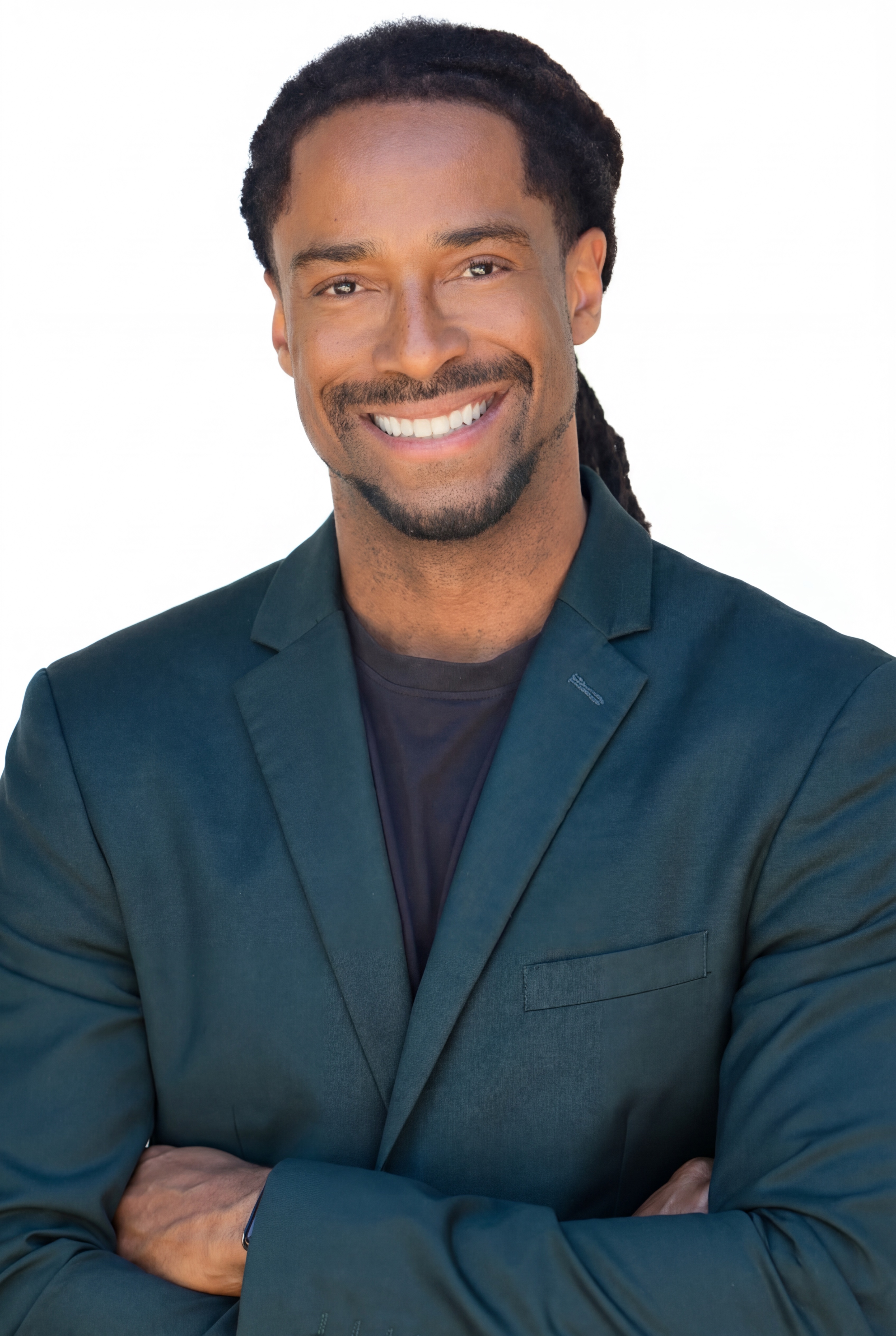
William “DJ Will Gill” Gilbert is a professional corporate event music curator, DJ, and emcee whose 600+ events span AT&T Business, CDW, Virgin Galactic, NeoGenomics, Foot Locker, Home Depot, BGCA, and other Fortune 500 organizations. The dimensions of professional music curation described in this article, including BPM curve discipline, real-time crowd reading, multi-generational era rotation, sound quality optimization, brand-appropriate filtering, and licensing compliance, are the operational discipline Will applies live across every corporate event. Will is recognized as the Wall Street Journal’s #1 Corporate DJ, a Forbes Next 1000 honoree, and has 2,520+ five-star reviews. Broadcast credits include Super Bowl LIV and The Voice 2011. He is also a World Cup performer and a Formula 1 Las Vegas Grand Prix performer.
Frequently Asked Questions
Why hire a professional music curator for an event?
Because tempo, key, energy, multi-generational appeal, transitions, lyrics, acoustics, crowd response and run-of-show timing all have to be right at once, and DIY playlists handle one or two.
What is the multi-generational problem?
A mixed-age room needs music that holds everyone, which professionals solve reliably.
What can't be pre-built?
Real-time crowd reading, the capability that no playlist can replace.
Which events benefit most?
Weddings, corporate events, milestone birthdays and anniversaries, fundraisers and galas, and club-style events.
When does professional curation pay for itself?
The closing section does the math on the asymmetric cost of a great outcome versus a mediocre one.