
What Qualities Make for an Exceptional Corporate Event DJ in 2026?
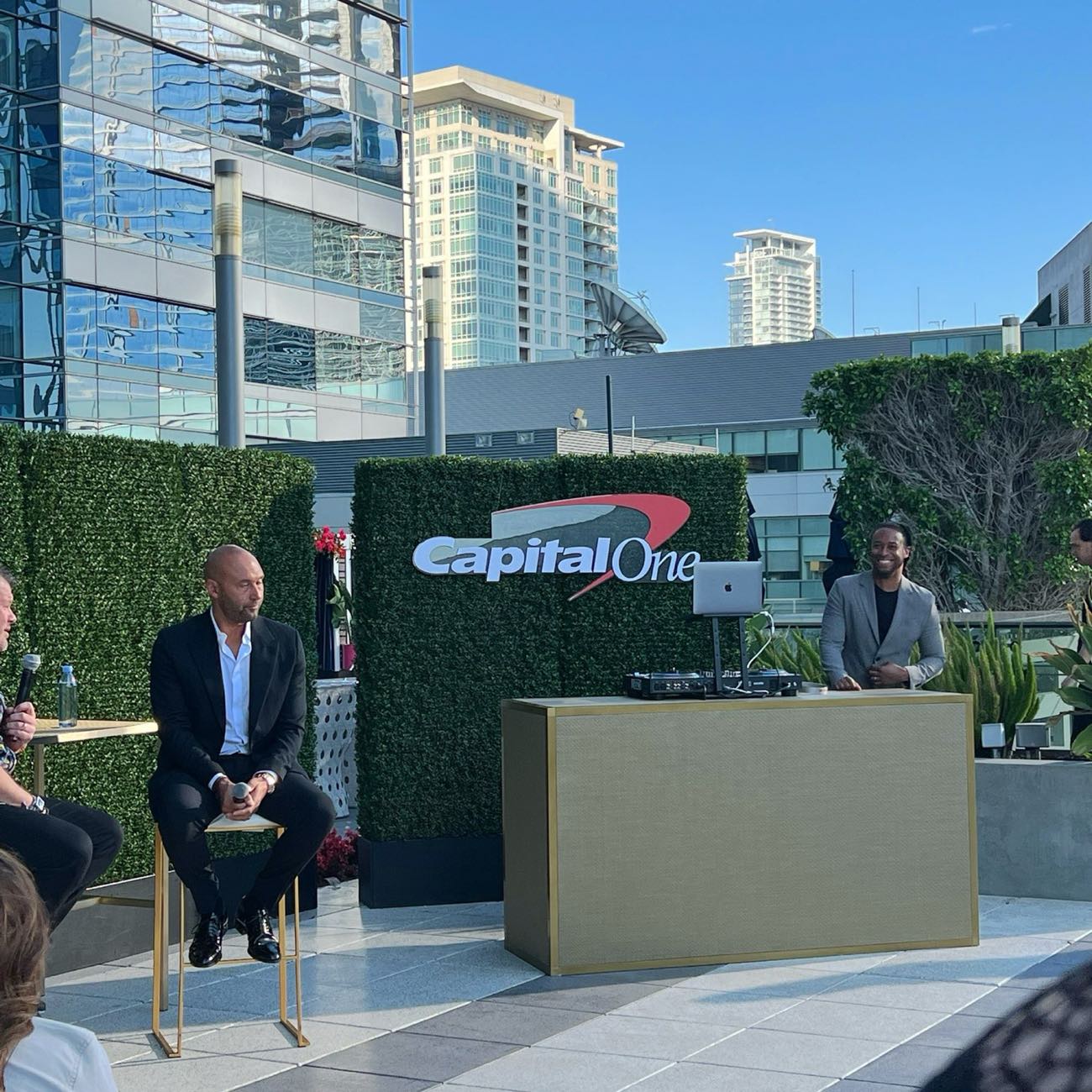
What qualities make an exceptional corporate event DJ in 2026? The 2026 shortlist: verified third-party reviews, corporate stage presence, clean-edit discipline, AV fluency, and the ability to host as well as mix. He holds 2,520+ five-star Google reviews and has performed for Google, Amazon, Salesforce, PayPal, Pepsi, and the United Nations.
Hiring a corporate event DJ is harder than it should be. The category includes wedding DJs branching into corporate work, club DJs taking corporate gigs for the rate, and a small group of specialists who actually understand how an annual sales kickoff, an investor summit, or a 1,500-person user conference is run from the front-of-house side. The qualities that distinguish these groups don’t show up on a price quote. They show up in how the DJ handles a 6 AM A/V test, a keynote running fifteen minutes long, a CEO who suddenly wants to walk out to a different song, and a final-night ballroom that has to peak on cue.
This guide is the framework planners actually use when vetting an exceptional corporate event DJ seven specific qualities, each paired with the verification signals that distinguish a real specialist from a candidate borrowing the vocabulary. It’s the framework that has built DJ Will Gill’s career as the Wall Street Journal’s #1 Corporate DJ and a Forbes Next 1000 honoree, with 2,520+ five-star reviews across multi-day conferences for clients including AT&T Business, CDW, Virgin Galactic, and 600+ others.
Exceptional DJs prep exceptional playlists.
Introducing TheAIDJ.com
The best corporate DJs read the room and plan the music. AIDJ helps: describe the crowd and vibe, preview the blend, and export a client-ready set. A simple way to prep like the pros.
Key Takeaways
→ Corporate event DJs are a distinct specialty, not a sub-category of wedding or club DJs. Industry analysis notes that “unlike club DJs, corporate DJs must adapt to professional settings, work with event planners, and sometimes provide MC duties. Their goal is to enhance the experience while maintaining a polished and professional presence” the verification signals are different from any other DJ category.
→ Reading the room is grounded in measurable behavior, not vibes. Milliman’s foundational 1982 supermarket study quantified the effect: slow-tempo music produced 38.2% higher sales by altering dwell time. Corporate DJs use the same behavioral mechanisms to control energy at networking receptions, awards dinners, and dance-floor closes.
→ The corporate DJ frequently doubles as event emcee. Industry guidance: “For a corporate event, the DJ often serves as the Master of Ceremonies (MC), and their on-mic presence is critical. A professional knows how to communicate with clarity, confidence, and charisma”. Verify both skills if both are needed.
→ Equipment and backup planning are non-negotiable at corporate scale. Event hiring guidance emphasizes verification of “a powerful and precise sound system capable of filling the event space without distortion” along with a “reliable mixer and controller for seamless transitions” plus the backup hardware, music libraries, and contingency plans that protect against any single point of failure.
→ The verification signals for an exceptional corporate event DJ are concrete: corporate client references at scale, multi-genre catalog demonstrated rather than claimed, video of real corporate work (not weddings or clubs), A/V technical rider on hand, written backup-plan documentation, and demonstrated emcee capability if needed. Anything less is a candidate borrowing the vocabulary.
1. Situational Awareness (Reading the Room as a Skill, Not a Buzzword)
Every DJ claims to “read the room.” The exceptional corporate event DJ can describe specifically what they’re reading and what they do with the information. The underlying behavior is measurable, not mystical.
Why it matters: the research on music and consumer behavior maps almost directly onto corporate event dynamics. Milliman’s foundational 1982 study found that supermarket sales increased 38.2% under slow-tempo background music, driven by changes in shopper pace and dwell time. His 1986 restaurant study found slow-tempo music increased drink spending roughly 40% per table. At a corporate event, the equivalent levers are conversation depth at a networking reception, attention during keynote bridges, and energy peak at the dance-floor close. An exceptional DJ understands these levers explicitly.
What this looks like in practice: early in a networking reception, the DJ keeps tempo and volume low enough that two people can converse at conversational distance, which protects the actual business function of the room. As cocktail hour transitions to dinner, the DJ adjusts again. By the time the dance-floor closed, tempo and volume had built across hours, not minutes. The exceptional DJ is making dozens of these micro-adjustments throughout the run-of-show, often invisibly.
Verification signals before booking:
— Ask the DJ to describe a specific moment from a real corporate event where they changed direction mid-set in response to the room. Specific stories with named clients, song names, and turning-point details signal real experience. Generic “I read the room and switched it up” answers signal practiced vocabulary without the underlying skill.
— Watch a video of the DJ at a real corporate event, not a club or wedding. The body language is different; corporate DJs work the booth while keeping a conservative stage presence at business-formal moments. DJ Will Gill’s corporate event reel shows the contrast clearly.
Negative pattern: a DJ who can’t describe specific mid-event adjustments, or who only has wedding/club footage to share, has not yet developed corporate situational awareness as a distinct skill.
2. Musical Versatility & Catalog Depth (Not Just Claimed — Demonstrated)
Corporate audiences are demographically and culturally diverse in ways most other DJ contexts aren’t. A single Fortune 500 user conference might include executives in their 60s, mid-career operators across multiple regions, and developers in their 20s plus international attendees with distinct musical references. Industry guidance: “A professional DJ for corporate events must have strong music selection skills tailored to diverse audiences and event themes” and that diversity exceeds what most DJs have ever programmed for in one room.
Why it matters: The cost of inadequate versatility is segmented engagement. If the DJ’s catalog skews heavily to one era, genre, or region, large portions of the room disengage in measurable ways; they leave the dance floor early, conversation volume drops, post-event feedback complains about music fit. None of this shows up until after the event has happened.
What this looks like in practice: a versatile corporate DJ moves cleanly between an instrumental jazz set for cocktail hour, mid-tempo crossover during dinner, peak-hour open-format dance programming for the close, and discrete subgenre blocks (Latin, Afrobeat, Bollywood, regional country) for specific audience moments. The catalog isn’t just deep, it’s organized for fast retrieval and clean tempo-matched transitions.
Verification signals before booking:
— Ask for a sample set list from a recent multi-demographic corporate event. The exceptional DJ has these on hand and can walk you through the programming logic of why this song bridged to that one, why a particular era block ran at a particular moment.
— Ask about specific subgenres that fit your audience. If your event has significant Latin-American, South Asian, East Asian, or West African representation, can the DJ name specific tracks and artists they’d program for those audiences without falling back on stereotype?
— Confirm music sourcing infrastructure. Professional corporate DJs typically work from curated personal libraries of tens of thousands of tracks, supplemented by professional record pools, not from consumer streaming services. This affects both versatility and reliability.
Negative pattern: a DJ who pitches “I can play anything” without naming specific eras, subgenres, or artists fluently has not actually developed the catalog depth corporate events require.
3. Event Flow Management & Emcee Coordination
This is the quality that most distinguishes exceptional corporate event DJs from competent ones. The DJ is not just programming music, they’re operating as a producer inside a tightly cued run-of-show, coordinating with the emcee (sometimes being the emcee), the show caller, the A/V team, and the speakers.
Why it matters: “A professional corporate DJ is also an expert event coordinator. They work closely with you and your planner to understand the timeline and help guide the event from start to finish. They know when to play subtle background music for cocktails and networking, how to build energy as the evening progresses, and when to make key announcements for speeches or awards. By managing the audio cues and musical transitions, they ensure the entire event flows seamlessly”. The cost of getting this wrong is visible to every guest in the room.
What this looks like in practice: the DJ has reviewed the run-of-show document before arriving on site, has confirmed walk-on songs for each speaker, has built or received an event-specific cue sheet, and is in constant contact with the show caller during the program. When a speaker runs long, the DJ adjusts the next transition without disrupting the broader arc. When a speaker runs short, the DJ fills with music that holds energy until the next program element. None of this is improvised.
The dual DJ/emcee question: many corporate events benefit from combining DJ and emcee work into a single performer. DJ Will Gill’s audience engagement package featured in the Wall Street Journal is built specifically around this dual role. The combined model means fewer vendor coordination handoffs, tighter timing between speaker intros and music cues, and a single on-stage voice the audience comes to recognize across the event arc. It also means the DJ needs verified emcee chops, not just claimed ones.
Verification signals before booking:
— Ask how the DJ handled a specific run-of-show timing problem at a past event. The answer should include details of how they learned about the problem, what they did, what the planner asked of them, and how the event recovered.
— Request a video of the DJ working alongside an emcee or a video of them in the dual DJ/emcee role if that’s what your event needs. The on-mic delivery should be tight, brand-appropriate, and audience-aware.
— Confirm cue-sheet workflow. Will the DJ work from your existing run-of-show, or do they have a template they bring? Either is fine; what matters is that there’s a documented, agreed-upon cue sheet before the event.
Negative pattern: a DJ who treats the run-of-show as the planner’s problem and operates only as a music vendor will not deliver exceptional corporate work, even with exceptional musical chops.
4. Technical & A/V Professionalism
Corporate events run on tight A/V architecture, sometimes with the DJ providing all audio, sometimes interfacing with a venue or production company’s house system. The exceptional DJ operates in both contexts without friction.
Why it matters: the floor of acceptable performance is “no audible problems.” The ceiling is invisible coordination with a complex production environment. Standard event hiring guidance: ensure the DJ has “a powerful and precise sound system capable of filling the event space without distortion,” “a reliable mixer and controller for seamless transitions,” and an “extensive music library to cater to different musical preferences” but for corporate scale, “reliable” needs to be specified by hardware and tested in advance.
What this looks like in practice: the DJ has industry-standard equipment they own and maintain (controllers like Pioneer DDJ or CDJ-3000 series, professional mixers, redundant laptops, a wired/wireless backup microphone setup). They arrive on site with time for a full sound check, work cleanly with the venue’s A/V lead, and provide a technical rider in advance that specifies power needs, line counts, monitor requirements, and any cabling assumptions.
Verification signals before booking:
— Request the DJ’s technical rider. An exceptional corporate DJ has one on hand and provides it without hesitation. The presence of a real rider is itself the signal.
— Ask about A/V coordination with prior corporate clients. The DJ should be able to describe how they integrate with house systems, branded set design, lighting departments, and live-broadcast or live-stream feeds when applicable.
— Confirm equipment ownership versus rental. Both are legitimate, but the answer affects scheduling and reliability owned equipment is tested ahead of time and travel-known; rentals introduce day-of unknowns that the DJ should be able to manage.
Negative pattern: vague answers to technical questions, no written rider, or visible discomfort with venue A/V terminology indicates the DJ has not worked at the corporate technical scale.
5. Communication During the Planning Phase
The behavior planners observe in the weeks leading up to an event is the most reliable predictor of how the DJ will operate on event day. Industry guidance: “Exceptional communication, adaptability, and professionalism help you coordinate with event planners and tailor sets to the company’s environment” and the signals show up early.
Why it matters: a DJ who is unresponsive during planning becomes a liability during execution. Conversely, a DJ who treats every clarifying question with care, returns documents within agreed timelines, and proactively flags issues is signaling how they’ll operate at higher pressure on event day.
What this looks like in practice: the DJ responds to inquiries within one business day, sends contracts and riders in clean professional format, asks substantive questions about the event audience and run-of-show rather than just price and load-in, and proactively raises potential coordination questions before they become problems.
Verification signals before booking:
— The first 72 hours of inquiry response tells you most of what you need to know. Did the DJ respond quickly? Did they ask questions that suggested they understood the corporate event context? Did the materials they sent reflect care?
— Ask for corporate references from events similar in scale or format to yours. The DJ should provide these without resistance. Call the references; the signal you’re listening for is whether the planner would book again without hesitation.
— Read review patterns at scale. A DJ with hundreds or thousands of corporate-event reviews has a track record that’s hard to fake. DJ Will Gill’s 2,520+ five-star Google reviews are an example of the kind of scale that signals genuine, repeatable performance.
Negative pattern: slow responses, generic materials, or reluctance to share references are signals to walk away. The communication problems visible in planning amplify under event-day pressure.
6. Energy Management as a Real Skill
“High energy” gets used as a generic positive trait. The exceptional corporate event DJ understands that energy at a corporate event is a managed resource built and held across hours, peaked deliberately at specific moments, brought down for program elements, and rebuilt cleanly afterward. The skill is the management, not just the volume.
Why it matters: A sales kickoff that peaks too early gets sleepy attendees in the back of the day-three keynote. An awards dinner that doesn’t lift enough at the right moments leaves recipients feeling under-celebrated. A user-conference closing party that doesn’t translate the day’s content into a celebratory ending leaves attendees feeling like the event ran out of gas. Energy management connects the DJ’s work directly to the event’s strategic goals.
What this looks like in practice: the DJ pre-programs an energy arc that maps to the run-of-show, with deliberate peaks at the moments that matter (award reveals, executive walk-on entrances, sponsor announcements, dance-floor opens) and deliberate troughs at the moments program design calls for (dinner conversation, networking, speaker bridges). The arc is constructed before the event, then adjusted in real time based on how the audience responds.
The on-mic component: for corporate events, energy isn’t just musical it’s also vocal. The exceptional DJ-emcee uses on-mic moments to lift, reset, and direct the room, often without the audience realizing they’re being directed. Will Gill’s emcee work, recognized by WSJ, is built around this combined musical-vocal energy management. The same principles apply to virtual events, where energy management has to compensate for the lack of in-room cues entirely.
Verification signals before booking:
— Ask the DJ to walk you through how they’d build the energy arc for your specific event. The answer should map to your run-of-show, not be generic.
— Watch the event-day video that shows the energy arc, not just peak moments. The exceptional DJ’s quiet hours are as deliberate as their peaks.
Negative pattern: a DJ whose default mode is “loud and fast all the time” lacks the dynamic range corporate events require. The same applies in the opposite direction, a DJ who can’t lift a room when needed.
7. Backup Planning & Contingency
This is the quality that the original article you may have read on this topic skips entirely, which is a problem at a corporate scale. The exceptional corporate event DJ assumes equipment will sometimes fail, music files will sometimes corrupt, internet connections will sometimes drop, and runs of show will sometimes change at the last minute. Their planning reflects all of that.
Why it matters: The cost of failure at a corporate event is high and visible. A wedding DJ’s failed laptop is one couple’s bad evening; a corporate DJ’s failed laptop in front of 1,500 attendees during an executive walk-on is a career incident for the planner who hired them. Industry hiring guidance is direct: “When hiring a DJ for a corporate event, consider their experience with professional events, music versatility, and ability to engage diverse audiences. Check for equipment quality and backup plans”. Backup plans are listed alongside core skills.
What this looks like in practice:
— Hardware redundancy: at least one backup laptop, backup controller, backup cables, backup wired microphone (in case wireless fails), backup audio interface. Critical event-day equipment is duplicated.
— Music library redundancy: the entire show library exists in at least two physical locations (laptop SSD plus external SSD, sometimes a third backup), with offline access. No reliance on streaming during execution.
— Run-of-show contingency: the DJ has worked through “what if” scenarios in advance with the planner, what happens if the keynote runs 15 minutes long, what happens if the awards segment runs 10 minutes short, what happens if a planned dance set needs to be cut entirely.
— Insurance and contract terms: the DJ carries liability insurance appropriate to corporate venues, signs standard event contracts without resistance, and can produce certificates of insurance for venues that require them.
Verification signals before booking:
— Ask directly: “What’s your backup plan if your primary laptop fails mid-event?” The exceptional DJ has a specific, rehearsed answer.
— Request a certificate of insurance for the event venue, and confirm the DJ can produce one if the venue requires it.
— Ask about a past on-site recovery a moment when something went wrong, and the DJ recovered. The honest answer (with detail) is more reassuring than a claim that nothing has ever gone wrong.
Negative pattern: a DJ who has never had anything go wrong has either had a small career or isn’t being honest. A DJ who handles the question defensively, or whose backup plan is vague, has not internalized corporate-scale risk.

Need more than music at your corporate event?
Will Gill is also a corporate keynote speaker. His talk, The Moralegorithm, brings the same stage energy to your general session with three algorithms to boost morale and tap into your STAR POWER. DJ bookings and keynote talks pair naturally on multi-day agendas.
About the Author
William “DJ Will Gill” Gilbert is a corporate event DJ, emcee, and audience engagement specialist whose 600+ corporate events include work for AT&T Business, CDW, Virgin Galactic, NeoGenomics, Foot Locker, Home Depot, BGCA, and Fortune 500 clients across multi-day sales kickoffs, user conferences, awards ceremonies, and executive summits. He is recognized as the Wall Street Journal’s #1 Corporate DJ, a Forbes Next 1000 honoree, and has 2,520+ five-star reviews from corporate planners. Broadcast credits include Super Bowl LIV and The Voice 2011. He is also a World Cup performer and a Formula 1 Las Vegas Grand Prix performer.
Watch Will Gill Work a Live Corporate Crowd
Real event footage beats any sales pitch. This is what the 3-in-1 show looks like in a room full of coworkers.
Frequently Asked Questions
What separates an exceptional corporate DJ from an average one in 2026?
Verified third-party proof, hosting ability, AI-assisted preparation with human judgment, and production fluency. The average DJ plays music; the exceptional one runs the room.
How important are reviews when hiring a corporate DJ?
They are the strongest signal planners have. Google’s own quality guidance treats independent reviews as top-tier evidence, and 2,520+ five-star reviews is the standard Will Gill sets.
Should a corporate DJ know how to use AI?
In 2026, yes: audience analysis, playlist drafting, and agenda-timed prep are faster with AI. The live read stays human.
Do exceptional corporate DJs cost more?
They run $5,000 to $8,000 per day, and they are cheaper than a failed event. Entertainment is the lever every attendee feels.
Can one performer really replace three vendors?
Will Gill’s 3-in-1 show does exactly that: DJ, emcee, and one-man team building, which is why planners at Google, Amazon, Salesforce, PayPal, and Pepsi book it.