
Which Corporate Band Genres Fit Your Event’s Vibe
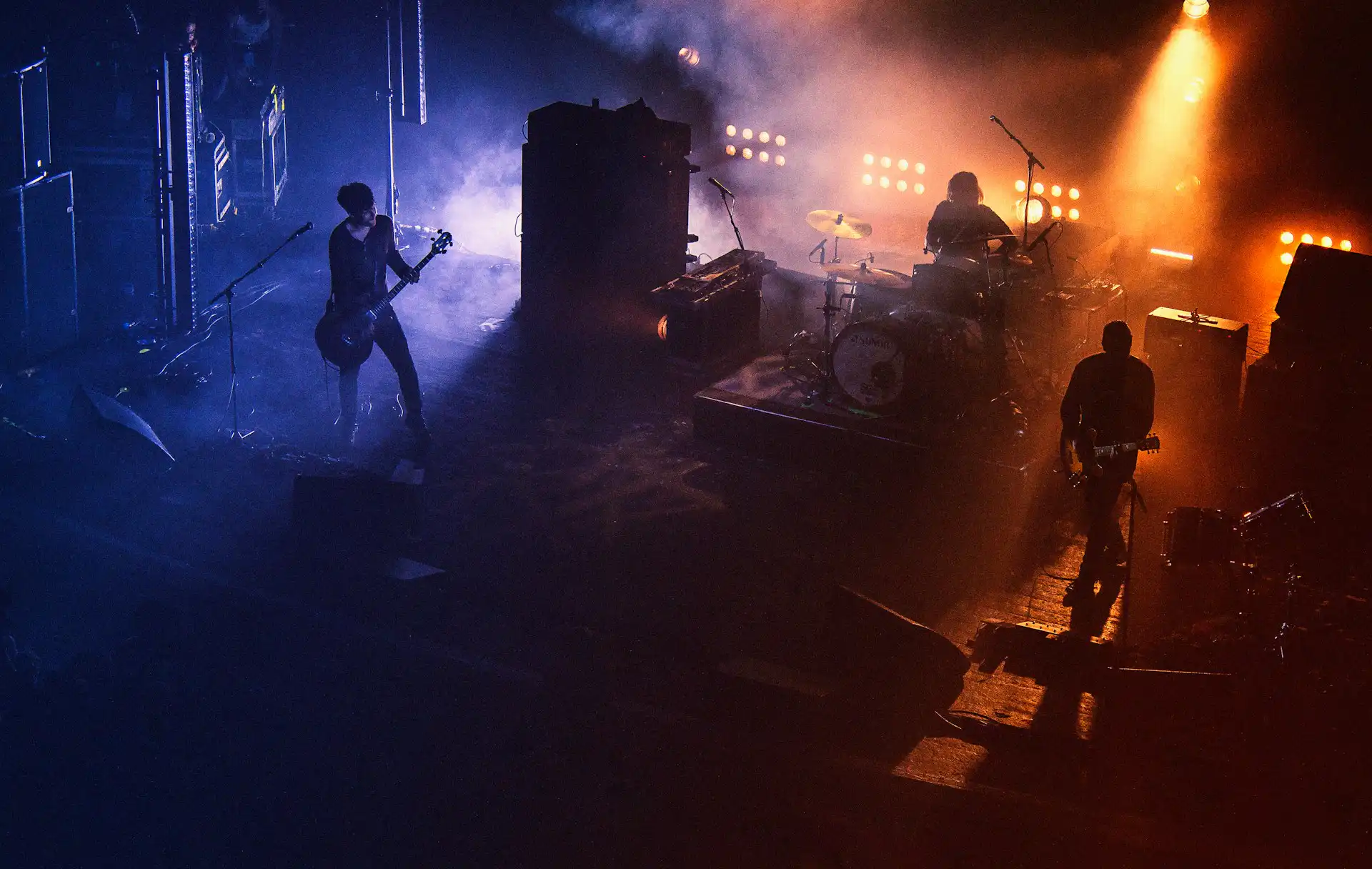
Most corporate band genre articles treat the question as a single categorical choice: “Pick one genre that matches your event type.” That’s the wrong frame. A corporate event isn’t a single continuous mood; it’s a sequence of distinct blocks (cocktail hour, dinner, awards or program, dance block), and each block has a fundamentally different musical role. Treat them all the same and you’ll either kill conversation during dinner with a rock band or kill the dance floor with a jazz trio at 9:30 PM.
This guide reframes corporate band selection as an event-arc design decision rather than a categorical pick. We’ll walk through the four standard event blocks, what musical function each one serves, which genres actually deliver on that function, and what the 2026 market pricing looks like for each band configuration. By the end, you should be able to make a defensible recommendation to your client (or yourself) about which genre or which combination fits the specific moment in your event arc.
Key Takeaways
→ A corporate event is a four-block musical arc cocktail hour, dinner, awards/program, dance block and each block needs a different musical function. Industry guidance for 2026 confirms that cocktail and dinner segments call for atmospheric music, while dance segments demand high-energy crowd-pleasers. Picking one genre for the whole event is the most common planning mistake.
→ The cocktail and dinner blocks are best served by jazz, acoustic, or classical ensembles operating at conversation-friendly volume. Cap City Band notes that jazz, soul, and acoustic pop “provide sophisticated background texture without demanding attention” during cocktail and dinner service. Volume discipline matters more than repertoire here.
→ The dance block needs cross-demographic floor-fillers typically Top 40, Motown, funk, R&B, and classic rock. The selection criterion shifts from “atmospheric” to “everyone moves.” This is also where DJs frequently outperform live bands on tight budgets because of repertoire range across decades.
→ 2026 market pricing varies enormously by configuration. A 2026 California booking guide quotes jazz trios at $3,478 for cocktail hour up to $9,685 for an 8-piece show band; Royal Dukes corporate pricing starts at $1,200 for a 3-piece, 1-hour performance; LIV Entertainment notes that corporate live bands typically run $1,000 to $5,000 depending on reputation and requirements.
→ The decision framework runs in this order: identify your event arc → assign a musical function to each block → match genre to function → check budget capacity against band size → confirm venue can support the configuration. Picking a genre first and forcing the rest of the design around it produces fragile outcomes. Designing the arc first produces resilient ones.
DJ Will Gill has designed the musical arc for 600+ corporate events — working alongside jazz combos at cocktail hour, acoustic duos through dinner, and DJ sets during the dance block. Contact us to coordinate your event’s full music plan.
1. Why “Which Genre” Is the Wrong Question
Corporate event entertainment articles tend to frame the genre decision as: “What’s your event type? Match it to a genre.” Gala = jazz. Holiday party = pop covers. Conference after-party = rock or EDM. Networking event = acoustic. It sounds clean. It also produces brittle events.
Here’s the problem: most corporate events run 3 to 5 hours and contain multiple distinct musical jobs. A 6 PM cocktail hour, 7 PM seated dinner, 8 PM awards program, and 9:30 PM dance block all need different musical functions. The cocktail hour needs music that supports conversation. Dinner needs music that recedes. The awards program needs music that punctuates without distracting. The dance block needs music that gets bodies moving.
One genre rarely does all four jobs well. A jazz trio is perfect for cocktails and dinner, and useless for the dance block. A high-energy funk band is perfect for the dance block and overwhelming during dinner. Industry guidance for 2026 specifically notes that cocktail and dinner segments call for music whose “primary function is atmospheric rather than performative”, while dance segments need fundamentally different repertoire designed for cross-generational floor-filling.
The planners who design the strongest events think in terms of music arcs: start low-energy and atmospheric, transition to mid-energy during the program, peak high-energy on the dance floor. That arc almost always requires multiple acts, a jazz combo or acoustic duo for the early blocks, then a DJ or party band for the dance block. Trying to force one act to cover the full arc is where most corporate event music plans break down.
The rest of this article walks through each of the four blocks, what genres serve them, and what 2026 market pricing looks like for each. The goal is to give you a decision framework, not just a list.
2. The Cocktail Hour & Dinner Block (Music as Background)
Function: The music here supports conversation, signals event tone, and provides ambient texture. Guests need to be able to hear each other without raising their voices. Volume discipline is more important than repertoire. A technically excellent band playing too loudly during dinner does more damage than a simpler act at the right volume.
Genres that work in this block:
Jazz ensembles (trio, quartet, quintet). The dominant choice for cocktails and dinner across the corporate event market. Quality jazz ensembles “create a backdrop that enhances conversation without competing with it” guests can hear the music, appreciate it, and still hear the person across the table. Repertoire spans Great American Songbook standards to crossover pop arrangements that sound elevated without being unfamiliar.
Acoustic duos and small acoustic groups. Stripped-down arrangements of popular songs work especially well when you want the music to feel personal and warm rather than performative. An acoustic act playing recognizable pop, soul, or singer-songwriter material at conversational volume is one of the most flexible cocktail-hour solutions in the market.
Classical ensembles (string trio, string quartet, solo piano). The most formal end of the spectrum. Works for galas, board dinners, awards ceremonies, and any event where an elevated tone is the explicit goal. The risk: classical can feel sterile or stuffy if the event audience is younger or the event tone is more casual than you think. Match the formality of the ensemble to the formality of the room.
What to brief the band on:
For this block, the most important conversation isn’t repertoire, it’s volume. Tell the band explicitly: “We want this to sit underneath conversation, not on top of it.” Most professional cocktail-hour bands understand this; less experienced acts default to performance volume because they’re used to weddings or club gigs where the music IS the event. For corporate dinner service, the music is the wallpaper.
3. The Awards & Program Block (Music as Punctuation)
Function: The program block keynote, awards, recognition moments, and executive remarks need music that punctuates without distracting. Walk-on music for each award recipient, transitional stings between segments, and energy-lifting interstitials to keep the room from going flat between speakers.
Important honest note: This block is often where a live band is the wrong tool. A live band committed to a single genre can’t switch fast enough between the dozens of short cues a program needs. This is where DJs and emcees typically outperform live bands. The format flexibility of a DJ rig lets a single operator cover Motown for one award winner, classic rock for the next, and a 2024 chart hit for the third, all in 15 minutes. Many corporate events run a hybrid model: live band for cocktail and dinner, DJ takes over for program and dance block.
If you do use a live band in this block:
Pop cover bands with a broad repertoire range. The best corporate party bands move fluently across decades and styles. Cap City Band, for example, explicitly markets format flexibility across R&B, soul, pop, rock, and country registers which is what a program block needs because you can’t predict what each award recipient will want as their walk-on music.
Funk and soul bands. Lower-risk than rock for a program block, the groove sits at exciting energy levels without being overwhelming. Funk and soul also work as a tonal bridge between dinner (lower energy) and dance block (higher energy), letting the room ramp up gradually rather than jumping from quiet to loud.
4. The Dance Block (Music as the Event)
Function: This is the only block where music IS the event. Conversation drops, the lights come down, and the goal is bodies on the dance floor. The selection criterion shifts from “atmospheric” to “everyone moves.”
Industry guidance identifies the genres that generate “the broadest cross-demographic floor traffic” as Top 40, Motown, funk, R&B, and classic rock. Notice that’s not one genre, it’s a category mix. The reason: corporate audiences are almost always multi-generational (mid-20s through mid-60s), and no single decade or single genre covers that age range. The dance block needs a song stack that hits 1970s Motown for the senior leadership, 1980s rock for mid-career managers, and current pop for the early-career employees, often within the same 90-minute set.
Genres that work in the dance block:
Party/cover bands (Top 40, multi-decade). The dominant choice when the budget supports it. A 6-to-10-piece party band with strong vocalists and a full horn section is the gold standard for corporate dance segments. The trade-off: cost. Full-size party bands start at $5,000 and routinely reach $15,000+, depending on market and reputation.
Funk and soul bands. Specifically, bands that anchor on Motown, classic R&B, and 1970s funk. The repertoire ages well across demographics, the energy is consistently high, and the genre is forgiving of audience-age skew because the source material is so universally recognizable.
Rock bands. Bold and energetic, but riskier than pop cover bands because rock skews more demographically narrow. Best for tech conferences, post-conference parties, or events where the audience tilts younger, and the brand identity supports it. Match volume carefully to the venue.
DJs (EDM, open-format, multi-genre). The most budget-flexible option, and often the strongest fit for corporate events that need to span multiple decades within a single set. A skilled corporate DJ can play 1970s Motown, 1990s hip-hop, and 2024 pop within the same 15-minute window, something no live band can match because of the inherent commitment a band makes to a specific instrumentation and tonal palette. For tight budgets or audiences that need a wide repertoire range, a DJ is frequently the better call.
Global/world music ensembles. Salsa, reggae, Afrobeat, K-pop tribute acts, and Bollywood bands. Most useful in two scenarios: (a) the company has an international employee base where a regional musical style is identity-relevant, or (b) the event has an explicit cultural theme. For a generic dance block, world music is generally a wrong-tool decision, as the genre commits the band to a narrow audience response.
Country bands. Strong fit for outdoor corporate events, team-building retreats, casual festivals, and events in markets where country is a regional cultural fit (Nashville, Austin, Dallas, Denver). Weaker fit for coastal urban markets or events where the leadership team doesn’t have country-music affinity. Audience-fit dependent.
5. Budget Reality: What 2026 Corporate Bands Actually Cost
Corporate band pricing varies enormously based on factors that aren’t always obvious from initial proposals. 2026 industry pricing guidance identifies band size as the most direct pricing variable “Every additional musician represents additional talent fees, additional equipment, additional travel, and additional coordination”. Below is what the 2026 market actually charges, with sources, so you can pressure-test any proposal you receive.
Reference pricing tiers (2026):
Cocktail-hour ensembles (3–4 piece): A 2026 California booking guide quotes jazz trios at $3,478 for cocktail-hour configurations up to 80 guests, and jazz quartets at $4,253 for brand activations and small reception cocktail sets. Royal Dukes lists corporate-only pricing for a three-piece band at one-hour performances starting from $1,200, though that’s a floor rather than a typical market rate.
Mid-size corporate bands (5–7 piece): The most-booked configuration in the corporate market. 2026 pricing puts 5-piece bands at $6,650 for 100–150-guest receptions and corporate dinners, 6-piece at $7,550 for 150–200-guest galas, and 7-piece at $8,595 for ballroom galas and award shows up to 250 guests. This tier is where most mid-market corporate events land, it covers cocktail through dance block on a single contract without the cost overhead of an 8+ piece show band.
Large show bands (8+ piece): An 8-piece show band runs $9,685 for 250–300-guest hotel ballrooms and brand launches in the 2026 California market. National brand-name acts and 10+ piece show bands routinely exceed $15,000. LIV Entertainment notes corporate live bands typically run $1,000–$5,000 for standard configurations, though dinner-party bands can reach $15,000 for higher-end ensembles.
Pricing variables to flag in any proposal:
Set length and overtime rates. Most bands quote standard pricing for a four-hour set including setup and performance; events running longer incur additional hourly charges. Always confirm overtime rates beforehand because they can be significant, and corporate events run longer more often than planners expect.
Travel and lodging. Bands beyond a 50-mile radius of their home market typically add travel costs, lodging for multi-day events, and sometimes per-diem charges for each musician. For destination corporate events, expect 15–25% on top of base rate.
Sound production scope. Some bands include full PA and lighting in their quote; others assume the venue or event production company is providing it. Industry guidance for 2026 recommends confirming sound production scope during booking and introducing the band’s technical contact to the venue’s AV team at least two weeks before the event. Gaps in this conversation are a top cause of show-day technical problems.
Additional services. Emcee mic, ceremony coverage, custom song requests requiring rehearsal, branded intro/outro music, and hybrid DJ+band collaboration. Each adds line items.
About the Author
William “DJ Will Gill” Gilbert is a corporate event DJ, emcee, and audience engagement specialist with experience designing the musical arc for 600+ corporate events. He’s worked alongside jazz combos during cocktail hour, acoustic duos through dinner service, and full party bands during dance blocks and frequently delivers the dance-block DJ set himself for events that book a live band for the early blocks and a DJ for the dance segment. Will is recognized as the Wall Street Journal’s #1 Corporate DJ, Forbes Next 1000 honoree, and has 2,520+ five-star reviews from corporate planners.