
Magician’s Way of Making Events Engaging

Corporate magicians are unusually good at one specific skill: pulling and holding a room’s attention through a long arc of varied moments. That skill isn’t unique to magic it’s the same skill keynote speakers, master emcees, theater directors, and great teachers all share. But magicians have developed the cleanest, most teachable methodology for it, because their entire profession depends on it. This article extracts that methodology and applies it to event design generally.
You don’t need to hire a magician to use these principles. The five design moves below front-loading impossibility, activating the audience, engineering moments of wonder, managing pacing density, and engineering a climactic close are transferable to any event format: conferences, sales kickoffs, product launches, training sessions, internal town halls, gala dinners. 74% of event professionals identify engagement as a key success factor in 2026, yet 39% cite it as one of their top challenges which means there’s a substantial gap between what planners know they need and what they know how to design. The magician’s playbook closes that gap.
Key Takeaways
→ The magician’s methodology for audience attention isn’t mystical it’s a structured five-stage system: front-load impossibility, activate the audience, engineer wonder, manage pacing density, engineer a climactic close. Each stage is supported by behavioral and cognitive science. Each transfers cleanly to non-magic event design.
→ The strongest single move is opening with pattern violation. Magicians always lead with their second-strongest effect (not their strongest that’s saved for closing) because the audience’s attention is most volatile in the first 90 seconds. 92% of attendees prefer interactive experiences over passive sessions and the opening is when that preference is most strongly reinforced or violated.
→ Audience activation isn’t a soft skill. Industry research shows the highest-impact corporate event entertainment in 2026 prioritizes participation over spectation. Magicians design specific volunteer mechanics; great event designers can apply the same structural thinking to panels, keynotes, breakout sessions, and audience Q&A.
→ Wonder is engineered, not accidental. Every magic effect is structured around a specific violation of audience expectations and the same principle works for non-magic event moments. The “wow” beats in great corporate events are almost always pre-designed around a specific surprise mechanic, not stumbled upon.
→ The ending matters more than the average. Freeman’s research shows attendees who experience a peak moment at an event are 85% more likely to return the following year. Magicians always save their strongest effect for the close because that’s the moment encoded most strongly in memory. Most corporate events do the opposite they front-load energy and then peter out which is a design error directly attributable to ignoring the magician’s playbook.
DJ Will Gill has produced and performed at 600+ corporate events, frequently designing the engagement architecture that frames specialty performers, including magicians. Contact us for engagement-focused event design.
1. Why “The Magician’s Way” Works as an Event Design Methodology
Magicians have a structural advantage that most event designers don’t share: their entire profession is built on solving the attention problem. A magic show only works if the audience is fully present, actively watching, emotionally engaged, and remembering specific moments. If any of those break, the show fails. So magicians have spent centuries refining a playbook specifically for those four outcomes.
Corporate event designers face the same four-outcome problem attention, presence, engagement, memory but rarely with the same focused training. Most event planners come from marketing, hospitality, or operations backgrounds. Engagement design isn’t typically taught in those tracks. So the magician’s playbook becomes useful intellectual borrowing: a structured framework you can apply to events without any actual magic in them.
The five principles that follow are the methodological core. Each one is grounded in cognitive or behavioral research, each one transfers cleanly to non-magic contexts, and each one addresses a specific failure mode that corporate events repeatedly hit. The principles below assume zero magic in your program they’re for designers who want the engagement architecture without the performer.
2. Principle 1 — Front-Load the Pattern Break
The magician’s version: Open with a strong, visual, fast effect. Not the strongest in the set that’s saved for the close. The opening effect is calibrated to reset the audience’s mental baseline within the first 60–90 seconds: “this isn’t a regular thing, pay attention.” Once the baseline is reset, the rest of the show has a higher floor.
Why it works: Human attention follows a predictable curve at events. The first 90 seconds are the highest-volatility window the audience is deciding whether this is worth their full attention or whether they can drift to phones and side conversations. Pattern violation in that window resets the curve upward. Pattern confirmation (predictable opening, standard pleasantries, generic welcome) lets it sag.
How to apply it without magic:
For conferences: open with a specific surprising data point that the audience is genuinely interested in, not a recap of the agenda. “75% of you in this room reported your last event hit 60% of its goals. Today is about why.” Then move into the program. The pattern break is the specificity most conferences open with the speaker thanking everyone for coming.
For sales kickoffs: open with a contradiction or a question that destabilizes the assumed answer. “We hit our number last year. Why aren’t we doing the same thing again?” This works because it violates the expected SKO opening (celebration, recap of wins) and signals the program will be substantive.
For internal town halls: open with the most unresolved question on the team’s mind, addressed directly. Not “thanks for joining” “I know what most of you are thinking about: the reorg. Here’s what I’m going to tell you about it in the first ten minutes.” Pattern break: tackling the elephant first instead of saving it for Q&A.
3. Principle 2 — Activate the Audience, Don’t Just Address Them
The magician’s version: The volunteer moment is a structural mechanic, not a logistical favor. Magicians design the audience-participation beats deliberately: a card chosen, a name written, a number predicted, a volunteer brought on stage. These moments are placed at specific points in the show to keep the audience cognitively engaged because watching someone else participate is itself more engaging than watching the performer act alone.
Why it works: The shift from passive to active engagement changes the neurological pattern of attention. Industry data confirms that 2026 corporate events are explicitly pivoting toward participation-over-spectation models precisely because passive audiences disengage faster than active ones. Magicians have known this for a long time and built it into their structure as a default.
How to apply it without magic:
For keynotes: build in 2–3 audience-activation moments where attendees do something specific vote with raised hands, write a single word on a card, turn to their neighbor for a 30-second exchange. These aren’t engagement theater; they’re cognitive reset points that re-engage attention. Keynote slots over 30 minutes without an activation moment routinely lose 40%+ of audience attention by minute 22.
For panel discussions: replace the standard panelist Q&A with audience-driven prompts. Ask the audience to submit one-line questions on phones, display them on screen, and have panelists respond. This converts the panel from a watch-experience into a participate-experience and dramatically lifts engagement in a format that’s otherwise notorious for dragging.
For training sessions: instead of slide-based content delivery, use cohort exercises where attendees apply concepts to their own work in 90-second sprints. Each sprint is a participation beat. This is why workshop-format trainings consistently outperform lecture-format trainings on retention measures they’re built around participation density.
4. Principle 3 — Engineer the Wonder Moments
The magician’s version: Every magic effect is structured around a specific moment of impossibility the climax beat where the audience’s mental model of “what can happen” gets broken. Magicians don’t hope for these moments; they engineer them. Each effect has a setup, a method, a misdirection, and a reveal and the reveal is the wonder beat. Without it, there’s no magic; there’s just procedure.
Why it works: 64% of attendees rate immersive experiences as the most important element of an event in 2026, and the surest path to immersion is a specific moment of surprise that disrupts the audience’s expected model. Surprise creates memory encoding at higher fidelity than ordinary content, which is why wonder beats are the moments attendees remember weeks and months later.
How to apply it without magic:
For product launches: design at least one engineered surprise that violates the audience’s expectations. A product reveal where the speaker is wrong about what’s behind the curtain, then corrects themselves on stage. A pre-announced demo that fails on purpose to reveal a deeper feature. The surprise has to be planned, not improvised, to land reliably.
For corporate awards events: replace the predictable “winner announced from envelope” mechanic with a surprise reveal mechanic. The winner’s face on every screen unexpectedly. A video tribute that the winner hasn’t seen. A surprise speaker (not announced on the agenda) will present the award. Awards events are particularly fertile ground for engineered wonder because the audience is already primed to expect a reveal, making the actual surprise land harder.
For executive offsites: build one moment per day where leadership says something the team genuinely didn’t expect to hear, an admitted miss, an unannounced commitment, a future plan revealed early. These wonder beats aren’t a dramatic spectacle; they’re moments of authentic surprise that produce the same memory-encoding effect.
5. Principle 4 & 5 — Manage Pacing Density, Then Engineer the Climactic Close
The magician’s version of pacing: Magic shows are structured around tight beat density. A short opening effect, a slightly longer one, a participation beat, a comedic interlude, another effect, a story setup, the next effect every 3–5 minutes, there’s a transition or a beat change. Magicians know that audience attention degrades fast inside any single beat and that beat-level transitions reset attention.
The magician’s version of climax: The strongest, most visual, most memorable effect is always saved for the closing position. Sometimes a magician will tell the audience “this is the last one” before performing it because attention spikes when an ending is signaled, and the magician wants the climax to land at peak attention. The principle is universal: the last 15% of the audience’s attention budget is the most important slot in the entire program.
Why both work: Memory encoding is asymmetric; the beginning and end of any experience are encoded at higher fidelity than the middle. This is the “peak-end rule” in cognitive psychology, and it explains why Freeman’s research shows attendees who experience a peak moment are 85% more likely to return. Tight pacing prevents the middle from sagging; engineered climax leverages the end’s natural memory-weighting.
How to apply both without magic:
For pacing: audit your event run-of-show for any single segment longer than 30 minutes without a beat change. Pad those segments with shorter interludes, video, audience activation, transition, brief speaker that resets attention every 8–15 minutes. The audience’s experience of “this event moved” is almost entirely about beat density, not about total duration.
For climax: identify the single moment the audience should remember most clearly two weeks later. Make sure that the moment is placed in the final 15% of the program. Most corporate events make the structural error of ending with logistics (“safe travels home”) or generic thanks, both of which dilute the peak-end memory. The strongest move is to make the climactic moment the last thing the audience experiences before leaving.
For sales kickoffs specifically: end with the single highest-energy speaker, the largest commitment announcement, or the strongest team-bonding moment not with the closing logistics. For product launches: end with the strongest product proof-point reveal. For awards events: end with the highest-status award. The order matters far more than most planners treat it.
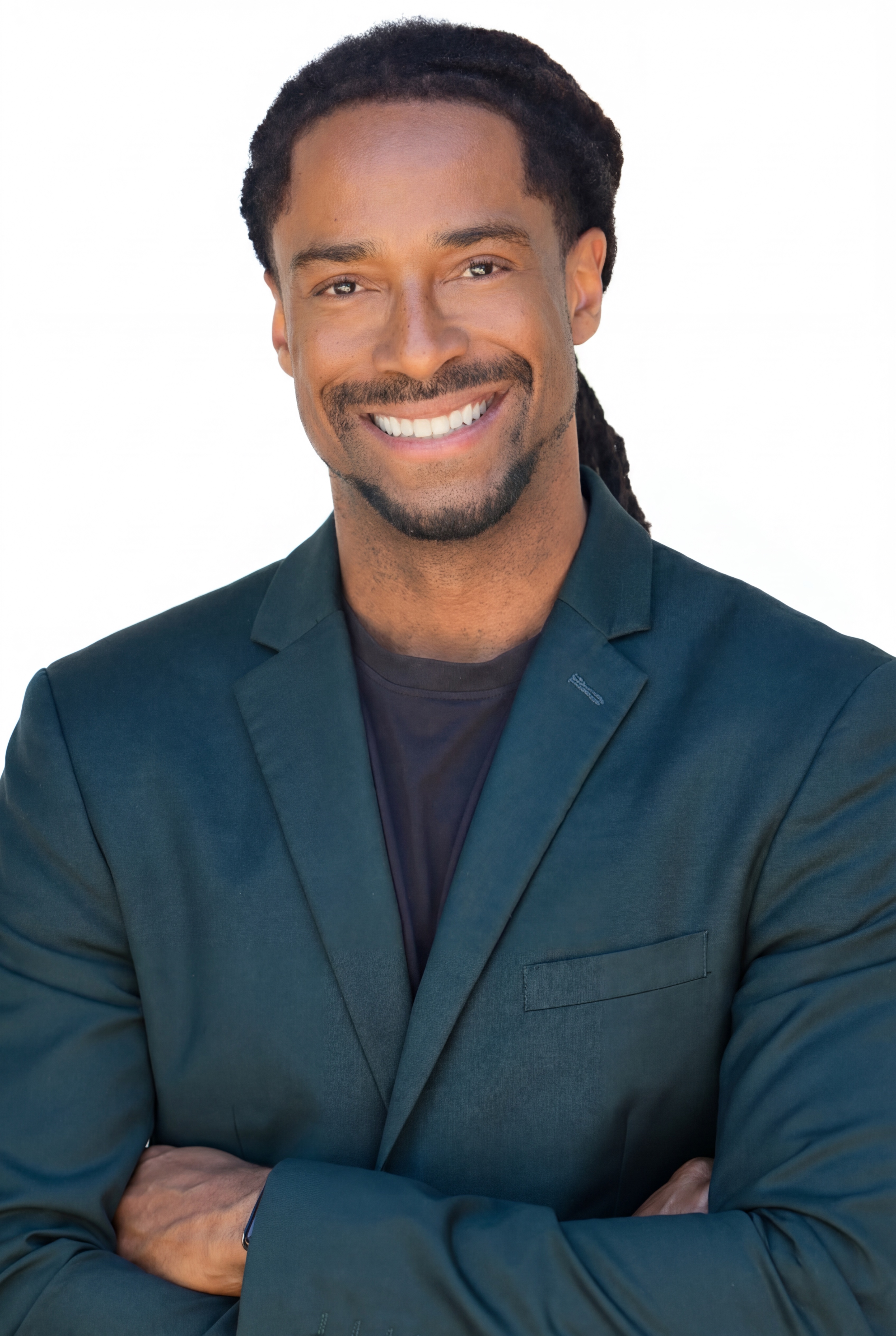
About the Author
William “DJ Will Gill” Gilbert is a corporate event DJ, emcee, and audience engagement specialist, not a magician but applies many of the design principles above to his own engagement work across 600+ corporate events. The five-principle framework here reflects the structural patterns observable across specialty performers (magicians, comedians, mentalists, motivational speakers) who share the same underlying engagement methodology even when their craft looks different on the surface. Will is recognized as the Wall Street Journal’s #1 Corporate DJ, Forbes Next 1000 honoree, and has 2,520+ five-star reviews from corporate planners.
Frequently Asked Questions
What is the magician's way of making events engaging?
A five-stage attention system: front-load the pattern break, activate the audience, engineer wonder moments, manage pacing density, and engineer a climactic close.
Why open with the second-strongest effect?
Attention is most volatile in the first 90 seconds, and the strongest effect is saved for the close.
Do attendees want interaction?
92% prefer interactive experiences over passive sessions.
Is engagement a known problem?
74% of event professionals call engagement a key success factor in 2026, yet 39% cite it as a top challenge.
Does this apply outside magic?
Yes, to conferences, sales kickoffs, product launches, training sessions, town halls and galas.