
12 Perks of Corporate Gigs for Musicians (2026 Guide)
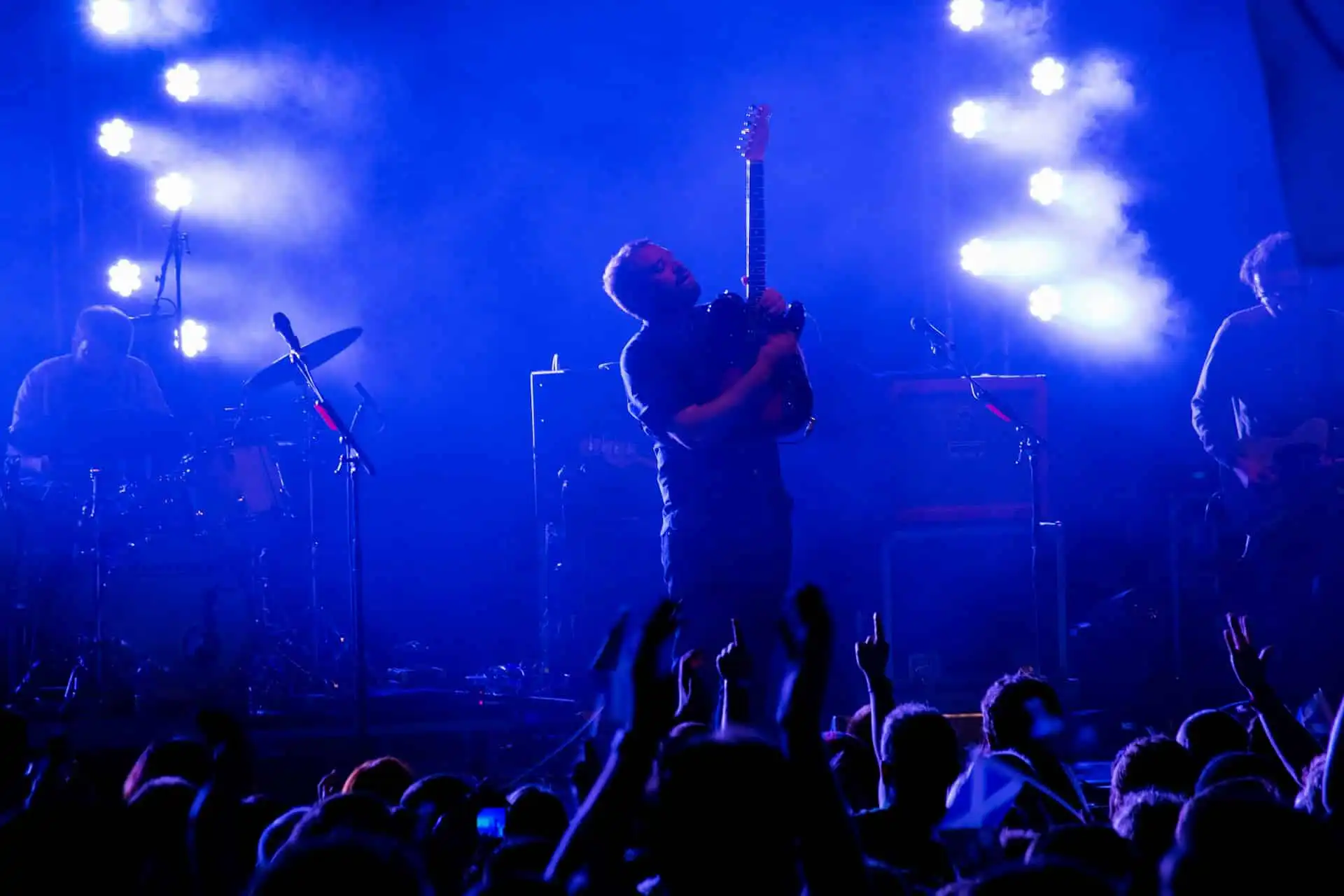
When most musicians picture a paying gig, they picture a bar, a club, a festival slot, or a wedding. The corporate market sits almost invisibly alongside all of those, and it quietly pays more, books further ahead, and competes against fewer musicians than any of them. Conferences, sales kickoffs, product launches, awards galas, holiday parties, and leadership off-sites all need live music, and the companies booking them have budgets that bar owners simply do not.
This is the segment I built my own career on, so the twelve perks below aren’t theoretical, they’re the actual reasons the corporate market changed my trajectory across 600+ events. Each one is grounded in current 2026 market data, with every figure linked to its source, and organized into the five benefit categories that matter most when you’re deciding whether corporate work is worth pursuing.
Key Takeaways
→ The corporate entertainment line item runs from $2,000 to $50,000 per event, with bands typically earning $2,500–$6,000 (small), $6,000–$10,000 (mid-size), and $10,000–$50,000+ (large) well above typical bar or club rates (AMW, 2026; Altus Entertainment, 2026).
→ The market is growing, not shrinking. The U.S. live events market is valued at roughly $489.9 billion in 2026 and projected to reach $660.3 billion by 2033, with the entertainment segment holding the largest share at 34.2% (Coherent Market Insights, U.S. Live Events Market).
→ Corporate events book 9–12 months in advance, giving musicians a reliable forward calendar that bar and club gigs almost never provide, and they frequently fall on weekdays, backfilling the slow part of a performing calendar (Greenlight Booking, 2026).
→ The broader events industry, corporate events and seminars among its cornerstones, is forecast to grow at roughly a 12.9% compound annual rate from 2026 to 2030, signaling expanding demand for the kind of live entertainment corporate buyers source (Technavio, Events Industry Market Analysis).
→ Consumer appetite for live, in-person experiences continues to climb average U.S. concert ticket prices reached $144 in 2025, 45% higher than 2019, reflecting how much value audiences now place on live music over recorded formats (Mordor Intelligence, U.S. Live Music Market).
Watch DJ Will Gill perform at corporate events or contact us directly with questions about building the corporate side of your performing career.
The Money Corporate Rates, Reliability, and Economics That Beat Bar Gigs
The single most concrete reason to pursue corporate work is the pay. The gap between a corporate booking and a typical bar gig is not incremental it’s structural, and it shows up in three places: the rate itself, the reliability of getting paid, and the consistency of the calendar.
1. Higher pay. Across the corporate event industry, entertainment lands as a $2,000–$50,000 line item per event (AMW, 2026). For bands specifically, the 2026 ranges are roughly $2,500–$6,000 for a small band (3–5 musicians), $6,000–$10,000 for a mid-size band (6–8 musicians), and $10,000–$50,000+ for large ensembles with full production (Altus Entertainment, 2026). Compare that to a typical bar gig paying a few hundred dollars split across the band, and the math is obvious.
2. Reliable, upfront payment. Corporate clients work on contracts, deposits, and purchase orders. Most corporate bookings involve a signed agreement with a deposit paid in advance and the balance due on or shortly after the event, which means no chasing a bar manager for a promised cut of the door that never materializes. The financial certainty alone is worth the shift in focus.
3. Consistent, plannable scheduling. Corporate events are booked 9–12 months in advance for peak dates (Greenlight Booking, 2026). That forward visibility lets a musician plan a calendar months out instead of scrambling week to week and because most corporate events fall on weekdays (sales kickoffs, conferences, leadership offsites, weekday holiday parties), they backfill exactly the slow nights that bar and wedding work leave empty.
| Dimension | Bar / Club Gigs | Corporate Gigs |
|---|---|---|
| Typical pay | Low hundreds, often split + tips | $2,500–$50,000+ depending on band size |
| Payment reliability | Variable; door deals, late pay common | Contract + deposit, paid on schedule |
| Booking lead time | Days to weeks | 9–12 months for peak dates |
| Competition | High; saturated, visible scene | Lower; fewer musicians pursue it |
| Schedule | Late nights, weekends | Often weekday, daytime/early evening |
None of this is happening in a shrinking market, either. The U.S. live events market sits at roughly $489.9 billion in 2026 and is projected to reach $660.3 billion by 2033, with entertainment the single largest segment at 34.2% (Coherent Market Insights). A musician entering the corporate market in 2026 is entering on a rising tide.
The Pipeline Networking, Referrals, and Why Corporate Has Less Competition
The financial upside is the headline, but the compounding upside is the network. Corporate work has a structural advantage bar gigs never will: the people in the room are decision-makers, and the gig itself becomes a marketing asset.
4. Networking with people who actually book entertainment. A corporate event is full of executives, event planners, and professionals from across industries, exactly the people who hire musicians for the next event. One strong corporate performance routinely produces referrals to two or three other planners within a year, because corporate event planners talk to each other constantly. The networking value at a single corporate gig can exceed a year of bar gigs.
5. Less competition. Unlike the saturated, highly visible bar, club, and festival scenes, far fewer musicians actively pursue corporate work, partly because it’s less glamorous and partly because most performers never think to look. That means less competition for each booking, and once a musician builds a corporate reputation, repeat clients come more easily than in any other segment.
6. Built-in marketing exposure. Companies document their events heavily with photographers, videographers, and social media teams. A musician performing at a corporate event frequently ends up in content the company posts and tags, generating exposure with zero marketing spend. Politely requesting event photos and video afterward (and sharing them on your own channels) turns every corporate gig into promotional material for the next one.
This pipeline effect is what turns corporate work from a series of one-off gigs into a self-sustaining business. The first corporate booking is the hardest to land; each one after that gets easier as the network compounds.
The Professional Upgrade Venues, Business Skills, and Stage Presence
Corporate work doesn’t just pay a musician more; it makes them better at the business of being a musician. Three perks fall into this category, and together they compound into a level of professionalism that’s hard to build any other way.
7. Access to high-end venues and audiences. Corporate events happen in luxury hotels, resorts, conference centers, and premium production spaces. Performing in those environments with professional AV, real stages, and polished production exposes a musician’s work to a higher tier of audience and raises the ceiling on what their act looks and sounds like. It’s a different caliber of room than a corner stage in a bar.
8. Real business and professional development. Corporate work forces a musician to operate like a business: handling contracts, managing client expectations, communicating professionally, invoicing, carrying insurance, and showing up in appropriate attire. These aren’t bureaucratic annoyances, they’re the exact skills that separate a hobbyist from a working professional, and corporate clients demand them. Every booking sharpens them.
9. Stronger stage presence. Corporate audiences are often closer and more varied than a concert crowd a relaxed cocktail hour one minute, a high-energy gala the next. Learning to read and connect with those audiences, sometimes within the same event, builds a level of stage command and adaptability that translates directly back to every other performance setting. The musicians who do corporate work consistently become more confident performers across the board.
The Craft Stretch Repertoire, Adaptability, and Range
There’s a creative dividend to corporate work that surprises most musicians who expect it to be artistically limiting. Because corporate audiences are so varied and the brief changes event to event, the work stretches a musician’s craft in ways a niche bar following never will.
10. Forced adaptability. A holiday party wants lively, recognizable hits; a conference dinner wants restrained background music; a gala wants elegance; an after-party wants energy. Reading what a given corporate room needs and delivering it is a skill that makes a musician dramatically more versatile. The constant recalibration is exactly the kind of pressure that produces growth.
11. Repertoire expansion. Corporate clients request a wide range of styles and eras, acoustic pop, jazz standards, classic funk and disco, current hits, and international music for global audiences. Building out a setlist to meet those requests pushes a musician to learn material they’d never have explored otherwise, permanently widening their range. Many musicians discover entire genres they come to love through corporate requests.
The audience appetite driving these requests is real and growing: average U.S. concert ticket prices reached $144 in 2025, up 45% from 2019, reflecting how much value audiences now place on live experiences that recorded music can’t replicate (Mordor Intelligence). The musicians who can deliver range are the ones who capture that demand.
The Lifestyle Travel, Schedule, and a Career You Can Actually Sustain
The last benefit category is the one that determines whether a music career lasts: sustainability. The late-night grind of bar gigs burns musicians out; corporate work runs on a fundamentally more livable rhythm.
12. Travel opportunities with expenses covered. Corporate clients host events in other cities and countries, and travel-based bookings typically come with covered flights, lodging, and meals as separate line items rather than out-of-pocket costs. For a musician, that means seeing new places and reaching new audiences while the client absorbs the travel expense, a genuine perk that bar gigs never offer.
The work-life balance. Corporate events largely happen during daytime hours and early evenings, not at 1 a.m. in a bar. That schedule leaves a musician with their evenings, their health, and the energy to work on original music, family, or other creative projects while still earning a stable income from performing. The difference in sustainability between a 9 p.m. corporate gala and a 1 a.m. bar set, week after week, is the difference between a career you can run for decades and one that burns out in a few years.
The career longevity. Put the twelve perks together: better pay, reliable payment, a forward calendar, a compounding network, less competition, professional growth, a wider repertoire, covered travel, and a livable schedule, and what they add up to is a music career that’s financially and physically sustainable over the long haul. The broader events industry is forecast to grow at roughly 12.9% annually from 2026 to 2030 (Technavio), which means the runway for musicians who build a corporate reputation now is long. That’s the real perk: not any single booking, but a durable career built on top of all twelve.

About the Author
William “DJ Will Gill” Gilbert built his entire performing career on the corporate market described above. Every one of these twelve perks is something he has lived across 600+ corporate events for Fortune 500 clients. He has been ranked the #1 Corporate DJ by The Wall Street Journal, recognized by Forbes (Next 1000), and has earned 2,520+ five-star reviews from corporate executives and planners. Musicians weighing whether to pursue the corporate market are welcome to reach out directly.