
What Is a 3-in-1 DJ, Emcee, and Audience Engagement Solution for Corporate Events?
As Featured In

★★★★★ 2,520+ Five-Star Reviews
MBE Certified
A practical breakdown of what bundling music, hosting, and crowd activation into one booking actually means for planners running high-stakes corporate events, from the person who has done all three in the same room for over 600 of them.
The last sales kickoff I sat in on as a guest had three different people on stage in the first ninety minutes. A DJ playing walk-in music who disappeared the moment the GM took the mic. An emcee who introduced speakers but had no idea what song was coming next or when the energy was supposed to lift. And a “fun facilitator” brought in for the afternoon icebreaker who needed twenty minutes of setup the agenda did not have.
None of them were bad at their jobs. The problem was that none of them owned the room. The transitions felt like furniture being moved between sets, and you could watch the audience check their phones every time the baton dropped.
That gap, between three competent vendors and one cohesive show, is the whole reason “3-in-1” has become a thing planners ask me about by name. I am Will Gill, and the three roles I am about to describe are the exact three I run as a single booking. Here is what the model actually is, where the fragmented version breaks, and how to tell a real 3-in-1 provider from a DJ who just owns a microphone.
What a 3-in-1 Corporate Event Solution Actually Is
A 3-in-1 solution combines three roles into one booking and one person on site:
- DJ: music curation, transitions, walk-ons and walk-offs, energy management between segments, and a dance floor when the night calls for it.
- Emcee: running the show, introducing speakers, keeping the run-of-show on time, brand-safe stage presence, and absorbing complexity so the audience only experiences flow.
- Audience engagement host: interactive bits, contests, team activations, and the connective tissue between content blocks.
It is not a formal category. It is a positioning choice some providers make to solve a specific operational problem: corporate events that historically required three separate contracts, three tech riders, three sets of expectations, and three opportunities for tone to clash.
The reason it matters is that the three functions are not actually separable in practice. A DJ who does not know the agenda cannot read the room. An emcee with no control over music is at the mercy of whoever does. And engagement bits without a host’s voice and a DJ’s bed underneath them feel like awkward team-building from 2009.
Why the Fragmented Model Breaks Down at Scale
I have watched planners spend more time managing the seams between vendors than managing the actual event. The pattern is consistent.
You hire a DJ from a wedding-heavy roster who undercharges. You hire an emcee from a speakers bureau who overcharges and has never worked with that DJ. Then you realize neither of them does engagement, so you bolt on a team-building host for the offsite night. The three of them meet for the first time at load-in.
The result is rarely catastrophic. It is just flat. Cues get missed. The emcee says “let’s get some energy in here” and the DJ has to scramble to find a track. The engagement segment lands at the wrong moment because nobody owns the energy curve of the day.
DJs who mostly work weddings or clubs often do not understand the pacing, professionalism, or structure a corporate event demands. That problem multiplies when you stack two more vendors on top who also do not understand each other’s cues. The 3-in-1 model exists because somebody at some point looked at this and asked: what if one person held all three threads at once?
What the Emcee Layer Actually Does (Most People Underestimate This)
If you only think of the emcee as the person who reads names off a teleprompter, you are buying the wrong thing.
A working corporate emcee is closer to a stage manager who is also visible. They are the buffer between what the audience experiences and the chaos happening backstage. They reassure nervous executives in the green room. They cover for AV when a slide deck does not load. They adjust language in real time when an exec changes the framing of an announcement five minutes before they go on. The MC is not the center of attention. The MC is the thing that lets everyone else look good.
When that role is combined with the DJ function, something interesting happens. The person calling the next speaker is also the person controlling the music that introduces them. There is no handoff, no signal between two people across a stage, no risk of the wrong track playing.
When that same person also owns engagement, the audience gets one voice they trust across the whole day. Not three.
Audience Engagement Is Facilitation, Not Gimmicks
This is where a lot of “interactive entertainment” pitches go wrong, especially in corporate settings.
Engagement that works in a high-stakes business event is not a giant inflatable game or a magician between sessions. It is the thing that moves the goals of the event forward. Smart Q&A. A live poll that actually surfaces something leadership did not know. A team challenge tied to the theme of the kickoff. A walking-around bit during cocktails that gets people who do not know each other talking.
Humor and engagement at a corporate event should uplift the audience and the organization, never target them. That sounds obvious until you have watched a hired entertainer make a joke at the CFO’s expense in front of 600 employees.
A real 3-in-1 provider screens every engagement bit through that filter. Will this make the room feel something useful? Or is it just activity for its own sake? The answer changes what I program.
See the 3-in-1 in Action
A live look at the audience engagement and teambuilding format inside a real corporate run-of-show.
What Corporate Clients Need That Wedding or Club Talent Cannot Deliver
I want to be specific about this, because the gap is bigger than it sounds. Corporate events demand:
- Strict adherence to a run-of-show that may shift twice before doors open
- Brand-safe language and music, including clean edits across decades and genres
- Comfort working with executives, sponsors, and legal-sensitive content
- The ability to manage dead time and technical issues without panicking
- Coverage across diverse demographics in one room (a 28-year-old SDR and a 58-year-old VP are not vibing on the same playlist)
- Full insurance and often MBE certification for procurement compliance
A DJ who plays great weddings does not automatically clear those bars. An emcee who is brilliant at galas may have no idea how to read a sales kickoff agenda. A 3-in-1 provider who actually operates at this level has to clear all of them simultaneously, which is why the bench of credible providers is narrow.
This is the model I built my entire business around: one person, three functions, designed for Fortune 500 and enterprise events. The proof points my corporate clients check against, Wall Street Journal recognition, Forbes Next 1000, MBE certification, full insurance, and over 2,520 five-star reviews, are exactly the kinds of things a procurement team needs to clear before they sign. When planners ask “what is a 3-in-1 solution,” they are usually trying to figure out whether one provider can actually carry the weight, or whether it is marketing language for a DJ who also owns a microphone.
What Corporate Planners Say
“Will ran our entire general session, DJ, host, and the engagement segments, without a single dropped cue. Our leadership team kept asking how one person did all of that.”
Fortune 500 Event Lead
“The agenda shifted by 25 minutes mid-day and you would never have known. He absorbed it in real time and kept the room with us the whole way.”
Corporate Meeting Planner
How to Tell a Real 3-in-1 Provider From a DJ Who Says the Words
A short checklist I would actually use:
- References from corporate events of similar scale. Not weddings. Sales kickoffs, leadership conferences, partner summits, award shows. Ask for two from the last 12 months.
- A pre-event consultation that goes beyond music preferences. They should be asking about agenda, executive personalities, what is off-limits, and what success looks like on Monday morning.
- Comfort with AV teams and production crews. A 3-in-1 person sits in the middle of the show flow and needs to speak the language of show callers and stage managers, not just request a power outlet.
- Brand-safe music programming as a default, not a request. Clean edits, multi-generational range, no awkward lyrics surfacing during the CEO’s walk-on.
- Insurance and compliance documentation ready without friction. Liability coverage, W-9, vendor onboarding. If procurement causes a delay, that tells you they do not work at this level often.
- Virtual and hybrid capability that is actually live, not pre-recorded. The people who can hold a remote audience are doing it in real time, reading the room through the camera.
If a vendor cannot speak to four of those six without hedging, they are probably a strong DJ in a 3-in-1 sweater.
The Honest Tradeoffs
I am not going to pretend the model is universally better. There are real tradeoffs.
It costs more than a wedding DJ, often a lot more. Corporate DJ rates commonly run $2,000 to $3,500 in many U.S. markets, higher in major cities or with custom requirements. A 3-in-1 provider sits at the higher end of that range and well above it for top-tier talent, because you are paying for three roles. The value math only works if you would have hired all three anyway, or if the consolidation prevents a meaningful mistake.
It is a single point of failure. If your one provider gets sick the morning of, you do not have a backup emcee and a separate DJ to lean on. Real providers carry contingency plans and bench talent, but the risk profile is different than splitting roles.
The talent ceiling is narrower at the very top of any single function. A specialist emcee from a bureau may be a better pure emcee. A festival DJ may be a better pure DJ. What you are buying with 3-in-1 is integration, not the absolute best of any one function in isolation.
For most corporate events, integration wins. For a flagship gala where you want a celebrity host and a name DJ as separate marquee draws, splitting can make sense.
What I Would Do First If I Were Planning an Event Tomorrow
If you are early in planning and trying to decide whether 3-in-1 fits:
- Map your run-of-show and circle every transition. Walk-ons, walk-offs, segment shifts, energizers, breaks. Count them.
- Look at how many of those transitions currently depend on coordination between two or more vendors. That is your fragmentation cost.
- Get one quote from a credible 3-in-1 provider and one set of quotes for the three roles split. Compare total cost, but also compare the number of coordination meetings each option requires of your team.
- Ask both options the same question: “What happens if the agenda shifts by 20 minutes mid-day?” The answers will tell you who is actually built for this.
The planners I see make this decision well are not deciding based on a feature list. They are deciding based on how much of the event they want to personally hold in their head on show day. The 3-in-1 model reduces that load. That is the whole product.
If you want to see how this maps onto your specific run-of-show, the fastest path is a short call. You can compare it against a split-vendor plan in the same conversation. Explore the corporate event DJ and corporate event emcee services, or the virtual and hybrid event format.
Frequently Asked Questions
Is a 3-in-1 DJ just a DJ who also talks on the mic?
No, and that is the most common misunderstanding. A DJ who makes announcements is doing one and a half jobs, not three. A real 3-in-1 provider has trained emcee skills (speaker introductions, agenda management, executive interaction) and a designed engagement program, on top of professional DJ work. Most DJs who add light mic work are not 3-in-1 providers, even if they use the phrase.
Does this work for virtual or hybrid events?
It can, but the bar is higher. The provider needs production capability to handle a live audio feed, camera presence, and the ability to engage a remote audience in real time. Pre-recorded sets do not count. Ask specifically how they manage hybrid energy when half the audience is in the room and half is on Zoom.
What size of event makes sense for a 3-in-1 model?
Roughly speaking, any event with a formal agenda, multiple segments, and over 100 attendees is in the sweet spot. Smaller team offsites can use it but may not need the full setup. Events over 5,000 attendees often still benefit, though you may layer additional talent for specific segments.
How early should we book?
For peak quarters (Q1 sales kickoffs, Q4 holiday and recognition events), six to nine months out is normal for top-tier 3-in-1 talent. Inside 90 days you are working with whoever is left, and the gap between top and middle is wide.
What is the biggest mistake planners make when hiring this kind of provider?
Underbriefing them. Treating the consultation call as a formality and then expecting them to read your culture on show day. The 3-in-1 model only pays off if the provider has enough context to make live judgment calls. Give them the agenda, the personalities, the off-limits topics, and the energy you want. They will use all of it.
Booking a Corporate Event? Talk to DJ Will Gill
One provider, three roles, zero dropped cues. Bring your run-of-show to a short consult and we will map the 3-in-1 against a split-vendor plan together.
Introducing THEAIDJ.com
Hear What You’ve Been Missing.
A great event lives or dies on the right song at the right moment. But you know the drill: you type “company party playlist” into Spotify, get the same forty songs every other office got, and burn an hour skipping tracks. AIDJ is the thing you wished existed.
We are not Spotify. We do not know your listening history. And we are not ChatGPT, which hands you a list you cannot preview or export. AIDJ is the bridge: describe the vibe, hear AI-matched songs in seconds, preview every track, and load the whole set in one click.
Patent-pending playlist generation, U.S. App. No. 19/202,496. Three AI models run in parallel, not one.
Built by DJs, for DJs and fans of music. Prep Your Setlist in Seconds · Find and Load Similar Songs While Performing Live
About the Author
DJ Will Gill
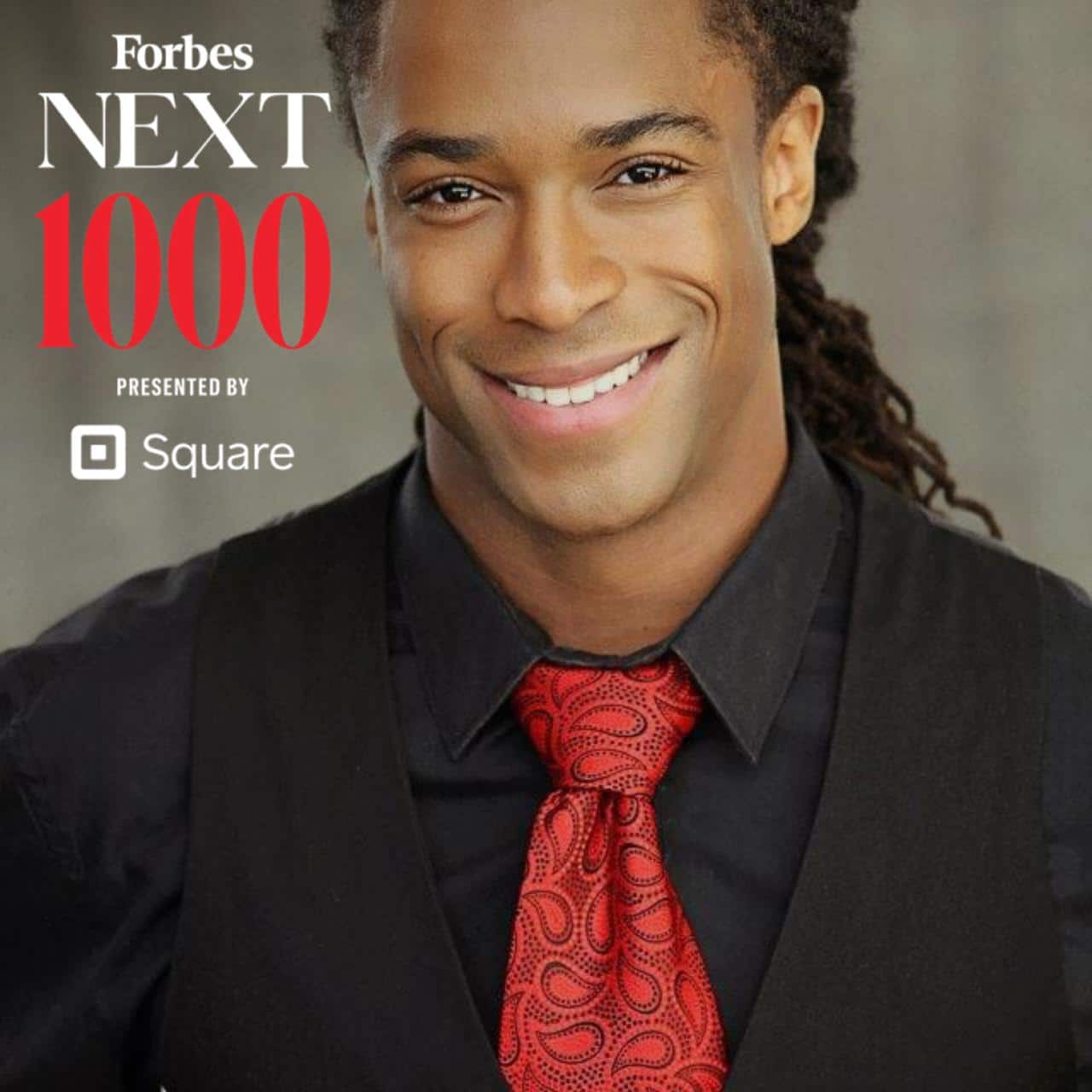
Will Gill is the Wall Street Journal’s #1 rated corporate DJ, a Forbes Next 1000 honoree, and an MBE-certified entertainer with over 2,520 five-star reviews. He is also a World Cup performer. Across 600+ corporate events he has served Fortune 500 clients including PepsiCo, PayPal, CDW, Ulta Beauty, and the United Nations, performed as a 3x Super Bowl DJ, and worked the Formula 1 Las Vegas Grand Prix. His 3-in-1 model combines high-energy DJ sets, professional emceeing, and audience engagement into one seamless show built for high-stakes business events.
Quick Answers: The 3-in-1 Format in 60 Seconds
Two short clips from Will on what a one-man team-building show looks like and why one performer beats three vendors.
Planning a corporate event? Check Will’s availability.

About DJ Will Gill
Will Gill is the Wall Street Journal’s #1 Corporate DJ, a Forbes Next 1000 honoree, and an MBE certified vendor operating as Faders and Fitness, LLC. He is a 3x Super Bowl performer, a World Cup performer, a Formula 1 performer and an MLB All-Star Game performer.
He delivers a 3-in-1 corporate service as DJ, emcee and one-man team-building show, with 2,520+ five-star Google reviews. See the Fortune 500 client roster or check your dates.