
Why Hire a Live Band for Corporate Events
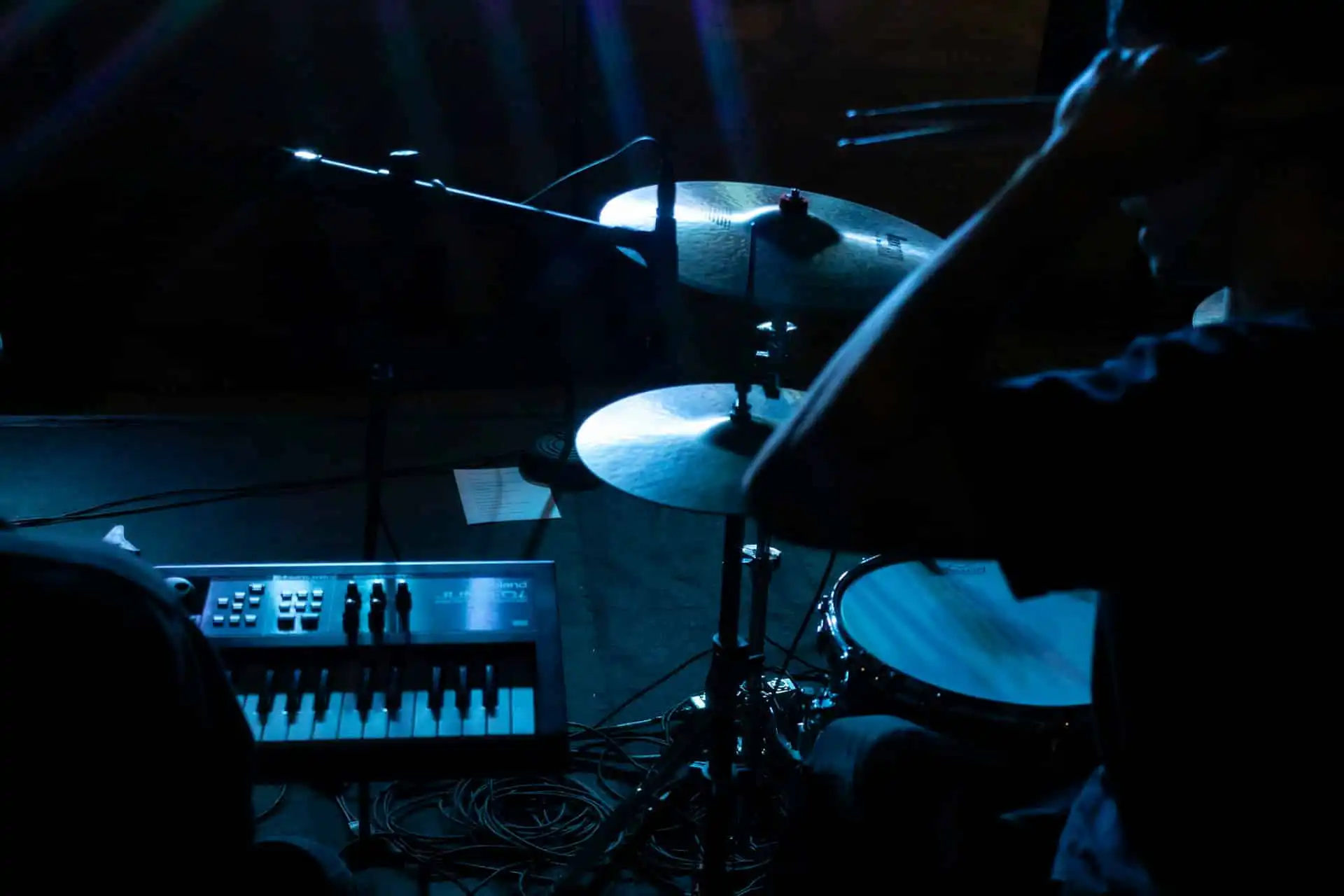
In 2026, corporate event planners are operating under a clear mandate: prove that every dollar of event spend is generating measurable engagement, pipeline impact, or retention outcomes. The same conditions that have pushed event teams toward more disciplined investment also explain why live music spending is rising rather than falling. When attendee engagement becomes the most-tracked event KPI, the entertainment line item stops being a cosmetic choice and starts becoming an ROI lever.
This guide makes the planner’s case for hiring a live band in 2026, grounded in the actual market data on corporate event spending, engagement measurement, and audience expectations. It also covers something most “10 reasons to hire a band” articles never address when a band is genuinely the wrong call, and what other entertainment formats fit those situations better. Every claim is linked to a verifiable source.
Key Takeaways
→ The corporate events market is growing fast. The global corporate events market was valued at $325 billion in 2023 and is expected to reach nearly $600 billion by 2029 a 10.6% compound annual growth rate (Cvent, 390 Event Statistics 2026).
→ Attendee engagement is now the most-tracked event KPI. When asked which KPIs they use most to measure event success, planners cite attendee engagement (34%), event feedback and satisfaction (34%), and attendance (31%) meaning the entertainment that drives engagement directly affects how the event is measured (Cvent, 2026).
→ Corporate planners and executives are increasing event spend. 67% of executives increased their meeting budgets in 2025, and 74% of Fortune 1000 marketers planned to increase event budgets in 2025 reflecting confidence in events as a revenue driver at the largest corporations (Event Industry Statistics USA 2026).
→ Live music outperforms recorded audio on measurable engagement responses. Peer-reviewed research has found that live music performances elicit stronger physiological and emotional responses in audiences than identical recorded performances including more sustained attention and stronger group affective experience (PMC, Live vs Recorded Music Studies).
→ A band is not the right answer for every event. Content-heavy formats (multi-day conferences with constant programming), networking-only cocktail events, and small intimate gatherings often deliver better engagement and lower cost-per-attendee with a DJ-emcee combination or no live entertainment at all and a good planner knows the difference.
Watch DJ Will Gill perform corporate events or contact us directly to discuss whether a band, a DJ-emcee, or both is the right entertainment fit for your event.
The 2026 Corporate Event Market Why Live Music Investment Is Rising
The headline data on the corporate event market in 2026 makes a clear case that planners are not retreating from in-person investment they are doubling down. The global corporate events market is on a 10.6% compound annual growth path, expected to grow from $325 billion in 2023 to roughly $600 billion by 2029 (Cvent, 2026). At the executive level, 67% of executives increased their meeting budgets in 2025, and 74% of Fortune 1000 marketers planned to increase event budgets in 2025 a clear vote of confidence in events as a revenue driver at the corporations with the most measurement discipline (Event Industry Statistics USA 2026).
The per-attendee economics have shifted as well. Corporate event spending is reaching $169 per attendee per day in 2026 (Eventcube, 100+ Event Industry Statistics 2026), and 78% of organizers rate in-person conferences as their most impactful marketing channel in 2026 ahead of paid media and digital advertising (Event Industry Statistics USA 2026). When the most-trusted marketing channel costs $169 per attendee per day, the entertainment line item the thing the audience actually feels in real-time becomes a higher-leverage spend than the channel-level average suggests.
Translated into the band-hire decision: live music is no longer competing against “should we save money by going DJ-only?” It is competing against “should we cut the hotel-rate line by booking a less-premium venue?” In a market where venues, AV, and catering are all increasing in cost faster than budgets, entertainment is one of the few line items where a smaller spend with the right format produces outsized engagement returns.
Audience Engagement The #1 Measured Event KPI in 2026
For planners who care about the metric leadership now actually reviews, the live-music decision aligns with measurement priorities. When asked which KPIs they use most to measure event success, planners cite attendee engagement (34%), event feedback and satisfaction (34%), and attendance (31%) as the top three (Cvent, 390 Event Statistics 2026). Engagement and satisfaction are tied at the top and live music is one of the highest-leverage drivers of both.
The peer-reviewed evidence base for live music’s engagement advantage is unusually strong. Multiple studies have found that live music performances elicit stronger physiological and emotional responses in audiences than identical recorded performances including measurable differences in attention, group affective experience, and physical movement (PMC, Live Music vs Recorded Performance Study). Research using movement-tracking has shown that audiences synchronize their movements more strongly to live performance than to recordings, with the same songs (PMC, Head Movement and Live Music). For a corporate event measured on attendee engagement, the choice between “background music” and “people physically moving together with shared focus” is the choice between a baseline measurement and a leadership-grade one.
Ten years ago, “people had fun” was a sufficient post-event report. In 2026, leadership wants the engagement score in the post-event deck. A live band moves that number measurably. Recorded background music does not.
Brand Memory and Event Recall Why Live Music Lasts Longer
A corporate event is not just measured at the post-event survey it is measured at the 30-day mark, the next-quarter pipeline review, and at the next year’s invite open rates. Memory durability matters. The behavioral-science research on emotional encoding consistently shows that experiences with high physiological arousal and strong emotional valence are encoded into memory more durably than neutral background experiences a long-running finding in memory research that has direct application to event design.
Live music is one of the most reliable ways to create high-arousal, positive-valence moments in a corporate event timeline. The shared-attention quality a roomful of people watching the same performers, responding to the same beats, moving in synchrony is harder to replicate with any other entertainment format. Music festivals continue to grow as cultural and economic forces precisely because live music creates this combination at a level recorded media does not: the European music festival market alone generates €5.2 billion annually in injected economic activity (Gitnux, Events Industry Statistics 2026).
For a corporate event, the implication is direct: the attendee who remembers the band six months later remembers the event. The attendee who remembers the keynote and a generic dinner playlist remembers the company. The first set of memories drives repeat attendance and word-of-mouth referrals; the second drives a polite RSVP and a quiet decision to skip next year.
Recognition, Morale, and the Internal-Event ROI Case
For internal corporate events annual kickoffs, year-end celebrations, recognition dinners, milestone anniversaries the ROI conversation shifts from external pipeline metrics to internal retention metrics. The data on what employees value in workplace culture has been remarkably consistent over the past five years: feeling recognized, feeling that the company invests in its people, and feeling part of a coherent culture all rank as top retention drivers, while transactional perks underperform.
A live band at an internal corporate event signals investment in a way that recorded background music does not. The employee who walks into a room and sees a full band on a riser receives a clear nonverbal message: this matters enough that the company spent money on real musicians. The same room with a Spotify playlist receives the opposite message that the entertainment was an afterthought, the cheapest line item on the run-of-show. For a fraction of the total event cost, the band line item produces a culture signal that lasts longer than the dinner.
Corporate meetings as a category yield a 4:1 ROI on average according to industry analysis (Gitnux, Events Industry Statistics 2026) and internal recognition events are the category where retention and engagement returns compound most predictably over time. The band line item is where the planner pulls the engagement number up to leadership-grade.
When a Band Is the Wrong Choice Honest Counter-Indications
Most “reasons to hire a band” articles never address this. Honest event planning starts with the acknowledgment that a live band is the right entertainment format for some events and the wrong one for others and committing to a band when the event format does not support it produces worse outcomes than a different choice. The corporate-event situations where a band typically underperforms versus other formats:
| Event Format | Live Band | DJ-Emcee | Better Fit |
|---|---|---|---|
| Awards dinner, gala (4–6 hours, 200+ guests) | Strong fit, multiple set transitions, headliner moment | Good for transitions; can’t hold a 90-min dance set as effectively | Band, with DJ for breaks |
| Cocktail-only networking (2 hours) | Often too loud or too prominent; competes with networking | Background-volume control, easier to dial down for conversation | DJ-emcee or ambient solo musician |
| Multi-day conference with constant content | Hard to integrate; the schedule already fills attendee attention | Easier to slot into breaks, opens, closes, and one evening | DJ-emcee for most slots; band only for closing party |
| Small intimate dinner (under 50 guests) | Often over-scaled and over-priced for the audience size | Right-sized; emcee can also handle program announcements | DJ-emcee or solo acoustic act |
| Sales kickoff, all-hands (full-day, mixed content) | Limited usable slots; band sits unused for most of the day | Energizes session breaks, runs games, handles transitions all day | DJ-emcee with audience engagement |
The honest rule of thumb: a live band is the right entertainment format when there is a defined post-program window typically 90 minutes to 3 hours where the band’s set is the room’s primary focus. When the event format does not produce that window, the band line item ends up paying for musicians who sit idle, and a DJ-emcee combination usually delivers higher engagement and lower cost-per-attendee. The planners who consistently nail entertainment are the ones who make this choice based on the event format, not based on what worked last time.

About the Author
William “DJ Will Gill” Gilbert is a corporate event DJ and emcee, not a band which gives him an unusual vantage point on the band-versus-DJ decision. He has been booked alongside live bands on hundreds of corporate events, and he has been the format planner’s choice specifically because a band would not have fit. He has performed at 600+ corporate events, collected 2,520+ five-star reviews, and been recognized by Forbes (Next 1000) and The Wall Street Journal, which ranked him the #1 Corporate DJ. For events where a DJ-emcee fits better than a band or where the two formats need to be paired Will is the considered alternative.
Frequently Asked Questions
Why hire a live band for a corporate event in 2026?
Because engagement is now the most-tracked event KPI and live music drives it; planners cite attendee engagement at 34% as a top success measure.
How big is the corporate events market?
$325 billion in 2023, expected to reach nearly $600 billion by 2029 at a 10.6% CAGR per Cvent.
Are budgets rising?
67% of executives increased meeting budgets in 2025 and 74% of Fortune 1000 marketers planned increases.
Does live music improve recall?
The guide covers brand memory and why live music lasts longer.
When is a band the wrong choice?
The honest counter-indications section covers when another format fits better.