
How to Plan a Hybrid Sales Kickoff
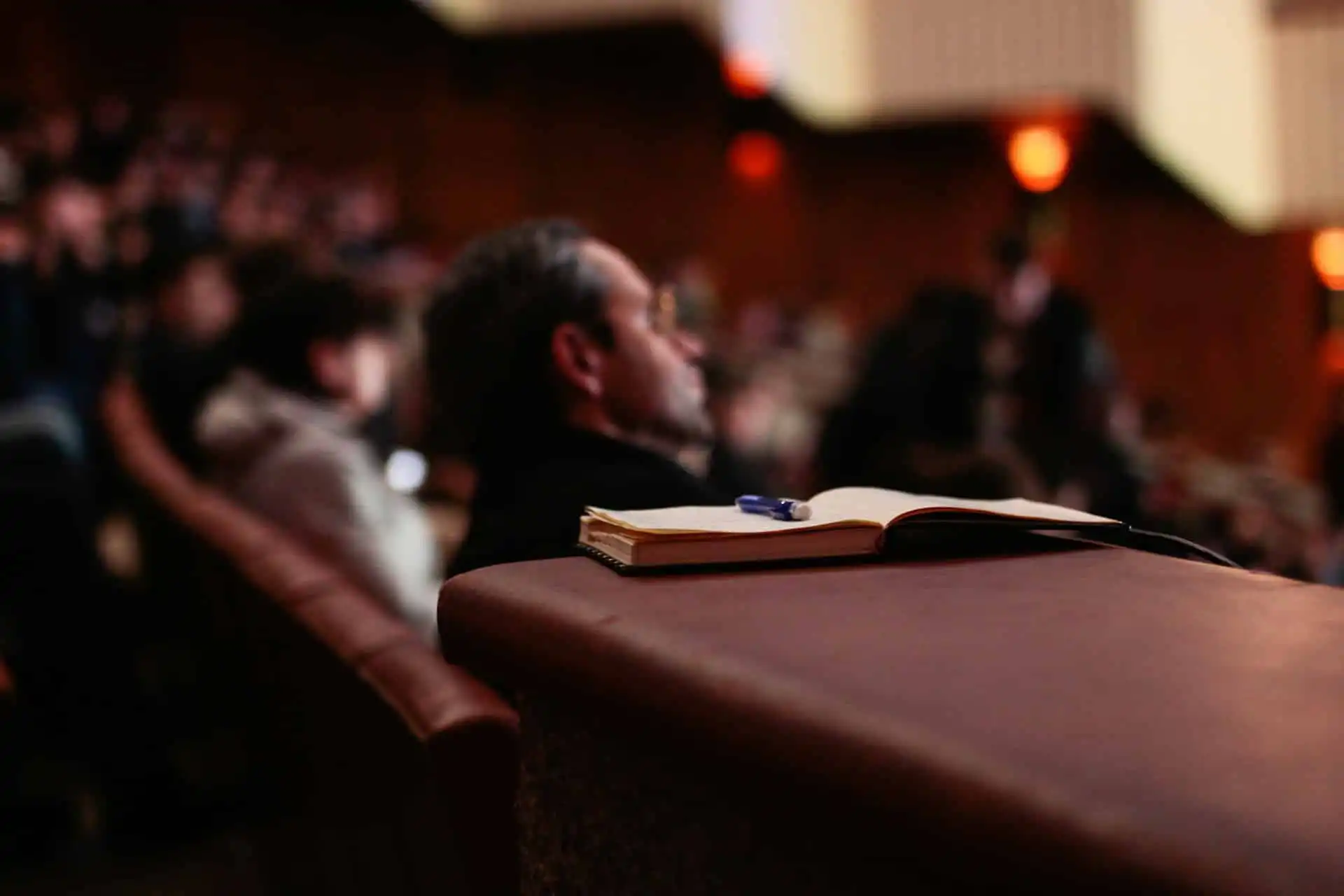
The hybrid sales kickoff has emerged as the second-largest SKO format category in 2026 neither a stripped-down in-person event with a stream tacked on the side, nor a virtual event with a few executives gathered in a room. The hybrid SKO is its own operational format with its own production requirements, agenda design discipline, and engagement risks. Prospeo’s 2026 virtual SKO analysis documents that roughly 52% of the US workforce now operates in hybrid arrangements, which has shifted SKO format expectations meaningfully since 2020 and means that for most companies, the hybrid format is no longer the compromise option it’s the format that matches how the team actually works the other 50 weeks of the year.
The challenge is that hybrid SKOs fail in a specific and predictable way: the in-room experience is great, the remote experience is mediocre, and the planning team doesn’t notice the asymmetry because the planning team is in the room. The strongest 2026 hybrid SKO planning teams design from the remote experience first, build the production infrastructure to support both audiences as equal citizens, and shift the agenda ratio toward formats that translate cleanly to remote viewing. This guide covers the operational differences that make hybrid distinct from in-person SKOs, the regional hub model that’s emerging as the dominant 2026 pattern, the agenda design discipline that hybrid format requires, the production and technology baseline for executing well, and the engagement infrastructure that keeps remote attendees from becoming second-class participants. For the broader SKO context, the companion guides on what an annual sales kickoff meeting is and how to do a sales kickoff cover the foundational planning work.
Key Takeaways
The hybrid SKO is structurally different from a streamed in-person SKO, and the planning discipline that makes it work is the inverse of the discipline that makes in-person events successful. SalesHood’s March 2026 SKO guide identifies the single most important hybrid SKO design principle: “If your event is hybrid focused, shift the energy of your event from keynotes to breakouts creating a flow where your reps are consuming content and also engaging with each other.” The reason is operational keynote content delivered to a hybrid audience always lands harder for the in-room attendees than for remote viewers, but breakout content delivered through video conferencing tools puts both audiences on equal footing. The hybrid SKO that allocates 60% of agenda time to breakouts and 40% to plenary content consistently outperforms the hybrid SKO that inverts the ratio.
The regional hub model has emerged as the dominant 2026 hybrid SKO pattern for distributed teams. Highspot’s March 2026 SKO planning analysis recommends the model directly: “If your SKO is hybrid, set up regional hubs to bring teams together locally. This gives attendees the connection and team-building of an in-person event without the travel hassle.” Rather than running a single main location with everyone else streaming from their kitchens, the regional hub model concentrates remote attendees into 3–8 satellite offices or co-working spaces, each with its own AV setup and on-the-ground coordinator. The result is that even the “remote” attendees have an in-room peer experience, while the main-stage content streams to all hubs simultaneously and breakout programming uses video conferencing across the hub network. The model costs more than pure-virtual but substantially less than flying everyone to one city, and the engagement numbers consistently land closer to in-person than to virtual.
Production complexity for hybrid SKOs is roughly 1.5–2x the complexity of in-person-only events of the same size, and the budget should reflect this rather than assuming hybrid is a cost-saving format. Bizzabo’s hybrid SKO production analysis documents the dual-camera, dual-audio, dual-engagement-platform requirements that drive the complexity premium and the failure mode when planning teams underestimate the infrastructure required. The strongest hybrid SKOs invest in professional video production for the main stage (multi-camera, broadcast-quality audio, professional director cutting between feeds in real time), redundant network infrastructure at every location, and dedicated remote-engagement moderators whose only job is to monitor the virtual chat, route questions to the main stage, and maintain energy in the remote audience. Skipping any of these three categories is the most common reason hybrid SKOs underperform.
AI integration plays differently in hybrid SKOs than in pure in-person events, and the hybrid format actually offers some structural advantages for AI-enabled programming. Ian Khan’s 2026 SKO best-practices analysis documents the case of Salesforce’s 2025 SKO using AI to curate personalized agendas based on attendee role and prior pipeline data a personalization layer that’s easier to execute in hybrid formats because each remote attendee already has their laptop in front of them with full screen real estate for AI-augmented content. AI hands-on labs work particularly well in hybrid formats because the remote attendees can have the AI tool open in one window and the lab instruction in another, while in-room attendees are often trying to balance the AI tool on a smaller screen against the main-stage content. The hybrid format isn’t a disadvantage for AI programming in many cases it’s the optimal format.
Remote-attendee engagement is the single largest failure category in hybrid SKOs, and the discipline that prevents it is making remote attendees equal citizens of every agenda element rather than supplemental viewers. jshay.events’ 2026 SKO analysis describes the framing directly: “Stream your keynote and include remote Q&A or breakout tools so home teams feel included. Remember: the majority of planners still value in-person meeting time, but 100% online or hybrid are important for flexibility.” The operational implication is that every recognition moment, every Q&A, every breakout discussion, and every team-building game has to be designed with the remote experience as a first-class consideration not as an afterthought added after the in-room experience is finalized. The strongest hybrid SKO planning teams have a remote-experience lead whose explicit job is to advocate for the remote audience at every stage of the agenda design process.
Watch DJ Will Gill perform live. Contact him now to book your hybrid event.
“Hybrid SKOs fail in a specific and predictable way: the in-room experience is great, the remote experience is mediocre, and the planning team doesn’t notice the asymmetry because the planning team is in the room. Design from the remote experience first.”
Hybrid SKO Format Models: Comparison by Attendee Experience, Cost, and Use Case
| Model | Remote Experience | Cost vs. All-In-Person | Production Complexity | Best For |
| Single-Location Plus Stream | Isolated, laptop-based | 60–75% | Medium | Small remote minority (under 20%) |
| Regional Hubs | Local in-room peer cohort | 40–60% | High | Multi-region distributed teams |
| Distributed Pods | Small-group team experience | 25–40% | Medium-High | Heavily remote-first organizations |
| Asynchronous-First Hybrid | Pre-recorded plus live breakouts | 20–35% | Medium | Time-zone-spread global teams |
| Two-Site Equal-Anchor | Two main stages with bi-directional broadcast | 70–85% | Very High | Coast-to-coast or US/EMEA splits |
Data compiled from Highspot March 2026 (regional hub model), SalesHood March 2026 (breakout-heavy hybrid ratio), Bizzabo hybrid production analysis (dual-camera and engagement-moderator requirements), Prospeo 2026 (52% hybrid workforce), and Ian Khan 2026 (AI-personalization in hybrid formats). Cost-vs-all-in-person estimates assume comparable content production quality across formats.
Why Hybrid Sales Kickoffs Are Operationally Different
The most common mistake in hybrid SKO planning is treating the format as “in-person event plus a Zoom link.” This frames the remote audience as supplementary viewers rather than full participants, and it produces the predictable failure pattern: in-room attendees walk away energized and aligned, remote attendees walk away feeling like they watched a show they weren’t part of. The fundamental design discipline that prevents this is acknowledging upfront that the hybrid SKO is not one event with two viewing options it’s effectively two events running simultaneously that have to be designed to converge at specific moments.
The energy ratios that work for in-person SKOs invert for hybrid formats. SalesHood’s March 2026 SKO guide states the principle plainly: hybrid-focused events should shift agenda emphasis from keynotes to breakouts, “creating a flow where your reps are consuming content and also engaging with each other.” The reason is that keynote content benefits asymmetrically from the in-room experience the energy of being in a packed ballroom with the company’s CEO is genuinely different from watching the same talk on a laptop. Breakout content, conversely, is delivered through video conferencing tools that put both audiences on roughly equal footing. A hybrid SKO that allocates 60% of agenda time to breakouts and 40% to plenary content consistently outperforms a hybrid SKO that inverts the ratio. The planning implication is that hybrid format pushes the agenda toward smaller-group, higher-engagement programming and away from main-stage broadcast.
The Regional Hub Model: Beyond One-Location-Plus-Stream
The regional hub model has emerged as the dominant 2026 pattern for distributed sales organizations running hybrid SKOs. The structure is straightforward: instead of running a single main event with all other attendees streaming from home, the company concentrates remote attendees into 3–8 satellite offices, regional hotels, or co-working spaces, each with its own AV setup, food and beverage, and on-the-ground coordinator. Highspot’s March 2026 SKO planning analysis recommends the approach directly: “Lean into satellite offices: Remote doesn’t have to mean joining alone. If your SKO is hybrid, set up regional hubs to bring teams together locally. This gives attendees the connection and team-building of an in-person event without the travel hassle.”
The operational advantage of the regional hub model is that even the “remote” attendees get an in-room peer experience they watch the executive keynote on a screen alongside 15–40 colleagues rather than alone on their laptop, and they participate in breakout programming with the people sitting next to them rather than through a video conferencing breakout room. The main stage broadcasts to all hubs simultaneously, but the local energy at each hub means the remote experience approaches the in-person experience in measurable engagement terms. The cost is more than pure-virtual SKOs because each hub requires its own venue, F&B, and AV infrastructure, but substantially less than flying everyone to one city typically 30–50% of the all-in-person cost depending on the geographic distribution. For multi-region companies where flying the full field to a single city is prohibitive, the regional hub model is usually the optimal hybrid pattern. For companies considering city-by-city venue strategy specifically, the companion article on the best location for a sales kickoff event covers the venue selection framework.
Designing the Hybrid Agenda: Breakout-Heavy, Keynote-Light
The agenda design discipline for hybrid SKOs is the inversion of the standard in-person template. Where an in-person SKO might run 50% plenary content and 50% breakouts, a hybrid SKO should run closer to 40% plenary and 60% breakout-driven programming. Prospeo’s 2026 SKO benchmark analysis identifies the 30% practice-time rule as the strongest single design discipline across all SKO formats, but for hybrid specifically, the practice and breakout allocation should run even higher because it’s the agenda category where the remote experience approaches the in-room experience most closely.
The plenary content that does run in hybrid SKOs should be shorter and more visually produced than its in-person equivalent. The 30–45 minute CEO keynote that works in a packed ballroom should be cut to 20–30 minutes when delivered to a hybrid audience, and the production should use multi-camera setups, visual graphics, and editing rhythms drawn from broadcast television rather than live conference production. Remote attendees watching on a laptop have a meaningfully shorter attention span for talking-head content than in-room attendees do, and the production has to compensate. The companion article on fresh and impactful sales kickoff presentations covers the broader keynote-design framework that applies in adapted form to hybrid programming.
Breakout programming for hybrid SKOs should be designed with mixed in-room/remote group composition rather than separated by attendance type. The instinct to keep remote attendees in their own breakout rooms is exactly the wrong move, it isolates them further. The correct pattern is to mix in-room and remote reps in the same breakouts using video conferencing infrastructure, which forces the in-room attendees to engage with their remote peers and produces the cross-cohort connection-building that hybrid SKOs need to deliver. For programming options specifically suited to hybrid breakout work, see the companion article on the best sales kickoff games.
Production and Technology Requirements for Hybrid SKOs
The production complexity of a hybrid SKO is roughly 1.5–2x the complexity of an in-person-only SKO of the same audience size, and the budget should reflect this rather than assuming hybrid is automatically a cost-saving format. Bizzabo’s hybrid SKO production analysis documents the infrastructure required: dual-camera coverage of the main stage with a director cutting between feeds in real time, professional broadcast-quality audio (not just venue PA), redundant network infrastructure at every location, dedicated streaming hardware separate from the venue’s AV system, and engagement platforms that support both in-room and remote participation simultaneously.
The most underestimated production category is the remote-engagement moderator role. Hybrid SKOs need at least one dedicated person whose only job is to monitor the virtual chat, surface questions from remote attendees to the main stage, maintain energy in the remote audience through pacing and acknowledgment, and flag technical issues before they cascade. This role can’t be combined with general event production the moderator has to be focused exclusively on the remote experience the entire event. The strongest hybrid SKOs staff this role at a 1-moderator-per-100-remote-attendees ratio, which makes the cost meaningful but produces a measurably better remote experience than understaffed alternatives.
Platform selection follows from the engagement design. Generic video conferencing tools (Zoom, Microsoft Teams) work for hybrid SKOs running at smaller scales under 200 total attendees with simple breakout structures. Larger or more production-heavy hybrid SKOs typically benefit from purpose-built hybrid event platforms (Hopin, Bizzabo, vFairs, Spotme) that include integrated streaming, breakout management, engagement tools, networking features, and post-event content libraries in a single platform. The platform decision should be made early in the planning cycle because it affects venue requirements, AV infrastructure, and content production decisions throughout the rest of the planning process.
Engagement Discipline: Making Remote Attendees Equal Citizens
The single largest failure category in hybrid SKOs is unintentional remote-attendee neglect the pattern where the planning team designs the in-room experience first and treats the remote experience as a derivative product. The discipline that prevents this is structural: have a dedicated remote-experience lead on the planning team whose explicit job is to advocate for the remote audience at every stage of agenda design, and whose veto authority is respected when in-room-first decisions conflict with the remote experience. The role can be combined with broader engagement responsibilities at smaller events, but for hybrid SKOs over 100 total attendees, it should be a standalone role.
The recognition-programming question is the test case. In-person recognition ceremonies are intuitive top performers walk on stage, receive an award, and the room applauds. Hybrid recognition is harder: the remote attendees see an in-room moment from a distance, and the celebratory energy doesn’t translate cleanly to laptop viewing. The strongest hybrid SKO recognition programming integrates remote winners as equal participants top performers in regional hubs are recognized live in their hubs with the same theater as the main stage, and the main-stage broadcast cuts to the hub recognition moments in real time. This requires more production coordination than a single-location recognition ceremony, but it produces the actual outcome the recognition programming is designed to deliver. Ian Khan’s 2026 SKO best-practices analysis describes the broader principle: hybrid models work when they use “technology to facilitate connections between remote and in-person attendees” rather than treating them as separate audiences.
Entertainment programming follows the same discipline. The in-room DJ set, emcee energy, and game show production that work in-person have to be designed to translate to remote viewing which means professional production cameras capturing the entertainment from broadcast angles, multi-source audio that picks up both the entertainer and the room energy, and an emcee or host who’s specifically experienced in addressing both audiences simultaneously. Will Gill’s Forbes-recognized virtual programming model was developed specifically for the hybrid format the same emcee energy and game show production that anchor in-room programming, designed to land cleanly through the camera for the remote audience watching from regional hubs or home.
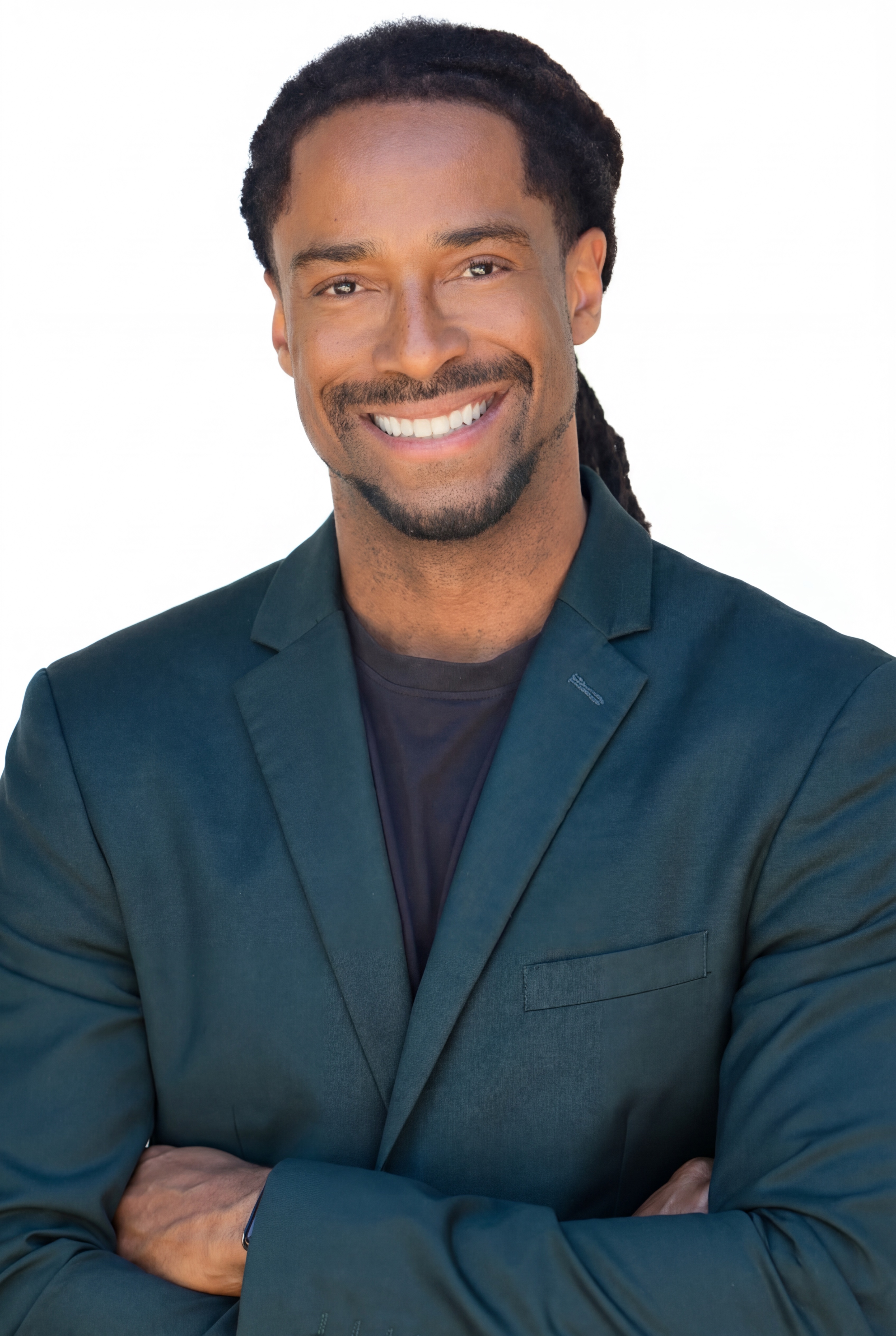
DJ Will Gill
Will Gill is a corporate DJ, emcee, and audience engagement specialist whose Forbes-recognized virtual programming model through ZoomDJs was developed specifically for the hybrid event format the same in-room emcee energy, DJ programming, and game show production translated through broadcast-quality production to land cleanly for remote audiences viewing from regional hubs or home. A Forbes Next 1000 honoree, the Wall Street Journal’s #1-ranked corporate DJ and emcee, with 2,520+ five-star Google reviews across 600+ annual corporate engagements including a substantial hybrid SKO calendar in January and February. His 3-in-1 service combining DJ, emcee, and audience engagement was developed at a time when the WSJ first profiled the model for its effectiveness in virtual and hybrid corporate environments. Client roster spans Google, Amazon, Salesforce, the United Nations, and the Boys & Girls Clubs of America. See his on-stage credits on IMDb. Reach out to discuss your 2026 hybrid sales kickoff programming.
Corporate Events Hosted Annually
Five-Star Google Reviews
WSJ-Ranked Corporate DJ and Emcee