
5 Secrets to DJ Song Selection That Packs Dance Floors | DJ Will Gill
Every working DJ blog repeats the same five-secrets framing for song selection know your audience, build energy arcs, surprise with throwbacks, stay adaptable, serve the music. The framing is broadly correct. What it usually lacks is documented research support for why each principle works, calibration for the corporate event context, and the buyer-evaluation overlay that turns the principles from DJ-craft wisdom into a hiring framework for event planners. This guide rebuilds the five-secrets template with peer-reviewed 2025-2026 research, corporate-adjacent context, and the working-DJ specifics that separate consistent operators from one-night-only generalists.
For broader DJ song-selection reading, see 10 must-have song selections for every DJ set and the companion genre-programming framework in 5 essential DJ playlists by genre for any event. For corporate event booking, DJ Will Gill applies these principles across Fortune 500 corporate events with 2,520+ five-star reviews documenting consistency of execution.
Key Takeaways
→ Nostalgia outperforms familiarity for dance behavior. A peer-reviewed 2025 PLOS One study by Sidhu, Urian, Zheng, and Grahn at Western University documented that nostalgic songs elicited a higher desire to move than merely familiar songs, and only nostalgia not familiarity alone predicted the desire to dance. The “Oh Wow!” throwback track isn’t a gut-instinct trick; it’s a documented neurological mechanism.
→ DJ physical engagement measurably affects audience experience. A 2026 field study by Rudnicki, Murrath, and Poels published in Sage Journals documented that DJs’ physical engagement, especially dancing, increased audience positive affect, while moving away from the console decreased it. The body language behind the decks is part of the song-selection signal the crowd reads; the DJ, at the same time, the DJ is reading them.
→ Audience reading is a multi-input process, not a single intuition. The professional methodology integrates pre-event intake (client interviews, do-not-play lists, demographic analysis, venue history), real-time observation (facial expressions, foot-tapping, head-nodding, sing-along behavior), and structured response protocols (pivot triggers, backup-genre activation, energy modulation). Each input has a corresponding output.
→ The corporate event arc isn’t the nightclub arc. Nightclub sets peak at 11 pm-1 am with sustained 120-128 BPM dance music. Corporate event arcs run a different shape entirely, atmosphere-warmup-program-dance-anthems-close, with the dance window typically running 60-90 minutes inside a multi-hour evening. Treating both event types with identical song-selection logic produces underperformance in both directions.
→ Rigidity loses dance floors more often than poor track choice. The DJ who locks in a pre-planned set and refuses to deviate when the room signals disinterest is failing at the core job. Gallup’s 2024 workplace research documenting that just 21% of employees worldwide are engaged at work applies to event audiences too. The baseline assumption is that the room is disengaged until the DJ proves otherwise, not the reverse.
Watch DJ Will Gill applying these song-selection principles live at Fortune 500 corporate events. For event-specific consultation, contact DJ Will Gill directly.
Why Generic Song-Selection Advice Underperforms in Corporate Rooms
Most DJ song-selection guides are written from the nightclub-resident or wedding-DJ perspective. Both are legitimate frames, and both miss the corporate-event context where the actual buying decisions happen for professional event DJs. Three specific gaps separate corporate-context song selection from the generic template.
The starting baseline assumes engagement that doesn’t exist. Nightclub guides assume the audience showed up specifically to dance. Wedding guides assume the audience is emotionally primed by the occasion. Corporate event audiences arrive after a workday, in business attire, with executives in the room they need to behave professionally around, and an average engagement baseline that Gallup’s 2024 workplace research documents at just 21% of employees worldwide engaged at work. The song-selection sequence has to actively move the room from neutral to engaged before any dance floor exists at all.
The “play what you want” instinct hurts more than it helps. DJs whose taste runs to deep house or hardstyle or underground hip-hop will routinely sneak in personal-favorite tracks at corporate events under the assumption that “I know what’s good.” Corporate rooms reject this within two tracks. The professional discipline is to serve the room, not curate the DJ’s portfolio, and the room is paying.
The technical-mixing emphasis distracts from the actual job. Mobile-DJ training materials over-emphasize transition technique, beat-matching precision, and effects layering. None of those skills move corporate dance floors as reliably as accurate audience reading, energy-arc discipline, and well-deployed nostalgia. The technical floor matters; the technical ceiling rarely shows up on the dance floor.
Secret #1: Know Your Audience Before You Play a Single Song
The most important song-selection work happens before the event starts. Audience reading is a multi-input process, pre-event intelligence gathering plus real-time observation and corporate-event DJs who skip the intelligence-gathering half routinely deliver worse sets than DJs with less raw skill but better preparation.
Pre-Event Intelligence Gathering
Client interview inputs. Genres they want, genres they explicitly don’t want, named must-play tracks, named do-not-play tracks, recipient walkup music for awards segments, brand voice considerations, age distribution of the room, executive presence, external-guest presence, contracted dance-floor window length. Professional event DJs run this conversation as a structured intake, not a casual chat, because the answers determine 80% of the playlist before the event starts.
Demographic analysis. A Fortune 500 sales kickoff has different demographics than an industry conference, which has different demographics than a wedding-adjacent corporate appreciation event. Age distribution, industry context, regional composition, and recent company news all feed song selection. A mid-Atlantic financial services kickoff has different appropriate selections than a West Coast tech company holiday party and the DJ who treats them identically delivers the same mid result to both.
Venue history reconnaissance. If the venue has hosted similar events, the DJ checks past event social media, public photos, video posts, and reviews. The visible reactions in those documents reveal what worked there. 2025 DJ-craft research from Hercules describes the value of checking venue social media and past event videos for demographic clues and musical-taste signals before showing up.
Real-Time Observation Cues
The cue hierarchy. 2025 dance-floor psychology research from MP4 Remix documents the non-verbal signal stack experienced DJs read in real time: facial expressions, smiles, cheers, eye contact. The full hierarchy of professional event DJs scan: foot-tapping (lowest engagement signal), head-nodding (mid-engagement), seated sing-along (high engagement, dance-floor-ready), conversation while music plays (engagement-neutral, can be positive in cocktail context), phone-scrolling (disengagement signal), exit movement (immediate-pivot trigger).
The 90-second feedback window. Every track is a small experiment. Within 60-90 seconds of dropping a new selection, the DJ can read whether the track is landing. Tracks that aren’t landing in 90 seconds rarely recover. The professional pivot is to mix out cleanly and try a different selection rather than hoping the unfamiliar track wins the room over time.
The corporate-room-specific cue: senior executive body language. When the CEO, CMO, or senior executive in the room is visibly enjoying the music, the rest of the room follows. When they’re visibly uncomfortable, the rest of the room takes the cue and disengages. Professional corporate event DJs identify the senior figures during arrival and watch their reactions specifically.
Secret #2: Build Your Set Around Energy Arcs (Corporate-Calibrated)
Every song-selection guide mentions energy arcs. Most describe a generic nightclub arc as slow warmup, gradual build, peak, and cooldown. The corporate event arc is structurally different, and applying nightclub-arc thinking to a corporate event predictably misses the mark.
The Warm-Up Window: Atmospheric Background, Not Pre-Dance Build
Nightclub warmup builds toward dance. The arriving crowd is already dressed to dance, already committed to dance, and just needs the gradual escalation. Corporate event warmup serves a different function: setting a professional-event atmosphere while attendees network, greet executives, and ease into the social-but-not-dance-floor mode that dominates the first hour.
Tempo discipline matters. Corporate warmup music typically sits in the 80-100 BPM range, present without demanding movement. R&B, classic soul, lighter jazz-influenced tracks, mid-tempo pop. The DJ resists the instinct to push tempo prematurely because the room isn’t ready for it, and pushing too early signals inexperience to the planner.
The Peak Window: Sustained High Energy with Strategic Releases
The push-pull dynamic is documented. 2025 dance-floor psychology research documents that the natural rhythm of energy ebbs and flows alternating high-energy moments with calmer tracks gives the audience time to breathe and keeps them engaged without exhausting them. Skilled corporate event DJs deploy this push-pull intentionally rather than running unbroken high-energy walls.
Mini-arcs inside the peak. A 60-90 minute peak window typically runs three or four mini-arcs of 12-18 minutes each. Each mini-arc builds, peaks, and releases briefly with a sing-along anthem or recognized classic break, then rebuilds. This structure prevents the audience-fatigue collapse that happens with relentless high-BPM programming.
The Cool-Down Window: The Memorable Finish
The exit memory dominates the recall. Behavioral economics research consistently shows people remember peak moments and endings more than averages. The corporate event DJ who closes on a recognized anthem with full-room sing-along gives the planner a final memorable moment that determines whether the DJ gets re-booked. A poorly chosen closer, too long, too obscure, too jarring, undoes the work the DJ put in across the whole night.
Secret #3: The Power of the “Oh Wow!” Track (Documented Nostalgia Science)
The “Oh Wow!” track isn’t intuition, it’s measured neuroscience. A peer-reviewed 2025 PLOS One study by Sidhu, Urian, Zheng, and Grahn at Western University titled “Throwbacks that move us: The dance-inducing power of nostalgic songs” tested 102 participants on 40 pop songs and documented that nostalgic songs elicited a higher desire to move than merely familiar songs, with both familiarity and nostalgia predicting tap and move ratings but only nostalgia emerging as a predictor of the desire to dance.
Familiarity isn’t enough. The study used recent songs (Dua Lipa’s “Don’t Start Now,” Jonas Brothers’ “Sucker,” Billie Eilish’s “Bad Guy”) as a high-familiarity but low-nostalgia control group. These tracks were widely recognized but didn’t generate the same desire-to-dance response as the throwback set. The lead author, psychology professor Jessica Grahn, told Western News: “Every great wedding DJ inherently knows this, and now, we have the scientific results to back it”.
The top-scoring track was Ke$ha’s “TiK ToK.” In the desire-to-dance category, Ke$ha’s 2009 hit “TiK ToK” which spent nine weeks atop the Billboard Hot 100 scored highest, edging “Uptown Funk” by Mark Ronson featuring Bruno Mars and “Party Rock Anthem” by LMFAO featuring Lauren Bennett and GoonRock. These are the documented “Oh Wow!” tracks for adult corporate-room demographics who came of age in the late 2000s.
What Makes a Track an “Oh Wow!” for Corporate Rooms
Age-calibrated nostalgia targeting. The Sidhu et al. research used songs from participants’ adolescent years (ages 13-18) as the high-nostalgia set. For corporate rooms with mixed demographics, the DJ needs multiple nostalgia targets: 1990s tracks for 45-55 year olds, 2000s tracks for 35-45 year olds, 2010s tracks for 25-35 year olds. Skilled corporate event DJs sequence these strategically across the peak window to land each demographic in turn.
The forgotten classic over the obvious classic. The “Oh Wow!” reaction depends on the track being recognized but not currently in rotation. Songs that have stayed in everyday rotation become familiar but not nostalgic; they don’t trigger the dance response that the research documented. The professional pick targets songs that were huge five to fifteen years ago, but aren’t currently being played at every wedding and bar in the same city.
The remix variant. A nostalgic track presented in a fresh remix triggers both nostalgia recognition and novelty interest simultaneously. Mark Ronson’s “Uptown Funk” worked this way (modern hit with throwback funk DNA); contemporary disco-house remixes of 1980s hits work similarly. The professional library includes both original and remix versions of nostalgia anchors, so the DJ can choose which version reads better for the specific room.
The genre-bending surprise. Mid-dance-floor transitions into an unexpected genre, from house to classic rock anthem, hip-hop into 80s pop, can produce massive energy surges if executed at the right moment. 2026 DJ psychology research from ZIPDJ describes how the unexpected transition becomes one of the most-discussed moments of the event when timed correctly.
Secret #4: Don’t Be a Slave to Your Playlist (Real-Time Adaptation Discipline)
The empirical case for DJ engagement. A 2026 field study by Rudnicki, Murrath, and Poels published in Sage Journals examined DJ behavior across multiple electronic dance music clubs in Belgium and documented that DJs’ physical engagement especially dancing increased audience positive affect, while moving away from the console decreased it. The DJ who buries themselves behind the laptop, eyes down, treating the set as a playlist-execution task, measurably reduces audience enjoyment compared to the DJ visibly engaged in the same music.
The implication for adaptability. If the DJ’s visible engagement affects the room, then the DJ also needs to be visibly engaged with the room’s response. The locked-in, pre-planned set DJ staring at the screen, executing tracks in pre-determined order, never adjusting, is the structural opposite of what the field research documented as effective. Adaptability is observable from the audience side, not just an internal DJ practice.
The Watch-Listen-React Protocol
Scan continuously. Professional event DJs scan the room every 30-60 seconds during active dance windows. The scan rotates: dance floor occupancy, edge-of-floor body language, conversation-zone energy, executive-seating reactions, exit traffic. Each scan input feeds the next track decision.
Defined pivot triggers. Empty dance floor for two consecutive tracks = backup-genre activation. Phone-out body language spreading across the room = energy modulation or tempo shift. Executive-seating disengagement = immediate cleaner-track substitution. The professional has the trigger conditions defined before the event, so the response is automatic rather than improvised mid-room-empty.
Library Organization for Backup Plans
Multi-axis tagging. Professional event DJs organize their libraries by genre, era, BPM range, energy level, vocal density, and audience-appropriateness rating. The combination of tags lets the DJ pivot rapidly when one genre isn’t working. Switching from 90s hip-hop to 80s pop is a two-click filter, not a frantic library scroll.
Backup-list pre-loading. Smart corporate event DJs pre-load 3-4 backup playlists keyed to specific scenarios: “if pop isn’t working,” “if room skews older than expected,” “if executive request comes in mid-set,” “if energy needs to drop quickly for a cued program transition.” None of these gets used at most events. The ones that do get used save the night.
Secret #5: Mix for the Music, Not for Your Ego (Restraint Discipline)
The technical-craft trap. DJs trained in competitive technical environments battle DJs, scratch DJs, and EDM festival programmers frequently over-deploy technique in contexts where it actively reduces audience enjoyment. Complex multi-track layering, aggressive scratching, dense effects work, and signal craft mastery for other DJs. They distract from the music in a corporate ballroom.
Serve the Song: Let Key Moments Breathe
Recognized tracks earn the right to play full. The big chorus, the iconic guitar solo, the famous breakdown, these are the moments the room is paying attention to. Mixing out before them robs the audience of the payoff the track is built around. Professional corporate event DJs let recognized peaks land before transitioning out.
Simple transitions over complex transitions. A clean cut at the right moment beats a layered transition at the wrong one. For corporate audiences who aren’t tracking the technical execution, transition cleanliness matters far less than song selection accuracy. The 30-second blend over the chorus that the DJ thought was clever just stepped on the audience’s favorite part of the song.
Audience First, Personal Taste Second
The DJ’s personal taste is in a professional context. A deep-house specialist who insists on programming deep house at a 200-person sales kickoff for a regional insurance company isn’t expressing artistic integrity; they’re delivering wrong-fit work. The booking implied a multi-genre commercial set; the deep-house insistence is the DJ prioritizing self over client.
The trust-then-introduce sequence. Skilled corporate event DJs earn audience trust early with familiar high-recognition tracks, then introduce one or two less-familiar selections during the established-floor window. The discovery moments work because the audience has already accepted the DJ as credible, not because the DJ forced them at minute three when no trust existed yet.
The Corporate Event Multiplier: Why Specialist DJs Outperform Generalists
Volume produces pattern knowledge that generalists can’t access. A wedding DJ working 25 weddings per year sees one event type repeatedly. A corporate event DJ working 50+ Fortune 500 events per year sees multi-day conferences, executive kickoffs, customer appreciation dinners, awards programs, brand activations, and product launches, each with different song-selection logic. The pattern library that builds across hundreds of corporate events is what separates the specialist from the wedding DJ, adding “corporate events” to their service menu.
The integration layer. Corporate event song selection has to coordinate with show callers, AV teams, branded content, executive walk-ons, and program timelines that the DJ doesn’t control. The discipline to take cues from the show caller while maintaining song-selection responsibility is a skill specialists develop over years of corporate work, and that generalists routinely lack.
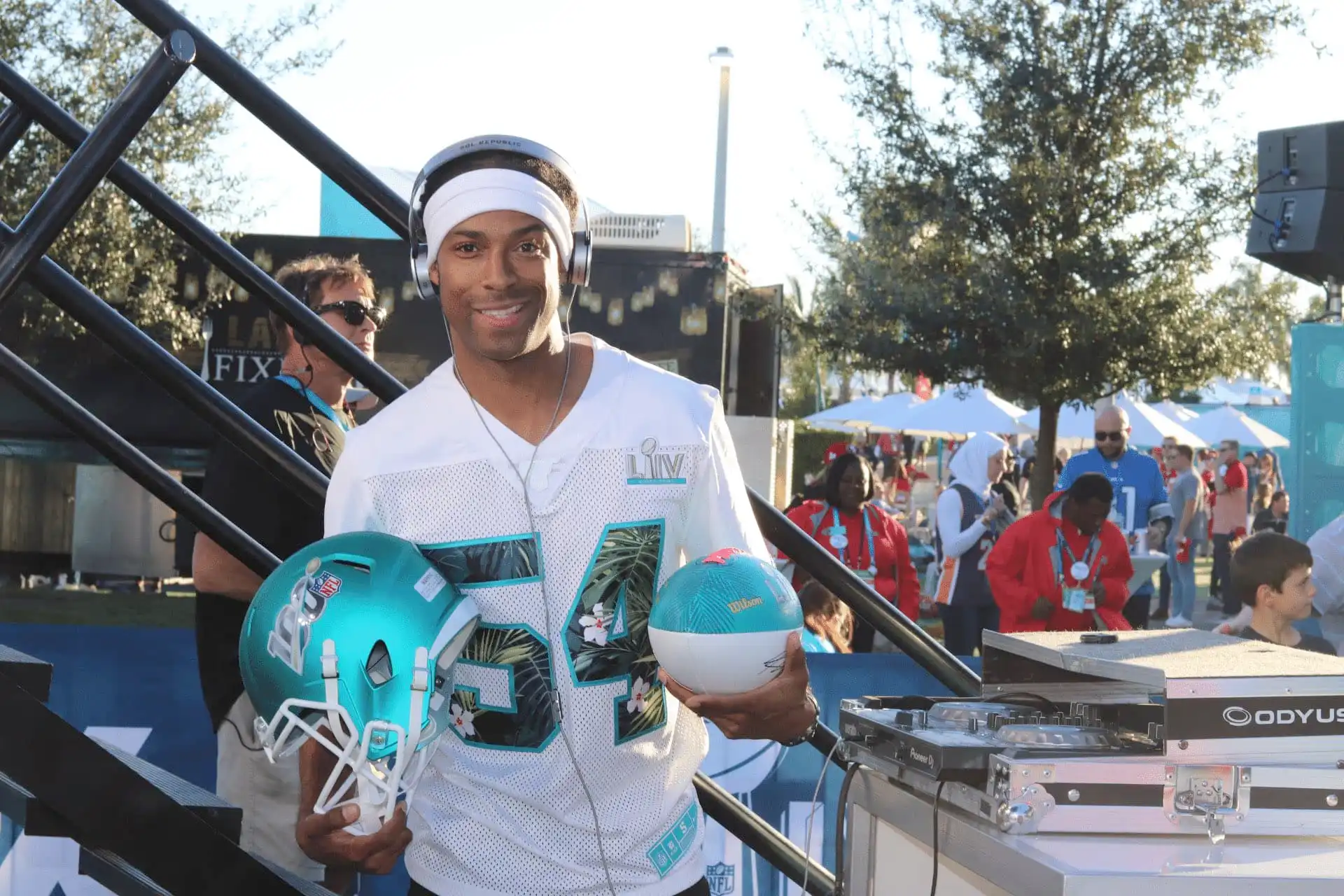
DJ Will Gill’s positioning. Will Gill operates as the Wall Street Journal #1 Corporate DJ and Emcee with documented corporate event song-selection work for AT&T Business, CDW, Team USA, Virgin Galactic, NeoGenomics, Foot Locker, Home Depot, Hilton, and BGCA. Forbes Next 1000 honoree with broadcast credits including Super Bowl LIV (2020), The Voice (2011), and MTV’s The Real World: Hollywood (2008). 2,520+ five-star Google reviews accumulated over 600+ documented corporate events.
For the genre-deployment companion framework, see 5 essential DJ playlists by genre for any event. For event-specific consultation, contact DJ Will Gill directly.
About the Author
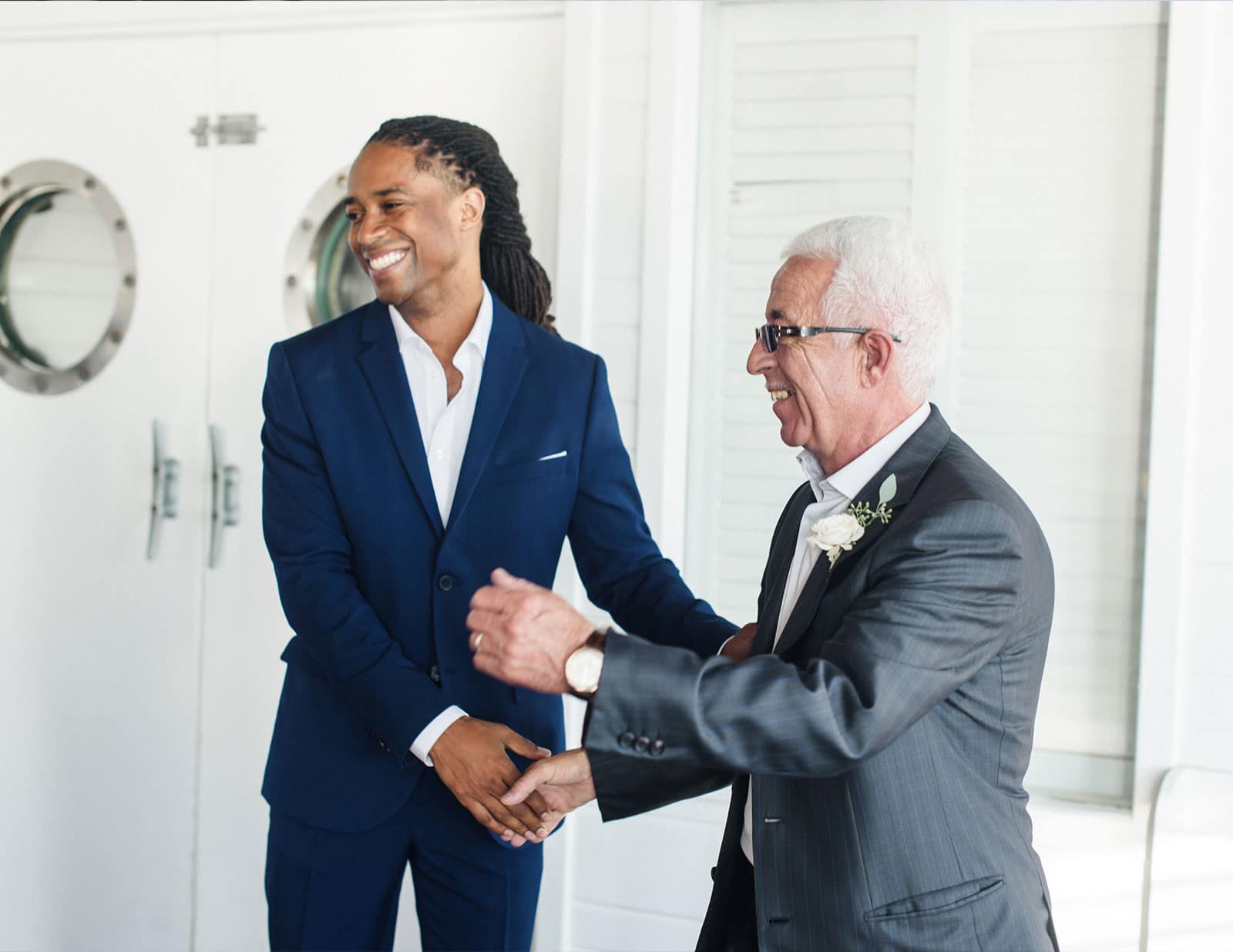
William “DJ Will Gill” Gilbert is the Wall Street Journal’s #1 Corporate DJ and Emcee with documented corporate event song-selection work for Fortune 500 clients, including AT&T Business, CDW, Team USA, Virgin Galactic, NeoGenomics, Foot Locker, Home Depot, Hilton, and BGCA. Also a Forbes Next 1000 honoree with broadcast credits including Super Bowl LIV (2020), The Voice (2011), and MTV’s The Real World: Hollywood (2008). 2,520+ five-star Google reviews accumulated over 600+ documented corporate events.
2,520+ Google Reviews · IMDB · Mixcloud · Instagram · Contact