
5 Essential DJ Playlists by Genre for Corporate Events
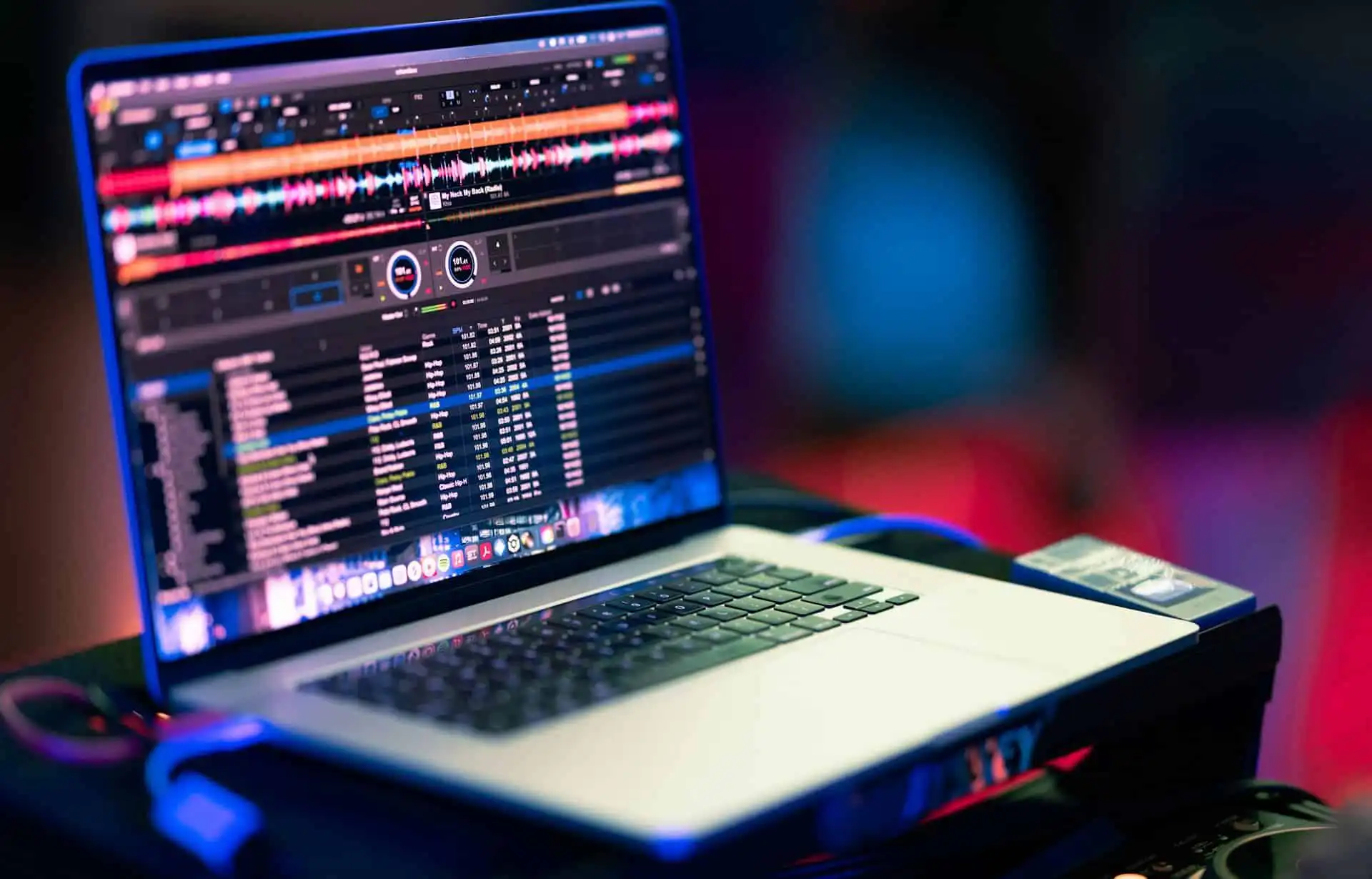
The “5 essential DJ playlists for any event” framing fails the most important buyer category in the working-DJ market: corporate event planners. A genre lineup tuned for nightclubs, festivals, and college parties doesn’t translate to the corporate-adjacent context where executive audiences, multi-generational room composition, brand sensitivity, and program-arc choreography all matter. This guide preserves the five core genres every working DJ needs: ready Pop, Hip-Hop, House, R&B/Soul, and Rock, but rebuilds the framing for corporate-adjacent event programming with documented 2026 streaming data and the energy-curve logic that determines when each genre belongs in the event arc.
For a broader playlist-building methodology, see the 10 tips for building the perfect music playlist. For the corporate event use case specifically, DJ Will Gill handles genre programming for Fortune 500 corporate events with 2,520+ five-star reviews documenting the consistency of the approach.
Key Takeaways
→ Hip-Hop dominates US streaming, but Pop dominates corporate-event programming. Luminate’s 2024 data documents that R&B/Hip-Hop commanded a 25.3% share of US on-demand audio streaming, more than double the second-place pop genre at approximately 11%. But streaming-share rankings don’t directly predict corporate-event-floor performance corporate room composition skews older and more brand-sensitive than the average Spotify user, which pushes Pop’s universal-appeal advantage to the front of the deployment order.
→ Audiences cross genres aggressively. IFPI engagement research cited across 2026 industry reports documents that average listeners engage with eight or more different genres using seven or more different methods, listening to 20.7 hours of music per week. The implication for event DJs: a single-genre playlist underserves the room because the room is already multi-genre in its everyday listening behavior.
→ The genre matters less than the deployment moment. The arrival hour, dinner-program window, awards transitions, and dance-floor peak each demand fundamentally different genre choices. Five strong genre playlists deployed in the wrong sequence still produce a flat event; weaker selections deployed in the right sequence routinely produce a memorable one.
→ Clean-version awareness is mandatory for corporate audiences. The unedited streaming version of many hip-hop, pop, and R&B tracks contains language and content that’s appropriate for personal listening and entirely inappropriate for executive-audience corporate events. Professional event DJs maintain clean-version libraries; mobile-DJ generalists frequently don’t.
→ The engagement baseline rewards intentional programming. Gallup’s 2024 State of the Global Workplace research documents that just 21% of employees worldwide are engaged at work the baseline that corporate events are explicitly designed to disrupt. Genre programming that lands the energy peaks in the right moments is one of the highest-leverage tools the event has for moving that engagement number temporarily upward.
Watch DJ Will Gill applying multi-genre corporate event programming live. For event-specific genre planning, contact DJ Will Gill directly.
Why “Any Event” Genre Lists Fail Corporate Buyers
Most published genre guides recommend the same five to seven genres regardless of event context: Pop, Hip-Hop, House, R&B, Rock, sometimes Country, sometimes Latin. The artists named (Drake, Calvin Harris, The Weeknd) are correct for general working knowledge. The framing is wrong for corporate buyers, for three specific reasons.
Corporate room composition isn’t average streaming demographics. A Fortune 500 sales kickoff has executives in their 50s and 60s alongside individual contributors in their 20s. A regional industry conference has career-stage diversity that no nightclub demo profile resembles. A customer summit has attendees representing both client decision-makers and their younger account teams. Genre programming optimized for Spotify’s average user, which skews 16-34, misses both ends of the corporate room distribution.
Corporate brand sensitivity changes the playable inventory. Many of the top streaming tracks in any given quarter contain language, themes, or implied content that’s professionally appropriate for personal listening and professionally inappropriate when piped through a Caesars Forum sound system in front of the CMO. Mobile-DJ playlists that work at private parties don’t translate without active clean-version curation.
Corporate event arcs don’t run like dance-floor arcs. A nightclub’s night peaks at 11 pm-1 am. A corporate awards dinner peaks during the recognition program, drops sharply during the keynote, climbs again during the open bar after dinner, then peaks once more in a controlled dance-floor window. Genre selection has to follow that arc using Pop where Pop belongs, Hip-Hop where Hip-Hop belongs, R&B where intimacy belongs rather than treating all five genres as equally useful at all moments.
The Five Essential Genres, Reframed for Corporate Context
Genre 1: Pop Hits The Universal Common Denominator
Why it leads the corporate deployment order? Pop is the only genre that consistently reaches every demographic segment in the corporate room. 2026 streaming data documents that Pop remains the most listened to music genre across the globe, blending traditional pop structures with innovative electronic elements and cross-cultural influences. The same melodic accessibility that makes Pop dominant on streaming is exactly what makes it bulletproof in a multi-generational executive room.
Corporate-event artist roster. Taylor Swift, Ed Sheeran, Bruno Mars, Dua Lipa, Sabrina Carpenter, Olivia Rodrigo, Harry Styles, Adele plus throwback hits from the 2000s, 90s, and 80s that connect the over-40 segment of the room. The 80s and 90s pop archive is the single most underused corporate-event asset; Whitney Houston, Michael Jackson, Madonna, and George Michael tracks land harder with executive audiences than most current chart hits.
Where it belongs in the event arc. Arrival music, dinner-program transitions, between-speaker fills, awards walkup music for younger recipients, and dance-floor opening. Pop is the genre you can deploy at any moment without misreading the room.
Genre 2: Hip-Hop The Energy Driver
The streaming dominance is real, but doesn’t directly transfer. Luminate’s 2024 data documents R&B/Hip-Hop at a 25.3% share of US on-demand audio streaming, more than double pop’s approximately 11% second-place share. Hip-Hop/Rap accounted for 14.7% of global recorded music industry revenues in 2023. Hip-Hop is the dominant genre in personal listening but corporate-event deployment requires careful filtering for clean versions and content fit.
Corporate-event artist roster. Drake, Kendrick Lamar, J. Cole, Travis Scott, Megan Thee Stallion, Doja Cat (with clean-version selection), plus the throwback legends Tupac, Notorious B.I.G., Jay-Z, Nas, OutKast, Missy Elliott. Throwback hip-hop performs especially well in corporate rooms because the 35-55 demographic recognizes it from when it was new.
Where it belongs in the event arc. Mid-evening energy escalation, dance-floor peak hours, awards walkup music for recipients who request it, and post-program transition into open-bar windows. Deploy with caution during the dinner-program window and never during the keynote run-up.
Genre 3: House and EDM The Sustained Dance Floor
Why it earns a slot. House music’s steady tempo (typically 120-128 BPM) and consistent energy curve make it the easiest genre to sustain a dance floor across an extended window without overworking individual tracks. The four-on-the-floor structure that defines house gives the DJ programming flexibility, tracks blend cleanly, energy can be modulated through track selection without abrupt transitions.
Corporate-event artist roster. Calvin Harris, David Guetta, Disclosure, Diplo, John Summit, Fred again.., Chris Lake, plus the deep-house and disco-influenced corner of the genre (Defected, Glitterbox, Toolroom catalogs). Avoid the heavy big-room or hardstyle subgenres for corporate rooms; they’re optimized for outdoor festivals, not Strip-property ballrooms.
Where it belongs in the event arc. Sustained dance-floor windows, late-evening after-party programming, brand activations, and product-launch reveal moments, cocktail-hour energy elevation. House programs best when given an unbroken 60-90 minute window rather than scattered across the night.
Genre 4: R&B and Soul The Atmosphere Layer
The most undervalued genre in the corporate DJ toolkit. R&B and soul handle the moments other genres can’t: cocktail hours, dinner service, networking windows, and intimate award-ceremony transitions. The vocal-forward melodic structure creates a conversational atmosphere without competing with the conversation itself.
Corporate-event artist roster. John Legend, Alicia Keys, The Weeknd, SZA, H.E.R., Brent Faiyaz, Jazmine Sullivan, plus the timeless Motown and classic-soul archive (Stevie Wonder, Marvin Gaye, Aretha Franklin, Otis Redding, Al Green). Classic Motown is the secret weapon of corporate-event programming, universally recognized, instantly atmospheric, and it works at any age range.
Where it belongs in the event arc. Pre-event arrival windows, cocktail hours, dinner service, networking-segment background music, romantic-moment programming at wedding-adjacent corporate events, controlled wind-downs after dance-floor peaks. R&B is the genre you deploy when the event needs people talking to each other rather than dancing with each other.
Genre 5: Rock Classics The Cross-Generation Bridge
Why it survives in modern corporate programming. Rock’s mainstream cultural dominance peaked decades ago, but its classic-rock anthem catalog remains the most reliable cross-generational sing-along material in the working DJ’s toolkit. 2026 music genre research notes that while rock’s mainstream dominance has waned, it still steers approximately 80% of modern guitar-based genres culturally and retains a loyal following especially among older generations. For corporate rooms with an executive over-40 segment, classic rock is the unspoken floor of the programming spectrum.
Corporate-event artist roster. Queen, AC/DC, Bon Jovi, Fleetwood Mac, Journey, Foreigner, Bruce Springsteen, Eagles, Tom Petty, plus selective modern rock (Foo Fighters, Imagine Dragons, Coldplay in the rock-adjacent territory). The single most reliable corporate dance-floor track in this catalog: “Don’t Stop Believin'” by Journey. Universal recognition, sing-along trigger, age-spanning appeal.
Where it belongs in the event arc. Peak energy moments where cross-generation sing-along matters more than dance-floor sophistication, the late-evening anthem run, transition moments where the room needs to be re-engaged, walk-on music for senior executives, and closing-song selection. Rock classics over-deliver during the moments when the event needs all generations in the room moving together.
Programming Logic: When to Deploy Each Genre Across the Event Arc
Five strong genre playlists deployed in the wrong sequence still produce a flat event. Here is the deployment logic that experienced corporate event DJs follow, adapted to the typical corporate evening arc and adjustable to specific event formats.
Arrival Window (0:00-0:45): R&B and Soul
Attendees walking in need atmospheric music that signals “professional event in progress” without competing with conversation, executive networking, or first-impression handshakes. R&B and classic Motown handle this window better than any other genre present without being demanding.
Cocktail Hour (0:45-1:45): R&B and Light Pop
The energy curve nudges upward as drinks flow and conversations intensify. Pull from R&B with selective, lighter Pop hits, Bruno Mars, Lizzo, and John Legend territory. Volume creeps up slightly. The room is still primarily a networking environment, not a dance-floor environment.
Dinner and Program (1:45-3:00): Pop and Soft Background
Pop background that doesn’t compete with conversation but maintains atmospheric continuity. Volume sits below the conversation level. The DJ’s primary job during this window is to be present and ready when the program kicks off. The DJ needs to be alert for cue handoffs to the show caller.
Program Window (3:00-4:00): Cued Walk-On and Transition Music Only
During the formal program keynote, executive speeches, and awards announcements, the DJ delivers cued music only: speaker walk-on tracks, award-recipient walk-up tracks, and branded transition stings between segments. No continuous music. The show caller drives the timing; the DJ executes.
Dance Floor Opening (4:00-4:30): Pop Anchors
The hardest 30-minute window of the night to execute correctly. The room has just transitioned from sit-down program mode to vertical dance-floor mode. Most attendees don’t move immediately. The opening selections need to be Pop anchors, universally recognized tracks that pull the first wave onto the floor. Pop earns its place at the front of the deployment order because no other genre lands the opening cleanly with mixed-age corporate rooms.
Dance Floor Peak (4:30-5:30): Hip-Hop and Pop Rotation
The energy maximum of the night. Hip-Hop and Pop trade off track-by-track. Throwback hip-hop and pop hits over-perform here because they trigger the strongest recognition response across the room’s age distribution. The house can enter as a late-window energy sustainer, but only after the dance floor is already full.
Anthem Moments (5:30-6:00): Rock Classics
The late-evening sing-along window. This is where Rock earns its slot: Bon Jovi’s “Livin’ on a Prayer,” Journey’s “Don’t Stop Believin’,” Queen’s “Don’t Stop Me Now,” AC/DC’s “You Shook Me All Night Long” all unlock the full-room sing-along that becomes the event’s most-remembered moment. The DJ deploys these tracks deliberately, not at random.
Closing Window (6:00-6:30): House or Rock
Two viable approaches. The House keeps the energy elevated for the after-party crowd that’s continuing past the official end. The Rock closes the emotional bookend, closing the event on a recognized anthem that everyone walks out humming. Choice depends on whether the program has an after-party scheduled or wraps cleanly at the contracted end.
The Sixth Critical Layer: Energy Curve Management
Five genre playlists aren’t enough. The genre selection only handles half of the programming problem. The other half is energy curve management, how the DJ shapes the rise and fall of room energy across the multi-hour arc using tempo, vocal density, melodic intensity, and recognition load.
Tempo is the underlying lever. Most corporate event arcs run from ~80-95 BPM at arrival, climb to 100-115 BPM during cocktail hour, dip slightly during dinner, and peak at 120-128 BPM during the dance-floor window. The DJ’s tempo discipline across that arc matters more than the specific tracks within each tempo band.
Recognition load shapes the second-order curve. A room can only handle so much unfamiliar music before attention drifts. The corporate-event programming rule of thumb: 70-80% of tracks in any 30-minute window should be high-recognition selections (top 1,000 tracks by lifetime US streams). The remaining 20-30% can be discovery layer new releases, deeper cuts, regional flavor, but only after the recognition floor is established.
Vocal density modulates intensity within genres. Within Pop, instrumental-forward tracks and vocal-forward tracks deliver very different energy. Within Hip-Hop, the difference between a sample-heavy beat track and a verse-dense bar track is enormous. Skilled corporate event DJs modulate vocal density inside genre selections to control room energy without changing genres.
Clean-Version Awareness for Corporate Settings
The unfiltered streaming version isn’t the corporate-event version. Many top streaming tracks across Hip-Hop, Pop, and R&B contain language that’s professionally appropriate for personal listening through headphones and entirely inappropriate when amplified through a corporate-event sound system in front of executive attendees and external guests.
The clean version isn’t always available, and when it is, it isn’t always good. Some artists release clean versions that preserve the song’s energy. Others release clean versions that mute key words so aggressively that the song becomes confusing or anticlimactic. Professional corporate event DJs maintain clean-version libraries with quality-graded alternates so they can substitute when the official clean version doesn’t work.
Do-not-play lists are a standard corporate event input. Many corporate clients provide explicit do-not-play lists in advance artists, songs, genres, or themes that conflict with brand values, recent news events, or attendee demographics. Professional event DJs request these lists during pre-event consultation rather than discovering them mid-event when an executive is unhappy.
Five Buyer Evaluation Questions for Corporate-Adjacent Event DJ Booking
Apply these to any DJ candidate evaluation. The answers separate corporate-experienced operators from mobile-DJ generalists.
Question 1: “Walk me through how you’d program the first hour and the dance-floor opening for our event format.” Detailed answers describing specific tracks, tempo decisions, and energy-curve logic reveal corporate-experienced operators. Vague answers (generic “I’ll read the room”) reveal generalists who haven’t done the planning work.
Question 2: “What’s your clean-version library workflow?” Experienced operators describe systematic clean-version sourcing, quality-grading, and substitute-track preparation. Generalists hedge or say they “skip explicit tracks” which means they’re leaving major sections of contemporary Hip-Hop and Pop unavailable, narrowing their actual deployment toolkit.
Question 3: “How do you handle do-not-play list intake?” Look for a structured pre-event consultation process. Operators who treat do-not-play lists as a routine input have done corporate work before; operators who seem surprised by the question haven’t.
Question 4: “How do you coordinate with show callers and AV teams during the program window?” The answer should describe specific workflows for cued music, transition stings, walkup tracks, and silence handoffs. Generic answers (we’ll figure it out at the event) reveal a gap.
Question 5: “Show me three specific corporate events where you’ve executed multi-genre programming across a full event arc.” Named clients, named venues, named event types. The detail of the answer reveals the depth of the experience.
Why Corporate Event DJs Handle Genre Programming Differently
The corporate event format requires programming discipline that mobile DJs don’t typically have. A wedding DJ working 25 weddings a year develops one set of skills. A nightclub resident playing the same room weekly develops another. A corporate-adjacent event DJ working across 50+ corporate events annually develops a third of the discipline to deploy five genres across structured event arcs while integrating with show callers, holding executive-tone calibration, and serving multi-generational room composition.
DJ Will Gill’s corporate-event programming positioning. Will Gill operates as the Wall Street Journal #1 Corporate DJ and Emcee with documented multi-genre programming work for Fortune 500 corporate events, AT&T Business, CDW, Team USA, Virgin Galactic, NeoGenomics, Foot Locker, Home Depot, Hilton, and BGCA. Forbes Next 1000 honoree with broadcast credits including Super Bowl LIV (2020), The Voice (2011), and MTV’s The Real World: Hollywood (2008), plus 2,520+ five-star Google reviews documenting consistency of multi-genre execution across the client roster.
For a broader playlist methodology, see 10 tips for building the perfect music playlist. For event-specific genre planning, contact DJ Will Gill directly.
About the Author
William “DJ Will Gill” Gilbert is the Wall Street Journal’s #1 Corporate DJ and Emcee with documented multi-genre corporate event work for Fortune 500 clients including AT&T Business, CDW, Team USA, Virgin Galactic, NeoGenomics, Foot Locker, Home Depot, Hilton, and BGCA. Also a Forbes Next 1000 honoree with broadcast credits including Super Bowl LIV (2020), The Voice (2011), and MTV’s The Real World: Hollywood (2008). 2,520+ five-star Google reviews accumulated over 600+ documented corporate events.
2,520+ Google Reviews · IMDB · Mixcloud · Instagram · Contact